
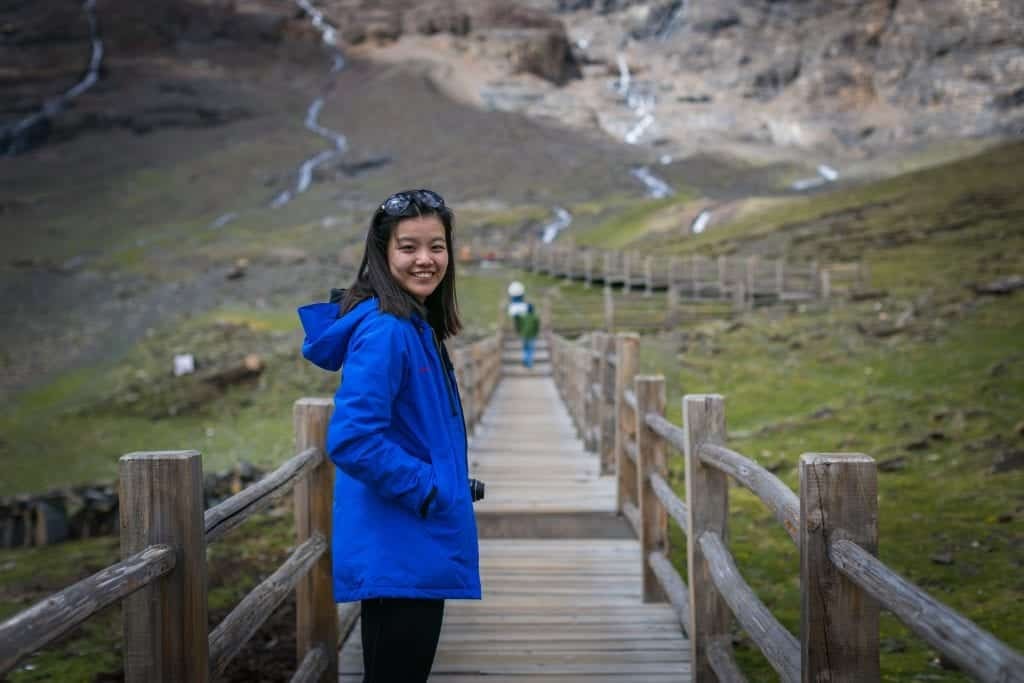
A Complete Guide to Tibet's Climate: Best Travel Seasons, Weather Patterns & What to Wear
When is the best time to visit Tibet? From climate analysis to seasonal attraction recommendations, plus plateau dressing tips, master Tibet's climate and the best travel seasons to help you find the perfect time to explore the Tibetan Plateau in depth.
Tibet, known as the "Roof of the World," captivates travellers with its snow-capped mountains, lakes, and rich Tibetan culture. The plateau's terrain creates magnificent scenery, but also poses unique climate challenges. Before setting off, understanding Tibet's climate characteristics and the best travel seasons will allow you to depart at the most suitable time, capture the most stunning plateau landscapes, and enjoy a comfortable and worry-free trip.
Tibet is located in southwestern China, at the core of the Qinghai-Tibet Plateau, with an average elevation exceeding 4,000 metres, earning it the title "Roof of the World." This plateau is surrounded by towering mountain ranges such as the Himalayas and the Kunlun Mountains, with dramatic and magnificent terrain, and is also the source of major river systems including the Yangtze and Yellow Rivers. Due to the high altitude and thin air, Tibet's oxygen levels are only 60-70% of those at sea level, requiring first-time visitors some time to acclimatise. In addition, the plateau climate is characterised by abundant sunshine year-round, extremely strong UV rays, and dry conditions—even in peak summer, the temperature difference between day and night can reach 10-20°C. Main Tourist Areas and Elevations
- Lhasa: approximately 3,650 metres above sea level, with relatively mild climate and long hours of sunshine year-round
- Shigatse: approximately 3,800 metres above sea level, with dry weather and larger temperature swings between morning and evening
- Namtso Lake: approximately 4,718 metres above sea level, with cooler lakeside temperatures and strong winds
- Everest Base Camp: approximately 5,200 metres above sea level, cold with thin air
Climate Characteristics
- Intense Sunshine: Long hours of sunshine year-round with a high UV index
- Dry Air: Low humidity—remember to stay hydrated and protect your skin
- Significant Temperature Swings: Warm during the day and cold at night, so pack clothing suitable for layering
- Risk of Altitude Sickness: Take it slow upon arrival and avoid strenuous activity
For travelers, understanding these geographical and climatic characteristics can help you choose the most suitable travel season and gear, ensuring you can comfortably and safely enjoy the plateau scenery every day in Tibet.
Due to its location on a plateau, Tibet's four seasons differ greatly from those of lowland areas. Sunshine hours are long throughout the year, UV rays are strong, the climate is dry, and rainfall is concentrated in summer. Each season has its own distinct character, so travelers can choose their travel time according to their preferences. Spring (March-May): In spring, Tibet's temperatures gradually warm up, ice and snow begin to melt, and flowers start blooming in valleys and cities. In particular, the peach blossom season in the Nyingchi region is a paradise for photography enthusiasts. However, mornings and evenings remain cold, so a jacket is essential.
- Average temperature: 5°C ~ 15°C
- Highlights: Blooming peach blossoms, clear skies, fewer tourists
Summer (June-August): Summer is the warmest time in Tibet and also the season with the highest oxygen content in the air, making it more friendly for first-time visitors to Tibet. During this time, lakes are full of water and grasslands are lush green, though brief afternoon showers are common.
- Average temperature: 10°C ~ 23°C
- Highlights: Peak travel season, high oxygen content in the air, the richest scenery
Autumn (September-October): Autumn weather is stable with high, clear skies offering excellent visibility, making it ideal for photographing snow-capped mountains and lakes. Golden grasslands interwoven with blue skies and white clouds create breathtaking scenes.
- Average temperature: 3°C ~ 18°C
- Highlights: Clear weather, soft lighting, the best season for photography
Winter (November-February): Winter is severely cold, with temperatures in some areas dropping below zero, but the air is dry and the sky is clear, making it a great time to admire snow-capped mountains. With fewer crowds in the off-season, it's suitable for travelers who enjoy quiet trips.
- Average temperature: -10°C ~ 8°C
- Highlights: Sparse tourist crowds, transparent skies, magnificent snow scenery
Tibet's Four-Season Climate & Travel Highlights
Season | Average Temperature | Rainfall | Highlights | Travel Popularity |
Spring (Mar-May) | 5°C~15°C | Light rainfall | Peach blossoms in bloom, warming weather | ★★★☆☆ |
Summer (Jun-Aug) | 10°C~23°C | Frequent rain (mostly in the afternoon) | Abundant lakes, lush green grasslands | ★★★★★ |
Autumn (Sep-Oct) | 3°C~18°C | Light rainfall | Soft light, golden scenery | ★★★★★ |
Winter (Nov-Feb) | -10°C~8°C | Light rainfall | Magnificent snow scenery, fewer tourists | ★★☆☆☆ |
Taking climate, scenery and overall travel experience into account, May to October is considered the best season to visit Tibet. Temperatures are relatively mild during this period, sunshine is abundant, and the scenery is richly layered, allowing you to enjoy snow mountains, lakes and grasslands all at once. May–June: Blossom Season and Fresh Early Summer
- The weather turns warmer, though some areas still retain patches of lingering snow
- Recommended sights: Nyingchi Peach Blossom Valley (March–April), Lhasa Old Town, Yamdrok Lake
- Highlights: Blossoms intertwine with snowy landscapes, perfect for photography and relaxed itineraries
July–August: Peak Plateau Season
- Summer temperatures are higher and air pressure is slightly elevated, making activities more comfortable for first-time visitors to Tibet, though altitude sickness should still be watched for
- Recommended sights: Namtso Lake, Everest Base Camp, Shigatse
- Highlights: Lakes are full, grasslands lush green, and skies deep blue, but watch out for afternoon showers
September–October: Golden Period for Photography
- Weather is stable, visibility is high, and the light is soft
- Recommended sights: Yamdrok Lake, Karola Glacier, Lhasa Old Town
- Highlights: Vivid colours, perfect for photographing snow mountain reflections and golden grasslands
November to March: Off-Peak Season
- Cold weather, some high-altitude areas may be closed off due to road blockages
- Recommended attractions: Winter Potala Palace, Winter Everest viewpoint
- Highlights: Fewer tourists, crystal-clear skies, magnificent snow scenery
💡 Quick Tip: If you want to balance comfort with crowd control, May-Juneor September-Octoberare ideal choices; if you prefer a lively atmosphere and lush green scenery, the peak season of July-August is a great option.
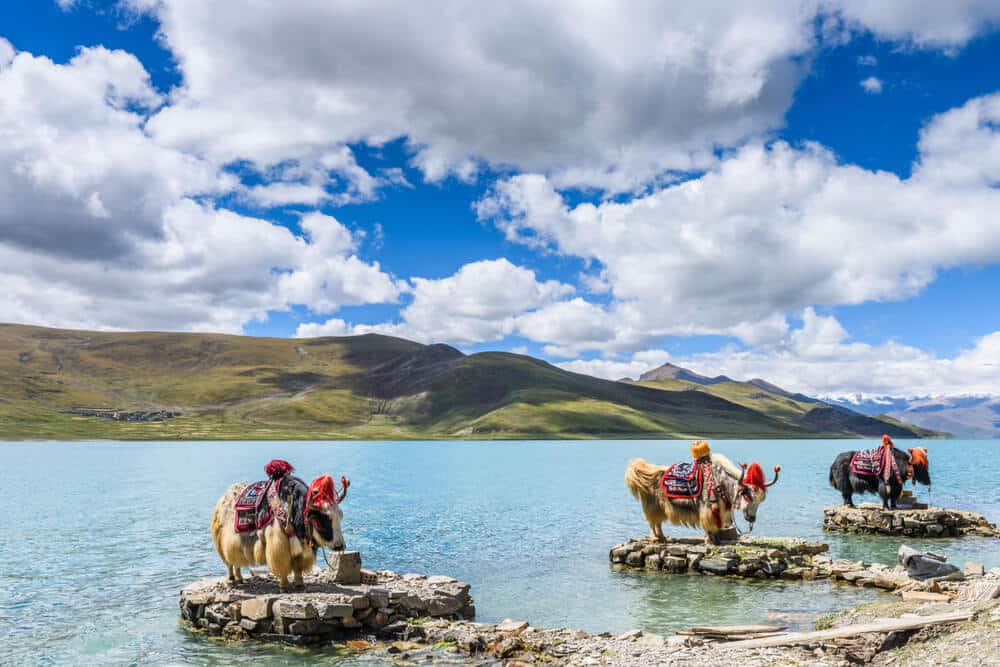
The surface of Yamdrok Lake is a crystal-clear turquoise, with cloud shadows and snow mountain reflections intertwining across the sky, showcasing the most enchanting colours of the plateau.
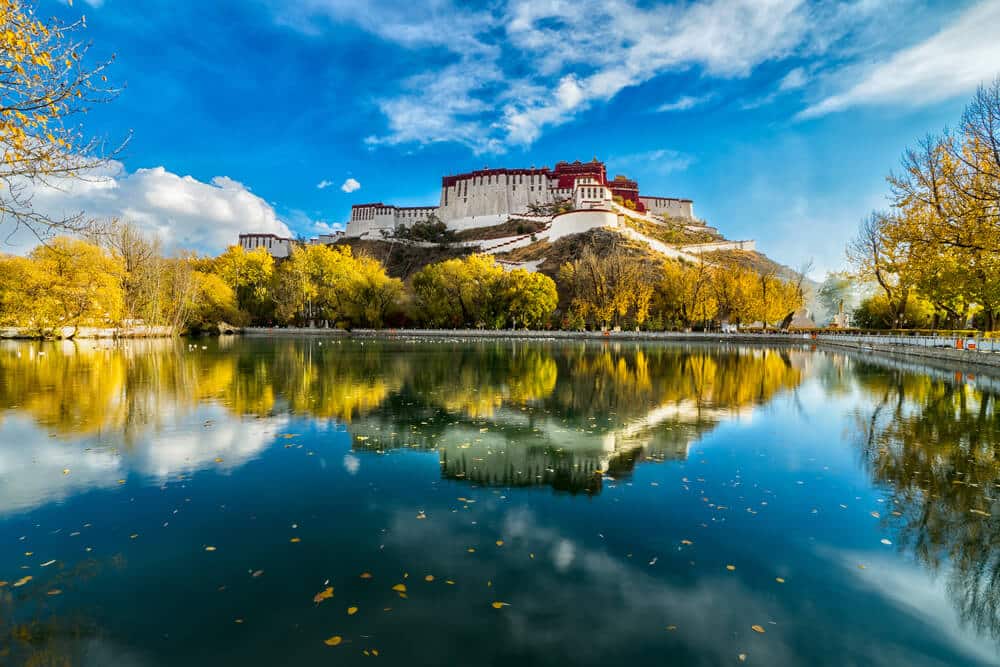
In autumn, the Potala Palace is surrounded by golden poplars and azure lakes, reflecting the palace's grandeur and the plateau's crystal-clear sky
Tibet sits on a plateau with a dry climate, intense UV rays, and large temperature swings between day and night — even on warm summer afternoons, mornings and nights remain cold. The right clothing and protection not only make your trip more comfortable but also help reduce the plateau climate's impact on your body. 1. Layer Up to Handle Temperature Swings
- Base layer: Moisture-wicking, breathable quick-dry clothing to keep your body dry
- Middle layer: Fleece or lightweight down jacket for warmth
- Outer layer: A windproof, waterproof jacket to guard against sudden mountain wind and rain
💡Quick Tip: Morning-to-night temperature differences can reach 10-20°C, so it's best to carry a jacket with you 2. Sun Protection & Skincare
- UV intensity is high — sun protection is needed even on cloudy days
- Essentials: SPF 50+ sunscreen, sunglasses, and a wide-brimmed or baseball cap
- Low humidity can cause dry, chapped skin, so bring moisturizer and lip balm
3. Footwear & Accessories
- Waterproof hiking boots or comfortable sports shoes to handle varied terrain
- Choose moisture-wicking socks to keep your feet from getting damp
- Gloves and scarves add extra warmth in autumn/winter or at higher altitudes
4. What to Do If You Experience Altitude Sickness
- Take it slow when you first arrive in Tibet and avoid strenuous activity
- Drink plenty of water, rest well, and carry a portable oxygen canister if needed

DeWonder Traveller's Outfit Tip: Be well-prepared for sun protection—bring sunglasses and a hat to cope with the plateau climate

DeWonder Traveller's Outfit Tip: Lightweight clothing and comfortable sports shoes are the most suitable attire for touring Tibet
No matter which season you plan to travel in, choosing the right itinerary and a professional team will make your plateau journey more reassuring and immersive. DeWonder's in-depth Tibet tours draw on years of high-altitude travel experience and local connections, not only arranging the most suitable routes for you in each season, but also bringing you into the daily life of Tibetans and letting you admire season-exclusive scenery—so you can truly experience the unique charm of Tibet in every season. Why Choose DeWonder?
- A Decade of Expertise: Specialising in in-depth Tibet tours since 2010, having co-organised study expeditions with the University of Hong Kong and led thousands of travellers to explore the snow-capped plateau.
- Pilgrimage and Faith: Walk along the ever-bustling Barkhor Street and watch monks debate scripture at Sera Monastery, drawing close to the spiritual power at the heart of Tibetan belief.
- Classic Route: Covering must-see landmarks such as Lhasa, Shigatse, Yamdrok Lake, and Namtso Lake, experiencing the very essence of Tibet in one trip.
- Exclusive Experience:Visit Tibetan homes as a guest and discover authentic Tibetan warmth and faith.
- In-Depth Local Interaction:Visit local families and experience the everyday life and cultural stories of Tibetans firsthand.
- Small Group Departures:An average of 8~14 people, a small yet refined group atmosphere, with a maximum of 16 people.
Whether it's peach blossoms against snow-capped mountains in spring, lush green grasslands in summer, golden lakesides in autumn, or crystal-clear snowscapes in winter, DeWonder can design an exclusive in-depth itinerary just for you. Want to learn more about Tibet itinerary planning and pre-trip preparations? Feel free to sign up for DeWonder's free information seminar. During the seminar, we'll cover itinerary details, permit applications, common questions, and travel tips 👉 Free Seminar: Click Here to Register 👉 Further Reading: Tibet Entry Regulations and Guide for Hong Kong, Macau, and Taiwan Residents 👉 Check out theFull-Year Tibet Tour Departure Schedule