
A Guide to Watching Black-necked Cranes: Exploring Bhutan's Gangtey Valley and the Black-necked Crane Festival
Every winter, black-necked cranes fly to Bhutan's Gangtey Valley to spend the season. This article takes you through the best spots and guidelines for crane-watching, while uncovering the cultural charm of the Black-necked Crane Festival.
Every winter, when black-necked cranes journey from distant Tibet across the Himalayas to land in Bhutan's tranquil Gangtey Valley, the entire valley bursts with vitality. These graceful migratory birds are not only travellers of the natural world, but also sacred symbols in the hearts of the Bhutanese. If you're planning a trip to Bhutan in November, the Black-necked Crane Festival is the perfect moment to experience the harmony between nature and culture. This article introduces the unique charm of the black-necked crane and how you can witness them for yourself in Bhutan.
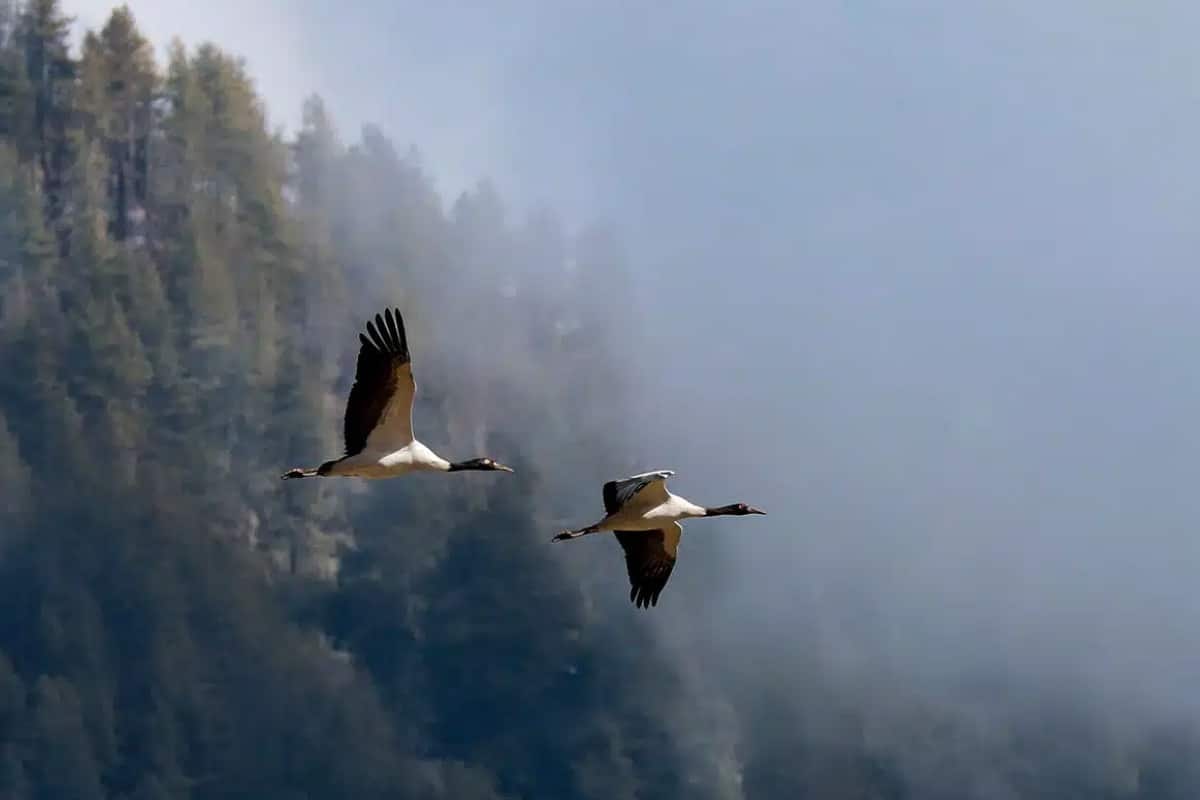
The black-necked crane is a rare high-altitude migratory bird found nowhere else in such numbers. Tall and elegant, with pristine white plumage and a striking ink-black neck and crown, they move with a graceful rhythm. Each autumn they migrate from the Qinghai-Tibet Plateau to Bhutan, returning north the following spring, becoming the most anticipated visitors of the winter season. To the Bhutanese, black-necked cranes are far more than birds. According to legend, when they arrive at Gangtey Monastery, they circle three times as if paying homage to Buddha, and are thus regarded as symbols of good fortune and sanctity. To this day, the Bhutanese still consider black-necked cranes as "messengers of nature," symbolising the balance between heaven and earth and the purity of the human heart.
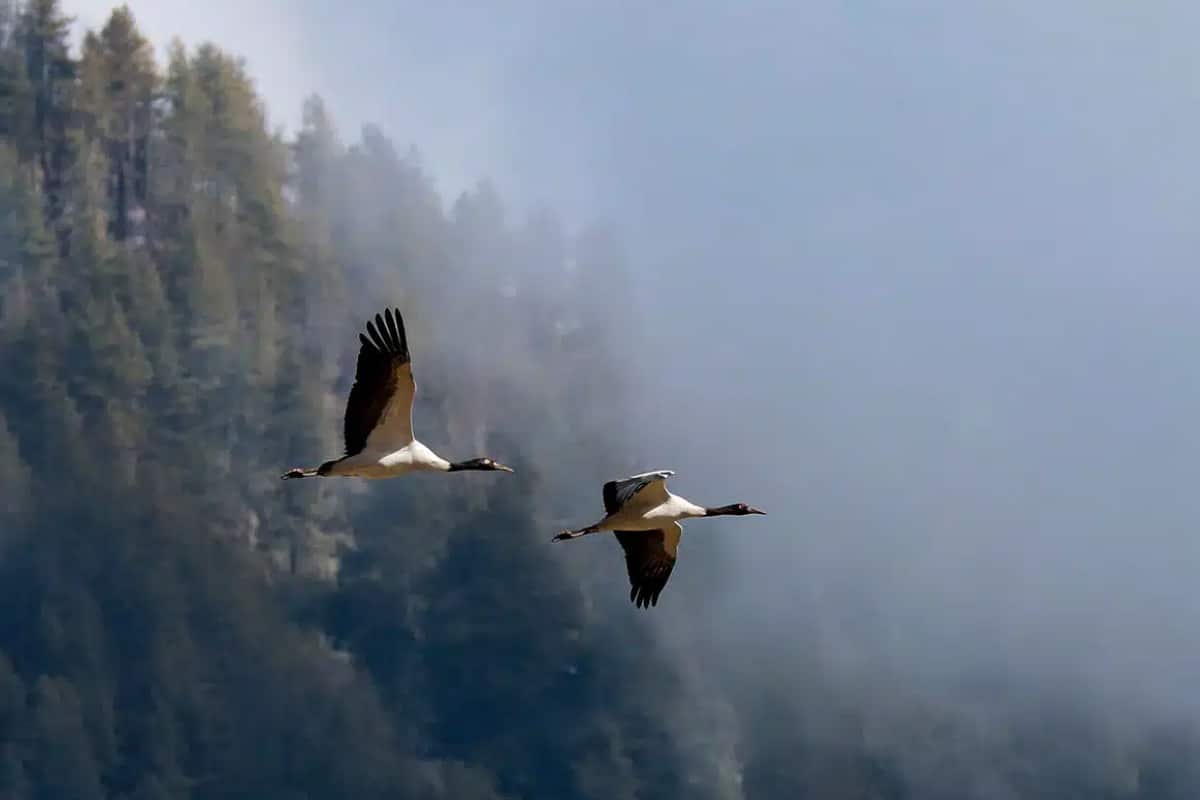
Black-necked cranes spread their wings across Bhutan's Gangtey Valley; arriving from Tibet every November, they are seen as symbols of good fortune and sanctity Beyond their cultural significance, black-necked cranes also hold great conservation value. They primarily inhabit Bhutan's Phobjikha Valley, a U-shaped glacial valley that remains almost untouched by modern development thanks to strict protection measures, where a sky full of stars greets you every night. It is precisely because of this that black-necked cranes can safely winter in this pristine land, while travellers can catch a glimpse of nature in its most original state.
Located in central Bhutan, Phobjikha Valley is a U-shaped valley carved by glacial erosion. There are no high-voltage power lines here, and development is strictly restricted, ensuring that black-necked cranes can winter safely in a natural, quiet environment.Every year, from November onwards, several hundred black-necked cranes fly here, staying until February the following year before returning north to Tibet, bringing vitality to the valley.
- Early November to Late February: This is the best period to see the black-necked cranes as they feed and rest in the valley.
- Mid-November: Coincides with the annual "Black-Necked Crane Festival", allowing you to experience both culture and nature at the same time. 👉 Further Reading:Introduction to Bhutanese Festivals: Black-Necked Crane Festival and Tshechu Festival
- Gangtey Monastery: The monastery's platform offers sweeping views over the entire valley, where black-necked cranes can often be seen circling in the sky.
- Gangtey Nature Trail: Taking about 1.5 hours in total, the trail winds through pine forests and grasslands, making it an ideal choice for combining hiking with birdwatching.
- Valley Bird-Watching Station: A dedicated viewing platform, perfect for use with binoculars or telephoto lenses.
Want to know what other must-visit spots in Bhutan there are besides Gangtey?👉 Further Reading:Must-Visit Attractions in Bhutan Viewing Spot Comparison
Viewing Spot | Features | Suitable For |
Gangtey Monastery | Black-necked cranes circling the monastery in flight, a sacred atmosphere | Travellers wanting to combine religion with nature |
Nature Trail | Easy hiking, experiencing the valley scenery up close | Families and travellers who enjoy slow travel |
Bird-Watching Station | A professional observation point, ideal for photography | Wildlife photographers and bird-watching enthusiasts |
The pristine purity and tranquillity of the Gangtey Valley is not only a haven for black-necked cranes, but also the perfect place for travellers to escape the hustle and bustle of the city and get close to nature.

Bhutan's Phobjikha Valley, thanks to strict development restrictions, has preserved its pristine natural environment, making it an important habitat for black-necked cranes every winter.
Every November, when black-necked cranes fly over the Himalayas from Tibet and arrive in Bhutan's Phobjikha Valley, the local people welcome them with the "Black-necked Crane Festival". Hosted by Gangtey Monastery, this festival has become one of Bhutan's most important cultural and natural celebrations.
In Bhutan, black-necked cranes are regarded as "birds of good fortune"—not only for their close ties to farming life, but also because legend holds that upon arriving at Gangtey, they circle the monastery three times as if paying homage to the Buddha. To express gratitude for and dedication to protecting nature, monks and villagers together founded the Black-necked Crane Festival.
- Traditional Dance and Monks' Blessings: Performers wear vibrant, colourful masks and perform dances symbolising blessings.
- Children's Crane Dance: Local schoolchildren dress in black and white costumes, mimicking the movements of the black-necked crane in a display both adorable and educational.
- Conservation Education: Through drama and exhibitions, the festival reminds people of the importance of protecting wetlands and wildlife.
- Community Festive Atmosphere: Beyond watching performances, visitors can join local markets, share food with the community, and experience the simplicity of village life.
Unlike Bhutan's other festivals, which centre mainly on Buddhist rituals, the Black-necked Crane Festival places greater emphasis on the coexistence of nature and humanity. It is not only a religious ceremony but also an occasion for ecological education and community bonding, allowing travellers to experience both cultural depth and the value of environmental conservation. Want to learn more about Bhutan's festivals?👉 Further Reading:Introduction to Bhutan's Festivals: Black-necked Crane Festival and Tshechu Festival
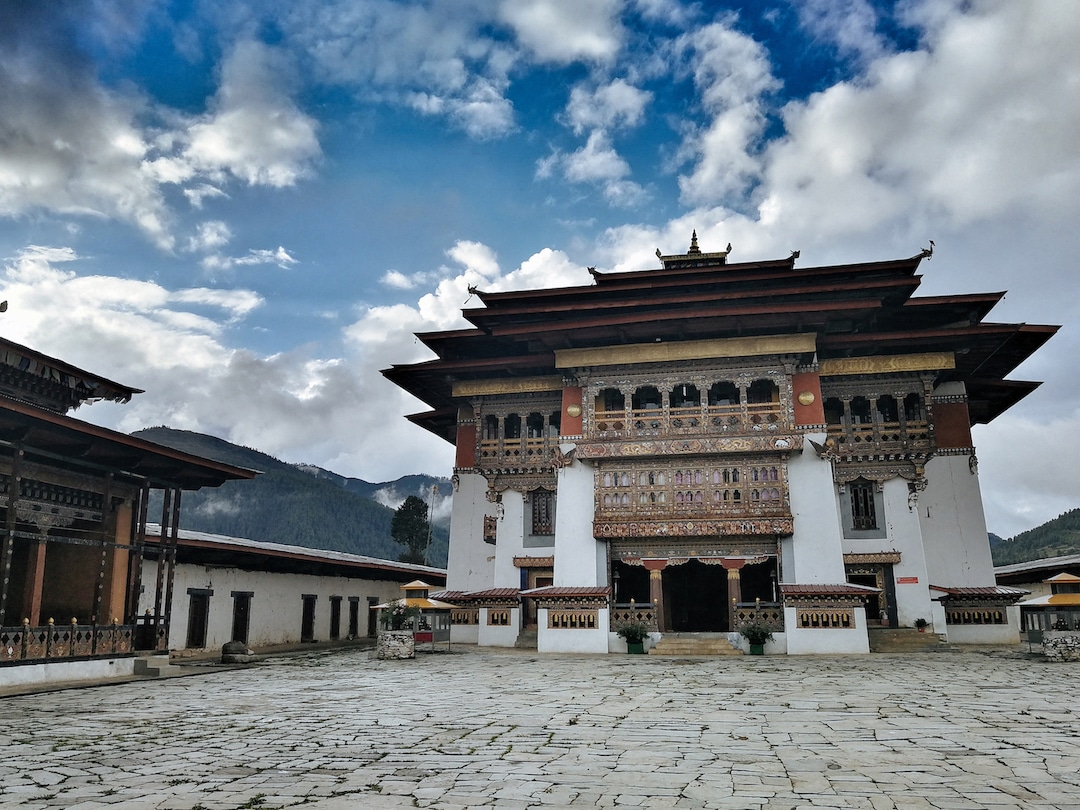
Gangtey Monastery, the main venue of the Black-necked Crane Festival. Every November, local monks and villagers gather here to welcome the arrival of the black-necked cranes, showcasing the harmony between humans and nature through dance and blessings.
The black-necked crane is an internationally protected bird species, and is regarded as a sacred symbol in Bhutan. Therefore, watching black-necked cranes in the Gangtey Valley is not merely "bird-watching", but an experience of respecting nature.
- Stay Quiet:Avoid loud noises or using megaphones, so as not to startle the birds.
- Do Not Feed:Black-necked cranes rely entirely on the valley's natural ecosystem for food; artificial feeding may disrupt the balance.
- Keep Your Distance:Even when using binoculars or telephoto cameras, maintain a safe distance and do not chase or approach the birds.
- Minimize Light Pollution:Avoid using flash when photographing, and turn off outdoor lighting as much as possible when staying overnight.
- Binoculars:The best tool for observing the fine details of the black-necked cranes' movements.
- Telephoto Camera:Ideal for photography enthusiasts to capture moments of flight.
- Warm Clothing: The valley sits at a high altitude, with significant temperature swings between day and night in winter.
- Non-Slip Shoes: The nature trails pass through grassy and muddy terrain, so watch your step for safety.
💡Quick Tips
- For accommodation, we recommend choosing hotels in the valley or around Gangtey Monastery — early morning and dusk are the prime times for spotting black-necked cranes.
- If you don't want to miss the highlights, consider joining a guide-led bird-watching activity for richer ecological knowledge and expert guidance.

Black-necked cranes quietly foraging in the Phobjikha Valley. Keep a respectful distance and stay quiet while observing, so these migratory birds can safely winter in Bhutan.
The Black-Necked Crane Festival is more than just an ecological celebration — it's also a chance to connect with local communities and gain deeper insight into Bhutanese culture. For many travelers, joining the festival is a "multi-layered experience": you can admire the graceful flight of the black-necked cranes while also feeling how the Bhutanese people express their reverence for nature through this celebration.
- During the festival, the Gangtey Valley fills with residents from nearby villages, dressed in traditional attire and bringing their whole families to join the celebration.
- Visitors have the chance to join villagers at the market, sample traditional Bhutanese snacks, and even take photos with local children.
- Watching the black-necked cranes against the backdrop of Gangtey Monastery creates an atmosphere where "nature meets the sacred."
- The monks' blessing dance echoes the arrival of the black-necked cranes, offering an intuitive experience of how the Bhutanese weave religious faith and natural ecology into one.
While attending the Black-Necked Crane Festival, you can also explore other iconic Bhutanese sites, such as:
- Taktshang Monastery (Tiger's Nest): A world-class monastery perched on a cliff, celebrated as a "must-visit sacred site."
- Punakha Dzong: Bhutan's most beautiful fortress-monastery, combining history and architecture.
- Paro Dzong: Home to a magnificent valley view, and also a filming location.
👉 Further Reading:Must-Visit Attractions in Bhutan A journey like this lets you not only "see" the black-necked cranes, but truly "experience" Bhutan's unique connection between nature and culture — becoming an unforgettable in-depth journey.
If you want the most effortless yet immersive way to experience the Black-Necked Crane Festival, joining the In-Depth Bhutan Black-Necked Crane Festival Tour designed by the DeWonder team is the best choice. This itinerary is specially arranged for November, the season when the black-necked cranes arrive, allowing you to not only experience the natural charm of the Gangtey Valley firsthand, but also fully participate in the Black-Necked Crane Festival celebrations. Trip Highlights
- Black-Necked Crane Festival Live Experience: Witness with your own eyes the black-necked cranes soaring above Gangtey Monastery, and join in the festive performances by monks and children.
- In-Depth Tour of Bhutan's Classic Sites: Including Paro Taktshang (Tiger's Nest), Punakha Dzong, and the Thimphu Buddha Dordenma, balancing nature and culture.
- Small-Group Design: An average of 8–14 people, maintaining comfort and space for interaction throughout the journey.
- All-Inclusive Arrangements: Including accommodation, meals, transportation, Bhutan visa, and professional guides, so you can fully immerse yourself in the journey.
Who Is This For?
- Travelers who want to combine birdwatching, eco-tourism, and cultural festivals in one trip
- Travelers who prefer niche, in-depth experiences over rushed sightseeing itineraries
- Travelers who want a worry-free journey with professional guides and thoughtful arrangements
This journey lets you do more than just "see" the black-necked cranes — it takes you into the story they share with the Bhutanese people, from nature to culture, from ecology to faith, bringing home an irreplaceable memory. 👉Check out theBhutan Year-Round Tour Schedule 👉Register for our free Bhutan online seminar to have your Bhutan travel questions answered: Sign Up Here 👉 Getting ready for Bhutan? We recommend reading thisComplete Bhutan Travel Guide 👉 Beyond Bhutanese festivals, discover more Bhutan cultural experiences: Top 5 Bhutan Cultural Experiences