
Arctic Aurora Guide: Best Viewing Seasons, Top Locations & Cruise Aurora-Chasing Experiences
Where exactly should you go to see the aurora, and when are you most likely to encounter it? This article guides you all the way from Northern Europe to Greenland, taking you deep into the polar region by cruise to witness the most magnificent aurora-lit night sky!
Chasing the aurora doesn't necessarily mean flying to Northern Europe. Deep within the Arctic Circle, when the mysterious green light dances across the light-pollution-free icy night sky, the impact is beyond anything you could imagine. This article will walk you through the formation of the aurora, the best viewing seasons, popular locations, and the most talked-about experience in recent years —the "Arctic Cruise Aurora-Chasing"— giving you a full picture of all the different ways to see the aurora.
The aurora is a natural light phenomenon caused by charged particles from solar wind entering Earth's magnetic field and colliding with oxygen and nitrogen in the upper atmosphere. These light beams mostly appear in the polar night sky, displaying dreamy shades of green, pink, and purple that shimmer like curtains in the darkness, earning it the nickname "fireworks of the sky." The Aurora Borealis refers specifically to the aurora in the Northern Hemisphere, mainly appearing inpolar regions north of 66 degrees latitude, including Greenland, Iceland, northern Norway, Finnish Lapland, Yukon in Canada, and Alaska. Compared to the Aurora Australis in the south, the Aurora Borealis is more accessible, with more well-developed viewing facilities, making it the top choice for aurora chasers around the world. 👉 If you're also interested in the magnificent ice fields and aurora wonders of Antarctica, feel free to read our[Antarctica Travel Guide], and explore the polar wonders at the other end of the earth.
The active period for the Arctic aurora is concentrated between September and March of the following year. During this time, the Arctic Circle experiences long nights and an active magnetosphere, making it the best time to chase the lights. Among these months, SeptemberandMarch are particularly favored by travelers, not only for the high aurora activity but also for the relatively stable climate, making them ideal for pairing with cruise or land-based itineraries. Quick Comparison of Aurora-Viewing Months
Month | Length of Darkness | Weather Stability | Activity Level | Recommended Regions | Notes |
September | Moderate | Stable | ★★★★☆ | Greenland, Iceland | Popular season for Arctic cruises |
October | Long | Gradually more humid | ★★★★☆ | Nordic aurora regions | Great for aurora viewing plus cultural experiences |
November | Longer | Cloudy and unstable | ★★☆☆☆ | Nordic interior | Itinerary flexibility required |
December | Longest | Frequent snowfall | ★★☆☆☆ | Nordic region and North America | High chance of cloud cover |
January | Long | Dry and cold | ★★★☆☆ | Canada, Finland | Ideal for stargazing and photography |
February | Long | Stable warming trend | ★★★★☆ | Suitable everywhere | Good weather, plenty of activities |
March | Moderate | Stable | ★★★★★ | Nordic region, Greenland | Daytime activities plus nighttime aurora |
The Northern Lights aren't found only deep within the polar regions — in fact, many countries and cities with convenient transport and well-developed facilities also let travellers chase the aurora with ease. Here are five of the most popular aurora-viewing regions. Whether you're a first-time aurora hunter or a seasoned photography enthusiast, you'll find the perfect option here:
Iceland is a destination where you can enjoy both the aurora and stunning natural landscapes. Although the city itself has a fair amount of light pollution, just a drive of a few dozen minutes takes you to remote areas like black sand beaches and volcanic geothermal valleys for aurora chasing. Weather changes quickly here, so a stay of 3–4 days is recommended to increase your chances of a sighting. Reykjavik is also the departure point for many Arctic cruise itineraries, making it ideal for extending your journey deeper into the polar region.

A church near Reykjavik, Iceland, silhouetted against a night sky woven with the Northern Lights — the first stop on the aurora-chasing journey for many Arctic travellers. Photo credit: Marek Piwnicki
Located at 69 degrees north latitude, Tromsø is celebrated as the "Capital of the Northern Lights." The aurora can already be seen from within the city itself, and you can also join a day tour to venture deeper into the fjords or surrounding countryside. The city offers a wealth of experiences, including guided aurora tours, sledding, and glass-igloo accommodation.
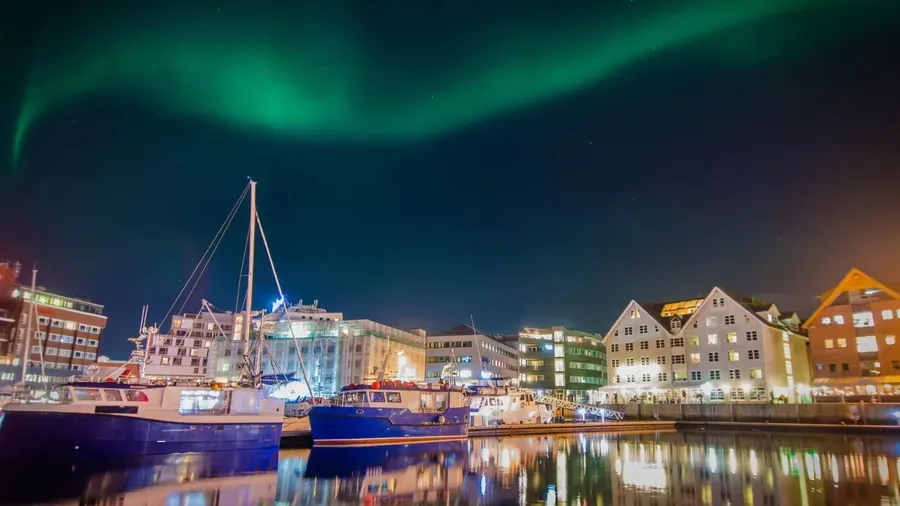
You can gaze up at the Northern Lights right from downtown Tromsø, making it one of the rare places where you can sip hot chocolate in your coat and still catch the aurora. Photo credit : reileycoyote
Covering areas such as Rovaniemi and Saariselkä, Lapland is a favourite choice for families and first-time aurora hunters. With diverse accommodation and comprehensive packages, you can even stay in a glass igloo under the northern lights and visit Santa Claus Village. Peak aurora season runs from September to March.
Sweden's northernmost city, far from light pollution and set against open terrain, is ideal for long observation and photography of the northern lights. Local experiences include ice hotels, mine adventures and dog-sledding, making it a perfect destination combining adventure with aurora viewing.
Located above the 60th parallel in northwestern Canada, with Whitehorse as its main base, Yukon offers stable weather, low cloud cover and minimal light pollution — making it one of the favourite long-exposure photography spots for aurora photographers. Perfect for travellers who love wilderness tranquility and outdoor activities.
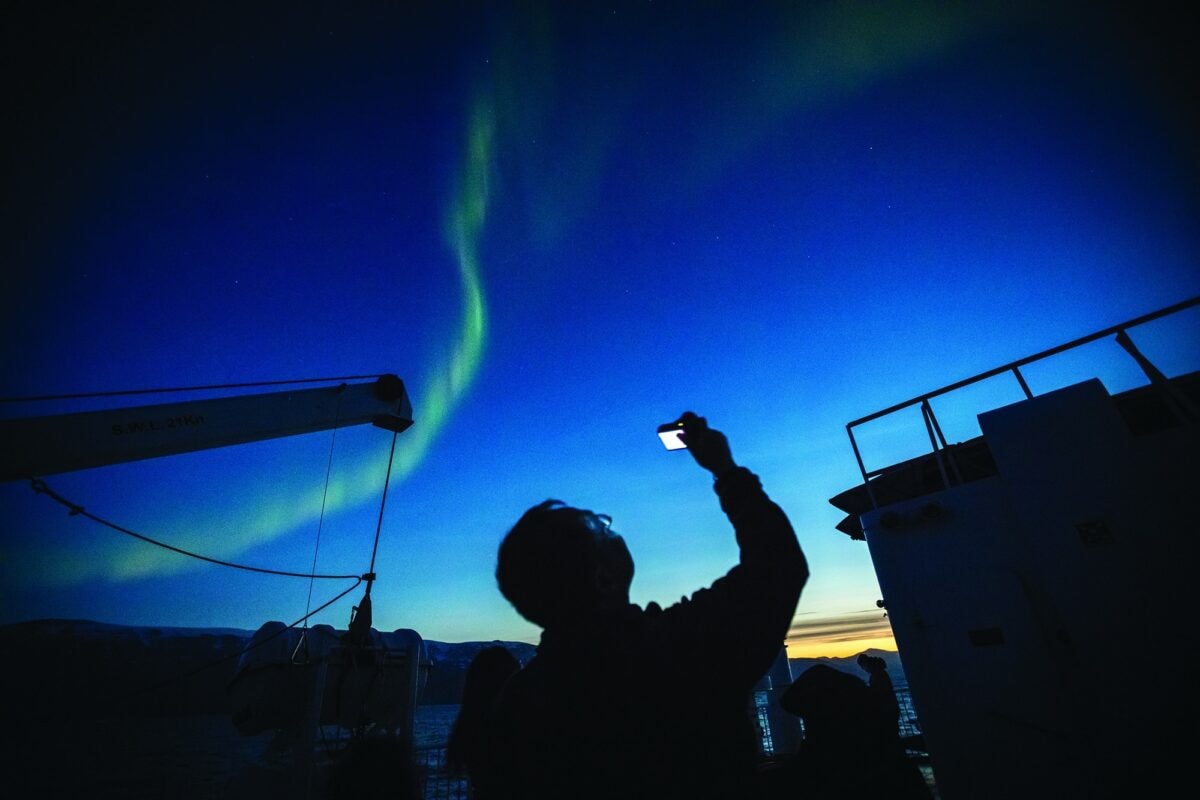
While most people chase the northern lights from cities, if you crave a purer, more breathtaking aurora scene, consider venturing deep into remote Arctic regions —a cruise can take you to Greenland's coastline, a place rarely reached by ordinary travellers. Every September, Arctic cruises departing from Reykjavik, Iceland, sail through the Denmark Strait into northeastern Greenland — an area with frequent aurora activity and no light pollution, one of the rare places where you can admire the northern lights and floating icebergs simultaneously at the boundary between sea and ice sheet. These in-depth Arctic cruises are popular not just for aurora viewing, but also because they combine:
- Zodiac landings, polar hiking, and photography guidance
- Onboard polar lectures and cultural tours
- Opportunities to encounter wildlife such as polar bears, muskoxen and seals
- Inuit cultural dining experiences
Depending on the itinerary, high-probability aurora viewing spots include: Ittoqqortoormiit village, Ella Island fjord, and the Botanikerbugt tundra ecological zone. With good weather, watching the northern lights from the deck at night will be one of the most awe-inspiring moments of the trip!
From Nordic cities to polar ice sheets, the northern lights always appear in the quietest yet most breathtaking way to those willing to wait. If you're ready to make this dream come true, consider venturing deep into Greenland for an Arctic journey combining natural wonders with cultural exploration.DeWonder Travel and our partner Quark Expeditions are experts in in-depth polar travel, trained at the Polar Academy, carefully selecting aurora viewing locations to help you embark on an unforgettable Arctic cruise in pursuit of the Northern Lights! 🚢 Learn more about the itinerary: Click to view Arctic Greenland Aurora In-Depth Tour 👉 Click to download【Detailed Itinerary Information Package】