
Arctic Climate Explained: The Best Travel Season and Clothing Guide for Greenland
Getting ready to head to the Arctic? This article walks you through Greenland's climate features, the best travel season, and clothing recommendations, helping you prepare for your polar adventure with ease!
When it comes to the Arctic, images of floating icebergs, aurora-lit night skies, or polar bears may come to mind. However, when it comes to actually planning an Arctic journey, one of the most representative destinations is actually "Greenland". As the world's largest island located within the Arctic Circle, it is not only the top port of call for polar expedition cruises, but also boasts diverse climate zones and rich natural ecosystems, making it a popular choice for viewing auroras, glaciers, and wildlife. This article will start with climate and seasons, summarizing the best time to visit Greenland and practical clothing advice, to help you prepare for a truly unforgettable Arctic adventure.
The Arctic Circle refers to the area north of 66.5° north latitude on Earth, encompassing the Arctic Ocean, northern Canada, Russia's northern coast, Norway's Svalbard archipelago, Greenland, Alaska, and other regions. This area experiences extreme climate year-round, with the midnight sun in summer and polar night in winter, making it one of the most unique climate zones on Earth. Within this vast polar region, Greenland is not only the largest landmass within the Arctic Circle, but also one of the most representative destinations for polar travel. Over 80% of its land lies within the Arctic Circle, and it is home to the world's second-largest ice sheet, with countless icebergs, fjords, and tundra along its coastline. It is also one of the few Arctic regions with an indigenous community—the Inuit. Today, most Arctic expeditions, cruise routes, photography tours, and aurora trips use northeastern Greenland as their main port of call and exploration area. Therefore, when we talk about "Arctic travel", we are, in most cases, actually referring to Greenland.
The Arctic Circle's climate is renowned for its extreme variability, with the "midnight sun" (24-hour daylight) in summer and prolonged "polar night" in winter, accompanied by temperatures dozens of degrees below zero and heavy snow and ice. Although Greenland is located at a high latitude, coastal areas can still reach 5–10°C in summer, making it especially suitable for adventure activities. According to the field experience of our partner Quark Expeditions , Greenland's peak travel season is concentrated between June and early October, with different months suited to different themes:
- June–August: Peak Season for Wildlife Watching and Glacier Exploration Summer is the most accessible time in Greenland, as sea ice melts and fjords open up, allowing travelers to explore magnificent glaciers up close via cruise ships and Zodiac boats, while observing polar bears, whales, walruses, and other Arctic animals in their natural habitats.
- September–Early October: Aurora and Autumn Scenery Coexist As daylight hours shorten and nights lengthen, the chances of seeing the aurora increase significantly. Cruises are still available during this period, but sea conditions can be a bit rougher, so it's advisable to choose a tour operator experienced in polar operations. Mid-September is considered the golden period where "wildlife watching" and "aurora viewing" overlap.

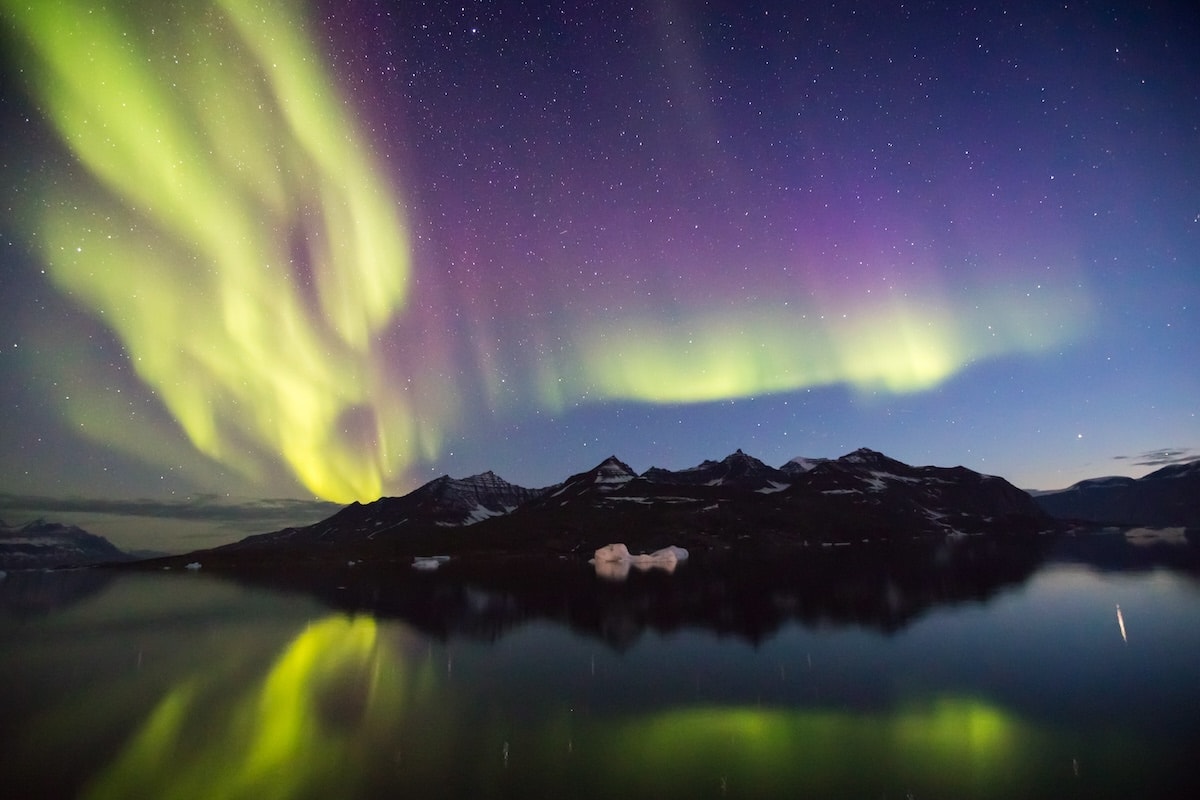
From September to early October each year is the ideal time to view the Northern Lights in the Arctic, when temperatures are still bearable — a window well worth seizing Here's a breakdown of highlights by month:
Month | Daylight / Temperature | Travel Highlights | Ideal Traveler Type |
June–August | Midnight sun, 5–10°C | Wildlife watching, glacier cruising, tundra bloom season | Photography and ecotourism enthusiasts |
September | Shortening daylight, 0–5°C | Northern Lights viewing, ice-field scenery, wildlife still visible | Travelers hoping to capture both wildlife and auroras |
Early October | Longer nights, approaching freeze-up | High chance of aurora sightings, transitioning into a tranquil winter landscape | Aurora chasers and those who love a crisp, wintry atmosphere |
In short: summer is best for active exploration and wildlife watching, while early autumn is the prime time to quietly savor the Northern Lights.Different seasons reveal different faces, and each is suited to different travel themes.
In polar travel, dressing right matters more than anything else. Whether you're watching wildlife in summer or chasing the Northern Lights in autumn, "onion-style layering" (multi-layer dressing) is always the safest and most flexible choice. Greenland's climate changes quickly, with strong winds and high humidity, so it's best to adjust your key gear according to the season. Summer (June–August) Clothing Recommendations:
- Base layer (moisture-wicking): quick-dry long sleeves, functional underwear
- Mid layer (insulation): lightweight down or fleece jacket
- Outer layer (windproof/waterproof): Gore-Tex jacket, waterproof pants
- Others: sun hat, sunglasses, sunscreen
📌 Although it's summer, temperatures still range between 5–10°C, and feel even colder in strong winds. Be sure to dress fully for sea excursions or shore landings. Autumn (September–October) Clothing Recommendations:
- Base layer: high-insulation thermal wear, thick socks
- Mid layer: down jacket or fleece set
- Outer layer: enhanced windproof/waterproof jacket, waterproof gloves, and a warm hat
- Other: head cover or neck gaiter (to block cold wind), ice-grip shoe covers (if glacier landings are involved)
📌 Nighttime aurora viewing often requires long periods of waiting outdoors, so it's recommended to bring a thermos and hand warmers, and take care to keep moisture out. Recommended Packing List:
Category | Recommended Items |
Basic Clothing | Thermal underwear, quick-dry clothing, thick socks, insulated coat, waterproof pants |
Protective Gear | Windproof and waterproof jacket, sunscreen, insect repellent, sunglasses |
Accessories | Gloves, wool hat, neck gaiter, hand warmers, thermos |
Special Needs | Camera protective case, portable power bank (batteries drain faster in low temperatures), small waterproof bag |
Now that you understand the Arctic's climate and seasons, if you're keen to dive deeper into polar travel, the following extended readings will help you plan an even more complete trip:
- Arctic Aurora Viewing Season & Guide : Click here to read more
- Arctic & Greenland Wildlife Spotting Guide : Polar Bear Viewing Guide、Arctic Whale & Seal Viewing Guide
- Arctic Greenland Attractions : Click here to read more
Ready to set sail? Join DeWonder Travel's Arctic cruise journey and experience the majesty of the world's end for yourself Every September to October is the golden window for heading to Greenland to explore the auroras and icy plains.WeQuark Expeditions have jointly crafted an in-depth Arctic journey combining comfortable cruise accommodations with expert polar guides, taking you across the Arctic Circle to observe wildlife up close beneath majestic fjords and tranquil ice sheets, marvel at the Northern Lights, and immerse yourself in Inuit culture and tundra ecology. 🚢 Learn more about the itinerary: Click here to view Arctic Greenland Aurora In-Depth Tour 👉 Click here to download【Detailed Itinerary Information Pack】