
Arctic Greenland Wildlife Watching Experience: Polar Encounters with Whales, Seals & Muskoxen
Explore the wildlife of Greenland and the Arctic — from whales and walruses to muskoxen — and enjoy up-close encounters aboard cruise ships and Zodiac boats.
When people think of the Arctic, the first image that usually comes to mind is the polar bear. But when sailing through Greenland and the Denmark Strait, you may also encounter many other remarkable polar creatures: whales breaching the surface, seals basking lazily on ice floes, muskoxen grazing peacefully across the tundra, and even snowy owls soaring above the icy landscape. These are real wild animals — not viewed “through glass” at a zoo. By exploring aboard a cruise ship and Zodiac boats, you can experience them up close in their natural habitat.
Along the northeastern coast of Greenland and through the Denmark Strait, encountering wildlife is one of the most anticipated highlights of the journey. According to the World Wildlife Fund (WWF), the Arctic is an important habitat for whales, seals, snowy owls, and many other polar species; meanwhile, the IUCN Red List of Threatened Species notes that although narwhals and bowhead whales are currently classified as “Least Concern,” their habitats remain affected by climate change, with research showing that their sighting frequency and behavior continue to shift. Of course, the most iconic Arctic animal remains the polar bear. We’ve already published a dedicated article covering its ecology and viewing tips — interested readers can explore further here 👉 The Complete Guide to Polar Bear Watching. Below is a list of other animals you may have the chance to observe during your Arctic journey, besides polar bears:
Animal | Characteristics | Possible Viewing Locations |
Bowhead Whale | The longest-living mammal, with a lifespan of over 200 years and a body length of up to 18 metres | Denmark Strait, Greenland waters |
Beluga Whale | The "Canary of the Sea", known for its varied and distinctive calls | Northeast coast of Greenland |
Narwhal | The legendary "unicorn whale", with males possessing tusks up to 3 metres long | Certain waters of Greenland (rarer sightings) |
Ringed Seal | The smallest seal in the Arctic, marked with distinctive ring-shaped patterns | Greenland coastline, sea ice |
Harp Seal | Medium-sized, with a distinctive black harp-shaped marking on its coat | Greenland coastline |
Hooded Seal | Males have a unique inflatable nasal sac used for courtship displays | Greenland coastline, sea ice |
Bearded Seal | Large-bodied with long, thick whiskers, often resting on sea ice | Greenland coastline |
Walrus | Impressive tusks, often gathering in groups on sea ice or along the shore | Northeast coast of Greenland |
Muskox | The largest herbivore on the Arctic tundra, with a shaggy coat and a habit of foraging in herds | Northeast Greenland tundra |
Snowy Owl | Covered in pure white feathers, sometimes with black markings, symbolising the Arctic wilderness | Commonly seen on Greenland's tundra during the breeding season |
Seabird Flocks | Including Arctic terns, gulls, and others, gathering in vast numbers | Denmark Strait, Greenland fjords |

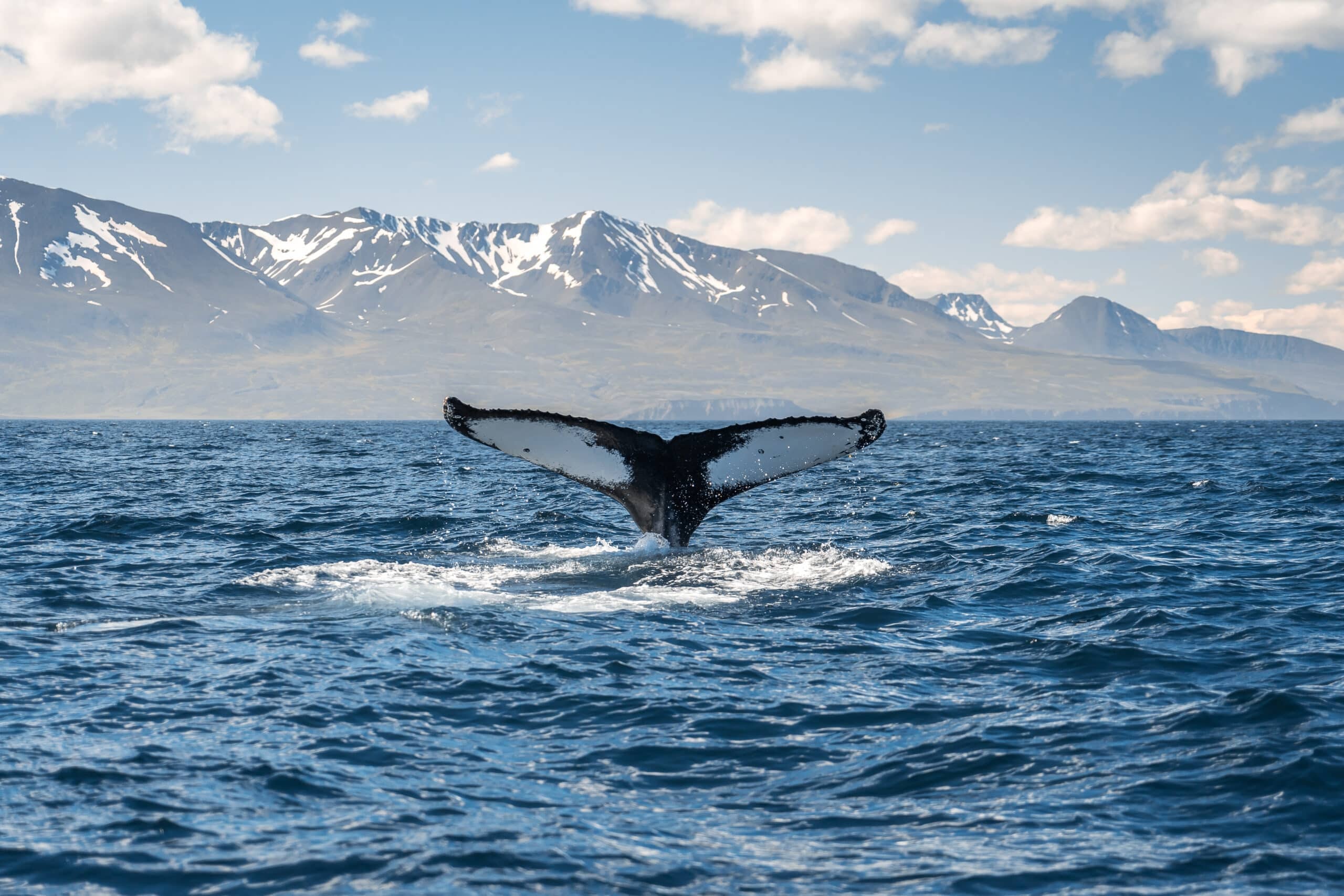
The humpback whale is a common cetacean species in Arctic waters, migrating to Greenland's waters in summer to feed.

When approaching sea ice by Zodiac, you'll often spot walruses lazily resting — an unforgettable wildlife encounter on any Arctic journey.
In the vast expanse of the Arctic, simply gazing from the deck isn't enough to truly step into the animals' world. Most Arctic expeditions combine cruise sailing with Zodiac boat exploration, allowing travellers to get close to wildlife from different perspectives
- The Advantage of the Cruise Ship: The ship offers a comfortable, safe environment for sailing long distances between waters and glaciers. From the deck, you can often spot distant whale spouts or flocks of seabirds gliding across the sky.
- The Charm of the Zodiac Boat: These agile small boats can venture deep into fjords and pack ice, giving you the chance to observe seals resting on ice floes up close, or even spot muskoxen on the tundra in the distance. These are experiences that large vessels simply cannot offer.
- Expert Guides and an Intimate Group Atmosphere: Every Zodiac is accompanied by a professional guide who points out wildlife in real time and explains their behaviour. The small-group atmosphere also makes for quieter, more intimate encounters with nature.

Zodiac inflatable boats let travelers venture deep into fjords and ice floes that large ships simply cannot reach, offering an up-close encounter with the Arctic's magnificent glacial landscapes and wildlife habitats.
The Arctic ecosystem shifts dramatically with the seasons, and the animals you'll encounter depend heavily on when you visit. Generally speaking, summer through early autumn offers the best wildlife-viewing opportunities:
- Summer (June–August): The midnight sun bathes the Arctic in 24-hour daylight, making this the peak period for animal activity. Whales can be seen breaching at the surface, seals gather in groups resting on ice floes, and on land you may encounter muskoxen and snowy owls. Summer is also breeding season for many migratory birds, making it an excellent time for bird photography.
- Early Autumn (September): Although daylight hours begin to shorten, animals remain active, and as temperatures cool and ice floes expand, wildlife tends to cluster in specific waters, making them easier to observe. Notably, September also offers the rare chance to witness both the Northern Lights and wildlife together—a season of double delights.
Want to learn more about the best seasons and tips for viewing the Northern Lights? 👉 Further Reading: Arctic Northern Lights Guide
Season | Wildlife Highlights | Special Experiences |
Summer (June–August) | Whales, seals, muskoxen, snowy owls, migratory bird flocks | 24-hour midnight sun, breeding season activity at its liveliest |
Early Autumn (September) | Whale pods, walruses, seals, muskoxen | First appearance of the Aurora, allowing you to enjoy wildlife and Northern Lights together |
Capturing the Arctic's animals in their most natural moments takes more than just luck—it also requires some know-how. Here are a few practical tips to help enhance your wildlife-watching experience:
- Bring the Right Photography Gear Photography enthusiasts are advised to bring a telephoto lens (200mm or above) or binoculars to capture distant animals with ease. If you're only using a phone, attaching a telephoto lens attachment can greatly improve your results.
- Stay Quiet and Respect the Wildlife Arctic animals are sensitive to noise, so observing quietly not only minimizes disturbance but also makes it easier to witness their natural interactions.
- Be Patient and Stay Ready Wildlife sightings often happen when you least expect them, so it's best to keep your camera settings adjusted and ready at all times so you don't miss a magical moment.
- Follow the Guidance of Professional Guides Guides are familiar with the local ecology and know where you're most likely to encounter wildlife. Following them is not only safer but also increases your chances of spotting rare species.
👉 Further Reading: Arctic Photography Guide

Standing on the deck of a cruise ship, capturing the glaciers and polar scenery before you with your camera is one of the most treasured memories of an Arctic voyage
If you wish to turn these wildlife encounters into real memories, the best way is to join the professional Arctic in-depth tour co-created by DeWonder and Quark Expeditions . Through small-group arrangements, you'll not only get closer to wildlife during cruise and Zodiac excursions, but also gain deeper insight into their role in the polar ecosystem through expert guide commentary. Beyond wildlife watching, an Arctic journey may also bring you the aurora, magnificent glaciers, and encounters with Inuit culture, making the trip even more complete. This is not just a trip—it's an unforgettable experience of witnessing the Arctic's vitality with your own eyes.
- Departing fromReykjavik, Iceland, crossing the Denmark Strait to venture deep intothe fjords of Northeast Greenland
- Daily Zodiac landings to explore glaciers, Arctic villages, and wildlife such as polar bears
- June–September is the golden season for bear-watching, whileSeptember offers the best chance to see the Northern Lights — satisfy both aurora and wildlife exploration in one trip 👉Click here to download the itinerary PDF
- Gather inHelsinki, Finland, then take a charter flight toLongyearbyen to board the ship
- Explore the region with the world'shighest density of polar bears, discovering glaciers and wildlife under the midnight sun
- Flexible itinerary design, adjusted in real time based on animal sightings and sea conditions 👉 Click here to download the itinerary PDF
👉 View theFull-Year Arctic Departure Schedule 👉 Join our free online seminarand enjoysavings of up to HK$28,000! 👉What other must-visit spots does the Arctic have? See more ofGreenland's Three Hidden Gems