
Bhutan Packing List (What to Pack): An Expert-Curated Pre-Trip Preparation Guide
What should you pack for a trip to Bhutan? We've put together a complete packing list — from clothing and documents to helpful tips — to help you prepare for your journey in one go.
Getting ready for your trip to Bhutan but not sure what to pack? This Bhutan Packing List (Bhutan What to Pack) will help you quickly master the essentials — from clothing and documents to electronics and handy tips — all compiled from our years of tour-leading experience. Whether you're a first-time visitor to Bhutan or a seasoned traveller returning for another trip, this list will make your pre-trip preparation effortless.
Although Bhutan is small in size, its geography and cultural characteristics make packing quite different from a typical Asian trip:
- Ever-Changing Mountain Climate: Temperatures can swing dramatically between day and night, especially in high-altitude areas like Paro and Gangtey — bright sunshine during the day can give way to near-freezing temperatures after dark.
- Strict Religious and Cultural Dress Codes: When visiting temples and dzongs, attire must be modest — shorts and sleeveless tops are not allowed
- Limited Internet and Electricity: Some valleys and villages have unstable network signals and occasional power outages, so bringing a power bank and a universal adapter is essential.
💡Tip:For a clearer picture of Bhutan's seasonal climate and the best months to visit, check out our related article: Best Time to Visit Bhutan
Breathable clothing is recommended for daytime, while a warm jacket is needed at night. Long sleeves, long trousers, or long skirts are required when visiting temples and dzongs.

Light clothing and layered dressing are the most suitable attire for a Bhutan trip
Bhutan's official currency is the Ngultrum (BTN), which is pegged to the Indian Rupee. 💰 Recommended currency exchange method:
- It's difficult to exchange for BTN directly in Hong Kong or Taiwan, so the most practical approach is to prepare US Dollars (USD) and exchange them after arriving in Bhutan.
- USD can be easily exchanged at banks or hotels in Bhutan.
- Credit cards are only accepted at some hotels and shops in major cities (such as Thimphu and Paro); small towns and villages accept cash almost exclusively.
👉 Expert tip: carry small amounts of cash (BTN) with you for convenience when tipping, shopping, or making temple donations.
Cities have signal, but mountainous areas frequently lose connection.You can buy a local SIM card (B-Mobile/TashiCell). Hotel Wi-Fi is generally available.
Passport (valid for at least 6 months), visa, travel insurance (medical coverage recommended). 👉Not sure how to apply for a Bhutan visa? Check out this article: Bhutan Visa Guide
The round-trip hike to Tiger's Nest takes about 5–6 hours and is of moderate difficulty. Hiking boots are recommended, along with rain gear and a lightweight backpack. 👉 If you'd rather not walk the whole way, you can choose to ride a horse up the mountain (one way), at a cost of about USD 40–50, payable by yourself. The descent must be done on foot.

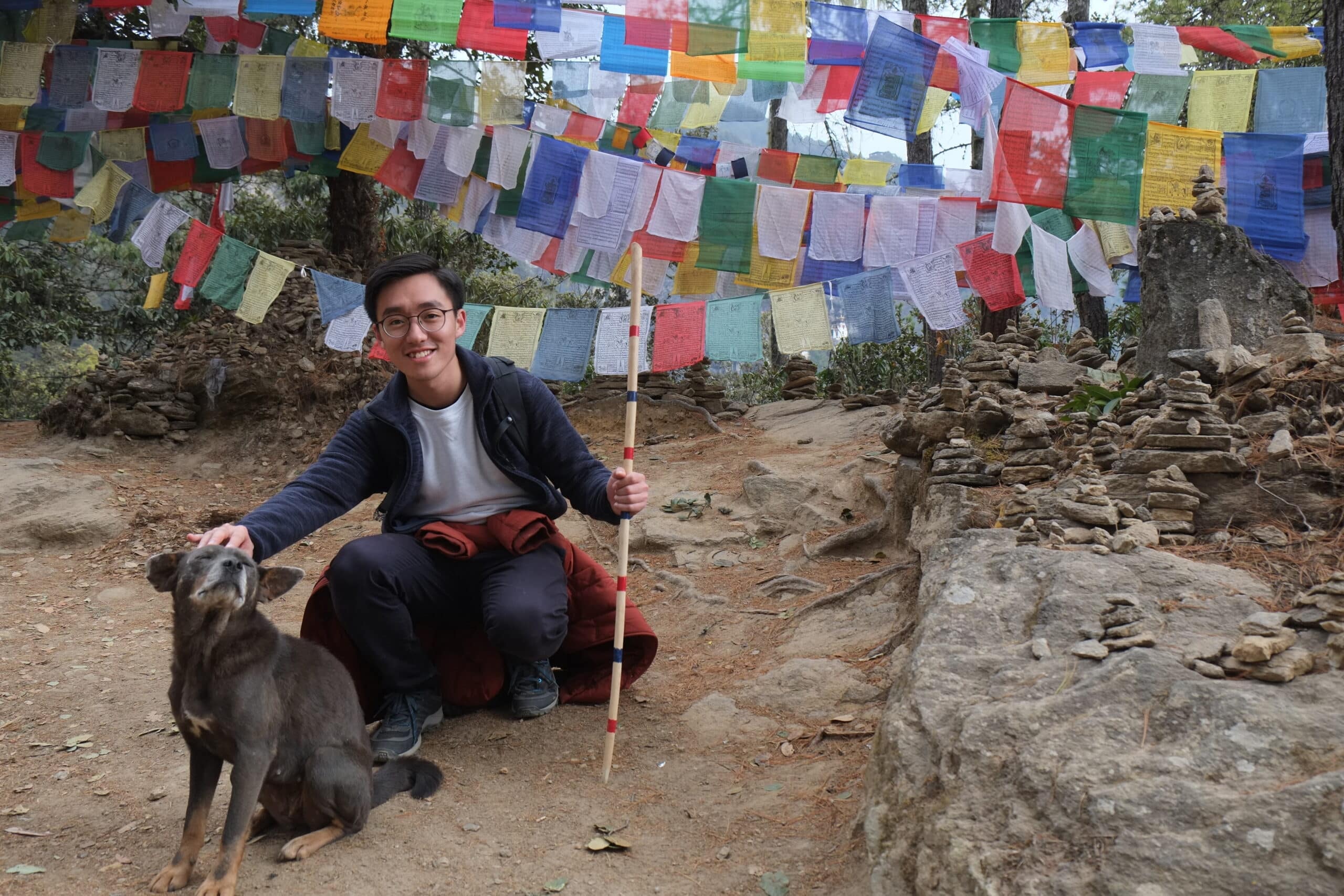
DeWonder travelers' outfit tips: A lightweight backpack, comfortable hiking shoes, and layered windproof or down jackets are the best combination for hiking in Bhutan during winter
Be sure to bring basic medications (for stomach issues, colds), and pack nuts or energy bars for long car rides.
Bhutan's voltage is 230V, 50Hz. Common plug types include:
- Type D: Three round pins arranged in a triangle (common in India and Bhutan).
- Type F: Two round pins with two grounding contacts on the sides (common in Europe).
- Type G: Three rectangular pins arranged in an inverted triangle (common in the UK and Hong Kong).
👉 We recommend bringing a universal adapter, so you won't need to worry about different plug types. 👉 Don't forget a power bank: some areas may occasionally experience power outages, so having backup battery power is essential.
To make packing easier, we've organized the Bhutan packing list into several main categories so you can pack according to the checklist:
Category | Essential Items | Tips |
Clothing | Lightweight long sleeves, down jacket, rain gear, hiking shoes, modest attire for temples | Large day-night temperature difference; sleeveless tops and shorts strictly forbidden in temples |
Documents | Passport (valid for 6 months), visa (arranged by the tour group), travel insurance | Please confirm you've purchased valid insurance before departure |
Electronics | Mobile phone, camera, universal adapter, power bank, offline maps | Signal is unstable in mountainous areas, so we recommend downloading maps in advance |
Medicine & Health | Stomach medicine, cold medicine, painkillers, sunscreen | Given the high-altitude climate, we recommend carrying an insulated water bottle |
Hiking Gear | Lightweight backpack, hiking shoes, hat, rain gear | The Tiger's Nest Monastery hike takes 5–6 hours |
Others | Cash (exchange USD for BTN), snacks (nuts, energy bars) | Credit cards are not widely accepted, so please prepare small amounts of cash |
Over years of leading tours, the DeWonder team has gathered plenty of on-the-ground experience and traveller feedback. Here are the most commonly overlooked yet crucial reminders we've compiled:
- Don't underestimate the temperature swings: Many travellers assume spring and autumn weather is mild, but in reality, valley towns like Gangtey or Paro can see nighttime temperatures drop below 10°C. Some travellers who only packed a thin jacket ended up too cold to sleep — so a down jacket is essential.
- Pay special attention to temple attire: Some travellers wore long skirts or trousers that were considered disrespectful by locals due to being too fitted or worn. We recommend preparing a modest outfit specifically for temple visits to avoid awkward situations on the spot.
- Small cash denominations matter: In Bhutan, cash is nearly irreplaceable for temple donations, tips, or everyday shopping. Many travellers initially exchange only large notes and later find them inconvenient. We suggest preparing plenty of small-denomination notes when exchanging currency.
- Internet access isn't always reliable: Even with a local SIM card, mountainous or remote areas may have no signal at all. Some travellers who relied too heavily on real-time translation or navigation apps ran into difficulties, so we always remind everyone to download offline maps before departure, and to take screenshots of important information.
- Pace yourself on the Tiger's Nest hike: The Tiger's Nest hike takes about 3 hours one way, or 5–6 hours round trip, which is a real challenge for many. If you're concerned about your fitness, you can consider hiring a horse for the ascent (USD 40–50) at your own expense — but note that the descent must always be done on foot.
These tips may seem like small details, but they can greatly improve your comfort during the trip and help you avoid unexpected inconveniences along the way.

During the Tiger's Nest hike, you can choose to ride a horse up the mountain at your own expense — a worthwhile option for travellers who want to conserve energy while still experiencing the mountain on horseback
Having completed your packing list, you've taken the first step in preparing for your Bhutan journey. For more comprehensive trip planning, the following resources will help you dive deeper:
- Bhutan Travel Guide Overview : The most complete introductory guide to Bhutan, from itinerary planning to important notes.
- Best Time to Visit Bhutan : Want to know the best time to visit Bhutan? This article tells you about the climate and clothing recommendations for each month.
- Must-Visit Attractions in Bhutan : A complete look at highlights such as Tiger's Nest Monastery hiking, Punakha Suspension Bridge, Gangtey Valley and more
- Bhutan Transportation Guide : A summary of flights from Hong Kong to Bhutan and local transportation options
- Bhutanese Cuisine: Discover the must-try local specialties when visiting Bhutan
- Bhutanese Cultural Experiences : Five recommended ways to deeply experience Bhutanese culture
📌 A quick reminder before your trip: while a packing list can help you avoid missing items, what truly makes a journey unforgettable is often the itinerary design and expert guidance. If you're looking for a safer, more in-depth Bhutan experience, feel free to check out our 【In-Depth Bhutan Tour】exclusive itinerary. 👉Check out theBhutan Year-Round Departure Schedule 👉Sign up for free for the Bhutan online seminar, where we answer more of your questions about traveling to Bhutan : Click here to register