
Bhutan vs Tibet: How Does Tibetan Buddhism Shape Daily Life? A Cultural Comparison and Travel Guide
Bhutan and Tibet both embrace Tibetan Buddhism, yet each reveals a distinct landscape of lifestyle and cultural character. From prayer flags and festivals to spiritual practice and art, we compare how faith is woven into daily life in both places, helping you find the spiritual journey that suits you best.
On either side of the Himalayas, Bhutan and Tibet share the same faith—Tibetan Buddhism—yet present two entirely different rhythms of life and cultural landscapes. Some say Bhutan's faith is a form of "mindful daily practice," while Tibet's faith is a "grand pilgrimage of the soul." This article takes a religious and cultural perspective to explore how Tibetan Buddhism has permeated daily life, festivals, and architecture in both places, helping you find the journey closest to your own spirit.
Tibetan Buddhism originated in Tibet, blending the ancient Bon religion (Tibet's early indigenous faith) with Indian Buddhist thought. This faith was never confined to temples alone—it took root deeply in mountains, daily life, and festivals. In the 8th century CE, the great master Guru Padmasambhava brought Buddhism to Bhutan, allowing both regions to develop their own distinctive styles of practice within the same spiritual lineage. In Bhutan, Buddhism and monarchy complement one another, with the Drukpa Kagyu lineage forming the core of spiritual and social order; while in Tibet, the Gelug school established a rigorous system of discipline and scholarship, forming a religious society centered on monastic institutions.
School | Region of Lineage | Practice Characteristics | Social Atmosphere |
Drukpa Kagyu | Bhutan | Emphasizes meditation and inner awakening, focusing on personal practice and compassion | Integrated into daily life and governance philosophy, symbolizing a happiness philosophy of "ruling with virtue" |
Gelug | Tibet | Emphasizes discipline, debate, and rational inquiry, valuing scholarship alongside practice | Became the core of monastic institutions and religious authority, influencing the operation of the entire society |
This divergence has given the same Tibetan Buddhism two entirely different appearances in each place: Bhutan's faith is gentle and serene, woven into everyday life; Tibet's faith is solemn and magnificent, standing as a pillar of the soul.

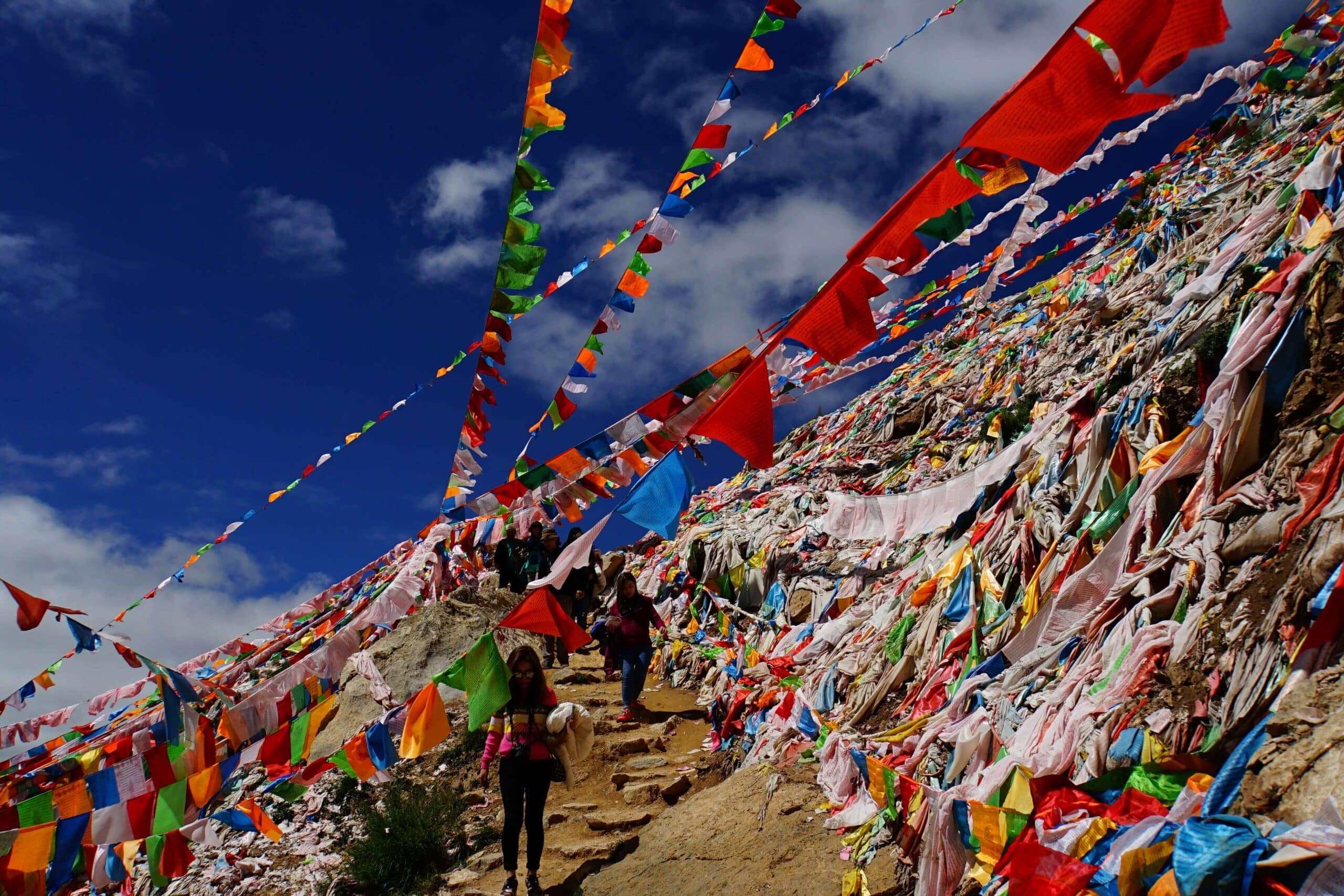
Tibetan Buddhist prayer flags symbolize blessings and good wishes, a common symbol of faith in both Tibet and Bhutan.
Bhutan is one of the few nations to make Buddhism a core national value. The Drukpa Kagyu faith permeates people's daily lives and social systems, forming a lifestyle attitude in which "cultivating the mind is the foundation of happiness." Below are several representative aspects of how faith is woven into daily life in Bhutan:
- Every household keeps a shrine, offering incense, chanting scriptures, and praying for blessings each day.
- Prayer wheels and prayer flags are common ways of making wishes, symbolizing good intentions carried by the wind.
- Monks play an important role in the community, presiding over rituals, blessing new homes, and educating the next generation.
- A Dzong is a building that serves both administrative and religious purposes—it is not only a government institution but also a place of monastic practice.
- This design reflects the concept of "the coexistence of royal authority and Buddhist dharma": governance rooted in compassion, and religion devoted to serving society.
- Representative buildings: Punakha Dzong and Thimphu Dzong.
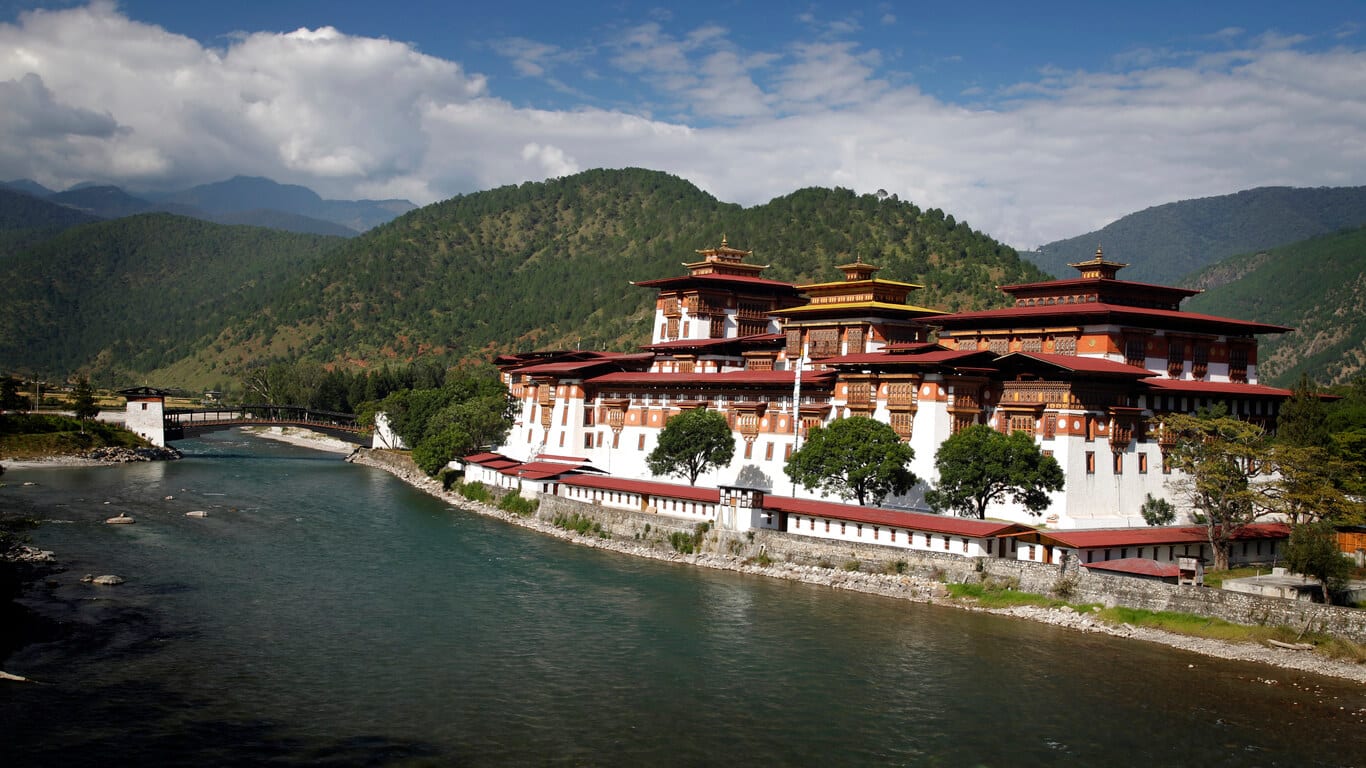
Punakha Dzong is renowned as the most beautiful temple in Bhutan, displaying a different charm with each season
- Tshechu Festival is the country's most important Buddhist festival.
- Monks and local residents gather in the dzong courtyard, reenacting Buddhist tales through the "Cham Dance" (mask dance).
- Participants believe that witnessing the ritual accumulates merit, wards off misfortune, and brings peace for the year ahead. The festival also strengthens community bonds and cultural heritage.
👉 Further Reading:Introduction to Bhutan's Tshechu Festival
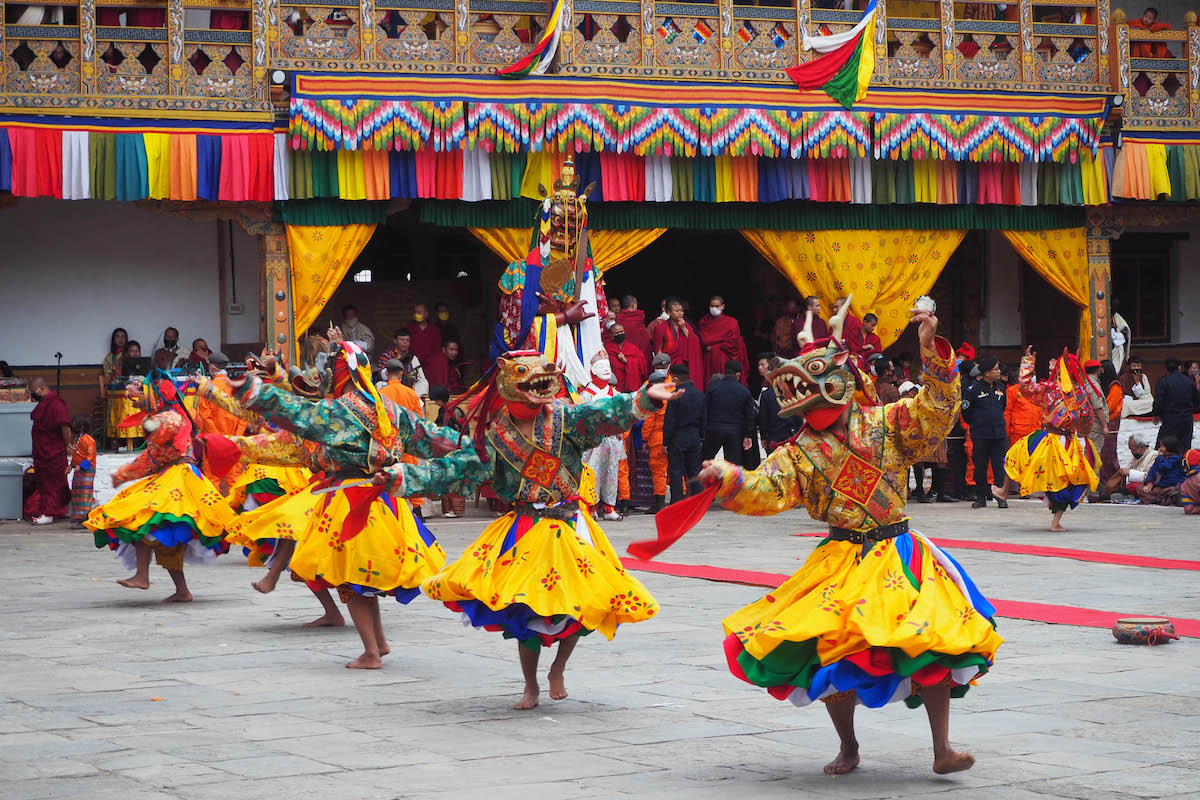
The "Cham Dance" at Bhutan's Tshechu Festival symbolizes the triumph of Buddhist teachings over evil and prayers for blessings, making it an annual celebration that blends faith and art.
- Paro Taktsang (Tiger's Nest Monastery) is Bhutan's most iconic sacred site.
- It is said that Guru Padmasambhava subdued demons here and attained enlightenment through spiritual practice.
- The trek up to the cliffside monastery symbolizes "cultivating the mind through the body," making it the best way for travellers to experience faith firsthand.
👉 Further Reading: Must-Visit Attractions in Bhutan

Paro Taktsang, Bhutan's Tiger's Nest Monastery, is a major pilgrimage site of Tibetan Buddhism, symbolizing spiritual practice and enlightenment.
- The Mandala symbolizes the order of the universe and the path to enlightenment.
- Bhutanese monks create intricate geometric patterns using coloured sand, and the process itself is a form of meditative practice.
- Once the ritual is complete, the mandala is erased and the sand scattered into a river, symbolizing "the impermanence of all things" and "letting go of attachment."
- Travellers can watch or even take part in the creation process at certain monasteries, experiencing the philosophy that "creation itself is practice, and dissolution itself is enlightenment."
👉 Further Reading:Bhutanese Cultural Experience Highlight - Mandala Sand Painting

Monks meticulously depict the mandala grain by grain with coloured sand, painting the image of cosmic order without ever holding a brush
In Tibet, Tibetan Buddhism is not merely a faith, but the very core of culture and society. The Gelug school established a monastic system built on rigorous scholarship and discipline, making religion the pillar of daily life, education, and social order. Below are the key aspects of Tibetan spiritual life:
- Pilgrimage is a lifelong aspiration for Tibetans, with many completing their journey through the practice of full-body prostrations.
- The most sacred routes include circumambulating the Jokhang Temple and the pilgrimage path of Barkhor Kora.
- Each prostration is a practice of purifying body and mind, symbolising absolute devotion to the faith.
👉 Further Reading:Recommended Tibet Attractions
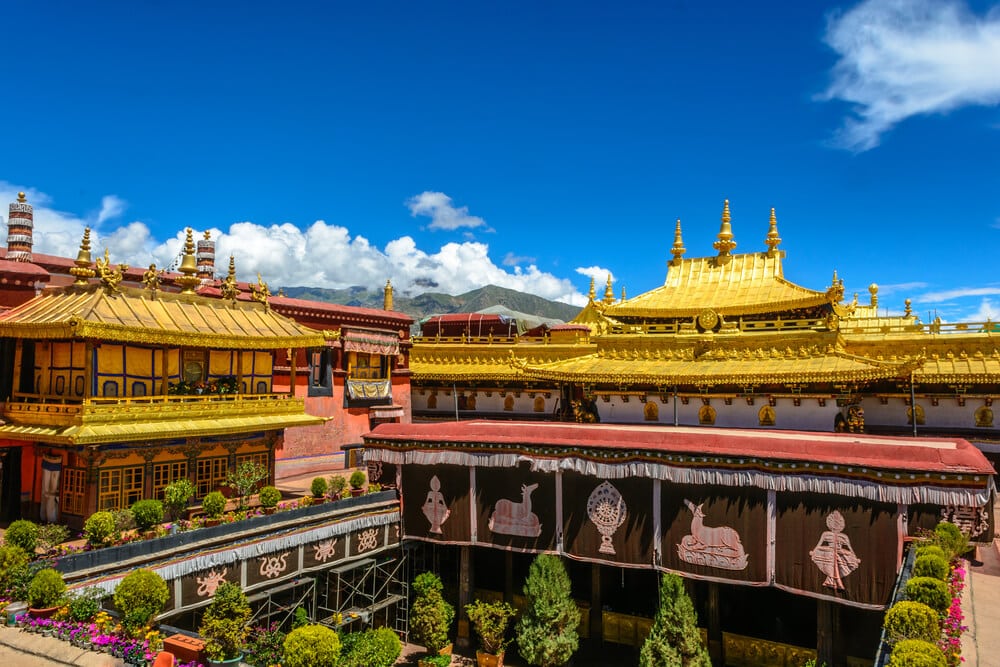
The magnificent golden roof of Jokhang Temple — Tibet's most sacred Buddhist temple, hailed as the spiritual heart of Lhasa and part of a UNESCO World Heritage Site.
- The Gelug school places great emphasis on rational inquiry and intellectual practice.
- At the debate courtyard of Sera Monastery, monks debate Buddhist philosophy through hand-clapping and probing questions.
- This is one of the most distinctive forms of practice in Tibetan Buddhism, symbolizing the union of wisdom and faith.

Monks at Sera Monastery engaged in traditional debate — this dynamic and thought-provoking practice is one of Lhasa's most distinctive religious and cultural experiences
- The Potala Palace is Tibet's most iconic landmark, serving as the winter palace and religious-administrative center of successive Dalai Lamas.
- Tashilhunpo Monastery is the seat of the Panchen Lama and a major centre of faith in the Tsang region.
- These structures are not merely religious sites; they also carry great historical and artistic value.
👉 Further Reading:Must-Visit Monasteries in Tibet
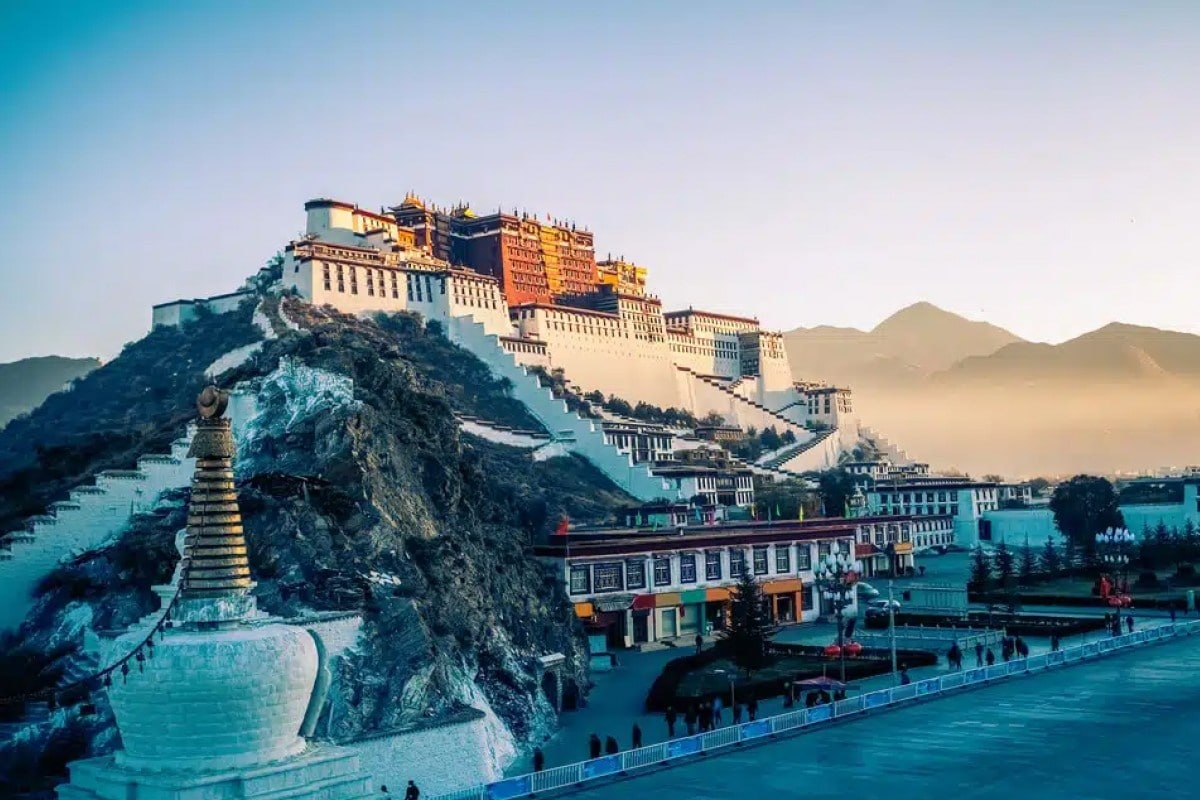
The Potala Palace stands atop Red Hill in Lhasa; this World Heritage Site is Tibet's most iconic landmark and a sacred site of Buddhism
- In Tibet, art is seen as an extension of spiritual practice.
- Thangka is the most iconic form of religious painting, using imagery of Buddhas and mandalas to depict the order of the cosmos.
- Creating a thangka requires focus and inner calm, and the process itself is regarded as "practice through the brush".
- Travellers can join a thangka experience workshop to gain deeper insight into the spiritual essence of Tibetan Buddhist art.
👉 Further Reading:Tibet Culture Guide
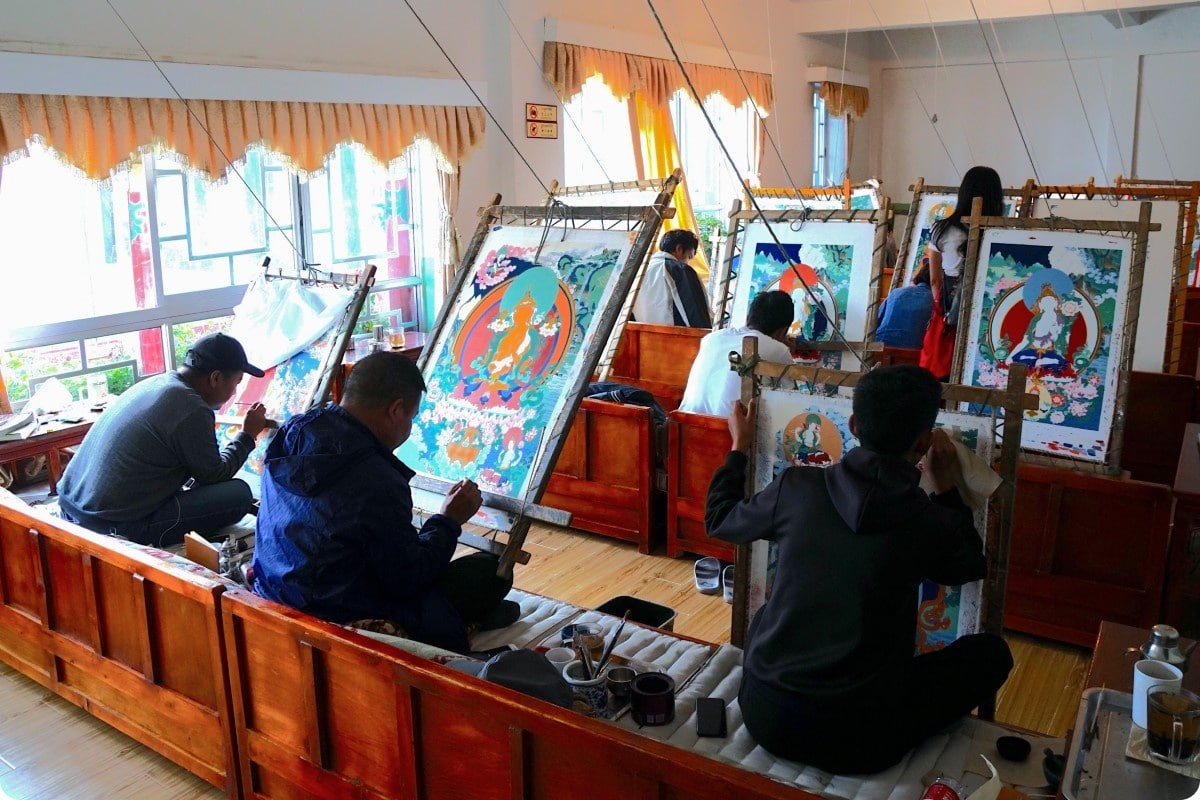
DeWonder's exclusive itinerary lets travellers hand-paint their own thangka artwork, leaving behind a truly one-of-a-kind travel memento.
In the world of Tibetan Buddhism, faith exists not only in monasteries and scriptures, but also through art as a language for expressing compassion, wisdom and cosmic order. Whether it's a mandala or a thangka, each carries a deeper understanding of life, time and existence.
- Bhutan's mandala sand paintings emphasise "inner cultivation" — focus, calm and letting go;
- Tibet's thangka paintings represent "outer expression" — the transmission, teaching and continuation of faith.
- Between stillness and movement, the complete picture of Tibetan Buddhist faith emerges: enlightenment lies both in the mind and in action.
- In Bhutan, art and life are seamlessly intertwined, embodying the belief that "happiness comes from within."
- In Tibet, art carries religious education and historical memory, serving as a force for cultural continuity.
- For travellers, appreciating these works of art is also a way of understanding a wisdom about "how to live."
- Whether watching a mandala dissolve or stepping into the colours of a thangka, one can sense Tibetan Buddhism's profound reflections on "impermanence" and "compassion."
- These art forms remind us that beauty is not merely visual pleasure, but a spiritual practice.
Having read the stories of faith in Bhutan and Tibet, you may have noticed that although both places share the same roots in Tibetan Buddhism, they present entirely different spiritual temperaments: Bhutan builds a philosophy of happiness through tranquillity and compassion, while Tibet carries the power of faith through grandeur and devotion. If you wish to experience these two cultural landscapes more deeply, the following two journeys can lead you into a genuine realm of spiritual practice: Bhutan In-Depth Tour|Direct Round-Trip Flights, Into the Everyday Faith of the Kingdom of Happiness
- Centred on Drukpa Buddhism, visiting Tiger's Nest Monastery, Punakha Dzong, and the Tshechu Festival in person.
- A relaxed itinerary pace, ideal for travellers seeking tranquillity and cultural depth.
- Direct flights throughout for time-saving peace of mind, staying at boutique hotels, combining exploration of nature and spirit.
DeWonder Bhutan In-Depth Tour 👉 Check outBhutan Year-Round Departure Schedule 👉 For more on Bhutan travel, we recommend reading thisComplete Bhutan Travel Guide Tibet In-Depth Tour|Experience the Grandeur of Pilgrimage and Faith
- Visit the Potala Palace, Jokhang Temple and Sera Monastery's debating courtyard, delving deep into the heart of Gelug practice.
- Personally experience the Barkhor pilgrimage circuit, a thangka painting workshop, and the cultural landscape of the plateau.
- Perfect for travellers craving a soul-stirring cultural adventure.
DeWonder Tibet In-Depth Tour
👉 Check outYear-Round Departure Schedule 👉 For more on Tibet travel, we recommend reading thisTibet Travel Guide