The three Caucasus nations — Georgia, Armenia, and Azerbaijan — have gradually become "hidden gem destinations" in travellers' hearts in recent years. With ancient civilisations intertwining, magnificent mountain and sea scenery, and rich cultural depth, many first-time planners still ask: "Is the Caucasus safe? How's the security there?"
In fact, overall security in the Caucasus is more stable than most people imagine. As long as you understand regional differences, border basics, and travel safety details, even first-timers can enjoy both peace of mind and a deep travel experience. This article breaks down everything you need to know about Caucasus safety, from an overview of security in all three countries and urban/natural risks, to safety tips for female travellers and transport reminders, all in one go.
Overview of Travel Security in the Caucasus
Situated at the crossroads of Europe and Asia, between the Black Sea and the Caspian Sea, the Caucasus has historically been a contested crossroads among multiple nations, resulting in complex political issues. However, security in the main tourist areas is actually quite good. Tourism is a key industry in all three countries, and whether it's the Old Town of Tbilisi, the Cascade in Yerevan, or the Baku Boulevard, these are the areas travellers frequent most, and they are generally safe.
That said, due to the differing terrains of the three countries (such as Georgia's high mountains, Armenia's border regions, and Azerbaijan's deserts and volcanic areas), travellers should still pay attention to natural environment and transport safety.
Below is a special Caucasus Three-Country Security Comparison Table to help you quickly grasp the differences between the countries:
Caucasus Three-Country Security Comparison Table
| Item |
Azerbaijan |
Georgia |
Armenia |
| Overall Safety |
High safety in Baku's tourist areas |
Mature city, occasional petty theft |
Good safety, darker suburbs at night |
| Capital Safety |
Baku's seafront and old town are safe |
Tbilisi's old town is walkable |
Yerevan's tourist areas are safe and stable |
| Main Risks |
Windy, dry, sandy terrain in suburbs |
Winding mountain roads, icy in winter |
Be mindful of military signage near border areas |
| Language Environment |
Moderate English prevalence |
English relatively common |
Less English, more Russian |
| Female-Friendliness |
Moderately good |
High, friendly in tourist areas |
Moderately good |
| Natural Terrain Risks |
Volcanic and desert terrain |
Mountains and snow |
Plateau terrain, cave areas |
| Tourism Maturity |
Medium-High |
High |
Medium |
Azerbaijan Safety Analysis
Azerbaijan is one of the three Caucasus nations with relatively stable security and well-developed tourism. Its capital, Baku, is renowned for its modern cityscape, stunning night views, and old-town charm, with the city area being one of the friendliest and safest in the Caucasus.
If your itinerary includes natural landmarks such as Gobustan Rock Art, the Mud Volcanoes, the Ateshgah Fire Temple, and Yanardag (the Burning Mountain), you'll need to pay special attention to natural risks related to terrain and climate.
Azerbaijan Travel Safety Overview
| Category |
Safety/Convenience Level |
Key Safety Notes |
| City Security: Baku |
★★★★☆ |
The Old City and seaside boulevard are highly safe, with visible police presence. Pickpockets may appear at metro stations and entrances to tourist attractions. |
| Safety for Female Travelers |
★★★★☆ |
Relatively safe in major tourist areas; late at night, avoid walking into poorly lit alleys or residential areas. |
| Suburban/Nature Site Risks |
★★★☆☆ |
Gobustan is windy with unpaved mud volcano areas; at the Fire Temple and Yanardag, be mindful of open flames and uneven edges. |
| Transport Safety & Ride-Hailing |
★★★★☆ |
We recommend Bolt (the most widely used) as your first choice, with Uber as a backup. |
Need to confirm whether drivers are willing to travel to the destination at night or in suburban areas.
| Tourism Maturity |
★★★★☆ |
Baku has well-developed facilities and is one of the most mature cities in the Caucasus, making it suitable for first-time travelers. |
City Safety: Baku is One of the Safest Major Cities in the Caucasus
- The Old City (Icherisheher) and the seaside boulevard are the safest areas
- The night-view areas are well-lit and crowded, making them great for strolling and photography
- Watch out for pickpockets near the metro and the Old City gates (only basic caution needed)

Azerbaijan · Baku Old City (Icherisheher) | A cityscape where ancient charm coexists with modern landmarks. Baku is one of the most well-equipped cities in the Caucasus in terms of infrastructure, with mature transport and public facilities, making it ideal for first-time visitors to the region.
Suburban and Natural Attractions: Beautiful Terrain, but Requires an "Environmental Safety" Mindset
The main risks are concentrated in "strong winds + unpaved roads + fire sources and cliffs":
Gobustan / Mud Volcanoes
- Strong winds and uneven ground
- The mud volcano area gets muddy after rain
- Non-slip shoes and windproof jackets are recommended
Fire Temple / Yanar Dag
- Strong winds near the fire source
- Watch out for drops in areas without railings
- Hot in summer, noticeably windy and cold in winter
📌In summary: once outside the city, safety risks come from nature, not crime.

Yanar Dag, Azerbaijan's Burning Mountain|A remarkable sight where natural gas has been burning perpetually from the hillside. Located on the outskirts of Baku in an open, windy area, it's best to allow extra travel time and arrange a private car or reliable transfer for a smoother itinerary.
Transport Safety: Bolt Is Most Reliable, Uber as Backup
- Bolt operates officially in Baku and is the most commonly used ride-hailing app locally.
- Uber (Uber AZ) has less coverage and can serve as a backup option.
Recommendations for travelers:
- Getting around the city: Prioritize using Bolt
- Airport or suburban trips: Drivers may refuse service, remember to confirm beforehand
- Don't hail cabs on the street (prone to overcharging/not using the meter)
Azerbaijan Safety Summary
- Cities are very safe, no need to worry too much in tourist areas
- The key concerns at natural attractions are wind and terrain, not safety
- Use Bolt for hailing rides, overall more reliable
- Very friendly for female travelers, but avoid narrow alleys late at night
👉 Further Reading: Must-Visit Attractions in Azerbaijan
Georgia Safety Analysis
Georgia is one of the most popular destinations among the three Caucasus countries. Its capital, Tbilisi, is renowned for its Old Town culture, restaurants, bars, and cafés, with well-established tourism infrastructure that is friendly to visitors. The areas that truly require attention mainly involve transportation and mountainous terrain, especially when heading to mountain attractions such as Kazbegi, Gudauri, and the Georgian Military Highway.
Georgia Travel Safety Overview
| Category |
Safety Rating |
Key Safety Notes |
| Urban Security (Tbilisi) |
★★★★☆ |
The Old Town, sulfur bath district, and main pedestrian streets are safe; pickpockets are more commonly found in the metro and crowded areas of the Old Town. |
| Safety for Female Travelers |
★★★★☆ |
Locals are friendly and English communication is moderate to good; at night, it's advisable to stay in the city center and avoid secluded streets. |
| Mountain Natural Risks |
★★★☆☆ |
The route to Kazbegi/Gudauri passes through the "Georgian Military Highway," which has many winding mountain roads that can easily ice over in winter. |
| Transportation Safety |
★★★☆☆ |
Public transportation in the city is generally adequate; professional drivers are needed for mountain areas. Roads may be closed due to rockfalls or snow accumulation during rainy/snowy seasons. |
| Tourism Maturity |
★★★★★ |
The most well-developed tourist country in the Caucasus, with excellent restaurants, accommodations, and tour guiding services. |
Urban Security: Tbilisi Has the Best Travel Atmosphere Among Cities
Tbilisi's city-center attractions are concentrated and pedestrian-friendly:
- Old Town and Sulphur Bath District (see page 19 of the info pack)
- Around Leghvtakhevi Waterfall, the pedestrian bridge, Bridge of Peace, and Narikala Fortress
- Restaurant-dense area (Rustaveli Avenue)
Overall safe, with plenty of tourists and friendly shopkeepers. The only things to watch out for:
- Crowded areas such as the metro, Old Town entrances, and narrow alleys → pickpockets are more common
- Poorly lit residential areas at night → avoid venturing in alone

Georgia · Tbilisi Old Town — colorful balcony buildings intertwine with the sulphur bath district to create the city's charm. As one of the most well-established tourist cities in the Caucasus, Tbilisi offers excellent facilities, a wide range of dining options, and high English proficiency, making it ideal for first-time travelers to explore.
Mountain Safety: Kazbegi/Gudauri Offer Stunning Views, but Road Conditions Require Attention
Georgia's most iconic natural attractions are mostly found in the Greater Caucasus Mountains:
- Kazbegi / Gergeti Trinity Church
- Gudauri
- Russia-Georgia Friendship Monument
These places are absolutely stunning, but a few things to note:
- The mountain routes require travel along the "Georgian Military Highway"
- Winding roads with steep gradients, and possible landslides during the rainy season
- Roads can ice over in winter (roughly December–March), sometimes leading to closures
📌 Key takeaway: mountain risks come from weather and road conditions, not safety concerns.

Kazbegi mountains, Georgia | A classic view pairing majestic peaks with the Gergeti Trinity Church. Mountain weather can be changeable and some sections are quite steep, so it's best to arrange a private car or a driver familiar with local conditions for a smoother, safer journey.
Road Safety: City Fine; Mountains Need a Professional Driver
In the city
- Bolt and other ride-hailing apps are widely used
- Buses and the metro are safe most of the time, though crowded during rush hour
- Walking is the most convenient way to get around downtown
Mountain Areas
- If your itinerary includes Kazbegi or Gudauri, be sure to use a driver or tour vehicle experienced with mountain roads
- In winter: always confirm the driver has snow tires and relevant experience
- Self-driving is not recommended (especially in winter and at night)
Georgia Safety Summary
- Cities are very safe, tourism infrastructure is well-developed, and locals are friendly toward Asian travelers
- Occasional pickpocketing in the Old Town, but basic precautions are sufficient
- Mountain road conditions vary: watch for road closures, rockfalls, and icing during rainy or snowy seasons
- Generally safe for female travelers, but avoid isolated areas late at night
👉 Further Reading: Introduction to Georgia's Attractions
Armenia Safety Analysis
Armenia is generally safe and stable. The capital, Yerevan, has a friendly city centre, is easy to explore on foot, and is well-developed for tourism. The main safety concerns are not crime, but rather weak nighttime transport and military-sensitive areas near the borders. Most tourist attractions are safe in themselves, but if visiting monasteries or plateau areas near the border, travellers should pay attention to official signage and areas where photography is prohibited.
Armenia Travel Safety Overview
| Category |
Safety Rating |
Key Travel Safety Points |
| City Safety (Yerevan) |
★★★★☆ |
Tourist areas are stable and safe, including the Cascade district. Streets are darker in less crowded areas at night. |
| Safety for Female Travellers |
★★★★☆ |
Generally friendly with few incidents of harassment; just avoid secluded alleys at night. |
| Suburban and Border Risks |
★★★☆☆ |
Attractions near the Turkish and Azerbaijani borders (such as Khor Virap) require caution around military installations — do not take photos indiscriminately. |
| Transport Safety |
★★★☆☆ |
Nighttime transport is weaker, with insufficient street lighting in some areas outside the city; hiring a private car is safer than self-driving. |
| Tourism Maturity |
★★★★☆ |
Yerevan is tourist-friendly, with museums and restaurants concentrated together, making the city centre easy to explore on foot. |
City Safety: Yerevan is Friendly and Walkable
Yerevan is one of the most accessible cities in the Caucasus, with attractions concentrated in the city centre:
- The Cascade Complex and the museum district
- Cafés and pedestrian streets
- Republic Square is busy both day and night
- Good public security and tourist-friendly, with police and security personnel stationed in main areas
Points to note:
- Some non-main roads are dimly lit at night
- Parks and riverside areas have few people at night — women are advised to avoid passing through alone
Suburbs and Border Areas: Stunning Scenery, but Watch for Military Signage
Many of Armenia's classic attractions are close to the border, especially:
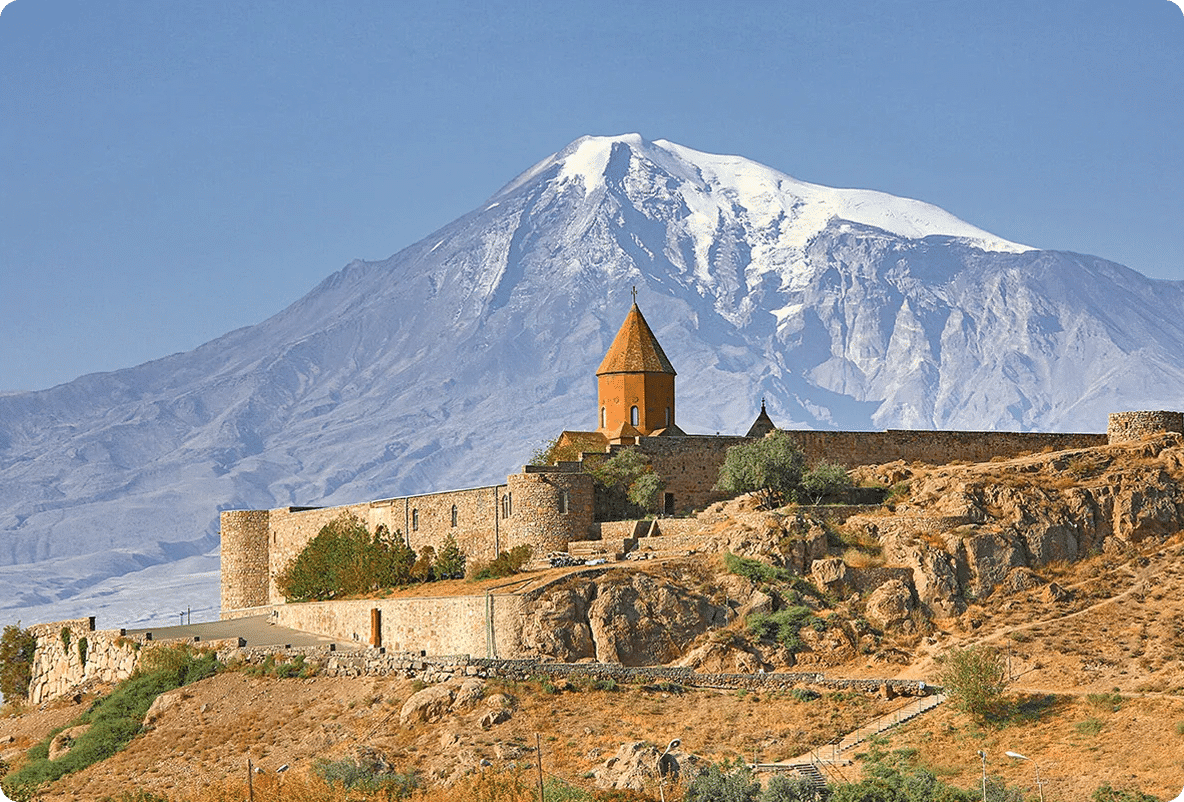
- Khor Virap Monastery: The site itself is safe and a popular tourist spot. However, it is near the border and a military zone — photographing military facilities/checkpoints is prohibited. There may occasionally be temporary road closures or restricted areas (if encountered, simply follow official instructions)
- Garni Temple, Geghard Monastery: Roads in these highland areas are winding, and surfaces can be slippery in winter — please take care
📌 Key Reminder: Armenia is generally safe, but border areas are sensitive military zones — avoid random photography, don't approach fences, and steer clear of any marked warning signs.

Khor Virap, Armenia | A classic view with Mount Ararat as the backdrop. As this site is near the border area, it is advisable to avoid photographing military facilities in the direction of the border; since it is located in a rural area with limited transport options, we recommend arranging a private car for a safer and smoother trip.
Road Safety: Weaker Night Traffic — Caution Needed for Self-Driving
City Centre
- Traffic is light but streets are dimmer at night
- Bolt is available in parts of Yerevan, but coverage is not as extensive as in Georgia
Outside the City
- Country roads at night have no lighting and little traffic
- Hiring a private car is safer, more time-saving and more reliable than self-driving
- Mountain areas in winter (such as trips to Garni/Geghard) often have ice and snow
If your itinerary includes suburban areas or evening travel, a private car is the safest and most hassle-free option.
Armenia Safety Summary
- The city centre is safe, with a great tourist atmosphere and is pedestrian-friendly
- Streets can be dim at night → women should avoid walking alone in secluded areas
- At border attractions, please do not photograph military facilities and follow official signage
- Transportation is less developed than in Georgia/Azerbaijan → hiring a private car is the most reliable option
👉 Further Reading: Must-Visit Attractions in Armenia
Common Caucasus Travel Safety Q&A
Overall travel safety in the three Caucasus countries (Georgia, Armenia and Azerbaijan) is good, but the risks travellers most commonly encounter are actually concentrated in transportation, belongings and the natural environment. Below is a summary of common safety issues shared across the three Caucasus countries, to help travellers quickly grasp the key points.
Overview of Common Safety Risks When Travelling in the Caucasus
| Safety Item |
Situation in the Three Countries |
What Travelers Should Note |
| Pickpockets / Personal Belongings Safety |
Occasional pickpockets at popular tourist spots (Tbilisi Old Town / Baku Metro / Yerevan event areas) |
Keep valuables in inner pockets, avoid using your phone while walking, and watch your backpack when taking photos |
| Traffic Safety |
Cities are fine; mountain road conditions are more challenging (Kazbegi, Gobustan, etc.) |
Mountain roads pose greater risk than public security; roads may be closed in winter, and self-drivers need experience |
| Safety for Female Travelers |
All three countries are generally friendly, and Asian women are also respected |
Avoid secluded areas at night; politely decline if approached |
| Language Communication |
English proficiency: Georgia > Azerbaijan > Armenia |
Not speaking English doesn't mean danger — Google Translate works fine |
| Friendliness Towards Asian Travelers |
Generally friendly, with few cases of discrimination |
Some may ask "Where are you from?」is normal curiosity |
| Natural Environment Risk |
Natural terrain varies greatly between countries (mountains, volcanoes, sandstorms, plateaus) |
Check the weather, avoid night travel, choose a reliable driver |
| Food and Water Safety |
Restaurants in urban areas are safe; hygiene standards vary in rural areas |
Drink bottled water, avoid raw food, avoid overly greasy street stalls |
| Political Demonstrations / Sensitive Areas |
Mostly concentrated in city squares, not on main tourist routes |
Avoid photographing military facilities; simply take a detour during demonstrations |
The items in the table broadly cover travellers' most common concerns, from pickpocket hotspots, transport and mountain road conditions, women's safety, to practical situations like food hygiene and political demonstrations.
Overall, the tourist areas in all three countries are safe — as long as you keep the above points in mind, your trip can be significantly lower-risk and much more reassuring.
Get to Know and Explore the Three Caucasus Countries More Deeply with DeWonder
The security situation in the three Caucasus countries is actually friendlier than most travellers imagine. As long as you keep the above safety essentials in mind, whether it's your first time in the Caucasus or you're preparing for an in-depth exploration, you can feel much more at ease. If you're still planning your route, transport, or cross-border travel, feel free to check out our other related articles to make your whole journey smoother and worry-free.
If you want a more effortless overall travel plan, DeWonder's carefully designedCaucasus In-Depth Tourwill be your best choice!Journey through Azerbaijan, Georgia and Armenia in a small group
- A decade of experience, thoughtfully curated: Venture off the beaten path that typical tour groups never reach, getting close to local history and culture on the ground.
- Exclusive cultural exchanges: Share meals with herders, prepare traditional dishes, or try your hand at the Duduk instrument for an authentic taste of everyday life.
- Immersion in local life: Visit tin-roofed neighbourhoods and rural households to learn the real stories and beliefs of the people who live there.
- Bringing history to life: From Soviet-era relics to medieval monasteries, trace the shifting eras of the Caucasus.
- Comprehensive cultural experiences: From winemaking to music and art, every leg of the journey blends knowledge with feeling.
- Small group departures: With an average of 8–14 travellers, we strike the perfect balance between comfort and interaction.
This journey is more than just photo ops—it's an exploration of culture, history and self-discovery. Set off with DeWonder now on your adventure through the three nations of the Caucasus.
👉 View Year-Round Departure Dates for the Caucasus In-Depth Tour
DeWonder Caucasus In-Depth Tour Information Package 👉 Click Here to Download
👉 Further Reading:A Quick Guide to the Three Caucasus Countries
👉 Further Reading:Recommended Attractions in Georgia | Recommended Attractions in Armenia | Recommended Attractions in Azerbaijan
👉 Further Reading:Visa Requirements for the Three Caucasus Countries
👉 Further Reading:Cross-Border Transport Guide for the Three Caucasus Countries