
Must-Visit Temples in Tibet: A Pilgrimage into the Buddhist Holy Land
Explore the mystery and grandeur of Tibetan temples—from the Potala Palace, a UNESCO World Heritage Site, to Sera Monastery, renowned for its monks' debates—and gain deep insight into the cultural allure of Tibetan Buddhism.
Tibet is home not only to majestic snow mountains and sacred lakes, but is also at the very heart of Buddhist faith. Its temples are more than mere buildings—they carry a thousand years of history, culture, and the devotion of the Tibetan people. If you're planning a trip to Tibet, visiting its temples is an experience you simply cannot miss. This article will take you into the Potala Palace, Jokhang Temple, Sera Monastery, and Tashilhunpo Monastery, so you can feel Tibet's most sacred spiritual journey.
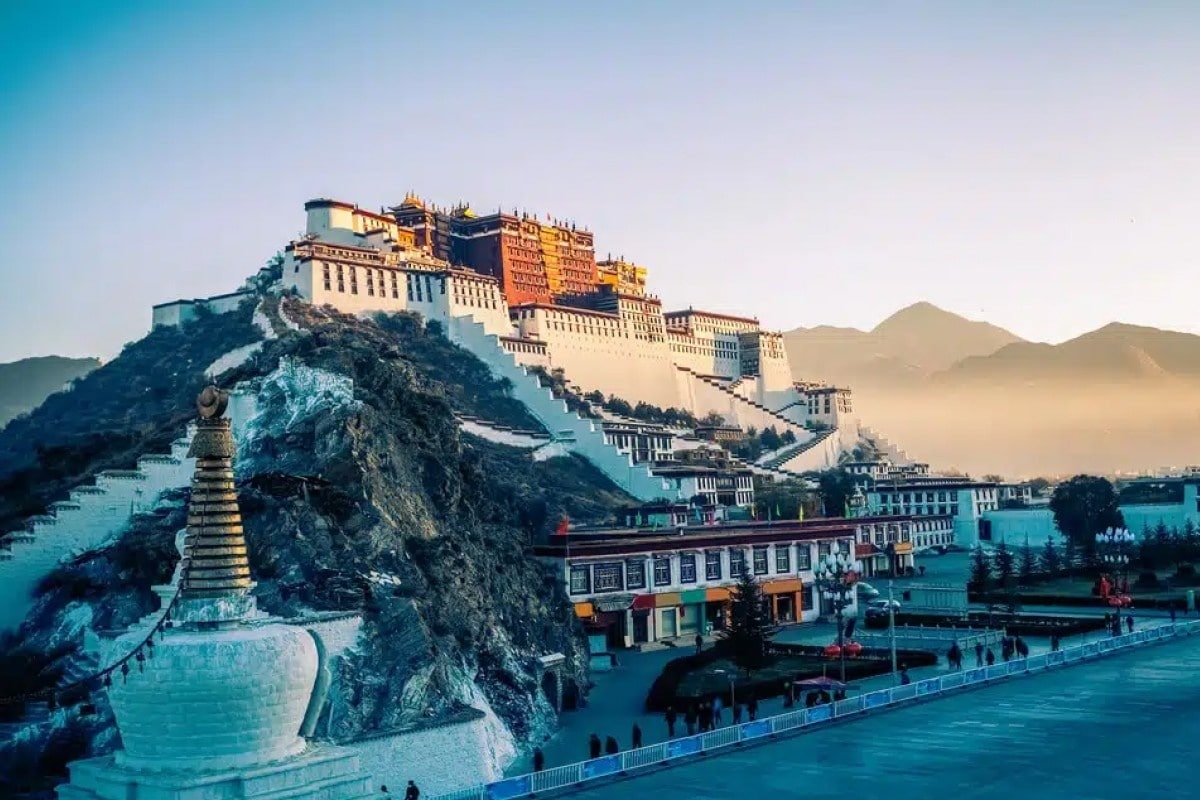
As Tibet's most famous landmark, the Potala Palace is not only a symbol of Lhasa, but also one of the core sacred sites of Tibetan Buddhism. Construction of the palace began in the 7th century, and it was later expanded to its present scale during the era of the 5th Dalai Lama. The Potala Palace is divided into the Red Palace and the White Palace—the former serves religious purposes, housing Buddha statues and scriptures, while the latter served as the winter residence and administrative office of successive Dalai Lamas. In 1994, the Potala Palace was inscribed as a UNESCO World Heritage Site, highlighting its unique historical and architectural value. Climbing to the Potala Palace requires ascending a long flight of stone steps—a journey that is both a physical challenge and a spiritual cleansing. Looking down over the entire city of Lhasa from the palace, you can truly feel the magnificence of the "Sunlight City."
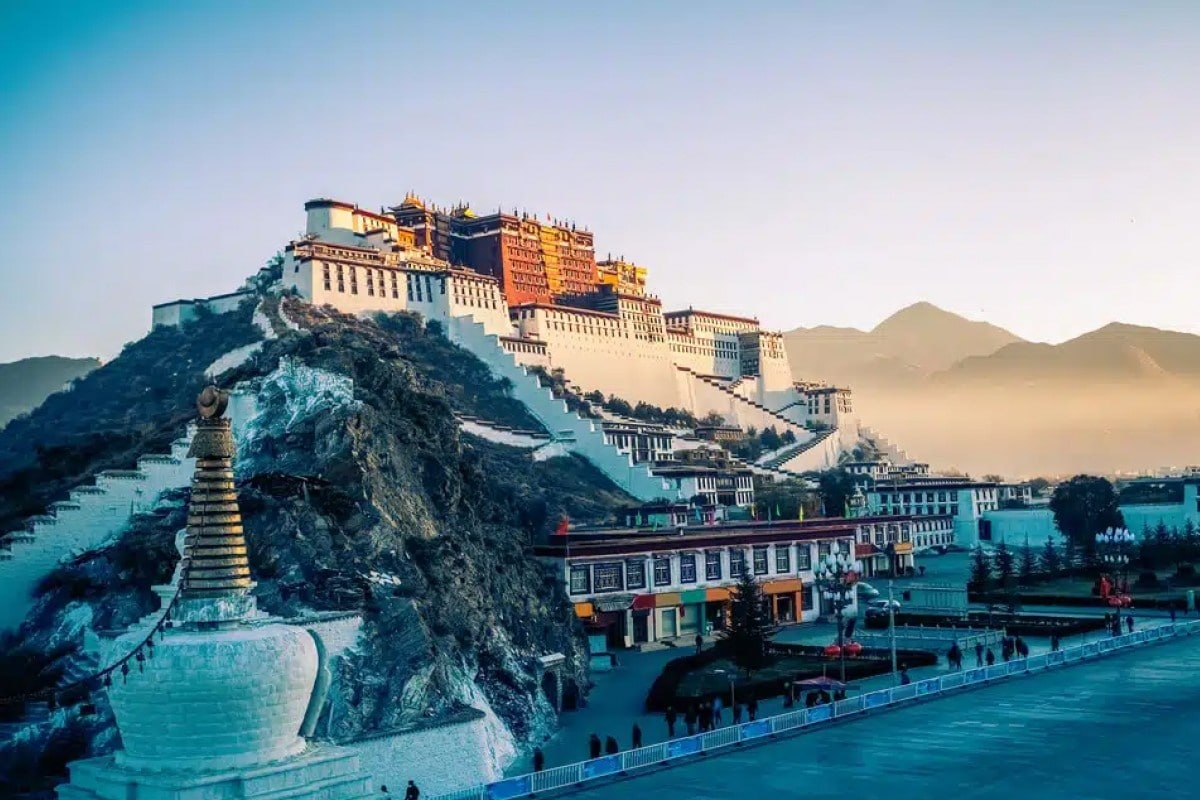
The Potala Palace stands atop Red Hill in Lhasa—this World Heritage Site is Tibet's most iconic landmark and Buddhist holy site
If the Potala Palace is the symbol of Tibet, then Jokhang Temple is the soul in the hearts of Tibetans. Built during the Tang Dynasty, it is said that Princess Wencheng brought a life-sized statue of Sakyamuni Buddha with her when she entered Tibet, and it has been enshrined here ever since—making it one of the most important sacred sites of Tibetan Buddhism. Jokhang Temple is not merely a religious building; it is the spiritual home of the Tibetan people.No matter how bitter the cold or how scorching the heat, devout pilgrims can be seen prostrating themselves along Barkhor Street every single day, circling the Jokhang Temple again and again in a display of the most sincere faith.In 2000, the Jokhang Temple was inscribed as part of the Historic Ensemble of the Potala Palace, becoming part of the UNESCO World Heritage Site. This not only affirms its historical value, but has also made the Jokhang Temple a “must-visit pilgrimage site” in the hearts of travellers worldwide.
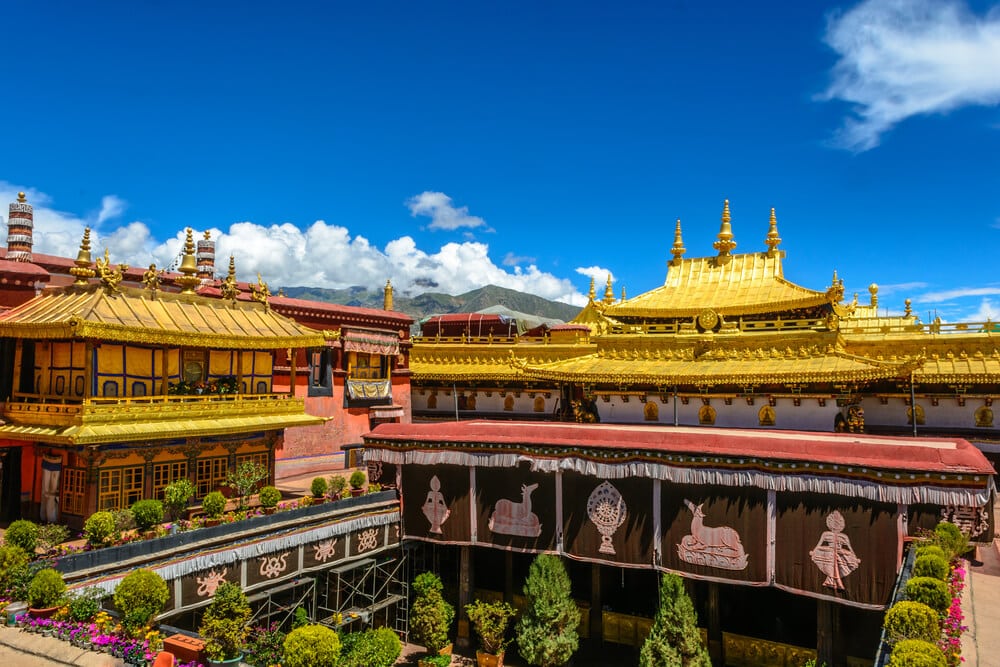
The resplendent golden roof of Jokhang Temple — Tibet's most sacred Buddhist temple, hailed as the spiritual heart of Lhasa and part of a World Heritage Site.
Among Lhasa's three great Gelug monasteries, Sera Monastery is world-renowned for its “debate sessions”. Founded in the 15th century by disciples of Je Tsongkhapa, it is counted alongside Ganden and Drepung Monasteries as one of the three great Gelug monasteries. Every afternoon, hundreds of monks gather at the monastery's debate courtyard, splitting into groups for intense discussions on Buddhist philosophy. You'll see one monk seated, responding to questions, while another stands and challenges him, punctuated by crisp claps and forceful tones. This distinctive form of practice serves not only to test one's grasp of Buddhist doctrine, but also as a way to showcase wisdom and logical reasoning. For travellers, watching the debates is a rare cultural experience. Unlike the tranquil atmosphere typically found in monasteries, this scene is charged with energy and tension, offering a profound sense of the spirit of learning and debate within Tibetan Buddhism. 💡 Did you know: What exactly is “debate”? Monastic debate is a form of philosophical debate practised by Tibetan Buddhist monks through a “question-and-answer” format, focusing not on winning or losing but on deepening one's understanding of Buddhist teachings through logic and critical thinking. This method of learning originates from the ancient Indian Buddhist tradition, and through simulated challenges and responses, it strengthens monks' memory, comprehension, and quick-response abilities. 👉 To learn more, you can refer to this TibetTravel article introducing Buddhist monastic debate

Monks at Sera Monastery engaging in traditional debate — this dynamic and thought-provoking practice is one of Lhasa's most distinctive religious and cultural experiences
Located in Shigatse, Tashilhunpo Monastery is one of the four great monasteries of the Gelug school, founded in 1447 by a disciple of Je Tsongkhapa. This magnificent monastery remains an important centre of Tibetan Buddhism to this day, renowned for its splendid architecture and solemn Buddha statues.The most awe-inspiring feature within the monastery is the 26-metre-tall bronze statue of the Future Buddha (Maitreya), hailed as one of the largest gilded bronze Buddha statues in the world. In addition, the monastery houses resplendent halls, exquisitely carved murals, and tiers of monks' quarters cascading across the hillside, showcasing the unique charm of Tibetan Buddhist art and architecture.For travellers, stepping into Tashilhunpo Monastery is not just a religious experience but more like a journey through time, allowing one to deeply feel the accumulated weight of Tibetan history and faith.
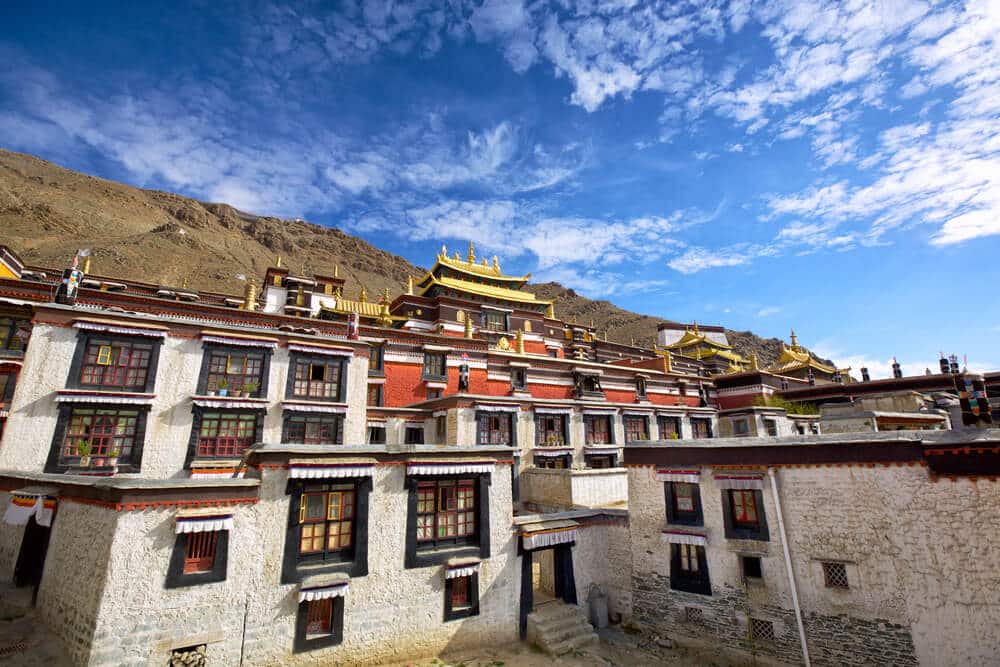
Tashilhunpo Monastery is located in Shigatse, its golden roofs and red-and-white building complex standing especially solemn under the blue sky, showcasing the grand splendour of a Gelug school monastery
Stepping into a Tibetan monastery is not just sightseeing—it's a cultural experience. To make your visit go more smoothly, here are a few tips worth keeping in mind: 1. Best Time to Visit
- Spring and autumn have milder climates, ideal for extended walking and touring.
- Summer brings grand festivals (such as the Shoton Festival), but with larger crowds.
- Winter, though cold, offers the purest atmosphere of faith.
👉 Further Reading : Tibet's Climate and the Best Time to Travel 2. Respect Local Beliefs
- When paying respects, please walk clockwise around monasteries and stupas, following the pilgrimage custom of Tibetans.
- When entering main halls, remember to remove your hat and remain quiet, avoiding loud noise.
- Photography is prohibited inside most monasteries; it's advisable to check with your local guide or the monks beforehand.
- Dress and Etiquette
- Dress modestly and avoid overly revealing clothing.
- Please do not step on the threshold when entering the monastery, as this is considered disrespectful.
- If you wish to offer a khata (white ceremonial scarf), ask your guide to show you the proper way.
👉 Further Reading : Guide to Temple Visiting Etiquette and Dress Code in Tibet (Coming Soon)
Tip | Recommended | Not Recommended |
Direction of Worship | Walk clockwise | Walk counterclockwise |
Dress Code | Long sleeves and long trousers, modest and dignified | Shorts, low-cut clothing |
Photography | Ask for permission first | Taking photos in prohibited areas |
Temple Etiquette | Remove hats, keep quiet | Loud talking, stepping on thresholds |
Witness the magnificence of the Potala Palace with your own eyes, feel the devotion at Jokhang Temple, watch the lively monk debates at Sera Monastery, and marvel at the grand and solemn Tashilhunpo Monastery — these are unforgettable experiences of a lifetime. In our carefully crafted Tibet In-Depth Tour, you'll be led by professional guides to explore Tibet's most iconic temples and experience firsthand the cultural and spiritual power of Tibetan Buddhism. Beyond temple visits, we've also arranged unique Tibetan homestay experiences, thangka painting workshops, and excursions to high-altitude lakes and glaciers, giving you a comprehensive understanding of this mysterious plateau. 👉 Check out our Year-Round Tibet Tour Schedule 👉 Have other questions about traveling to Tibet? Join our free online seminar, where our experts will answer all your questions