
Pyongyang International Marathon Returns! First North Korea Pyongyang Trip in 6 Years | New Swiss-Style Streets | Full Record of Changes | DeWonder Travel's First-Hand Visit
After more than five years of pandemic lockdown, North Korea finally reopened in spring 2025, holding the renowned Pyongyang International Marathon earlier this month for the first time. As the operator that has led the most travellers from Hong Kong and Taiwan into North Korea, DeWonder Travel made 200 in-depth trips into North Korea before the pandemic, and after the pandemic we were also behind the first tour group from Hong Kong and Taiwan to depart for North Korea. Returning to take part in the marathon this time, we found Pyongyang utterly transformed from what it once was. In this article, drawing on our own first-hand experience, we take you through the sweeping changes North Korea has undergone over these six years: urban development, policy shifts, and how Kim Jong Un's personal story has gradually taken shape.
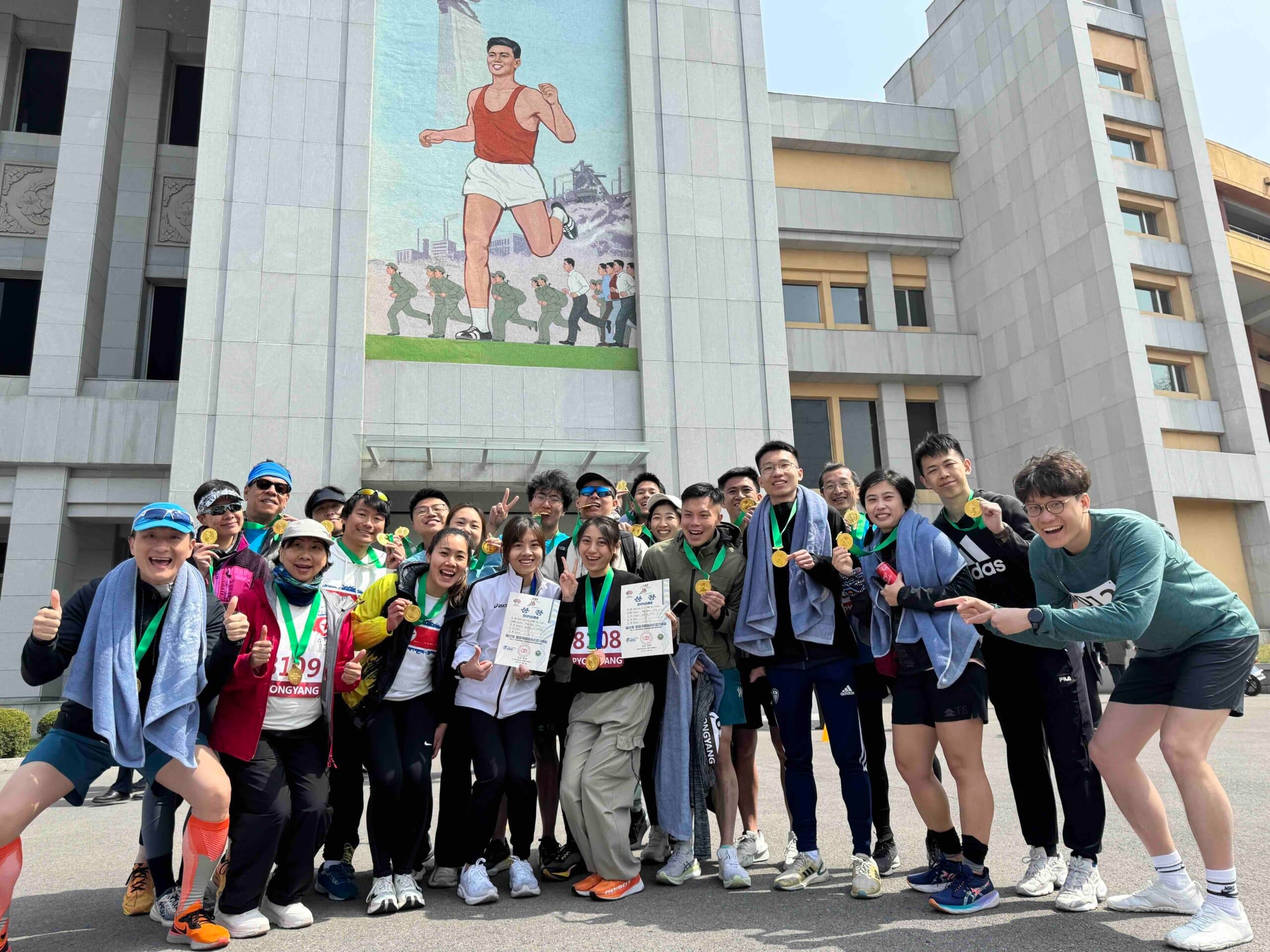
On 6 April 2025, North Korea held its first international sporting event since the COVID-19 pandemic — the Pyongyang International Marathon — marking a symbolic step in the reclusive nation's post-pandemic reopening to the outside world. This year's race drew more than 500 runners, including around 200 overseas participants from around the world.The 7-day North Korea marathon tour organised by DeWonder Travel also went ahead successfully, with 22 travellers from Hong Kong, Taiwan and Macau taking part in both the race and sightseeing.
This year's marathon featured four categories — 5km, 10km, half marathon and full marathon — with both start and finish lines at Kim Il Sung Stadium, with the entire Pyongyang city centre and landmark routes such as the "two bridges and one tunnel" opened up for runners.
Three Hong Kong female runners achieved outstanding results in the amateur category: Yuen Ching-yi claimed the half marathon title with a time of 1 hour 48 minutes, Chui Ka-yi took third place in the 5km category, and Ho Oi-yung completed the full marathon and won first place.
This marathon not only offered participants a uniquely striking race route, but also reflected Pyongyang's fresh ambitions in urban management and building its international image.

The DeWonder team successfully completed the 2025 Pyongyang Marathon, with 3 Hong Kong participants even winning medals

The Pyongyang Marathon allows runners to move freely through the streets, including Kim Il Sung Square.
Item | Before the Pandemic (2019) | After the Pandemic (2025) |
|---|---|---|
Marathon Event | Suspended | Resumed, with global participation |
Urban Development | Mainly socialist-style architecture | New Swiss-style modern districts added |
Kim Il Sung Square | Traditionally solemn, allowing close-up views of the leaders' portraits | New speaking platform installed; portraits moved higher up, no longer accessible for close-up photos |
Leadership Imagery | Mainly Kim Il Sung and Kim Jong Il | Dominated by Kim Jong Un, with his daughter Kim Ju Ae now appearing publicly |
Policy Focus | Military-first politics, socialist economy | Modernization, technological development, economic self-reliance |
Returning to Pyongyang after 6 years, what strikes visitors most is the dramatic transformation of the cityscape. In the past, tour buses would usually travel along a few fixed main avenues, showing only the polished, glamorous side of the city; this time, we clearly ventured into many more newly developed areas. Many old neighborhoods have been completely demolished, replaced by modern villas with floor-to-ceiling glass and bright, "Swiss-style" tones. The local guide half-jokingly remarked, "This was inspired by Kim Jong Un's time studying in Switzerland as a child."」 And Kim Jong-un's passion for skyscrapers shows no sign of waning. The newly completed Hwasong District, offering ten thousand residential units, marks the fourth super-scale housing project since he took office, showcasing North Korea's ambition to modernise.

A newly completed street in Pyongyang, including this one opened in 2025, features "Swiss-style" architecture.

A German-style hotel on the new street, said to have been visited by Kim Jong-un three times in four months
Most surprising of all is that Kim Il Sung Square, once the symbolic heart of North Korea, has also undergone major renovation. A large new speaking platform has been built on the square, allowing Kim Jong-un to survey the entire parade ground during military reviews. Meanwhile, the portraits of Kim Il Sung and Kim Jong Il have been relocated to the top of the buildings surrounding the square, so visitors can no longer take close-up photos with them and must instead view them from across the Taedong River. This design appears intended to make the leaders' images more sacred and distant.

The portraits at Kim Il Sung Square are now mounted high up, far removed from the ground level where they once stood. Looking out from theJuche Tower, a vast expanse of older buildings has also been repainted in unified colours, giving the overall view a more modern look—though it has lost some of the vibrant individuality once characteristic of socialist-era architecture.
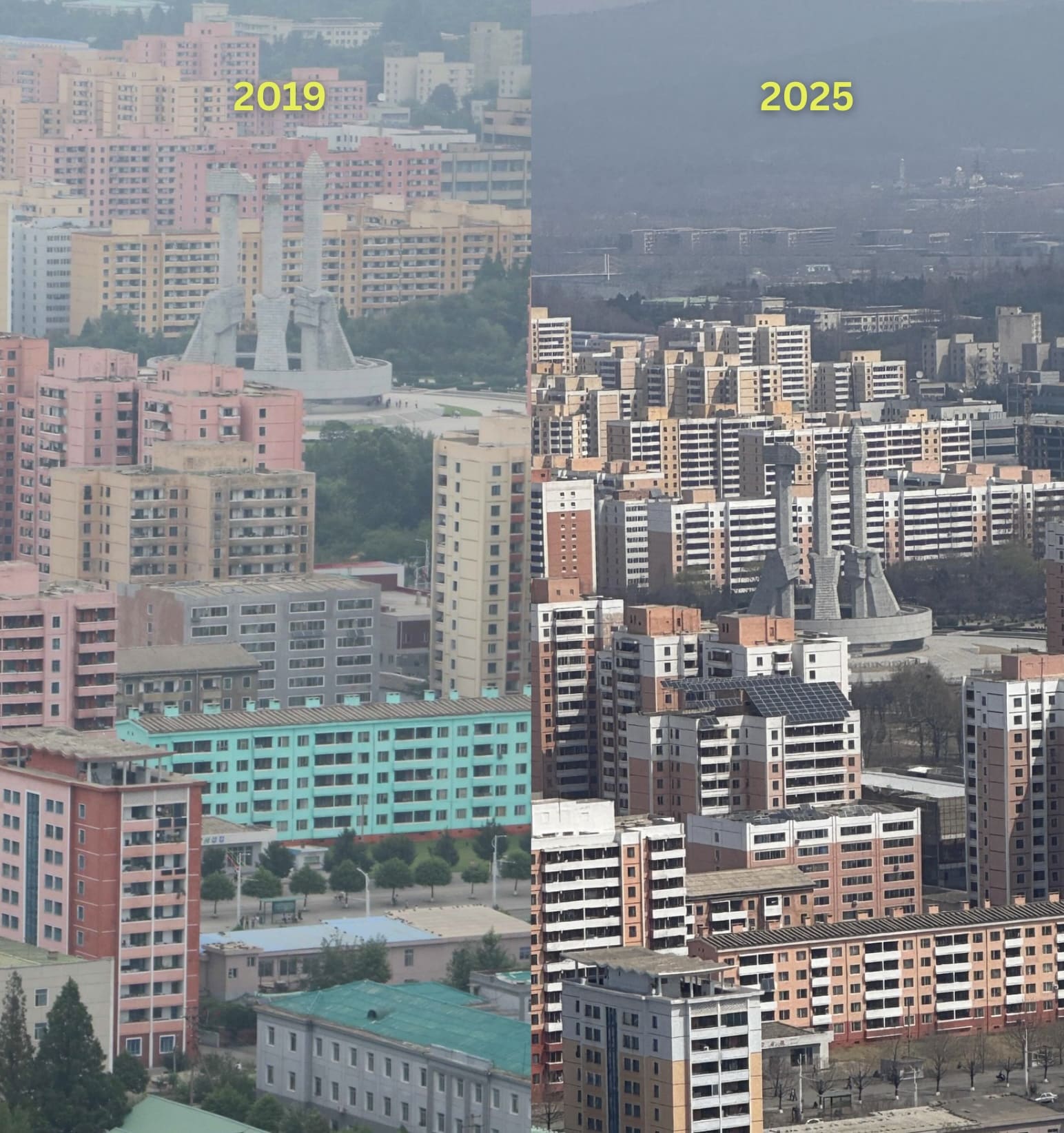
Pyongyang's architecture in 2019 still had plenty of colour, but it looked noticeably older, while in 2025 it has been freshly repainted.
Over these six years, North Korea's political propaganda has also undergone subtle changes. Images of Kim Jong-un now appear across every corner of the city, and slogans such as "With Comrade Kim Jong-un at the Core" have become mainstream. He has not only consolidated his power but has also begun to build his own brand of "Kim Jong-un-ism." Compared to his father Kim Jong-il's era, which emphasised military-first policy, Kim Jong-un's new direction focuses on "real-world response capability": promoting AI technology, developing nuclear energy, and encouraging regional economic self-reliance. The modernised Pyongyang is not just an image-building project, but also a demonstration of his resolve for domestic economic reform.
At present, North Korea only opens up for specific itineraries and events, such as the Pyongyang International Marathon, which still requires arrangement through a designated travel agency and must be accompanied throughout by an official guide.
You need to register in advance and obtain a visa; before departure, you must comply with North Korea's codes of conduct and respect the local culture and political atmosphere.
As the capital of North Korea, Pyongyang enjoys excellent public security, but freedom of movement is restricted. It is recommended to join a tour group and follow the official arrangements.
Returning to North Korea, the changes in Pyongyang are truly striking. From the cityscape to political propaganda, we see a country that is both upholding tradition and pursuing modernisation. Will North Korea in the future find a new balance between isolation and openness? If you too want to gain an in-depth understanding of this mysterious country, join DeWonder Travel and let us take you into the most authentic North Korea. We are the most experienced travel agency in Hong Kong and Taiwan, having brought the most travellers to North Korea. Over the years, we have negotiated itineraries directly with North Korea, produced Hong Kong's first television programme to enter northeastern North Korea, and published the bestselling book "Having Visited North Korea 50 Times, Ask Me Anything". Our experience in North Korea travel is truly unrivalled. 👉 Contact us now to learn about the latest itineraries and registration information!