
Tibetan Culture Guide: Tibetan Buddhism Knowledge, Thangka Experiences, and Travel Etiquette
Exploring Tibet isn't just about the scenery—it's a genuine cultural experience. Understanding temple etiquette, hands-on thangka painting, and sharing meals with Tibetan families all turn your journey into a story of deep cultural exchange.
Tibet is a society centered on religion and culture. Local life is deeply intertwined with faith, and this is reflected in everyday greetings, dining etiquette, and traditional arts such as thangka painting—each showcasing the region's unique ethnic character. Learning about these cultural nuances and tips beforehand will help you travel with greater ease and appreciate Tibet's charm on a deeper level.
In Tibet, culture and daily life are often inseparable. For example, spinning prayer wheels in temples is not only a religious ritual but also a daily habit; butter tea and tsampa at family gatherings are more than just food—they represent hospitality itself. For travelers, understanding these cultural symbols can help reduce misunderstandings and add warmth to the journey. When you observe and participate with respect and curiosity, you'll be able to sense the depth and warmth of Tibetan culture throughout your trip.
Tibetan Buddhism is more than just a belief system in Tibet—it permeates daily life and culture. Temples serve as social and spiritual centers for Tibetans, and visitors who approach them with respect will experience the local atmosphere more fully. Here are a few tips to keep in mind when visiting temples:
- Move Clockwise: When circling stupas or spinning prayer wheels, remember to always move in a clockwise direction.
- Keep Quiet: Temples are places for prayer and practice, so avoid loud conversations or noise.
- Be Mindful When Taking Photos: Photography is prohibited in some temple interiors, so it's best to ask your guide or local staff beforehand.
- Respect Monks and Buddha Statues: Avoid touching monks' robes or Buddha statues casually, as a sign of respect.
Keeping these small details in mind during your temple visits will not only help you avoid misunderstandings but also bring you closer to the local perspective on faith.

DeWonder travelers spin prayer wheels clockwise at a temple, experiencing a daily ritual of Tibetan Buddhism.
When traveling in Tibet, "respect" is the most important thing when interacting with locals. From greetings to table manners, these small details can often help you be accepted by locals more quickly. Everyday Interaction Tips
- Greetings: A smile paired with a simple "Tashi Delek" (a Tibetan blessing meaning good fortune) can help bridge the distance.
- Actions to Avoid: Avoid touching a child's head casually, as the head is considered a sacred part of the body.
- Giving and Receiving with Both Hands: Whether offering tea or receiving items, it's polite to use both hands.
Dining Customs Tips
- Butter Tea: If your host offers butter tea, it's best to accept politely—even just a small sip shows friendliness.
- Tsampa: This is a staple food in Tibetan daily life, and travelers can try accepting a small portion offered by their host.
- Let the Host Lead: When dining with Tibetan families, it's customary to wait for the host to signal before starting the meal.
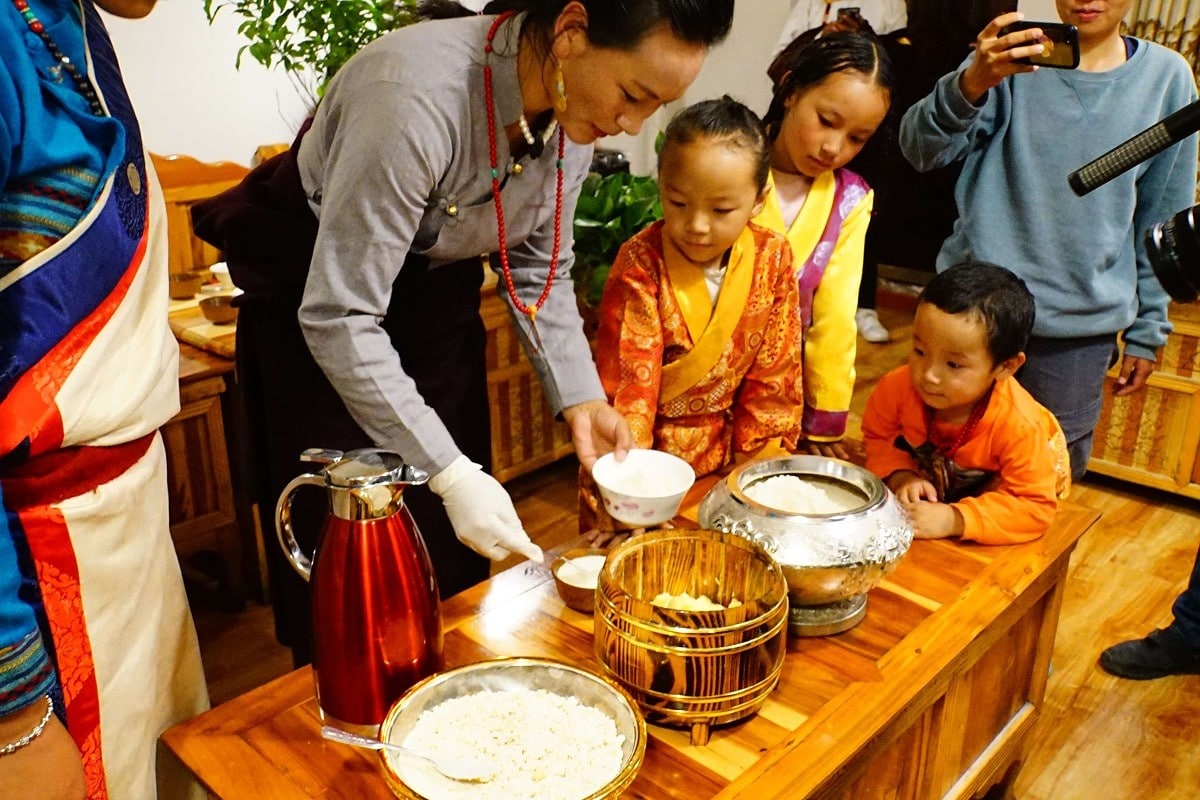
A Tibetan family prepares tsampa and butter tea, showcasing their warm and hospitable culture. Though these cultural details may seem simple, they help travelers blend in more quickly and experience the warmth and sincerity of the Tibetan people. 《Tibet Travel Do & Don’t Tips》
✅ Things to Do | ❌ Things to Avoid |
Always walk clockwise around temples and stupas | Do not walk counterclockwise around stupas or touch Buddha statues casually |
Offer and receive items or tea with both hands as a sign of respect | Do not accept things carelessly with one hand or ignore someone’s goodwill |
Greet people with a smile or a simple “Tashi Delek” in Tibetan | Do not speak loudly in public or discuss sensitive topics |
Politely accept butter tea or tsampa offered by your host, even if you only take a small sip or bite | Do not outright refuse or show any sign of disgust |
Wait for a cue from your host before starting to eat | Do not start eating first or open food containers without permission |
Stay quiet in temples or during religious occasions | Do not take photos casually or disturb people who are chanting scriptures |
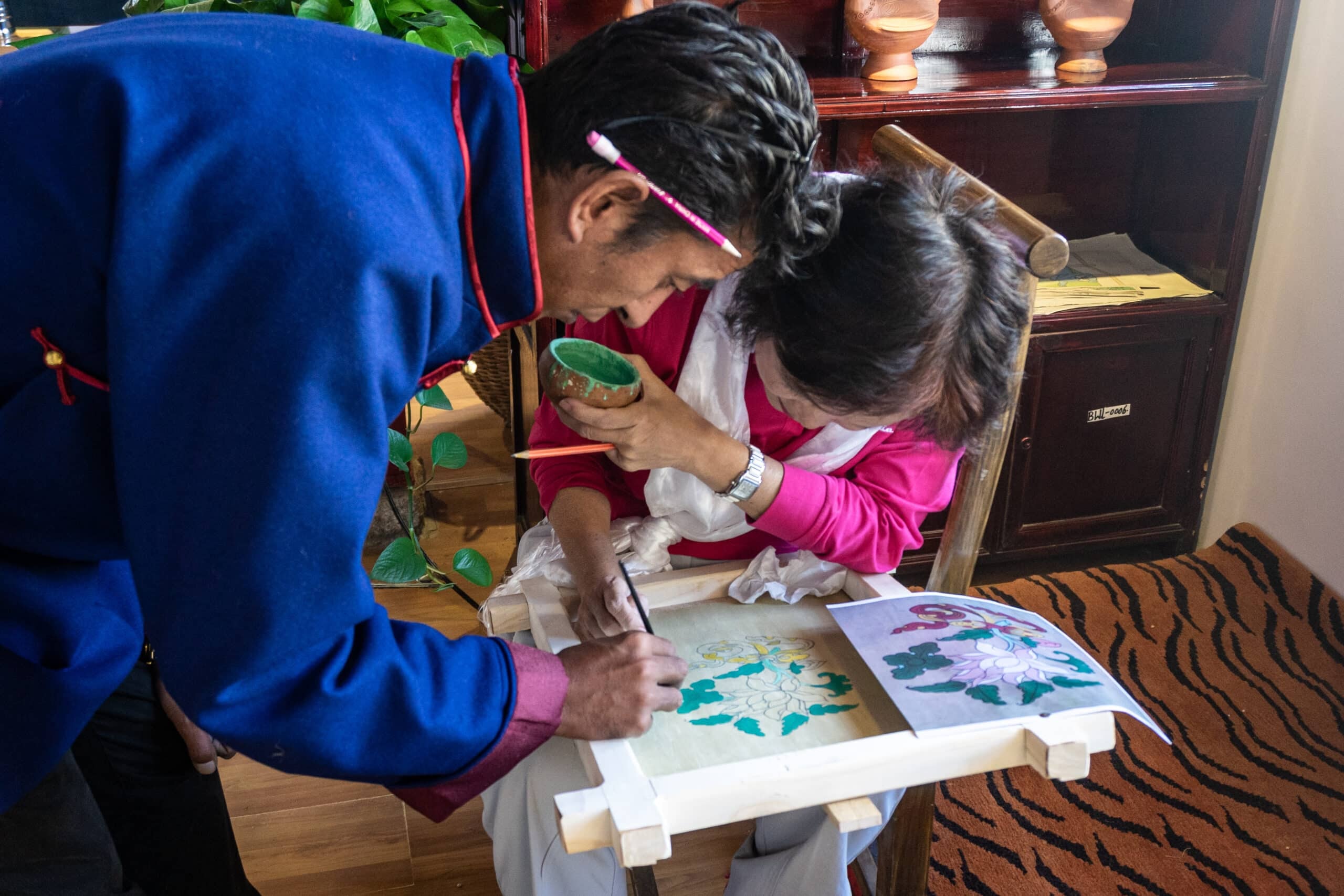
Thangka is a Tibetan painting art with a history spanning hundreds of years, typically centered on religious themes, with pigments largely derived from minerals and plants, giving the colours a vividness and durability. Beyond its artistic value, thangka also carries meanings of blessing and cultural significance. For travellers, being able to personally experience thangka painting is not only a process of learning traditional craftsmanship, but also a way to calm the mind. The finished thangka artwork can also become a one-of-a-kind travel keepsake.
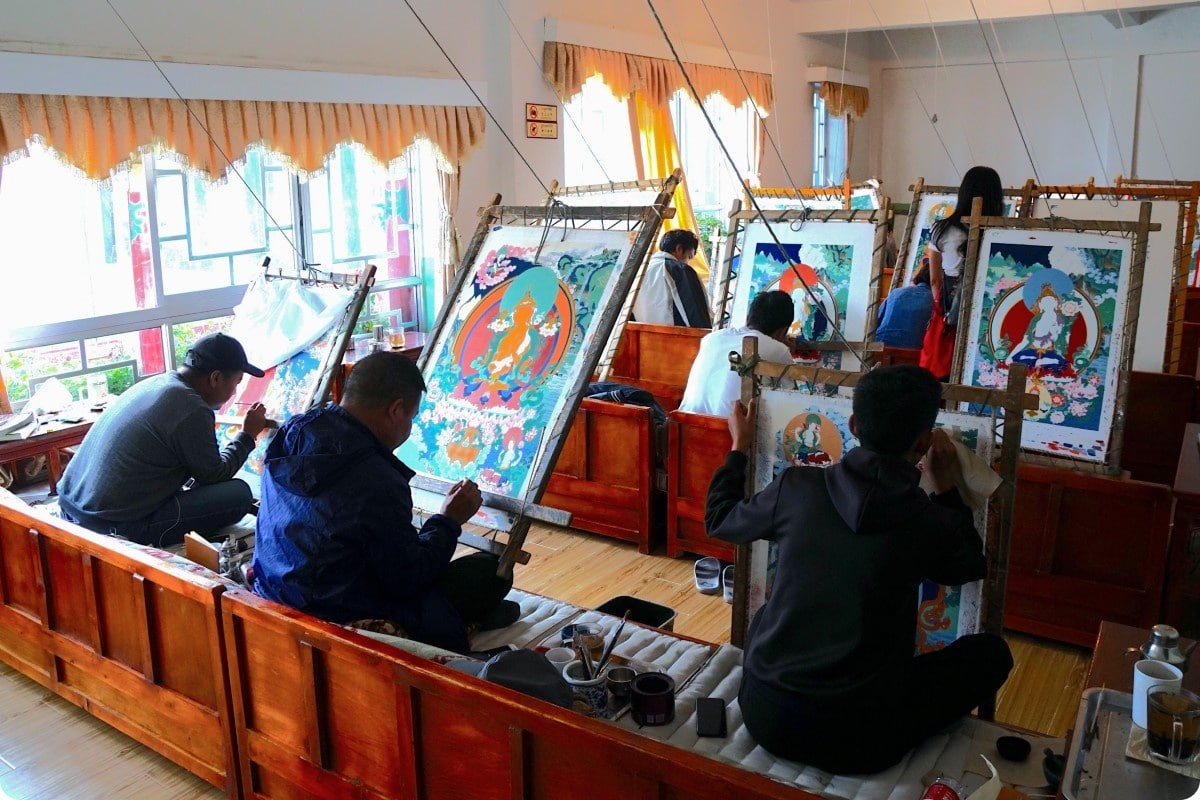
DeWOnder group members focus intently on painting thangka at the thangka academy, experiencing the delicacy and solemnity of this traditional craft.

On this DeWonder exclusive itinerary, group members personally paint a thangka to completion, keeping a one-of-a-kind travel memento.
A way to get closer to Tibetan culture than dining at a restaurant is to step into a Tibetan household and share a meal at the same table as the hosts. This is not just a meal, but a cultural exchange. Travellers can experience traditional foods such as butter tea and tsampa, and through conversation come to understand the daily life and hospitality of the Tibetan people. This kind of interaction means the journey is no longer just about "sightseeing", but about personally participating in local life and feeling the warmth of the culture.

Travellers step into a Tibetan household to share table time together, experiencing the most genuine culture of hospitality.
Q1: What etiquette should I be aware of when visiting Tibetan Buddhist temples? A: When circling stupas or turning prayer wheels, it's recommended to keep a clockwise direction and avoid going against the flow. Please remain quiet inside temples, avoid speaking loudly or taking photos casually. When encountering monks, refrain from touching their robes without permission, as a sign of respect. Q2: Can Thangka paintings be freely purchased or taken home? A: Beyond being works of art, Thangkas also carry religious significance for local people. If you'd like to bring one home, it's best to choose pieces from a Thangka academy or professional painters, ensuring both quality and respect for cultural taboos. Q3: What manners should I observe when Tibetans offer butter tea? A: If offered butter tea, it's polite to receive it with both hands—even taking just a small sip shows respect to your host. If you're truly not used to the taste, you can politely set the cup down rather than refusing outright. Q4: What's the proper way to behave when sharing a meal with a Tibetan family? A: Typically, the host will signal when to begin eating, and guests should follow suit. If you encounter unfamiliar dishes, taking a small bite to show appreciation for the host's hospitality is enough—you don't need to force yourself to finish it.
Tibet's charm lies not only in its majestic snow-capped mountains and lakes, but also in its profound cultural heritage. From the solemn atmosphere of its temples, to the intricate brushwork of Thangka paintings, to the warm interactions of sharing meals with Tibetan families—every moment brings you closer to this land. Our 8-Day In-Depth Tibet Tour features carefully designed experiences such as Thangka painting workshops and meals with Tibetan families, guided by expert local guides—turning your journey into more than just sightseeing, but a true immersion into local culture. Want to experience the unique moments of Thangka painting and dining with a Tibetan family for yourself?Check out our 【Tibet 8-Day In-Depth Tour Itinerary】 now, and let your journey become an unforgettable cultural exploration! 👉 Check out theFull-Year Tibet Tour Schedule 👉 Further Reading: When Is the Best Time to Visit Tibet? Best Travel Seasons and Four-Season Experiences 👉 Further Reading: Must-Visit Attractions in Tibet 👉 Further Reading: Must-Visit Monasteries in Tibet