
To See the Aurora, Should You Go to Antarctica or the Arctic? Understanding Aurora Travel Destinations Once and For All
Want to chase the aurora but don't know where to go? Although auroras can appear at both the North and South Poles, only one end is actually easy to observe from! Let us walk you through the differences between the northern and southern lights, the best viewing seasons, and the ideal way to travel, so you can finally figure out how to choose your aurora trip!
Every year as autumn turns to winter, searches for "aurora travel" surge, and many people ask: "Do I have to go to Antarctica or the Arctic to actually see the aurora?" After all, both places have "pole" in their names, and both sound close to the sky. But in reality, although auroras appear at both poles, they aren't equally visible from both. This article will break down the truth about auroras for you, helping you understand the differences, seasons, and travel feasibility of the northern and southern lights, so you can choose the right destination and boost your chances of actually seeing one.
Many people assume that going to the "southernmost" or "northernmost" point on Earth guarantees a sighting, but what truly determines whether you'll see the aurora isn't geographic extremity, but rather "the length of darkness" and "whether people can actually get there." What we call the Northern Lights (Aurora Borealis) and the Southern Lights (Aurora Australis) are actually natural phenomena that occur symmetrically at the Earth's magnetic poles. Both share the exact same "cause"—the interaction between solar wind and Earth's magnetic field. But the difference lies here:
- The Arctic Circle has residents, cities, and accessible travel routes,
- while Antarctica remains closed almost year-round—even though winter brings long nights, travel there isn't available.
So from a traveler's perspective: "Auroras do indeed appear at both poles simultaneously, but the ones you can actually 'see with your own eyes' are almost always in the Arctic Circle."
When it comes to the Southern Lights (Aurora Australis), many people's first reaction is: "That should appear over the Antarctic continent, right?」Indeed, the Aurora Australis is the "twin" of the Aurora Borealis—they occur through the same mechanism, just appearing on opposite ends of the Earth. However, there's a key difference here—the Aurora Australis appears during Antarctica's "winter" (roughly May to August), a period when the entire continent is locked in ice and snow, with temperatures plunging as low as -70°C. Aside from research station staff, no one is able to enter this region.In contrast, the tourist season when visitors can travel to Antarctica is from November to February the following year, which falls during Antarctica's "summer", with almost 24-hour daylight—there isn't even any night, so naturally the aurora cannot be seen. Simply put, for travellers: "The Aurora Australis does exist, but you won't see it on a typical trip."
Although most people cannot access Antarctica during winter to observe it, the "band of light" of the Aurora Australis actually extends to around 60°–65° south latitude. This means that in high-latitude regions of the Southern Hemisphere, there is occasionally a chance to witness this pink-green glow firsthand. 📍 Locations where the Aurora Australis is occasionally visible include:
- Tasmania, Australia
- The southern tip of New Zealand's South Island (such as Dunedin and Queenstown)
- South Georgia Island
- Waters near the Antarctic Peninsula (occasionally encountered on a small number of cruise voyages)
However, seeing the Aurora Australis is no easy feat—besides needing strong solar wind activity (a Kp index of 6 or above), you also need a clear, cloudless night free of light pollution. For most travellers, the Aurora Australis therefore remains a dreamlike phenomenon that you may encounter, but cannot count on.
Location | Latitude | Visibility of Aurora Australis | Likelihood | Remarks |
Antarctic Interior | About 75°S | ✅ Theoretically Visible | ★★★★★ | Only observable by research personnel |
Antarctic Peninsula (Cruise Area) | About 65°S | ⚠️ Possible | ★☆☆☆☆ | Travel season is daylight, hard to see |
Tasmania (Australia) | About 43°S | ⚠️ Possible | ★★☆☆☆ | Visible during strong solar wind activity |
Southern Tip of New Zealand's South Island | About 45°S | ⚠️ Possible | ★★☆☆☆ | Occasionally appears as "purple-pink aurora" |
South Georgia Island | About 54°S | ⚠️ Rare | ★☆☆☆☆ | Mostly for scientific observation purposes |

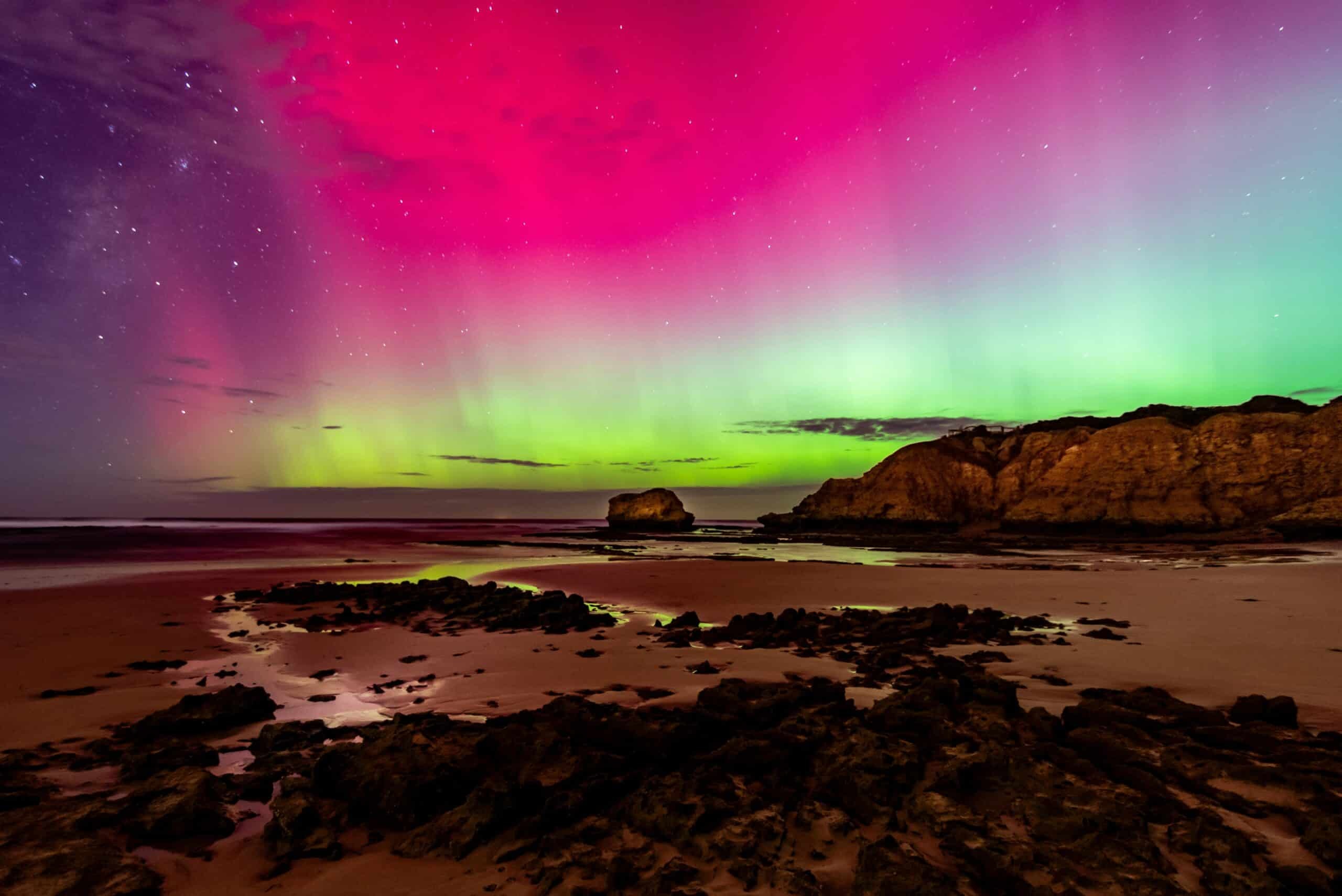
The Aurora Australis captured in southern Australia, glowing in soft pink and purple hues. Photo by Graham Holtshausen on Unsplash
When people think of auroras, most picture the Northern Lights. That gentle green glow dancing across the night sky, shimmering above icy plains, has almost become synonymous with "polar travel." And this is no coincidence — the Northern Lights are not only easier to see, but also easier to reach.
The Arctic aurora season generally runs from September through to March the following year. During this period, nights are long and the weather is stable, making it the peak time for viewing and photography. Unlike the 24-hour daylight of Antarctic summers, the Arctic experiences long polar nights in winter — as long as the skies are clear and light pollution is minimal, there's a chance to see the aurora almost every day. 📍 Popular viewing destinations include:
- Iceland: Easy to access, offering a dual experience of auroras and volcanic landscapes
- Tromsø, Norway: European travellers' favourite aurora city
- Rovaniemi, Finland: The romantic top choice for viewing auroras from a glass igloo
- Greenland & Yellowknife, Canada: High success rate + spectacular natural scenery
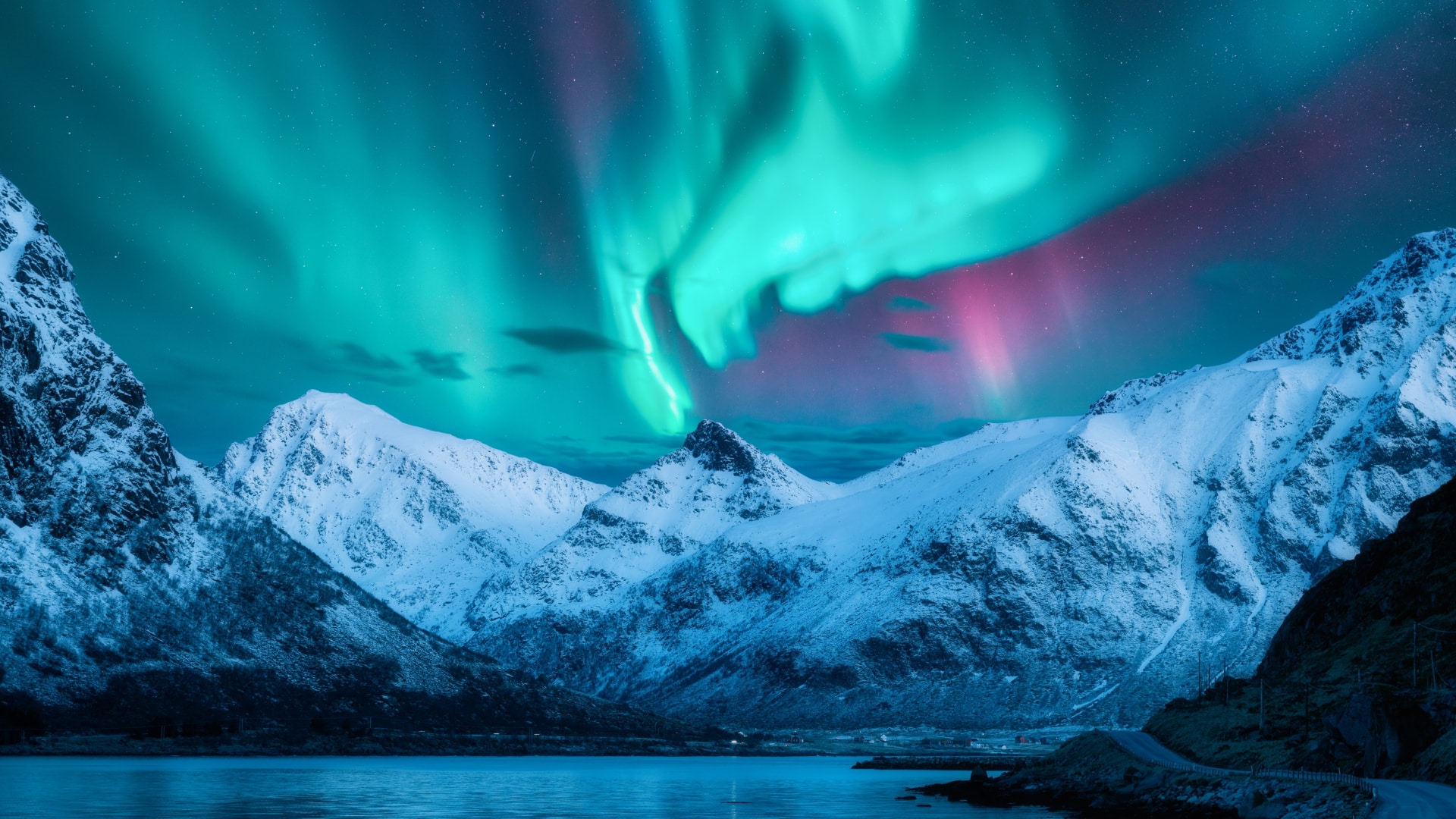
The Northern Lights dance above Arctic Circle fjords, green glow reflecting off snow-capped mountains and glaciers—the most magical moment countless travellers chase. 👉Further Reading:Arctic Aurora Guide
If you want to combine "Aurora + Polar Expedition" in one trip, an Arctic cruise is the most relaxed choice—and the one with the best chances of seeing the Northern Lights. Cruise ships can adjust their route in real time based on weather and cloud cover, seeking out "clear windows" (brief clear-sky patches) to avoid thick cloud, offering far more flexibility than land-based aurora hunting from fixed locations. Combined with near-zero light pollution on deck and a 360° open view, the success rate for spotting auroras is often higher than on land. This is also why many photographers and astronomy enthusiasts choose cruises departing from Reykjavik toward Greenland's waters—because the night sky there is so clear it feels like almost nothing but light remains.

Chasing the Northern Lights from a cruise deck is the purest, most luxurious experience. With zero light pollution and an unobstructed view all around, you can watch the aurora dance across the night sky at a full 360°.
Aspect | Land-Based Aurora Chasing | Cruise-Based Aurora Chasing |
Mobility | Limited by location and weather | Route can be adjusted to avoid clouds |
Light Pollution | Need to leave the city | Almost zero light pollution |
Shooting Conditions | Can be paired with landscapes | Unobstructed 360° panoramic views |
Comfort | Daily accommodation changes, long drives | Meals, lodging and transport all sorted at once |
👉 Further Reading:Land vs Cruise Aurora Chasing, Which Suits You Better?
Beyond geographic and weather conditions, the Arctic has one great advantage — you can actually get there and experience it. Departing from Hong Kong or Taiwan, you can reach Iceland or Northern Europe via a connecting flight, or even join a cruise voyage to see glaciers, fjords, wildlife and the aurora all in one trip. In other words, "chasing the aurora in the Arctic isn't just watching a celestial phenomenon — it's an adventure you can truly take part in." Since the conditions in the Antarctic and Arctic differ so greatly, let's compare the two side by side to see where the real differences lie.
Although the "Aurora Australis" and "Aurora Borealis" sound like twins, they are indeed formed by the same process — the interaction between solar wind and Earth's magnetic field, creating magnificent bands of light in the high-latitude sky. But the real difference lies not in the astronomical phenomenon itself, but in whether we can actually witness it in person.
- The Aurora Australis mostly appears within the Antarctic Circle (south of 60°S), where, apart from a few research stations, there are no permanent residents and no tourism access.
- The Aurora Borealis covers multiple travel-friendly regions such as Iceland, Norway, Finland, Greenland and northern Canada — whether you prefer self-driving, staying in a glass igloo, or cruising, you can wait for the aurora under the night sky.
Comparison | Aurora Borealis (Northern Lights) | Aurora Australis (Southern Lights) |
Cause | Interaction between solar wind and Earth's magnetic field | Same as above |
Visible Season | September–March of the following year (Northern Hemisphere autumn/winter) | May–August (Southern Hemisphere winter) |
Travel Season | Aligned: sightseeing possible + long nights ideal for viewing | Opposite: peak travel season falls in daylight months (Nov–Feb) |
Accessibility | High: reachable via Iceland, Greenland, Norway, Finland, and Canada | Extremely low: accessible only by scientific research vessels |
Photography Conditions | Low light pollution, long nights, stable weather | Extreme cold with frequent storms, outside travel season |
Common Colours | Green, purple, pink, white | Green, red (rare) |
Example Viewing Locations | Reykjavik, Greenland, Tromsø, Rovaniemi, Yellowknife | Tasmania, New Zealand's South Island (very rare chance) |
💬 Expert Insight: Auroras Aren't Only Visible at the "Most Extreme" Latitudes Many people mistakenly believe that auroras can only be seen at the "northernmost" or "southernmost" points on Earth. In fact, the auroral zone is a ring-shaped region encircling both poles, located thousands of kilometres from the geomagnetic poles.Therefore, high-latitude regions in the Northern Hemisphere like Iceland (approx. 64°N) and in the Southern Hemisphere like Tasmania (approx. 43°S) all have a chance of seeing the aurora—it's just that conditions within the Arctic Circle are more ideal, with higher frequency of occurrence.
Having read this far, you've probably discovered one fact: if you want to see the aurora, there's really only one answer—head to the Arctic Circle. But that doesn't mean Antarctica isn't worth visiting; it's just that the two destinations offer completely different things to "see."
The Arctic Circle offers long nights, low light pollution, and excellent tourist facilities. Whether you want to self-drive, stay in a glass igloo, or join a cruise to dodge clouds and chase the lights, you can witness that dancing green light show in the most comfortable way. Recommended Experiences:
- ArcticGreenland Aurora In-Depth Tour: Depart from Reykjavik, chase the lights on deck at night, and explore glaciers and fjords by day.
- Finland Glass Igloo Tour:Lying beneath a transparent roof waiting for the aurora to appear is a romantic moment many people dream of.
- Iceland Self-Drive Aurora Route:Enjoy the Golden Circle and the Blue Lagoon by day, then chase the lights at night—flexible and free.
💡Tip:To see the aurora, remember to allow at least 3–5 nights, as even in good weather you might still encounter cloud cover. 👉 Further Reading:Arctic Travel Guide | Arctic Aurora Guide | Aurora Hunting Guide

Chasing the aurora by cruise ship allows the vessel to adjust its route according to weather and cloud cover, seeking brief clear spells — giving you a better chance of seeing the lights than from a fixed location

On an Arctic Greenland cruise itinerary, you can take a Zodiac boat during the day to admire the polar scenery up close, then chase the aurora from the ship's deck at night
The focus of an Antarctic journey isn't the aurora, but the magnificent glaciers, penguins, and light-pollution-free polar landscapes. From November to February each year is the only season when landing in Antarctica is possible, when the sun barely sets — you'll see penguins raising their chicks, whales migrating, and icebergs reflected on the azure sea. Recommended Experiences:
- Antarctica In-depth Ecological Tour:Sail through the waters of the Antarctic Peninsula aboard an icebreaker cruise, observing penguins and glaciers up close.
- South Georgia Island Extension Route:Visit a less-trodden island to see gatherings of king penguins and seals.
💡Quick Tip:Antarctic summer isthe "Midnight Sun Period", meaning 24-hour daylight, so the aurora is completely invisible — but you'll witness even rarer sights instead. 👉 Further Reading:Antarctica Travel Guide | Antarctica Penguin Guide | Antarctica Attractions Introduction
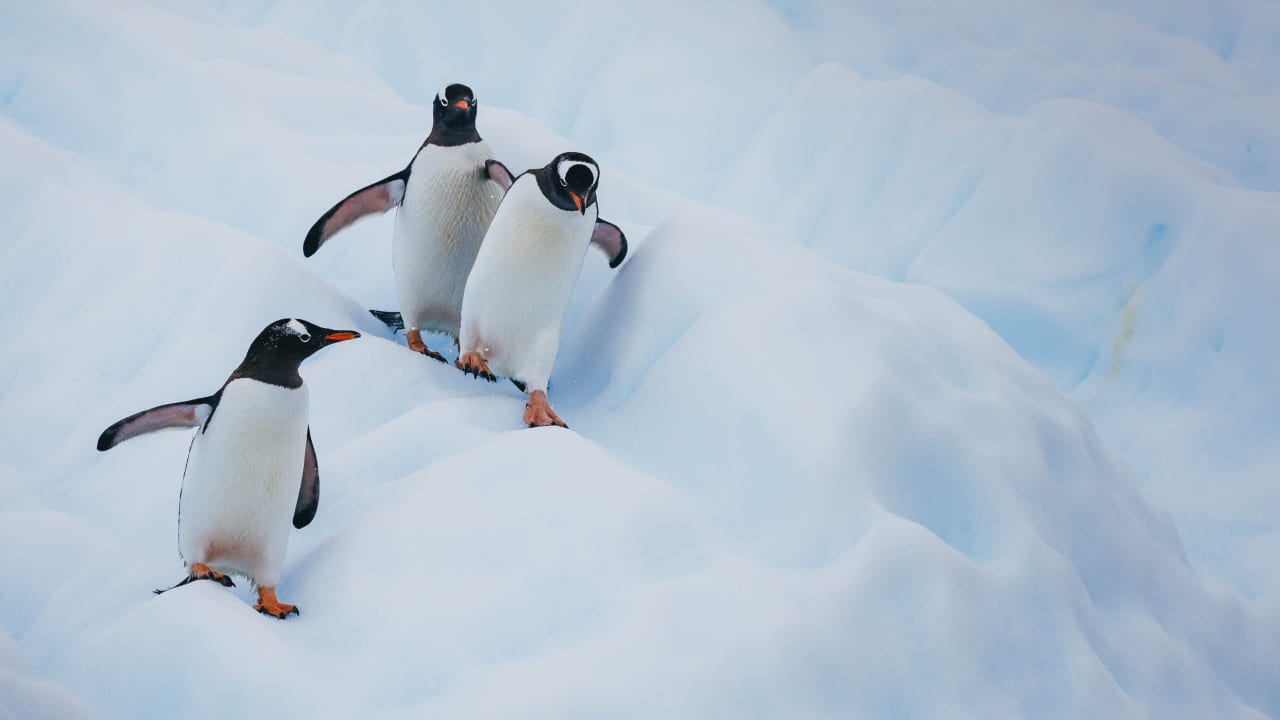
The most classic itinerary when heading to the Antarctic continent is watching different species of penguins — a once-in-a-lifetime experience
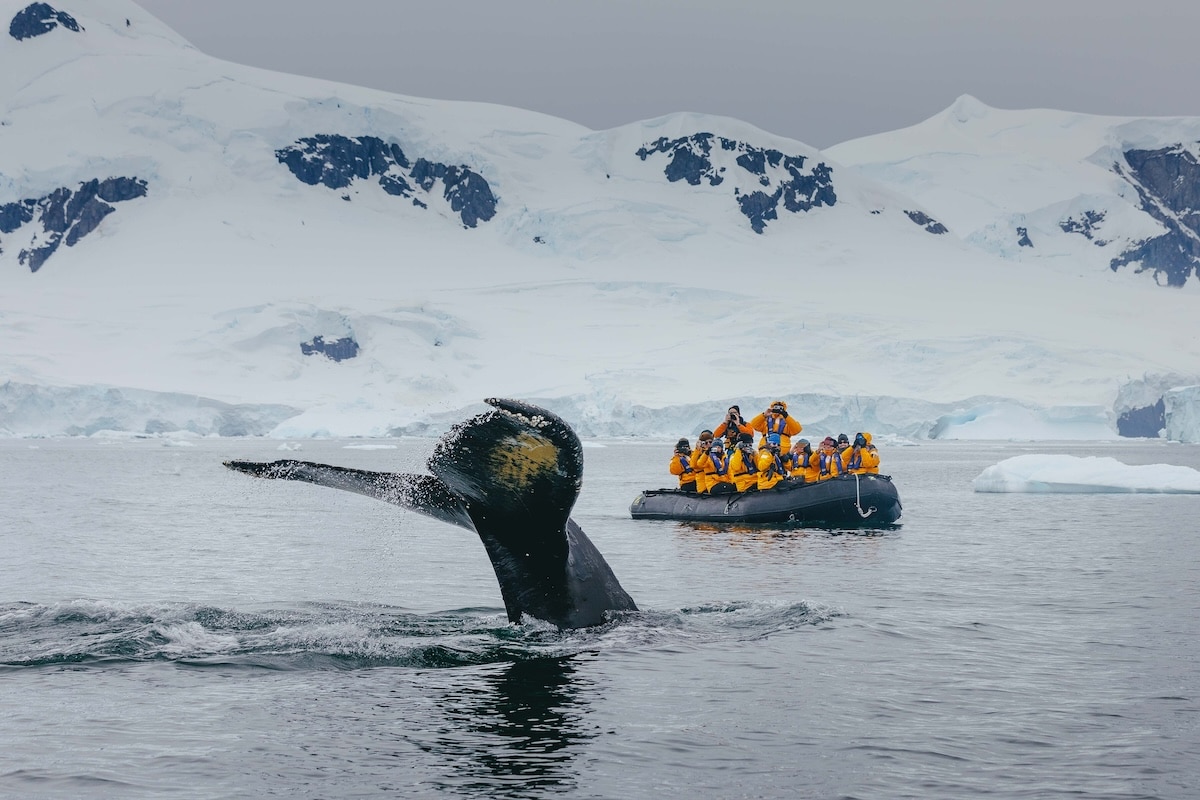
Antarctic cruise Zodiac excursions explore different wildlife habitats depending on the day's weather conditions, and with luck you may even encounter whales
Your Travel Goal | Recommended Destination |
✅ Want to see the aurora, photograph it, and shoot night skies full of stars | The Arctic Circle (Iceland / Finland / Greenland) |
✅ Want to see penguins, glaciers, and the ends of the earth | Antarctica (summer cruise) |
✅ Want to experience aurora and glaciers in one trip | Arctic Greenland Cruise (autumn only) |
Having compared the auroras of the north and south, you should now know which pole to set your sights on. Whether you want to witness the aurora's green dance with your own eyes or set foot on the icy continent at the end of the earth, there's a journey suited to your pace and interests.
- Departing fromReykjavik, Iceland, crossing the Denmark Strait, deep into thefjords of northeastern Greenland
- Daily Zodiac landings to explore glaciers, Arctic villages, and wildlife
- September is the best time to view the Northern Lights, offering the perfect combination of aurora and wildlife exploration
- A once-in-a-decade astronomical spectacle: witness a total solar eclipse on the Arctic glaciers
- The itinerary combines fjord exploration, wildlife observation, and scientific lectures
- Perfect for travelers who love photography and astronomy
- Gather in Helsinki, Finland, then take a charter flight to Longyearbyen to board the ship
- Explore the region with the world's highest density of polar bears, discovering glaciers and wildlife under the summer's midnight sun
- Flexible route design, adjusted in real time based on wildlife sightings and sea conditions
👉 Check out theYear-Round Arctic Departure Schedule
As a partner of Quark Expeditions, DeWonder offersthe most affordable Antarctica cruise prices on the market, making your dream polar expedition a reality. Antarctica In-Depth Itinerary
- Route: Classic single-island Antarctic Peninsula itinerary
- Voyage duration: 11-day, 10-night cruise itinerary
- Cost includes: Cruise fare, landing activities, onboard meals, polar lectures, professional guidance from the expedition team
- Exclusive services: Professional pre-departure consultation for Hong Kong/Macau/Taiwan departures, visa consultation, flight transfer advice, and packing guide
👉 ViewFull-Year Antarctica Departure Schedule 👉 Further Reading: Arctic Travel Guide | Antarctic Travel Guide 👉 Further Reading: Arctic Travel Costs | Antarctic Travel Costs 👉 Further Reading: Arctic & Antarctic Cruise Activities & Itinerary Comparison