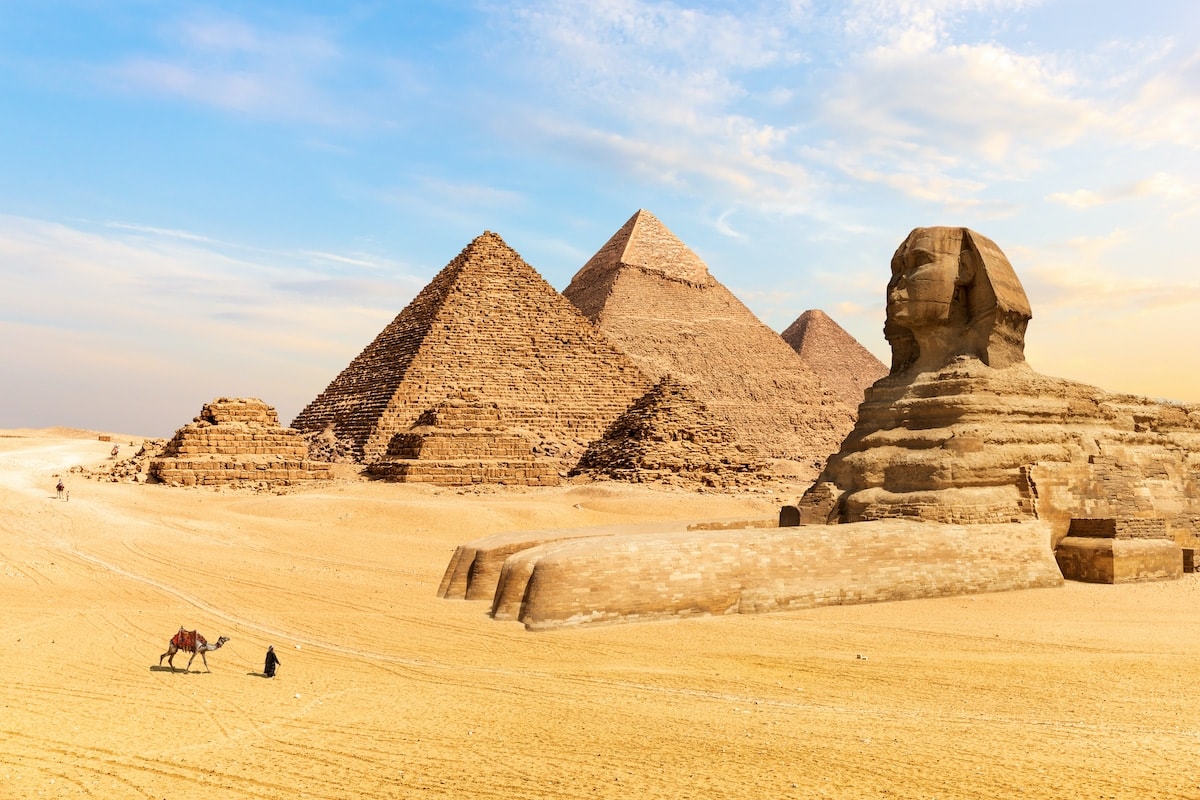
When it comes to the Egyptian pyramids, do you instantly think of mummies, treasure, or mysterious curses? In truth, the real face of the pyramids is far more magnificent—and far more relevant to the modern world—than you might imagine.
This article will take you through the pyramids from a practical perspective, starting with an introduction to the Giza Pyramid Complex, then step by step debunking five common myths, and finally guiding you through planning an insider-level visiting itinerary—so that before you set off, you'll know exactly what's really inside the pyramids, the smoothest way to get around, and everything you need to know before visiting.
Introduction to the Giza Pyramid Complex
Located on the western outskirts of Cairo, the Giza Pyramid Complex is one of the world's most iconic ancient sites. It comprises three main pyramids—the Pyramid of Khufu, the Pyramid of Khafre, and the Pyramid of Menkaure—built around 4,500 years ago during the Old Kingdom as tombs for successive pharaohs.
Today, the entire site has been designated a UNESCO World Heritage Site since 1979, and it is the only surviving structure among the Seven Wonders of the Ancient World. Besides the three main pyramids, the complex also features the guardian Great Sphinx, several subsidiary pyramids, and temple ruins, making it the perfect starting point for exploring ancient Egyptian civilization.

The pyramids stand alongside the Great Sphinx on the Giza Plateau in Egypt—the only structure among the Seven Wonders of the World still standing today. Seeing it up close is far more breathtaking than any photograph could capture.
Debunked!5 Common Myths About the Pyramids
Many people hold all sorts of imaginings about the pyramids—some think they hide pharaohs' mummies and treasures of gold and silver inside, some think they stand in the middle of an endless desert, and others feel that "you haven't really been there unless you ride a camel."Here we round up the five most commonly asked myths about visiting the pyramids, debunking them one by one with archaeological evidence and real travel experience.
Myth 1: Are there mummies and treasures inside the pyramids?
Many people assume that walking into a pyramid means seeing a pharaoh's mummy and glittering gold treasures. But in fact, the pyramids were emptied by tomb robbers thousands of years ago. Today, stepping inside a pyramid, all you'll see are ancient stone walls, narrow passageways, and empty burial chambers—no artifacts or remains whatsoever.
So where are the real treasures?
The precious artifacts and remains of the pharaohs from ancient Egypt are now mostly housed in museums around the world:
- Grand Egyptian Museum (Grand Egyptian Museum, GEM): Located next to the Giza Pyramids, this is Egypt's newest and largest museum, housing over 100,000 artifacts, including the complete burial collection and golden mask of Tutankhamun.
- The Egyptian Museum, Cairo (The Egyptian Museum, Cairo): Before the Grand Egyptian Museum is fully opened, this museum still displays some mummies and artifacts from the Old Kingdom period.
- The British Museum(The British Museum, London), the Louvre(Louvre, Paris), and the Neues Museum in Berlin(Neues Museum, Berlin) also house numerous mummies, sarcophagi, and statues of the pharaohs.
Although these collections are scattered across the globe, they have helped bring the wonder of ancient Egyptian civilisation to a wider audience.
💬 Fun Fact: Why Were the Pyramids Looted?
Once completed, the pyramids—filled with vast amounts of gold, silver, and burial treasures—soon became prime targets for tomb robbers. This later led the ancient Egyptians to adopt the hidden underground chambers of the “Valley of the Kings,” hoping to prevent their treasures from being stolen again.
Myth 2: What Can You Actually See Inside the Pyramids?
Many assume the interior of the pyramids is lavishly decorated with murals and treasures, but stepping inside reveals something different—it’s an experience, not a display.
Entering the pyramid, you make your way along narrow, sloping passages, the stone walls weathered by more than four thousand years. The air is dry and stifling. When you finally reach the burial chamber, you’ll find a massive granite sarcophagus waiting in the silence and dim light—a spine-tingling moment that feels like coming face to face with a time over four thousand years past. This encounter is the true magic of the pyramids.
Comparing the Interiors of the Three Great Pyramids
| Pyramid Name |
Pharaoh & Era |
Interior Features |
What You Can See |
Visit Tips |
| Great Pyramid of Khufu |
Pharaoh Khufu, circa 2560 BC |
The most complex structure, featuring an Ascending Passage, the Grand Gallery, and the King's Chamber |
✦ Massive granite sarcophagus (empty)
✦ The spectacular sloping ramp of the "Grand Gallery" |
⚠️ The passage is long and steep, requiring visitors to stoop while walking; fairly physically demanding. Highly recommended for first-time visitors. |
| Pyramid of Khafre |
Pharaoh Khafre (son of Khufu) |
A simpler, well-preserved structure with a lower-lying burial chamber |
✦ Sarcophagus (no remains)
✦ Clearly visible stone grain on the chamber walls |
👍 A shorter, relatively easy route, suitable for travellers with average mobility. |
| Pyramid of Menkaure |
Pharaoh Menkaure (grandson of Khufu) |
The smallest of the three, with a burial chamber built of red granite |
✦ Replica of the burial chamber and sarcophagus (the original was lost in a shipwreck in the 19th century) |
🌙 Quiet and tranquil, with fewer crowds; ideal for those wishing to avoid the masses and experience the atmosphere of an ancient tomb. |
Latest Pyramid Complex Ticket Prices and Types
According to the official ticketing platform of the Egyptian Ministry of Tourism and Antiquities egymonuments.com, the following are the latest 2025 ticket prices (in Egyptian Pounds EGP, converted at 1 EGP ≈ 0.17 HKD):
| Ticket Type |
Foreign Adult (EGP) |
Foreign Student (EGP) |
Approx. HK Dollars (HK$) |
Access Scope |
| Entry Ticket |
700 |
350 |
Approx. HK$120 / HK$60 |
Access to the pyramid complex, the Sphinx, and panoramic viewpoints. | ❗️Does not include entry to the pyramid interiors.
| 胡夫金字塔 Khufu Pyramid |
1,500 |
750 |
Approx. HK$255 / HK$130 |
Allows entry into the pyramid interior to visit the Grand Gallery and the King's Chamber. Daily quota is limited, so early ticket purchase is recommended. |
| 孟卡拉金字塔 Menkaure Pyramid |
280 |
140 |
Approx. HK$47 / HK$24 |
Allows entry into the burial chamber area of the Third Pyramid. Small in space, with fewer crowds. |
| Mars Ankh Tomb(Tomb of a High Official) |
200 |
100 |
Approx. HK$34 / HK$17 |
Allows a visit to the tomb of a high-ranking official from the Old Kingdom, with well-preserved relief carvings on the walls. |
| Labor Tombs (Workers' Tombs) |
700 (minimum 5 tickets) |
350 |
Approx. HK$120 |
Group-only area. Requires advance booking for 5 or more people. |
💡Tips:
- You must purchase a park entrance ticket before entering any pyramid interior.
- Ticket prices are subject to official website announcements and on-site ticket counters, and may fluctuate frequently—please confirm before departure.
-
- Flash photography is prohibited inside the pyramids. Phone photos are generally allowed, but tripods or large cameras are not permitted.
- In summer, the interior is hot and the air is thin, so it's best to avoid entering around midday.
- If you want to experience both an “interior visit + panoramic photography,” it's recommended to enter the pyramids in the morning and head to the “Nine Pyramids Viewpoint” in the afternoon.
Myth 3: Are the Pyramids Deep in the Desert?
Many people imagine the pyramids as isolated structures in the middle of a remote Sahara Desert, surrounded only by endless golden sand and camels.But in reality, the Giza Pyramid Complex is less than a 30-minute drive from downtown Cairo — it sits almost right at the city's edge, so close that you can even spot cafés and hotels nearby.
How to Get to the Pyramids
There are several options for getting there from central Cairo:
| Transport Option |
Travel Time |
Advantages |
Recommendation |
| Uber / Careem (ride-hailing apps) |
About 25–35 minutes |
Safe, transparent pricing, comfortable air-conditioned cars |
You can simply set "Giza Plateau Entrance" as your destination.
(📱 Both apps are available in Egypt and accept credit card or cash payment) |
| Private Car / Guided Tour |
Half-day trip |
Can be combined with visits to the Grand Egyptian Museum, Nile dinner cruise, etc. |
Best value if traveling with a group or looking to save time. |
| Metro + Taxi |
About 50 minutes |
Lowest cost |
Requires switching to a taxi after getting off at the "Giza" station; not recommended for first-time visitors. |
💡Quick Tips:
- The network connection can sometimes be unstable, so it's advisable to download Google Maps offline maps beforehand. If using Uber, choose the "Cash" payment option to avoid delays with credit card transactions.
- As the area surrounding the site is still sandy terrain, please wear closed-toe shoes or sneakers to prevent fine sand from getting in.
Myth 4: Do You Have to Ride a Camel to Visit the Pyramids?
Riding a camel isn't a "must-do" activity for visiting the Pyramids — it's simply one way to experience them. The main attractions, such as the Great Pyramids and the Sphinx, can actually be reached on foot. Many travelers choose to ride camels mainly to soak in the exotic atmosphere, or to capture the classic "camel + pyramid" photo from the distant sand dunes.
Experience Highlights & Price Reference
| Item |
Recommendations & Details |
| Location |
Mostly concentrated around the "Nine Pyramids Panoramic Viewpoint" and the sand dune areas surrounding the site. |
| Duration |
About 10–20 minutes (short photo stop) or 30–60 minutes (full panoramic route). |
| Reference Price Range |
Around E£ 200–400 (approx. HK$ 34–70), depending on distance, duration, and negotiation. |
| Payment Method |
It's recommended to pay in Egyptian pound cash, and confirm in advance whether the price "includes the return trip" and "includes a photo stop." |
💬 Insider Tip: The prices above reflect the common range travelers encounter and are not official fixed rates. If a vendor quotes a price far above this or tries to raise it on the spot, it's best to politely decline or ask your guide to help confirm. We recommend agreeing on the amount and duration before mounting the camel, and staying alert to avoid being asked for extra "photo fees" or "dismounting tips" during the ride.

At the Giza Plateau, sand dunes, camels, and the three pyramids come together to form the classic image of Egypt—well worth pausing to admire, even if you skip the camel ride itself.
Myth 5: Did Napoleon Really Knock Off the Sphinx's Nose?
This is one of the most widely circulated pyramid legends. Many believe that when Napoleon's army invaded Egypt, his soldiers accidentally blasted off the Sphinx's nose with a cannon, forever altering its "face."
But this is actually a misconception. According to paintings and records predating the 18th century, the Sphinx's nose had already disappeared long before Napoleon was even born.
📜 The Historical Truth
- According to the 15th-century Arab historian Al-Maqrizi, in the year 1378 CE, a Sufi named Muhammad Sa'im al-Dahr, believing that local people's worship of the stone statue was "idolatrous," deliberately destroyed the Sphinx's nose as a form of punishment.
- Later sketches by European travelers and artists, such as Frederic Norden (1737), clearly show the Sphinx's nose already missing at that time.
In other words, the mystery of the Sphinx's missing nose predates Napoleon's era by roughly 400 years.
🧱 Why Is the Nose Particularly Prone to Damage?
The Great Sphinx was carved from a single block of limestone, with its nose protruding and structurally fragile — naturally susceptible to collapse under long-term wind erosion and sand exposure. Combined with centuries of human activity and failed restoration attempts, this has resulted in the appearance we see today.

The Great Sphinx sits at the front of the Giza Plateau, facing east to greet the rising sun. Though many legends surround its missing nose, the truth isn't Napoleon's doing.
The 'Insider's' Guide to Visiting the Pyramids (How-to-Visit)
Now that we've debunked those pyramid myths, the next thing to consider is how to get around and how to photograph them so you can truly appreciate the pyramids. This 'Insider's Guide' below breaks down the visiting route, timing recommendations, and photography tips, helping you avoid detours, capture great shots, and steer clear of tourist crowds.
Best Times to Visit the Pyramids & Pre-Trip Preparation
- Recommended Time:Entering right at the 8:00 AM opening is ideal — soft lighting, moderate temperatures, and fewer crowds. If you want to photograph the sunset, enter before 4:00 PM.
- What to Wear:Breathable clothing and closed-toe shoes. The ground around the pyramids is mostly loose gravel and fine sand, which can be slippery.
- Essential Gear:Water, sunscreen, sunglasses, a portable charger, and tissues.
- Ticket Reminder:If you plan to enter a pyramid, it's recommended to purchase tickets online in advance to avoid on-site quotas selling out.
3-Hour Highlights Route (Counter-clockwise)
- Entrance → Great Pyramid of Khufu→ Option to enter the pyramid or take photos of its full proportions from outside.
- Walk to the Pyramid of Khafre → The best-preserved exterior, with the original limestone casing still visible at the top.
- Head to the Great Sphinx → Morning light is favourable, allowing clear front-facing shots together with the Pyramid of Khafre.
- Finish at the Panoramic Viewpoint of the Nine Pyramids → Capture all three main pyramids in one frame — a popular spot for panoramic photos and camel experiences.
💡 Insider Tips for Visiting the Pyramids Complex
- Pacing Your Energy: The site is vast, so it's best to visit the main pyramids first before heading to the outer areas.
- Rest Stops & Restrooms: Facilities are only available at the main entrance, car park, and café area, with some requiring an E£10 tip.
- Sun Protection Strategy: The site offers very little shade, so a hat and water are essential.
- Dealing with Vendors: Simply smile and politely decline (you can say “La, shukran,” meaning “No, thank you”).
📸 The Ultimate Photo Guide to the Pyramids
Capturing that "postcard-worthy" pyramid photo isn't just about the angle — it's aboutthe timing of light, composition choices, and exposure control.
Best Time to Shoot
| Time |
Light Characteristics |
Recommended Scene |
| 8:00–10:00 AM |
Soft light, clear air |
Shoot the front view of the Great Pyramid of Khufu and the face of the Sphinx. |
| 3:30–5:00 PM |
Golden sunset light, rich shadow layers |
Capture the silhouette of all three pyramids from a distance for a full panoramic shot. |
| After dusk (summer only) |
Sky turns blue-gold gradient |
Shoot the night view from a rooftop scenic restaurant. |
💡Quick Tip:The pyramids are aligned east-west, so mornings offer front-lit shots while afternoons give you backlit panoramas. For that "golden pyramid" effect, the best time is about 30 minutes before sunset.
📍 Three Must-Shoot Composition Spots
- The ramp entrance of the Great Pyramid of Khufu → the most dramatic "low-angle view," perfect for emphasizing the scale of the architecture.
- The Sphinx viewing platform → the classic shot combining the Sphinx's face with the pyramids in one frame — best photographed in the morning to avoid backlighting.
- Nine Pyramids Panoramic Viewpoint→ This elevated vantage point lets you capture all three main pyramids together with camel silhouettes, making it the ultimate spot for panoramic shots.
⚙️ Camera Settings & Tips
Shooting with a Phone:
- You can turn on HDR mode to balance bright and dark areas, but under strong sunlight it's best to manually lower the exposure (around -0.3 to -0.7 EV) to avoid overexposing the stone walls or sky.
- Tap on the sky or the upper half of the pyramid to focus, then manually brighten the subject's face.
- If your phone supports RAW format (such as iPhone Pro or Samsung S series), turn it on to preserve more highlight detail.
Shooting with a Camera:
- We recommend an aperture of f/8–f/11 and ISO 100–200 to ensure sharpness and rich colour tones.
- For silhouette or sunset shots, set the exposure compensation to -1 EV to bring out more definition in the sky.
- In windy conditions, avoid using a tripod as it can easily topple over; instead, use rocks or your camera bag to stabilise low-angle shots.
Composition Tips:
- Placing a person in the foreground with the pyramid in the background creates a better sense of scale.
- Avoid cutting off the top of the pyramid — step back for a wider panoramic shot or try a low-angle composition instead.
- If you want to photograph the camels, ask the vendor to position them at a mid-distance so the camels and pyramids form a 1/3 ratio composition.
💡Quick Tip:
- The pyramids are far brighter than the background sky, so rather than relying on auto mode, it's better to deliberately shoot "slightly darker" and brighten the subject in post-processing — this gives cleaner tonal layers and prevents the sky from blowing out white.
- Flash, tripods, and professional lighting equipment are prohibited inside the pyramids.
3 Pre-Trip Reminders for Visiting the Pyramids (Hassle-Free Tips)
Visiting the pyramids isn't just about seeing a world wonder — it's more like a journey of "racing against time." But without adequate preparation, you can easily be worn down by weather, crowds, or vendors. These three pre-trip reminders will help you avoid common hassles before you even set off, so you can fully enjoy the pyramids' awe and romance.
Reasonable Negotiation Around "Camel Riding"
Within the pyramid grounds, camel rides are one of the most common tourist activities, but the price and duration usually depend on "on-the-spot bargaining."
Recommended approach:
- Confirm three things beforehand:Price / Duration (Minutes) / Whether the Return Trip is Included.
- A common price range is E£200–400 (approx. HK$34–70), which can serve as a reference.
- If a vendor's quote is much higher than this, feel free to smile and decline, or ask your tour guide for help.
📌 Handy tip:Before hopping on a camel, confirm whether a photo stop is included. If you'd like a photo with the camel, feel free to ask and offer a small extra tip (E£20–30 is enough)

Riding a camel in front of the pyramids is a dream experience for many travellers. Be sure to agree on the price and route in advance, so you can fully enjoy this ancient moment with peace of mind.
How to Deal with "Enthusiastic" Vendors and Guides
Egyptians are extremely warm and friendly, but also skilled at sales pitches. You may be approached frequently at entrances, car parks, or within the site.
💬 Insider tip:
- Learn a simple Arabic phrase: "La, shukran (No, thank you)." Said politely but firmly, it's the most effective way to decline.
- Avoid making too much eye contact with vendors, and don't casually take anything they hand you (such as souvenirs or a headscarf).
- If someone persists, simply walk towards other tourists or your guide group — they will usually back off.
💡Extra Reminder: Some people who claim to offer "free guiding" will ask for a tip after their explanation. If no fee was agreed upon in advance, it's best to politely decline or simply walk away.
Sun Protection, Hydration & Essentials
The Pyramids area offers very little shade, with daytime temperatures reaching over 35°C. Even in winter, the sun exposure can be quite intense.
Recommended Packing List:
| Item |
Recommendation |
| Sun Protection |
Sunscreen (SPF50+), hat, sunglasses. |
| Water & Supplies |
At least 1 bottle of drinking water per person, as prices inside the site are higher. |
| Cash & Small Change |
Prepare small denominations of Egyptian Pounds (E£10–20) for restrooms, tips, or snacks. |
| Tissues & Wet Wipes |
Restrooms on site are basic, so it's recommended to bring your own. |
| Power Bank |
Bring a power bank, as taking photos and using navigation drains battery quickly. |
💡Special Reminder:The interior of the pyramids has no air conditioning and narrow passageways. If you have claustrophobia or cardiovascular concerns, it's best to view them only from outside.
Truly "knowing how" to visit the Pyramids isn't just about getting beautiful photos—it's about knowing how to make your trip comfortable, safe, and undisturbed. Prepare these three things, and your Pyramids journey is already half a success.
Let DeWonder Take You on a "Deep Dive" into the Mystery of the Pyramids
If you've read this far, it means you already understand the true nature and visiting details of the Pyramids better than most travelers. But to witness these historic sites with your own eyes and truly experience the awe of the Pyramids, the safest and most efficient way is to leave it to a professional guided tour team.
✨ DeWonder Egypt In-Depth Tour Itinerary Highlights
Master the "Pyramid Strategy" in a Single Day
- Accompanied throughout by a professional Egyptian guide, visit the Great Pyramid of Khufu, the Sphinx, and all nine pyramids in full panoramic view.
- We handle pyramid entry tickets and help you avoid crowds and vendors, fully delivering the "insider route" mentioned in this article.
Witness the Real "Treasures" with Your Own Eyes
- Visit Cairo's new landmark, the Grand Egyptian Museum (GEM), for a close-up view of Tutankhamun's Golden Mask and pharaonic mummies.
- All your "pyramid myths" answered at once — the treasures and mummies are actually here.
Exclusive Experience: Lunch at a Pyramid-View Restaurant: Dine at "9 Pyramids Lounge" while enjoying the magnificent view of the three pyramids. Exclusive private seating, away from tour groups and crowds.
🚢 Extended Itinerary:
- Take a Nile River cruise to admire ancient civilization relics,
- and visit a Nubian village to experience traditional Egyptian culture and way of life.
DeWonder Egypt In-Depth Tour isn't just about "taking you to see" — it's about "helping you truly understand" the stories behind the pyramids. Our small-group itineraries make the exchanges along the journey more meaningful and interactive.
👉 View year-round departure dates for the Egypt In-Depth Tour
👉 Join our free online seminar to get your Egypt itinerary questions answered 👉 Click here to sign up
DeWonder Egypt In-Depth Tour Info Kit 👉 Click here to download
👉 Further reading: Egypt's Four-Season Climate & Outfit Guide | Best Time to Visit Egypt