
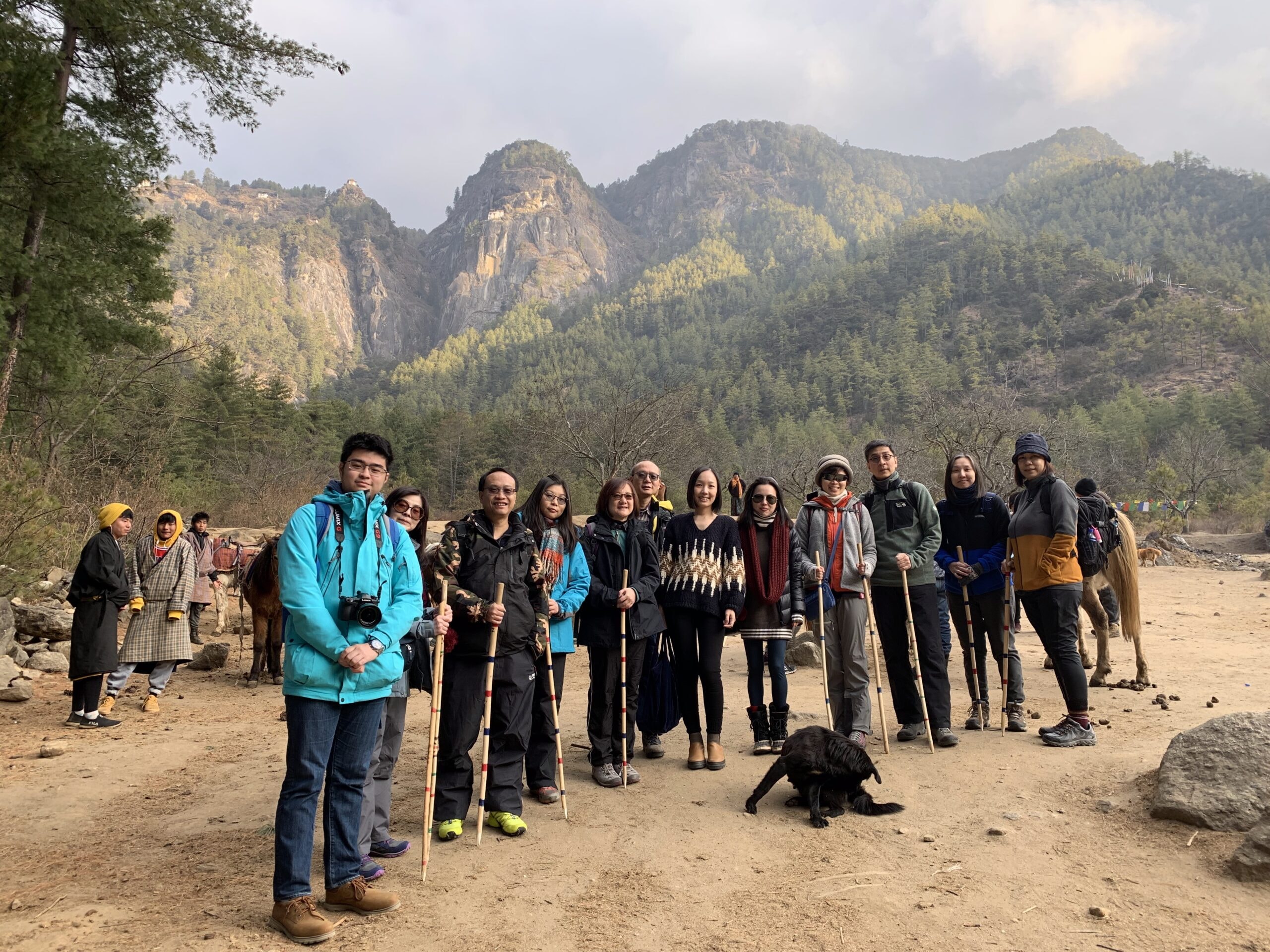
Will You Get Altitude Sickness in Bhutan? A Complete Guide to Elevation, Symptoms and How to Cope
How high is Bhutan? Will hiking to Tiger's Nest leave you gasping for breath? This article compiles elevation data and real-life experiences to help you understand whether altitude discomfort is really something to worry about.
When planning a trip to Bhutan, the first questions many people want to ask are:
- Will I get altitude sickness in Bhutan?
- Will it be very uncomfortable?
- Do I need to take altitude medication?
- Just how high is Bhutan's elevation?
This article compiles the relevant information on altitude sickness in Bhutan, so you can quickly grasp the key points and travel to Bhutan with peace of mind.
- In Bhutan it is "possible" to experience mild altitude sickness, but most people won't suffer severe discomfort.
- The main tourist areas sit at around 2,200–3,100 metres, much lower than Tibet.
- Common symptoms are headaches, light sleep, and getting easily out of breath when hiking.
- Most people acclimatise within a day.
- Slowing down on your first day is more important than taking medication.
Key takeaway: Bhutan is a mid-to-high altitude travel destination, with low-to-moderate risk, so there's no need to worry excessively.
Although Bhutan lies on the southern slopes of the Himalayas, most of its tourist areas are not at extremely high altitude. Elevations of Major Cities and Attractions
- Paro: about 2,200 metres
- Thimphu: about 2,300 metres
- Tiger's Nest: about 3,120 metres
- Dochula Pass: about 3,100 metres
Location | Altitude | Likelihood of Discomfort |
Paro | 2,200m | Low |
Thimphu | 2,300m | Low |
Dochula Pass | 3,100m | Moderate |
Tiger's Nest Monastery | 3,120m | Somewhat breathless during the hike |
💡Quick tip:Bhutan keeps you mostly between 2,200 and 3,000 metres. Compared with plateau regions that often exceed 4,000 metres, the overall risk is significantly lower.

Tiger's Nest Monastery is one of the higher-altitude sights on a Bhutan itinerary (about 3,120 metres). You may feel a little breathless during the hike, but it sits at a moderate altitude overall, and most travellers can complete it with ease simply by slowing their pace.
From a medical standpoint, mild altitude adjustment reactions can occur above 2,000 metres. Bhutan falls into the category of "medium-to-high altitude travel".
Altitude range | Likelihood of physical reaction |
Below 1500m | Almost none |
2000–3000m | Mild in a few people |
Above 3000m | Noticeable in some people |
👉 Most Bhutan itineraries fall within the second range So, the question of whether you will experience altitude sickness when travelling to Bhutan can be summed up as: ✔ You may experience a mild reaction ✔ But most people will not suffer serious discomfort

You may get slightly short of breath while hiking in Bhutan, but as long as the itinerary is well planned and your body is given a little time to adjust, most travellers will not experience noticeable altitude sickness and can enjoy the mountain scenery with peace of mind.
What occurs in Bhutan is mostly a presentation of "mild altitude sickness", but not everyone will experience such a reaction.
Symptom | When It Appears | Typical Recovery Time |
Headache | Day of arrival | Within 1 day |
Light sleep | First 1–2 nights | Within 2 days |
Reduced appetite | First 1–2 days | Gradually improves |
Getting easily out of breath when hiking | During treks | Improves after resting |
⚠️ Severe altitude sickness is quite rare on a typical Bhutan itinerary.
In Bhutan, discomfort is often linked to "activity intensity" rather than altitude alone. Those more prone to discomfort include:
- People who rarely exercise
- Those with an overly packed itinerary on the day of arrival
- Those who hike up to Tiger's Nest right after getting off the plane
- Those with existing heart or lung conditions
👉 Key reminder: The key to altitude sickness in Bhutan lies in "pacing your itinerary."
Dealing with altitude sickness in Bhutan is actually not complicated—the key is to "let your body adapt naturally." Most travellers experience only mild symptoms, which can be relieved simply by drinking plenty of water and resting.
Severity Level | Symptoms | Recommended Response |
Mild | Headache, slight shortness of breath | Drink plenty of water, rest |
Moderate | Persistent headache, fatigue | Slow down your itinerary |
Severe (rare) | Difficulty breathing, intense headache | Seek medical attention immediately |
Avoid scheduling strenuous hikes or long uphill climbs.
Give your body 24 hours to acclimatise.
High-altitude environments cause dehydration easily.
A good rest helps your body adapt to changes in oxygen levels.
Comparison Item | Bhutan | Tibet |
Average Travel Altitude | 2200–3000m | Above 3650m |
Risk of Severe Altitude Sickness | Low | Moderate |
Acclimatisation Time | About 1 day | 1–3 days |
Conclusion: Bhutan is a moderate-altitude travel destination, with overall risks significantly lower than those of the plateau regions. 👉 Tibet Altitude Sickness Coping Guide
A: Not necessarily. Most people experience only mild acclimatisation reactions, or no discomfort at all.
A: Not recommended. It's best scheduled for the 2nd or 3rd day.
A : Yes, but the itinerary should avoid being overly packed. If you have a chronic condition, we recommend consulting a professional physician before departure.
A : No. Most itineraries fall within moderate-altitude travel.
Generally speaking, when travelling to Bhutan, any discomfort from altitude reactions tends to be mild, and most people adjust within 24 hours. Bhutan is not an extremely high-altitude region, and as long as the pace of the itinerary is well arranged, most travellers can enjoy their Bhutan journey comfortably and with peace of mind. DeWonder's Bhutan In-Depth Tour not only helps you properly arrange the most comfortable itinerary — the following features are also why many travellers choose to head to Bhutan together with DeWonder:
- 10 years of on-the-ground experience in Bhutan: from guides to farm-stay experiences, we've worked with local partners for years to make the experience more authentic.
- Hong Kong direct-flight partners: in certain months we arrange charter-flight group departures flying direct to Paro, Bhutan, for a smoother and more time-saving itinerary.
- Small-group departures and flexible private tours: an average of 8–14 people, with private tours also arranged to suit your pace.
- Cultural experiences that go beyond a passing glance: farmhouse dinners, mandala (sand painting) experiences, festival ceremonies… all elements that give the journey more warmth.
- Record of International-Level Collaboration: We helped Ed Sheeran hold a dedicated concert in Bhutan — the country's first-ever international superstar event.
If you can't quite picture what actually joining a DeWonder in-depth tour would be like, why not take a look at the reflections of DeWonder travellers to get a more concrete idea of the Bhutan itinerary! If you'd like to step into Bhutan in a more comfortable and authentic way, feel free to check out our latest tour dates or chat with us about your travel plans. 👉 View the Bhutan Year-Round Tour Schedule 👉 Sign up free for the Bhutan online seminar to have more of your Bhutan travel questions answered: Click here to register 👉 For more on travelling in Bhutan, we recommend reading this Complete Bhutan Travel Guide