
A Deep Dive into Moroccan Culture: Language, Religion, Festivals and Travel Tips
Master the essentials of Moroccan culture in one go! From language and religion to festivals and travel tips, get ready for your North Africa adventure with ease.
Located at the northwestern tip of Africa, separated from Spain by the Strait of Gibraltar, Morocco is hailed as "Africa's Backyard Garden." Blending Berber culture, Arab-Islamic heritage, and French colonial influence, it offers surprises at every turn — from the golden dunes of the Sahara Desert to the blue-washed alleys of Chefchaouen. This article will give you a quick rundown of Morocco's language, religion, festivals, and travel tips, so you can grasp the cultural essentials before you set off.
Morocco's linguistic diversity reflects its long history and cultural fusion.
- Arabic: The official language, widely used in government, media, and formal settings. In daily conversation, locals mostly speak Moroccan Arabic (Darija), which differs from Middle Eastern Arabic in accent and vocabulary.
- Berber Language (Tamazight): The Berbers are Morocco's indigenous ethnic group, and their language remains widely spoken in mountainous and rural areas. In recent years, the Moroccan government has stepped up efforts to promote Berber in the education system.
- French (Français): Once under French rule, Morocco still relies heavily on French for business, education, and diplomacy. You can communicate smoothly in French in major cities and tourist areas.
This coexistence of multiple languages makes Morocco a wonderful place to experience cultural diversity. Comparison Table of Common Languages in Morocco
Language | Usage | Hello | Thank You |
Arabic (Darija) | Government, media, daily communication | Salam(سلام) | Shukran(شكرا) |
Berber (Tamazight) | Mountains, rural areas, family life | Azul(ⴰⵣⵓⵍ) | Tanmirt(ⵜⴰⵏⵎⵉⵔⵜ) |
French (Français) | Business, education, tourism | Bonjour | Merci |
Morocco's culture is a rich tapestry woven from multiple ethnic groups and historical eras, with religious beliefs and architectural aesthetics deeply shaping the way of life for its people.
- Religion: Morocco is predominantly Sunni Muslim, and religion holds an important place in daily life, shaping festivals, cuisine, and dress customs. For example, the call to prayer (adhan) sounds five times a day across the cities, reminding believers to perform their prayers. 👉 Want to know more about religious taboos and etiquette? Check out our further reading《Morocco Travel Guide》
- Architectural Style: The Moroccan-style courtyard (Riad) is representative of traditional architecture, typically featuring a garden or pool at its center, combining privacy with beauty. Mosques and palaces are often decorated with geometric patterns and colorful tiles (Zellige), with the Hassan II Mosque representing the pinnacle of architectural artistry. 👉 Besides the Hassan II Mosque, you must know about theSeven Must-Visit Attractions in Morocco
- Culinary Features: Moroccan cuisine blends Arab, Berber, Mediterranean, and French flavors, with Tagine and Couscous as classic representatives. Mint tea is regarded as "the Moroccan way of hospitality," symbolizing friendship and welcome. 👉 See moreMust-Try Moroccan Foods
- Dress Culture: The traditional Djellaba robe and headscarf are common attire, being both practical and in line with religious customs. On festivals or important occasions, people wear vividly coloured, intricately embroidered garments.
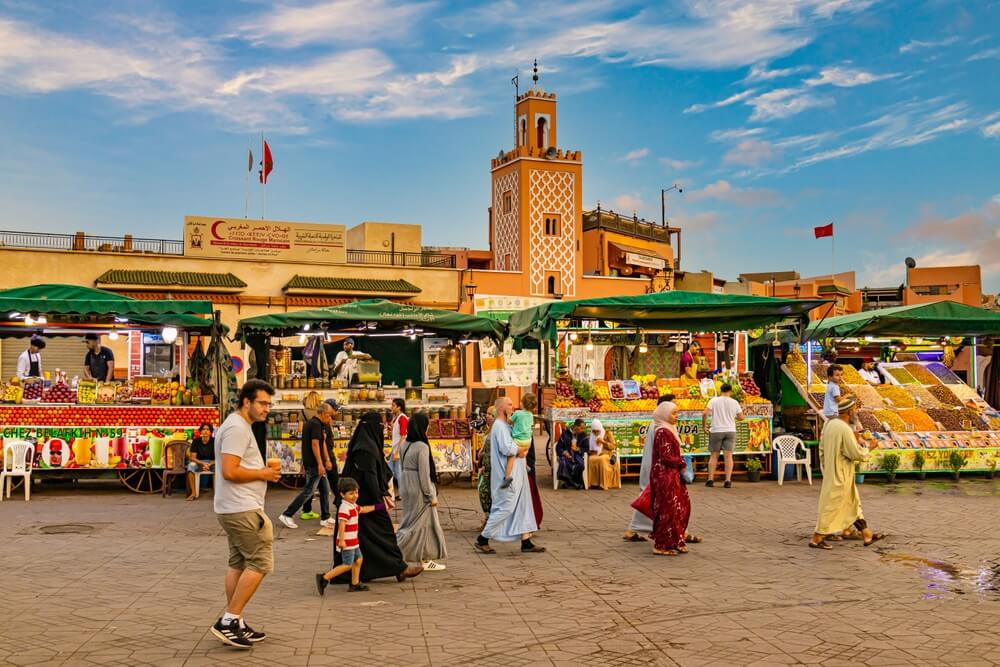
Walking down the street, you can see locals wearing the Djellaba and headscarf, embodying their culture in everyday dress

DeWonder travellers personally try on the traditional headscarf at a Moroccan market, picking and fitting it on the spot
Morocco's festivals are mostly tied to the Islamic calendar and religious traditions, with timing following the lunar phases, so the corresponding Gregorian dates differ each year. If your trip coincides with a festival, be sure to check in advance for possible changes to transport schedules and shop opening hours. Ramadan
- Duration: 29–30 days, depending on the lunar phase
- Muslim believers: Fasting from food, water, and smoking from sunrise to sunset
- Tips for tourists: Fasting is not required, but avoid eating or smoking in public during the day; you can join the lively night markets and Iftar dining experience in the evening
- Highlights: The Iftar meal after sunset is a key moment for family and social gatherings, and the streets become especially lively at night
- Travel reminder: Fewer restaurants open during the day; transport and attraction operating hours may be shortened
Eid al-Fitr
- Timing: 1–3 days after the end of Ramadan
- Muslim believers: Wear new clothes, make sweets, and visit family and friends
- Tips for tourists: Most shops and attractions are closed; activities are mainly family-oriented, and visitors mostly enjoy the festive atmosphere on the streets
- Highlights: Cities and towns are decorated for the festival, creating a lively atmosphere
- Travel reminder: Arrange transport and itineraries in advance
Eid al-Adha
- Timing: About two months after Eid al-Fitr
- Muslim believers: Commemorates the story of Ibrahim's (Abraham's) sacrifice; animals are slaughtered and the meat is shared with family, friends, and those in need
- Tips for tourists: Public transport and shops are mostly closed; the sacrificial ritual scenes may be uncomfortable for some visitors to witness
- Highlights: A festival of community unity and sharing
- Travel Tip:Please note accommodation and transport arrangements during the festival period
Moussem of Moulay Idriss
- Timing:Late summer to early autumn
- Muslim Devotees:Travel to the town of Moulay Idriss to take part in pilgrimage and religious rituals
- Notes for Tourists:You may join in markets, music and dance performances, but should respect religious areas (some mosques or ritual sites are off-limits to non-Muslims)
- Highlights:A blend of religious pilgrimage and folk celebration
- Travel Tip:Accommodation is scarce and traffic is heavy during the festival (DeWonder's Morocco itinerary does not include this location; if you're interested in joining this festival, we also offer private tours, feel free to contact us!)
- Respect Culture and Etiquette:Avoid intimate gestures in public, and always ask permission before photographing people
- Dress Code:Women are advised to wear clothing covering the shoulders and knees; men should avoid sleeveless tops or shorts when entering religious sites
- Dietary Customs:During Ramadan, avoid eating, drinking, or smoking in public during the day
- Personal Belongings:Markets and tourist areas tend to be crowded, so it's advisable to keep your valuables secure
💡Want to learn more about dress codes and religious taboos? We recommend reading this articleMorocco Travel Essentials Now that you understand Morocco's language, religion, festivals, and travel precautions, you should have a more vivid picture of this North African nation. To help plan your itinerary more smoothly, here are some additional resources we've compiled:
- Visa & Entry:Visa-Free Entry for HK/Macau Residents & Taiwan Visa Application Process
- Morocco Travel Guide:Morocco Travel FAQ and Common Questions
Want to skip the tedious planning process? DeWonder's In-Depth Morocco Tour has prepared a localized, in-depth itinerary just for you.With 10 years of experience leading tours in Morocco, we're deeply familiar with the local culture and transportation routes. Our itineraries are designed to avoid superficial, rushed sightseeing, featuring intimate small groups (approximately 8–14 people), professional tour guides, authentic local experiences, and comfortable transportation, so you can explore every step with peace of mind. DeWonder In-Depth Morocco Tour Information Package 👉 Click to Download Join Our Free Online Seminar to get your Morocco itinerary questions answered 👉 Click to Register