
![[Central Asian Specialties] 5 Central Asian Souvenirs Full of Ethnic Charm](/_next/image/?url=https%3A%2F%2Fcdn.dewonder.travel%2Fmedia%2F3051%2F%E4%B8%AD%E4%BA%9E%E6%89%8B%E4%BF%A1-central-asia-03.jpeg&w=3840&q=90)
[Central Asian Specialties] 5 Central Asian Souvenirs Full of Ethnic Charm
Each of the five Central Asian countries boasts its own distinctive character and ethnic traditions — from Uzbek pottery and copperware, Kazakh chocolate, and bazaar dried fruits, to Turkmen carpets and traditional hats. Every souvenir carries the history and cultural stories of its homeland. These crafts are more than mementos of a journey; they are a cultural dialogue spanning the Silk Road. DeWonder's in-depth Central Asia tours take you deep into renowned craft towns and local homes, uncovering the intertwined cultural charm of these five nations — making your travels richer and more meaningful.
The five Central Asian countries — Turkmenistan, Kazakhstan, Kyrgyzstan, Tajikistan, and Uzbekistan — were once essential stops along the ancient Silk Road. Each country boasts a rich ethnic heritage, with its artistry woven into the details of everyday life. Having travelled through Central Asia many times, our tour team loves bringing a piece of this local charm back to Hong Kong. Here are our top 5 recommended Central Asian souvenirs — each one not only capturing beautiful travel memories, but also carrying the deep-rooted spirit of the Central Asian people.
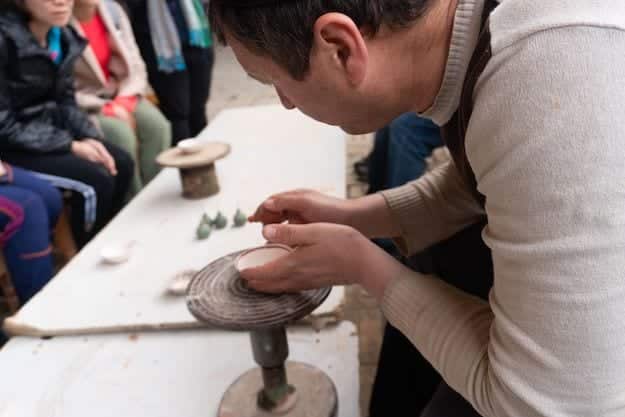
Uzbekistan's traditional craftsmanship has been preserved to this day, and traces of local handicrafts can be found everywhere. Among them, pottery is considered the oldest craft — appearing in everything from bowls and jugs to wall murals and interior decorations. Of all the cities, Rishton, near the Kyrgyzstan border, is the most renowned for its pottery. Local artisans shape a variety of vessels on the potter's wheel, decorate them with painting, relief carving, and other techniques, and finally glaze and fire them. Our tour team has specially arranged a hands-on Ceramic Workshop, where travellers can design their own one-of-a-kind piece of pottery — truly the perfect souvenir.
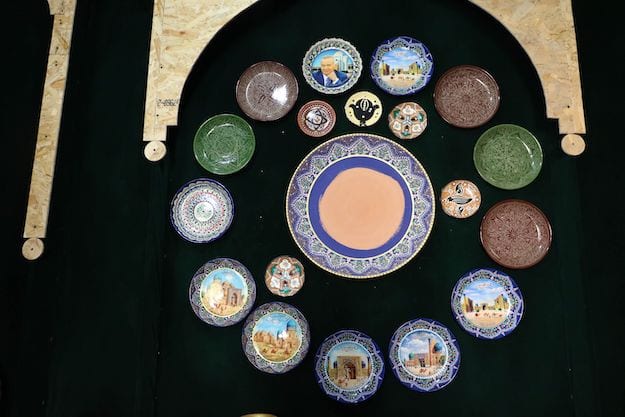
In Uzbekistan, coppersmithing is the second most prominent handicraft after pottery. Locals take great care over the shape and design of copperware, even displaying teapots and copper trays on shelves at home to showcase the owner's social status and refinement — a subtle form of showing off wealth. Like pottery, copperware production involves multiple steps, and each piece is adorned with floral, vine, or geometric patterns, with a smaller number featuring animal motifs or calligraphy. Bukhara and Khiva are the centres of copperware craftsmanship.
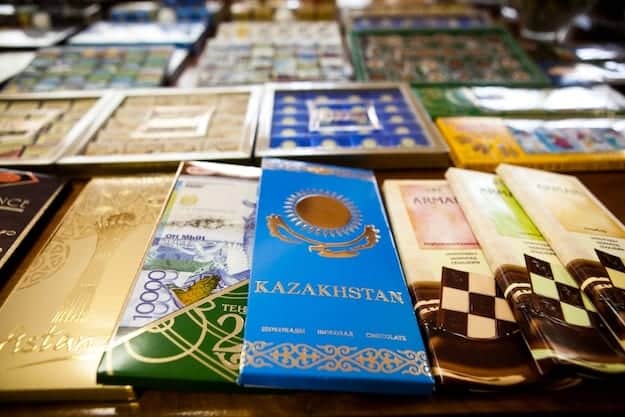
Rakhat is a time-honoured Kazakh chocolate brand with over 75 years of history, recently acquired by South Korea's LOTTE Confectionery. Beyond chocolate, it also produces sweets, caramels, biscuits, milk candy, waffles, and semi-finished chocolate products, making it a must-buy souvenir for visitors to Kazakhstan. According to information on the official website, Rakhat was founded using production lines from wineries evacuated from Moscow and Kharkiv during wartime, bringing the Soviet-style love of sweets to Kazakhstan. Besides the flagship store at Zenkov, our tour groups have also found Rakhat products in local supermarkets. If you're looking for a gift with local character, the Kazakhstan flag edition of Rakhat chocolate is a top recommendation.
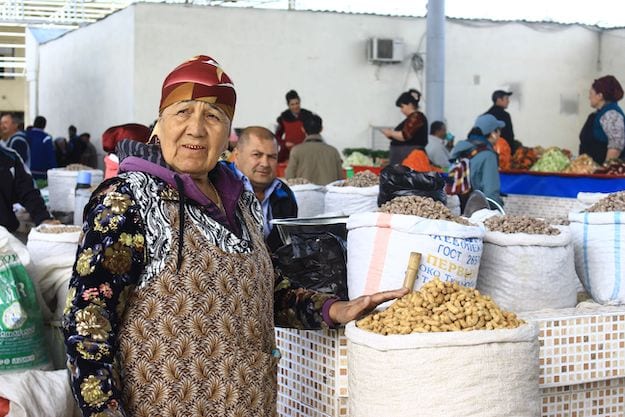
If travellers are fortunate enough to be invited into a local's home, they will certainly be treated to dried fruits and tea. Dried fruits and nuts are a signature snack of Central Asian countries, available at any bazaar, where warm-hearted vendors will let you sample freely. At bazaars in Uzbekistan, we've encountered many enthusiastic stallholders and staff eager to recommend their goods — and even if you sample without buying, you won't be met with a cold shoulder, as they are incredibly welcoming to foreigners. If you come across dried fruits and nuts that catch your fancy, feel free to haggle with the vendor.
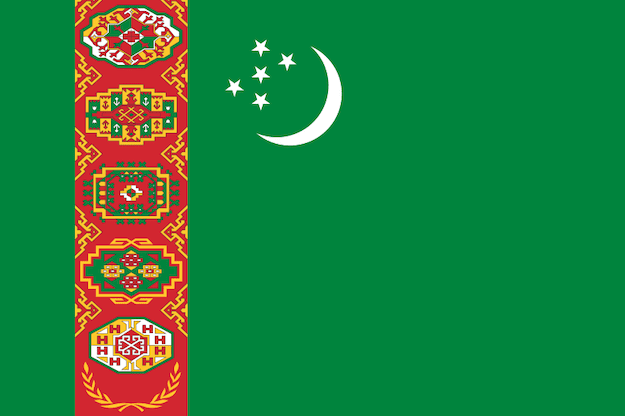
Although carpets are a common sight across Central Asia, nowhere are they more prevalent than in Turkmenistan. Beyond lobbies, corridors, and rooms, carpet motifs appear on the gates of various buildings in the capital Ashgabat, on books and maps, and even on the Turkmenistan national flag — no wonder the country has long been known as the "Kingdom of Carpets." To celebrate this national treasure, Turkmenistan's first president, Niyazov, decreed that the last Sunday of May each year be designated "Turkmenistan Carpet Day," and the country even holds carpet exhibitions. As a local saying goes: "Fine horses are our wings, carpets are our souls."
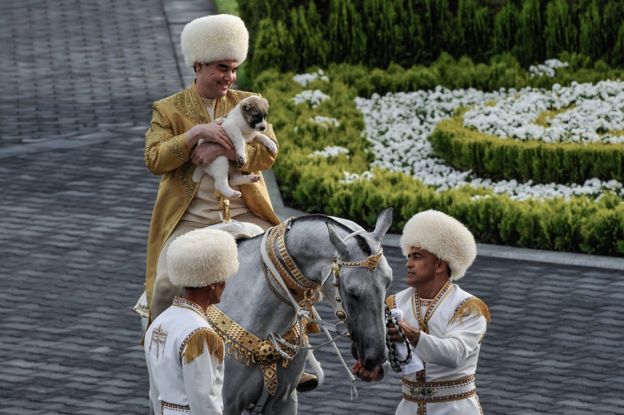
Each of the five Central Asian countries has its own distinctive national hats, with completely different shapes and ways of wearing them. Take Turkmenistan as an example: men wear large fluffy fur hats which may look stifling to us, but locals say the design keeps them warm in winter and cool in summer; married women traditionally wear a round headpiece topped with a headscarf. In Tajikistan, men wear embroidered skullcaps or turbans, while women wear white gauze or silk scarves, or embroidered skullcaps, draping a large square scarf over the top when going outdoors. Bringing home a national hat as a souvenir is truly distinctive. Journeying through these five countries is like retracing the essential route of the Silk Road — shaped by the rule of Alexander the Great, the conquests of Genghis Khan and Timur, and the isolation of the Soviet era, all of which have forged the unique landscape we see today. Our specially designed Central Asia In-Depth Tour visits historic ancient cities to explore the region's rich history, tours renowned craft centres along the Silk Road, and visits local families to learn about their daily lives and traditions. We bring you the many faces of Central Asia — travelling and storytelling, hand in hand.