
Complete Climate Guide to the Five Central Asian Countries: Seasonal Features, Packing Tips & Best Months to Travel
Understand the climate differences across the five Central Asian countries at a glance! From seasonal characteristics to packing checklists, this article offers a complete guide to travel seasons and pre-trip advice, so you can set off with confidence.
Want to explore Kazakhstan's magnificent canyons, Kyrgyzstan's alpine lakes, Uzbekistan's ancient Silk Road city-states, Tajikistan's Persian heritage, and Turkmenistan's Door to Hell in the desert—all in one trip? On a journey through the five Central Asian countries, climate and season will shape your entire experience, affecting everything from itinerary planning and packing to photo results. This article will give you a complete breakdown of the climate features of the five Central Asian countries, the best months to travel, and practical packing tips. Whether you're planning to admire spring blooms, escape the heat in summer, or explore ancient city culture in winter, you'll be able to set off with confidence and avoid any pitfalls!
Located at the crossroads of Europe and Asia, the five Central Asian countries span deserts, grasslands, plateaus, and high mountains, resulting in highly varied climates. Here's a climate overview for each country:
- Turkmenistan: Predominantly a dry desert climate, with summer temperatures exceeding 40°C, but pleasant daytime temperatures in autumn and winter—ideal for exploring outdoor wonders such as the Door to Hell.
- Uzbekistan: A typical continental dry climate, with large temperature swings between day and night. Spring and autumn offer the most pleasant weather, perfect for strolling through ancient cities like Bukhara and Samarkand.
- Tajikistan: Mostly a mountain climate, with some mountainous areas becoming impassable due to snow in winter. Summer and autumn are the best times to admire stunning mountain views and go hiking.
- Kyrgyzstan: Predominantly a plateau climate, with cool, refreshing summers—the golden season for visiting Issyk-Kul Lake and the Tian Shan mountain region.
- Kazakhstan: A vast territory with distinct climate variations — the south has a dry steppe climate, while the north and mountainous regions are cooler, with spring and autumn being the most comfortable seasons.
💡 Travel Tip: As landscapes and climates vary greatly across regions, it's best to choose a professional itinerary covering multiple countries, with local tour leaders familiar with the weather and transport arranging the route — this helps you avoid extreme weather and enjoy your trip with peace of mind.
Central Asia's climate spans a wide range, but as long as you avoid extreme heat and snow-blocked roads, every season offers its own unique travel value. From desert adventures and ancient city tours to plateau hikes and lakeside retreats, the scenery and activities you can experience vary greatly from month to month. Below is a summary of the climate characteristics and recommended activities for each season:
Spring is one of the mildest and most pleasant seasons in Central Asia. Ancient cities like Samarkand and Bukhara enjoy comfortable weather, with apricot and peach blossoms often lining the streets, making the blue domes especially enchanting during blossom season. This is also an ideal time to visit the World Heritage site of Sarazm, where clear skies and spring breezes add a poetic touch to the historic ruins.
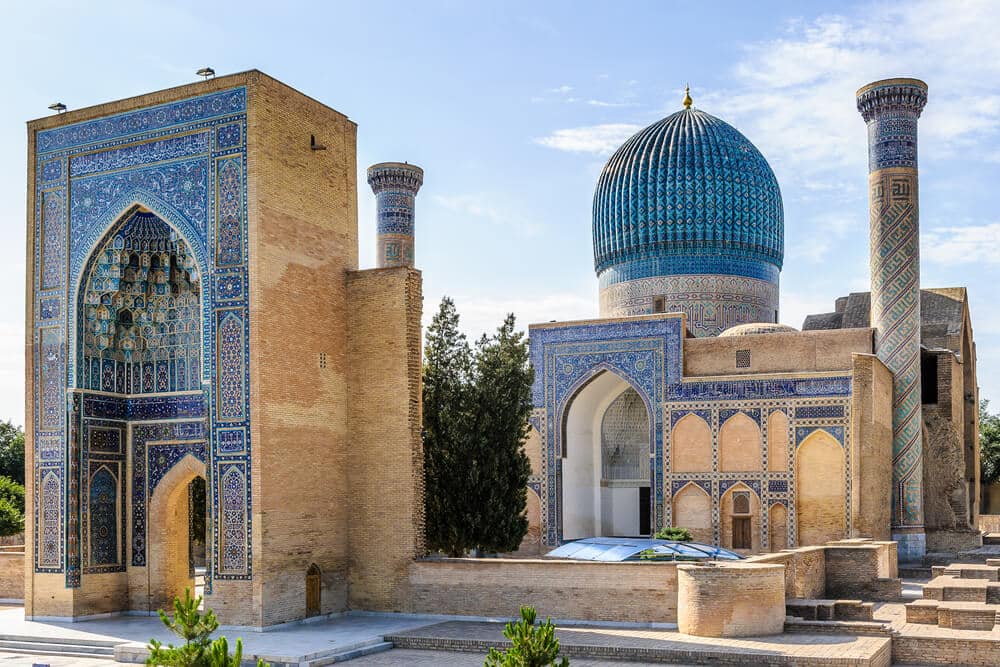
The Bibi Khanym Mosque in Samarkand looks even more magnificent in spring, set against blue skies and blooming flowers.

Sarazm World Heritage Site in Tajikistan, where spring sunlight bathes the ancient ruins in a tranquil glow.
While the desert regions of Central Asia can be scorching in summer, the highland and lake areas serve as natural summer havens. Kazakhstan's Big Almaty Lake and Kolsay Lake boast crystal-clear, azure waters surrounded by mountains and forests, with pleasant daytime temperatures ideal for camping, hiking, and boating.
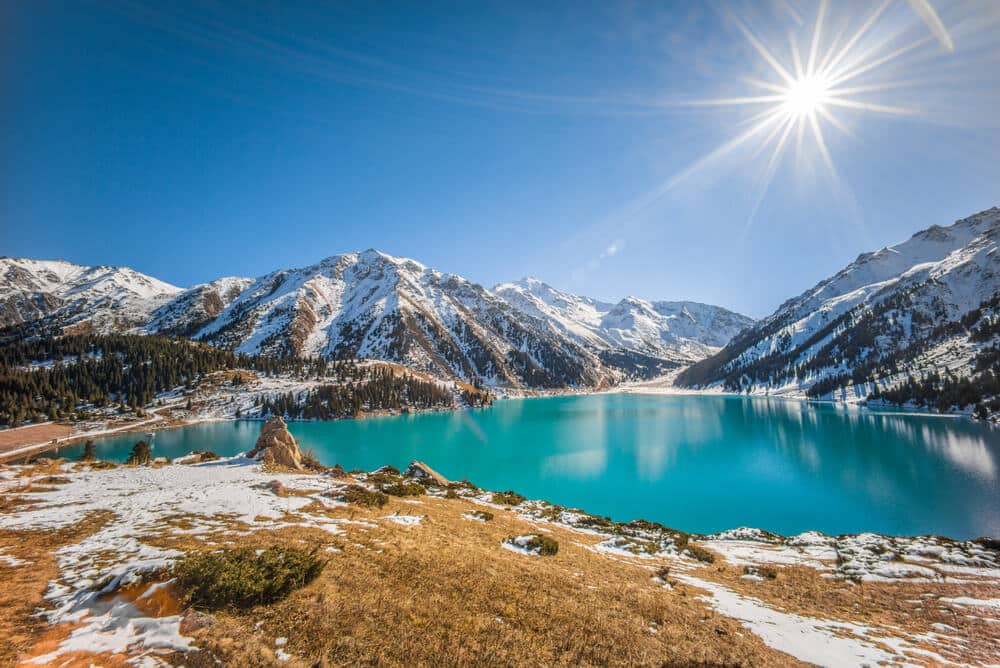
Big Almaty Lake in Kazakhstan, the coolest alpine retreat for summer escapes.
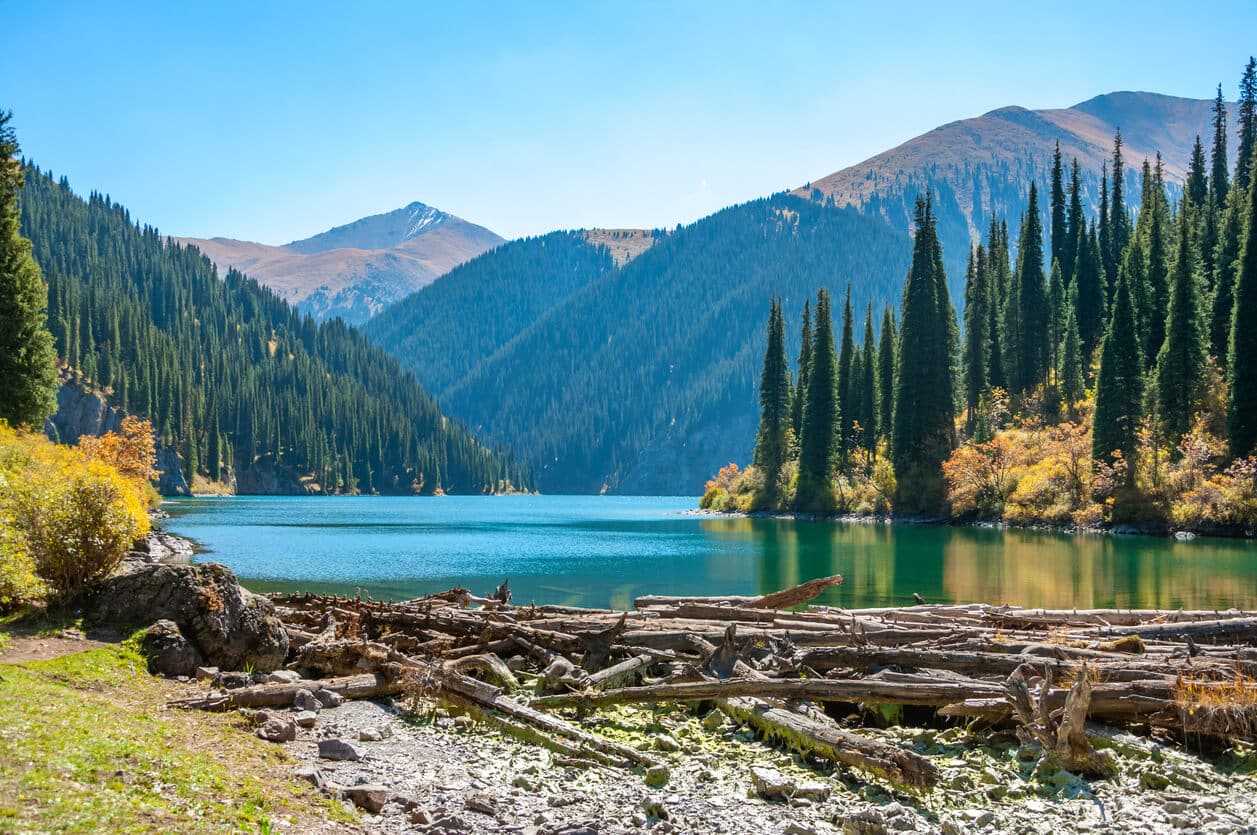
Kolsay Lake, where azure waters and lush green mountains blend into a refreshing summer scene.
Autumn in Central Asia brings stable weather and clear skies, casting a special atmosphere over both natural landscapes and ancient architecture. Kazakhstan's Charyn Canyon takes on a striking, layered appearance under the autumn sunset, its red and yellow rock walls a paradise for photography enthusiasts. Kyrgyzstan's Burana Tower, set against golden grasslands, reveals the weathered grandeur and history of this ancient Silk Road tower. In Bukhara, Uzbekistan, the Poi Kalyan Complex takes on a solemn serenity under the soft autumn light, its blue domes even more majestic.

Charyn Canyon, Kazakhstan — a valley of interlacing red and gold in autumn, the perfect moment for photography.

Burana Tower, Kyrgyzstan, looks all the more weathered against the golden autumn steppe.

The Poi Kalyan Complex in Bukhara, Uzbekistan — blue domes bathed in soft autumn light.
Winter brings fewer crowds to Central Asia, lending the trip a more tranquil atmosphere. At Turkmenistan's Darvaza Gas Crater (the “Door to Hell”), the flames blaze even more spectacularly against the cold night sky — a truly unique winter experience.
Winter is also ideal for “escape-the-cold” cultural explorations, such as:
- Admiring the artistic architecture of the Tashkent Metro in Uzbekistan
- Experience local culture at museums and teahouses in Almaty or Dushanbe
- Wander through traditional bazaars and enjoy hot tea and the aroma of spices with the locals
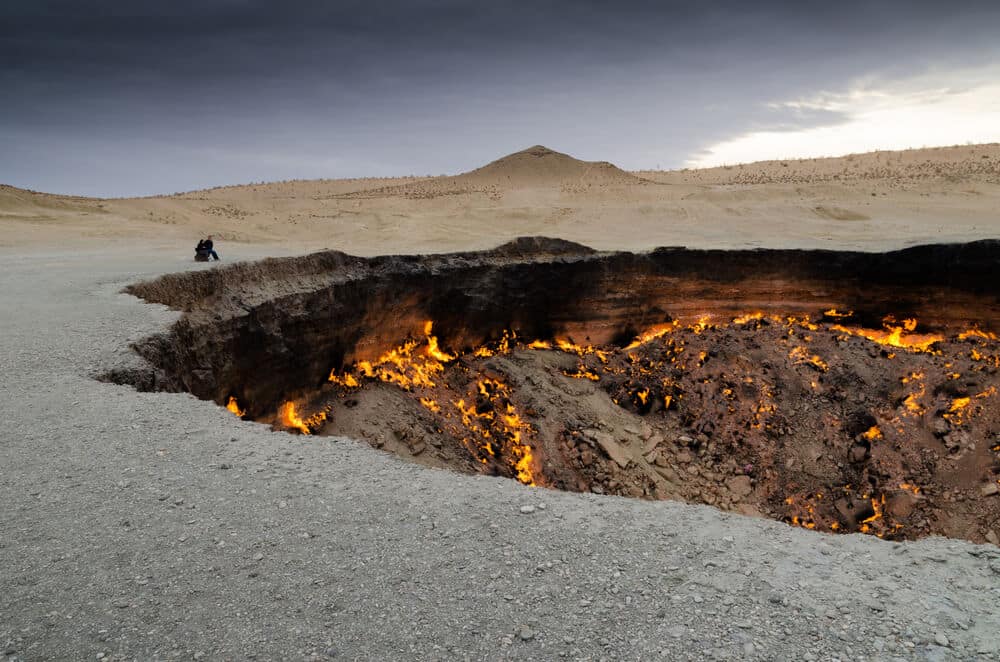
The Darvaza Gas Crater in Turkmenistan, known as the “Door to Hell” — its desert flames burn even more magnificently in the cold winter night.
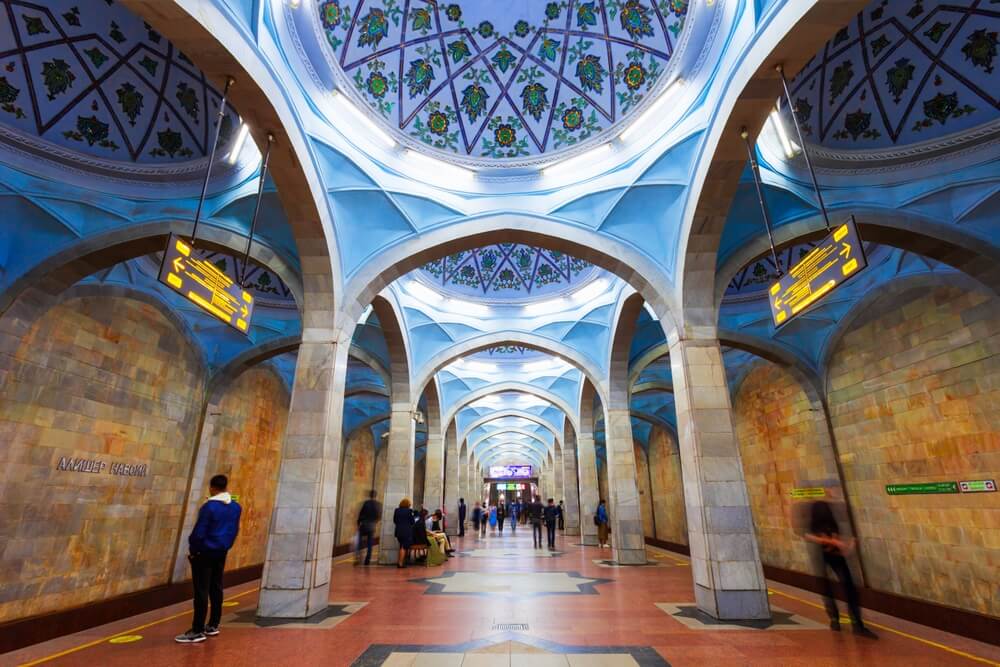
The Tashkent Metro in Uzbekistan — escape the winter chill while admiring its artistic architecture.💡 Handy Tip: If you're planning a multi-country trip, spring, autumn, and early winter are recommended, as the climate is generally more stable and helps you avoid the hottest or coldest regions.
Although the five Central Asian countries are geographically close to one another, differences in terrain and climate zones mean each offers a slightly different travel experience throughout the seasons.Below is a breakdown of each country's basic climate patterns and seasonal highlights, to help you plan your gear and expectations by month:
Country | Spring (Mar–May) | Summer (Jun–Aug) | Autumn (Sep–Nov) | Winter (Dec–Feb) |
Kazakhstan | Steppes come back to life and temperatures warm up—ideal for exploring cities and canyons | Big day-night temperature swings, with some areas turning quite hot | Comfortable climate with vivid autumn colours | Bitterly cold in the north, though city strolls remain feasible in the south |
Uzbekistan | Blossoms fill the ancient cities and the climate is dry and pleasant | Hot and dry, with stifling daytime heat | Cool and easy for travel, with clear skies—the best time to wander the ancient cities | Bitterly cold and dry, with short daylight hours |
Kyrgyzstan | Highlands turn green and mountain trails gradually open up | Cool peak season for escaping the heat, with plenty of lake activities | Golden leaves everywhere and stunning alpine scenery | Many areas are snowed in and roads blocked—better suited to staying in the cities |
Tajikistan | Mountain snow thaws and trails gradually reopen | Great for hiking and exploring the highlands | Late autumn turns cold, with snowfall in some high-altitude areas | Mountain roads are difficult to travel, limiting tourism |
Turkmenistan | Desert heat is mild—great for outdoor photography | Scorching and dry, with daytime highs above 40°C | Cool and pleasant—the perfect time for desert exploration | Cold and dry, with large swings between day and night |
The five Central Asian countries have distinct climate variations and diverse terrain — even within the same season, you might be scorched by desert heat one day, then wake up to a chilly morning in the alpine lake regions the next. Mastering the "layered dressing" principle, along with cultural respect and practicality, is key when packing for the trip. Below are practical outfit recommendations organized by season:
- Lightweight long sleeves and moisture-wicking base layers are suitable for daytime
- A thin down jacket or windbreaker is recommended for mornings and evenings
- Comfortable closed-toe shoes are recommended for city strolls (ancient towns often have cobblestone streets)
- Sand and dust can be common — consider bringing a mask or scarf for wind protection
- Breathable, quick-drying long sleeves are recommended (they provide sun protection while respecting local culture)
- A sun hat, sunglasses, and sunscreen are essential
- Desert areas have large temperature differences between day and night, so a thin long-sleeve shirt or jacket is still needed at night
- Lightweight sandals plus dust-proof shoe covers are suitable for desert or camping activities
- Stable temperatures, but mountain and desert areas turn cold at night
- Pair a long-sleeve T-shirt with a knit jacket / lightly padded coat
- Scarves and hats add layers for warmth and style
- Easy-to-layer outfits are the most practical choice
- A down jacket with a windproof layer and waterproof hiking shoes will handle both city and countryside walking
- Thick, heavy coats aren't recommended as they're cumbersome to move and pack
- Small accessories like hand warmers and a thermos flask are handy to bring along
- If the itinerary doesn't involve high mountains, gear needn't be extreme, but do watch out for the indoor–outdoor temperature difference

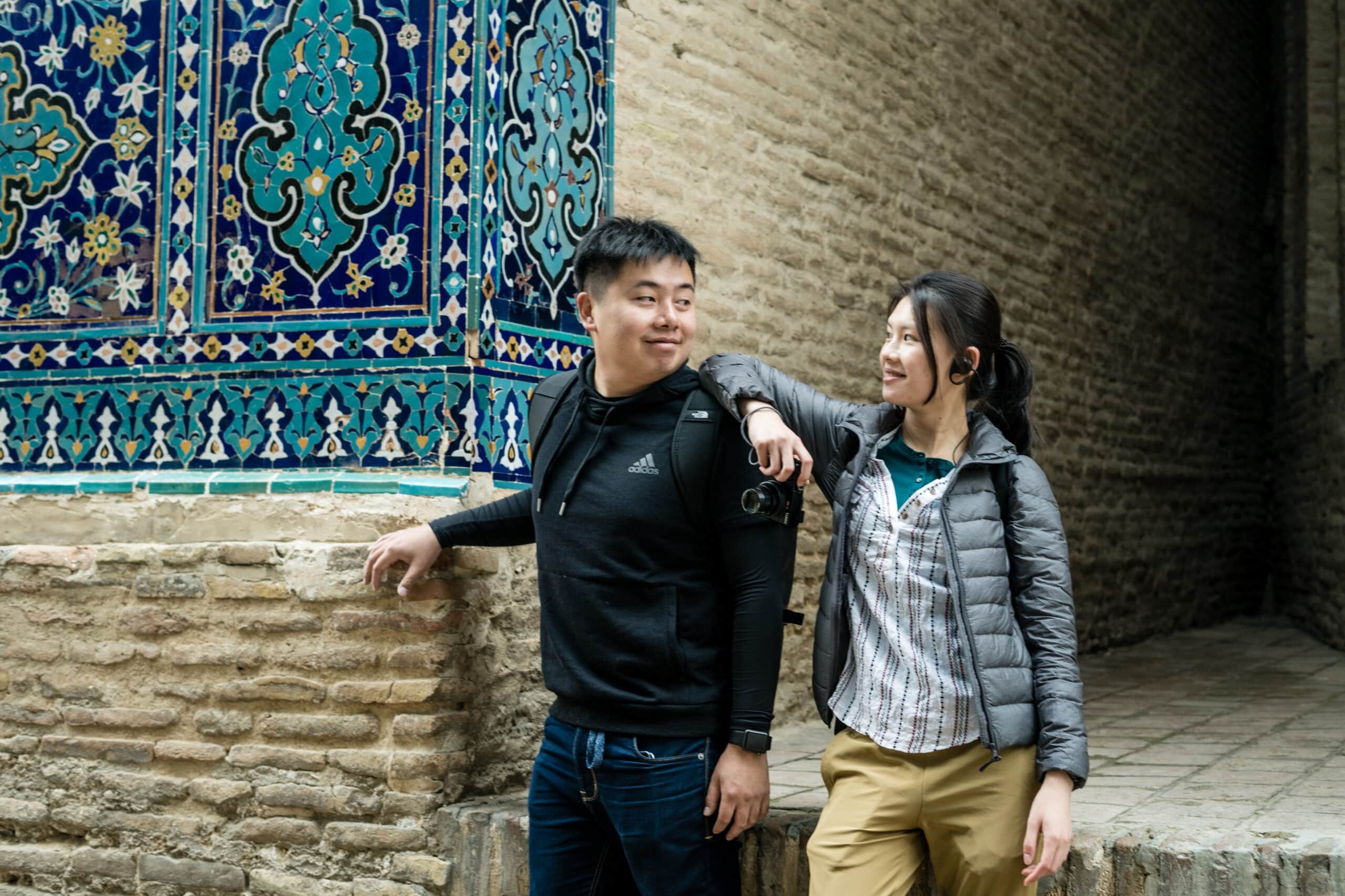
DeWonder traveller outfit example: Spring Central Asia styling, a light down jacket paired with a long-sleeve shirt, comfortable by day and warm in the early morning and evening.

Winter Central Asia essentials: a warm coat, scarf, and layered dressing keep you comfortable while handling the morning-to-evening temperature swings.Central Asia Pre-Trip Packing Checklist
Category | Recommended Items |
Clothing | Light down jacket, moisture-wicking shirt, windbreaker, hat, scarf |
Footwear | Comfortable closed-toe shoes, non-slip hiking boots, sandals |
Accessories | Sunglasses, sunscreen, face masks, portable power bank |
Cultural Respect | Shorts and spaghetti straps are not recommended (out of respect for Islamic culture) |
Warmth Essentials | Hand warmers, thermal flask, gloves (winter) |
💡 Quick Tip: Most parts of Central Asia are predominantly Muslim. While attitudes toward tourists' attire are relatively relaxed, it's still advisable to dress modestly and appropriately, especially at religious sites and in rural areas.
Q1: Is Central Asia really that hot or cold? Is it unsuitable for travel? Central Asia has a continental climate with large day-night temperature swings, but as long as you avoid extreme seasons (such as peak desert summer or the high-mountain snow-bound period), most months offer dry, clear weather—making it a great region for travel. We recommend departing during the more stable seasons of spring, autumn, and early winter. Q2: Does it get very cold at night at the Darvaza Gas Crater (Door to Hell)? Yes. Even in summer, Turkmenistan's desert areas experience large temperature swings between day and night—daytime highs can exceed 35°C, while nighttime lows can drop below 15°C. We recommend bringing a warm jacket and long pants to handle the nighttime chill. Q3: Does it snow in Kyrgyzstan in summer? Kyrgyzstan sits at high altitude, so its mountainous regions can experience brief snowfall or low temperatures even in summer, especially in the early morning or at elevations above roughly 3,000 meters.However, the climate in cities and lake regions during the day is stable and comfortable, so there's no need to worry. Q4: Is it okay to wear shorts in Central Asia? It's recommended to follow the principle of "appropriateness and respect." Most Central Asian countries follow Islam, and while they're relatively tolerant of tourists' clothing, overly short or revealing outfits may still draw attention at religious sites, in rural areas, and traditional markets. Loose trousers or long skirts are more suitable. Q5: Do I have to travel in spring or autumn? Not necessarily. While spring and autumn are the most comfortable, summer allows you to escape the heat in lake and plateau regions, and November–December is ideal for in-depth cultural exploration and relaxed experiences.
Exploring Central Asia — from starry desert skies to alpine lakes, from ancient city streets to the Gates of Hell — takes more than just a travel guide; it takes guides and companions who truly understand the region. Having traveled dozens of Central Asia routes, we know every detail of climate change and transportation. By combining local culture, flexible itineraries, and in-depth small-group experiences, we ensure you see the most spectacular and comfortable side of Central Asia in every season. Highlights of DeWonder's In-Depth Central Asia Tour:
- Years of Experience: Personally leading tours across all five Central Asian countries, designing every route in depth
- Flexible Arrangements: Choose from three-country, four-country, or five-country itineraries based on your time and interests
- In-Depth Local Interaction: Wander through markets and stay in courtyard homestays to build genuine connections with the local people
- Small-Group Departures: Each group is limited to 8–14 people, avoiding crowds and ensuring quality
- A Warm Sense of Community: Fellow travelers become friends, and the conversations and interactions along the journey become part of the memories
👉 Check out all upcoming Central Asia in-depth tour departure dates 👉 Join our free online seminar to get answers to your questions about the Central Asia itinerary 👉 Click here to sign up DeWonder Central Asia In-Depth Tour Information Package 👉 Click here to download