
Decoding Egyptian Symbols: 10 Must-Know Icons to Understand the Meaning Behind Murals and Artifacts
From the Ankh and the Eye of Horus to the Scarab Beetle, discover the 10 major symbols found in ancient Egyptian murals and artifacts. Grasp the meanings behind faith, life, and kingship in one go, and add greater depth to your journey through Egypt.
In〈A Guide to Egyptian Mythology〉, we learned about the eight major deities of ancient Egypt. But when you step into a museum or temple and see walls covered in murals and ornaments, do you still find yourself wondering: "What does that cross-shaped symbol mean? What's the significance of that beetle?" This article will take you from "observing murals" to "choosing souvenirs", covering 10 of the most iconic Egyptian symbols—from the Ankh and the Eye of Horus to the Scarab Beetle—so you can understand their symbolic meanings in artifacts, temples, and daily life. Next time you visit Egypt in person, you won't just see these symbols—you'll be able to "read" them.
These icons are the most familiar symbols of belief to the ancient Egyptians, representing life, rebirth, and protection. You'll find them on temple walls, tomb murals, mummy burial items, and even souvenir jewelry. Understanding the meanings behind these symbols makes it much easier to read the language of ancient Egyptian art.
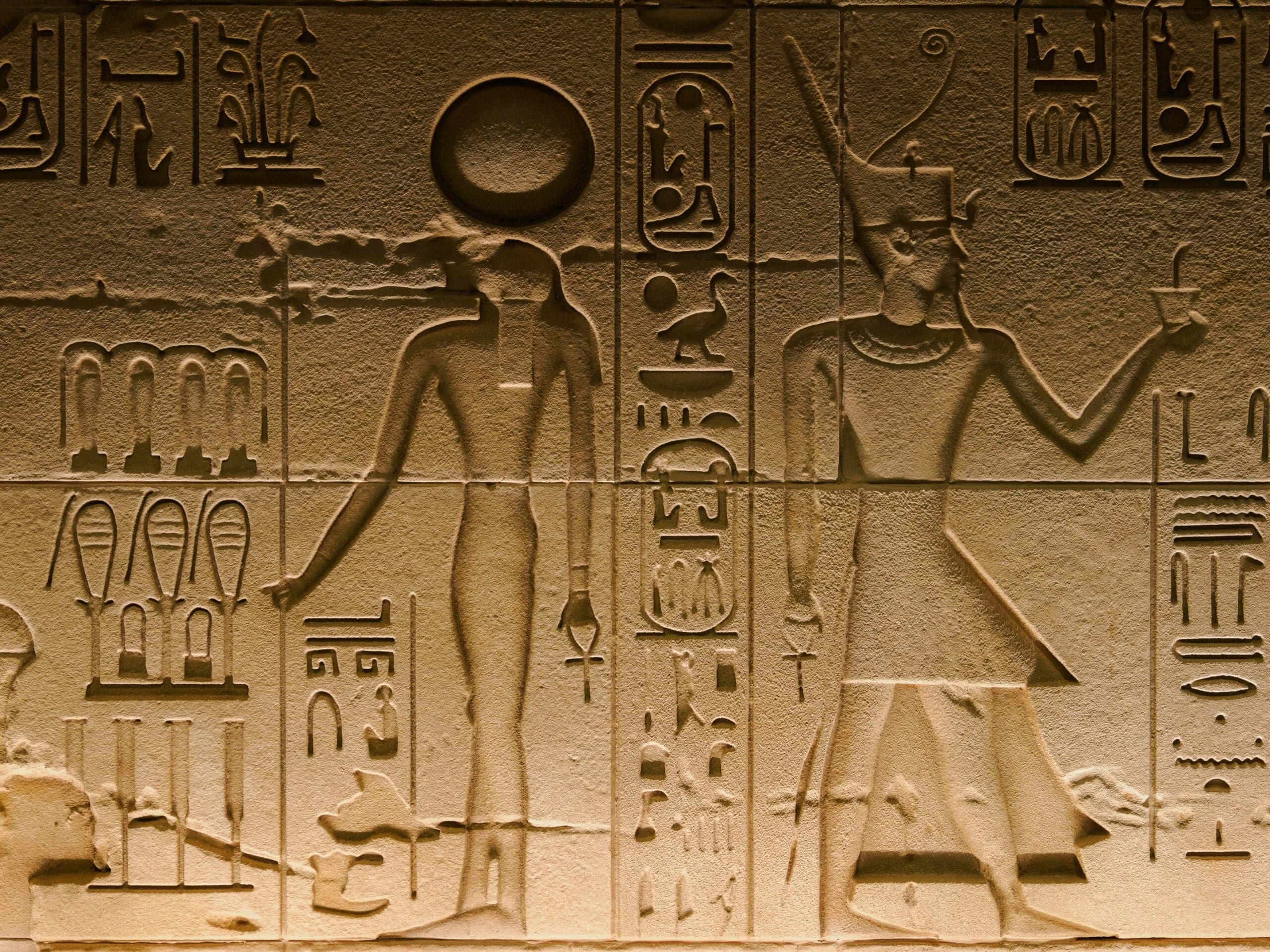
Also known as the Ankh, this symbol resembles a T-shaped cross topped with a loop, and is one of the most iconic icons of ancient Egypt. Deities are often depicted holding the Ankh close to the pharaoh's nose—a gesture symbolizing the "granting of the breath of life."

A relief depicting a deity bestowing the Ankh (symbol of life) upon the pharaoh. The Ankh symbolizes "life and eternity," and is one of the most iconic amulets of ancient Egypt, frequently seen in murals, statues, and burial items, symbolizing the divine power to grant rebirth to the soul. Photo by Declan Sun on Unsplash
The tear-marked eye originates from the myth of Horus and Set. After Horus lost his right eye, it was healed by Thoth, the god of wisdom, becoming a symbol of rebirth and healing. Ancient Egyptians often carved it on mummy coffins or wore it as an amulet to seek peace and health.
Modeled after the dung beetle, it symbolizes the sun god Khepri pushing the sun to rise each day. In tombs and burial items, the scarab represents the renewal of the soul and hope. Many travelers purchase pendants or rings in this shape from souvenir shops.
A sun disk with wings spread on both sides symbolizes the power of the sun god. It is often carved at temple entrances or above lintels, used to ward off evil and proclaim the legitimacy of royal authority.
The lotus represents Upper Egypt, while the papyrus represents Lower Egypt. When the two are bound together with a rope (known as Sema-Tawy), it symbolizes the unification of the nation and the continuity of life. You'll frequently see this combination on temple column capitals and reliefs.

The relief depicts the pharaoh offering lotus and papyrus to the gods, symbolizing the unification and abundance of Upper and Lower Egypt. The intertwined plants and ankh symbols together form a symbolic language of "life and order," making this one of the most common political and religious themes in temple murals. Photo by M abnodey on Unsplash💡Extra Tip:These symbols were not only religious icons but also the "visual script" of ancient Egypt. If you can recognize them at a museum or temple site, you've essentially mastered half of "ancient Egyptian."
In ancient Egyptian art, the pharaoh was not merely a ruler, but the embodiment of a god. In murals and statues, every pharaoh's image is accompanied by specific symbols, and these emblems represent the source of his power, his divine status, and the legitimacy of his rule. Once you learn to recognize these three key symbols, you can almost instantly spot "who the pharaoh is."
Shaped like an oval loop of rope, it encloses the pharaoh's name. In hieroglyphics, this circle represents "the world illuminated by the sun," so the name within the cartouche symbolizes "the ruler of all lands." 📌 Viewing Tip: On temple walls or stone stelae, whenever you see an inscription enclosed in an oval frame, it's almost certainly a pharaoh's name.

At the centre of the cup you can see an oval royal name frame (Cartouche) along with multiple Ankh symbols, representing the pharaoh's kingship, eternity and life force. Such stone vessels were often used in ritual or burial ceremonies, and are a concrete manifestation of ancient Egyptian symbolic beliefs.
Each crown's shape represents a different political meaning:
- White Crown (Hedjet) = Upper Egypt (southern region)
- Red Crown (Deshret) = Lower Egypt (northern region)
- Double Crown (Pschent) = Unification of Upper and Lower Egypt
In the reliefs at Luxor and Karnak Temples, you'll see pharaohs wearing these crowns standing alongside the gods, symbolising that they are divinely appointed rulers
The cobra is the incarnation of the goddess Wadjet, coiled with head raised on the pharaoh's brow, capable of spitting flames to repel enemies. This is not mere decoration, but a declaration that "the pharaoh is protected by the gods and must not be violated." 📌 Viewing Tip: You'll see this cobra on statues or pharaoh masks — for example, on Tutankhamun's golden mask, that is the most famous Uraeus. 💬 Did You Know: The symbols of royal power in Ancient Egypt were not merely political emblems, but proof of "religious legitimacy." The Pharaoh was seen as Horus on earth, and became Osiris after death — these symbols are precisely the visual language of his transformation from "mortal" to "god."
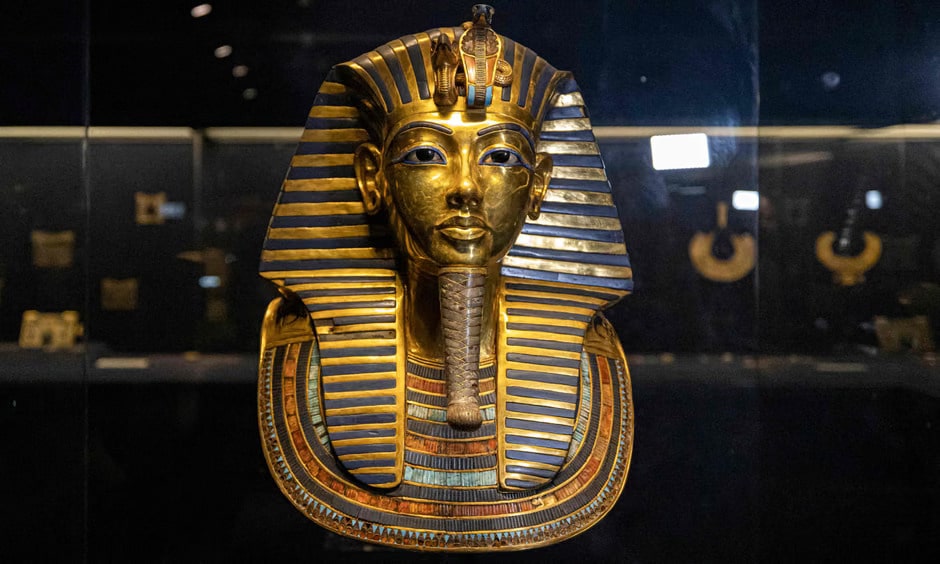
Tutankhamun's Gold Mask is one of the most iconic artifacts in the Grand Egyptian Museum (GEM). On the mask, you can see the Uraeus (Cobra) and Vulture Emblem symbolizing royal power, representing the Pharaoh's protection by the "Two Goddesses of Upper and Lower Egypt," and showcasing his status as a living god on earth.
In Ancient Egyptian belief, death was not an end, but a new journey. Therefore, symbols related to the underworld are filled with imagery of "transformation" and "rebirth." Whether in the murals of the Valley of the Kings or in the mummy exhibits of museums, you can see these symbols of the soul and judgment.
This set of four internal organ jars was an important item in Ancient Egyptian funerary rituals. The lids are carved into a human head, baboon head, jackal head, and falcon head, representing the "Four Sons of Horus," who respectively guarded the mummy's heart, liver, lungs, and intestines. These jars were typically placed beside the coffin, symbolizing that the soul would remain whole after death. 📌 Viewing Tip: At the Grand Egyptian Museum or the Cairo Museum, you can see exceptionally well-preserved sets of Canopic Jars, most of which were unearthed from Pharaoh tombs of the New Kingdom period.

These four stone canopic jars symbolize the Four Sons of Horus, used to store the internal organs of the mummy. From left to right, they represent a human head, a jackal head, a baboon head, and a falcon head, each guarding a different organ, representing the protective ritual for the soul before its rebirth in the underworld.
This is the most famous and dramatic scene in the underworld murals. The deceased's heart is placed on one side of the scale, while the other side holds the feather of Ma'at, representing truth and justice. Anubis presides over the weighing, Thoth records the result beside him, and Horus leads the souls who pass the test before Osiris, the Lord of the Underworld, for judgment.If the heart is lighter than the feather, the soul may enter eternity; if it is too heavy, it will be devoured by the chaos beast Ammit. 📌 Viewing Tip: This scene appears on the walls of almost every tomb in the Valley of the Kings, and is key to understanding the ancient Egyptian concept of "judgment after death." These underworld symbols not only reflect the Egyptians' imagination of the afterlife, but also demonstrate their belief in "order" and "justice." In their worldview, for the soul to reach eternity, it must undergo protection, judgment, and rebirth — just like the sun's daily cycle.
Having explored the various deities and their symbolic meanings in depth, we can now summarize the key points below. These 10 totems are the core symbols of belief in ancient Egyptian culture, appearing together in temples, tombs, and artifacts, symbolizing life, kingship, protection, and the rebirth of the soul.
Symbol | English Name | Symbolic Meaning | Common Locations |
Symbol of Life (Ankh) | Ankh | Life, eternity, divine breath | Murals, statues, held in the hands of deities |
Eye of Horus | Eye of Horus | Protection, health, rebirth | Coffins, amulets, murals |
Scarab Beetle | Scarab | Sun, rebirth, regeneration of the soul | Funerary items, rings, jewellery |
Winged Sun Disk | Winged Sun Disk | Divine protection, legitimacy of kingship | Temple lintels, above altars |
Lotus and Papyrus | Lotus & Papyrus | Unity, prosperity, the cycle of life | Column capitals, reliefs, decorative motifs |
Cartouche | Cartouche | The world illuminated by the sun, the Pharaoh's name | Murals, stelae, statue bases |
Crown | Crowns | Extent of rule and legitimate kingship | Pharaoh statues and reliefs |
Cobra | Uraeus | Protection, power, sacred fire | Masks, headdresses, crowns |
Canopic Jars | Canopic Jars | Protection of the soul, preservation of internal organs | Tombs, museum exhibits |
Weighing of the Heart | Weighing of the Heart | Judgement, justice, purification of the soul | Murals in the Valley of the Kings, funerary scrolls |
💡Handy Tip:If you're planning a trip to Egypt, this table is the most practical"on-site reference chart."Whether you're standing before a museum display case or beneath the stone walls of a temple, once you can recognise these symbols, you can begin to "read" ancient Egyptian civilisation. Having explored the meaning behind these motifs, let's return to the mural itself—this painting is the quintessential example, encompassing almost all the key symbols and deities. 👉 Further Reading: A Guide to Egyptian Deities and Their Imagery

Osiris at the centre symbolises the underworld and order, while Horus stands alongside the Pharaoh on the right, representing the transmission of royal power. The mural features symbols such as the Ankh (life), the winged sun disk (protection), and the cartouche (the Pharaoh's name). Photo by The New York Public Library on Unsplash
From museums to temples, traces of these symbols are hidden in almost every site. The table below will help you quickly match "where to see what", serving as a handy guide for on-site exploration as well.
Location | Representative Symbols | Experience Highlights & Observation Tips |
Grand Egyptian Museum (GEM, Cairo) | Ankh (Symbol of Life), Eye of Horus, Scarab, Canopic Jars | Home to the world's most complete collection of Egyptian artifacts. Many exhibits relate to "life" and "rebirth." Pay special attention to the sun disk and amulets in the Tutankhamun galleries. |
Valley of the Kings (West Bank, Luxor) | Weighing of the Heart, Eye of Horus, Scarab, Solar Barque | Tomb murals depict the soul's journey of judgment. Notice the Ankh held by the deities in the murals—a symbol of the soul's rebirth. |
Luxor & Karnak Temples | Winged Sun Disk, Cartouche, Uraeus, Lotus & Papyrus | The center of religious and royal symbolism. Sun disks adorn the entrances and lintels, while the colonnades and reliefs are filled with symbols of kingship and unification. |
Abu Simbel Temples (Aswan) | Sun Disk, Uraeus, Cartouche | A temple built for the sun god and the pharaoh. Every February and October, the sunrise light penetrates the temple doorway to illuminate the statues, symbolizing the union of the pharaoh and the sun god. |
Whether you're in Cairo, Luxor, or Aswan, these motifs are actually present at every stop on your journey. Once you can recognise their shapes and meanings, the murals are no longer just patterns, but a chapter of civilisation waiting to be read.
Ancient Egyptian symbols aren't found only in murals or temples. In today's Egyptian markets, museum shops, and even tourist souvenir stalls, these ancient motifs are still crafted into jewellery, statues, and ornaments, serving as symbols through which people place their blessings and hopes for protection. The table below summarises the most common "Egyptian symbol souvenirs", so that when you buy one, you're not just taking home a keepsake, but also understanding its cultural significance.
Symbol | Common Forms | Symbolic Meaning | Tips & Cultural Etiquette |
Symbol of Life / Ankh | Pendants, earrings, wall decorations | Life, eternity, rebirth | One of the most common amulets. Anyone can wear it, symbolising peace and blessings. |
Eye of Horus | Bracelets, car decorations, wall hangings | Protection, health, rebirth | The symbol most beloved by travellers, regarded as an amulet safeguarding a safe and healthy journey. |
Scarab | Rings, figurines, paperweights | Sun, rebirth, good luck | It is recommended to place the scarab face-up with its head pointing outward, symbolising the force that pushes the sun to rise. |
Bastet (Cat Goddess) | Statues, home décor, accessories | Household protection, happiness and music | Regarded as a goddess symbolising joy and protection. Avoid placing it directly on the ground as a sign of respect. |
Uraeus (Cobra) | Pharaoh head statues, relief souvenirs | Kingship, power, divine protection | Rarely appears alone in souvenirs, usually presented alongside a pharaoh's image; it symbolises majesty and should not be used for jokes. |
💡 Cultural Tip:
- The direction of the scarab matters: The scarab symbolises the sun and rebirth, but if placed in the wrong direction, its meaning changes completely. It is recommended to place it face-up with its head pointing outward, representing the force that drives the sun to rise and the energy of life. If placed upside down or enclosed in a dark place, it is regarded as a symbol of the soul being stagnant or returning to the underworld.
- Animals as the Language of Faith:The falcon symbolizes kingship and the sky, the cat symbolizes family protection, the scarab beetle symbolizes rebirth, and the serpent symbolizes the balance of protection and vigilance. Every animal on the murals carries a clear role and symbolic meaning
- Tips for Shopping and Gift-Giving:If you're buying souvenirs as gifts, we recommend symbols with auspicious meanings and broad appeal (such as the Ankh or the Eye of Horus); avoid designs with strong associations to kingship or the underworld, which may cause misunderstanding. If a local vendor volunteers to explain the meaning of a symbol, it's worth listening—their stories are often more vivid than any guided tour.
Every piece of Egyptian symbol souvenir is a modern continuation of an ancient faith. When you understand their meanings and cultural background, what you bring home is not just a memento of your journey, but a story you can carry with you.
From the Ankh to the Eye of Horus, from temple murals to market souvenirs, these totems are more than just ancient Egyptian artistic ornamentation—they are a language of faith spanning thousands of years, telling stories of life, order, and eternity. ✨ Next Step: Witness Ancient Egypt's Myths and Symbols in Person If you too want to see with your own eyes how these totems "come alive" on the murals, DeWonder Travel's 【Egypt In-Depth Tour】will take you into the Valley of the Kings, Karnak, and Abu Simbel Temple, where a small group of 8-14 people accompanied by a professional guide will explain the story behind every myth and every symbol on-site. 👉 Check the full-year departure dates for our Egypt In-Depth Tour 👉 Join our free online seminar to get your Egypt itinerary questions answered 👉 Click here to sign up DeWonder Egypt In-Depth Tour Info Kit 👉 Click here to download 👉 Further reading: Egypt Pyramids Guide 👉 Further reading: Grand Egyptian Museum Guide 👉 Further reading: Guide to Egyptian Mythology