
Don't Just Look at the Golden Mask! The Grand Egyptian Museum's Top 10 Must-See Artifacts
What exactly should you see at the Grand Egyptian Museum (GEM)? This article takes you through the Top 10 Must-See Artifacts, so you can spot the highlights before your visit and never miss what matters.
Walking into the Grand Egyptian Museum (GEM), most visitors' first move is to head straight for the Colossus of Ramesses II in the entrance hall, then rush to photograph the Khufu Solar Boat, before dashing into the Tutankhamun Golden Mask gallery. These three treasures are, of course, must-sees, but GEM's charm goes far beyond them. The museum displays over 5,000 pieces from Tutankhamun's burial collection, along with Old Kingdom statues, jewelry, and funerary artifacts—many of which carry richer stories and reveal more about ancient Egyptian beliefs and craftsmanship than the golden mask itself. In this article, we'll walk you through 3 classic highlights + 7 "insider-only" hidden gems, so you don't just take photos—you truly step into the soul of ancient Egyptian civilization. If you're planning your route, tickets, and transportation for the Grand Egyptian Museum 👉 Further Reading:Grand Egyptian Museum Guide
Stepping into the GEM atrium, the most striking sight is this 11-meter-tall Colossus of Ramesses II. From its upright posture to the details of its crown, it embodies the symbolic language ancient Egypt used to represent the "ideal pharaoh." This isn't just a statue—it's GEM's opening chapter, ushering you into the world of kings.
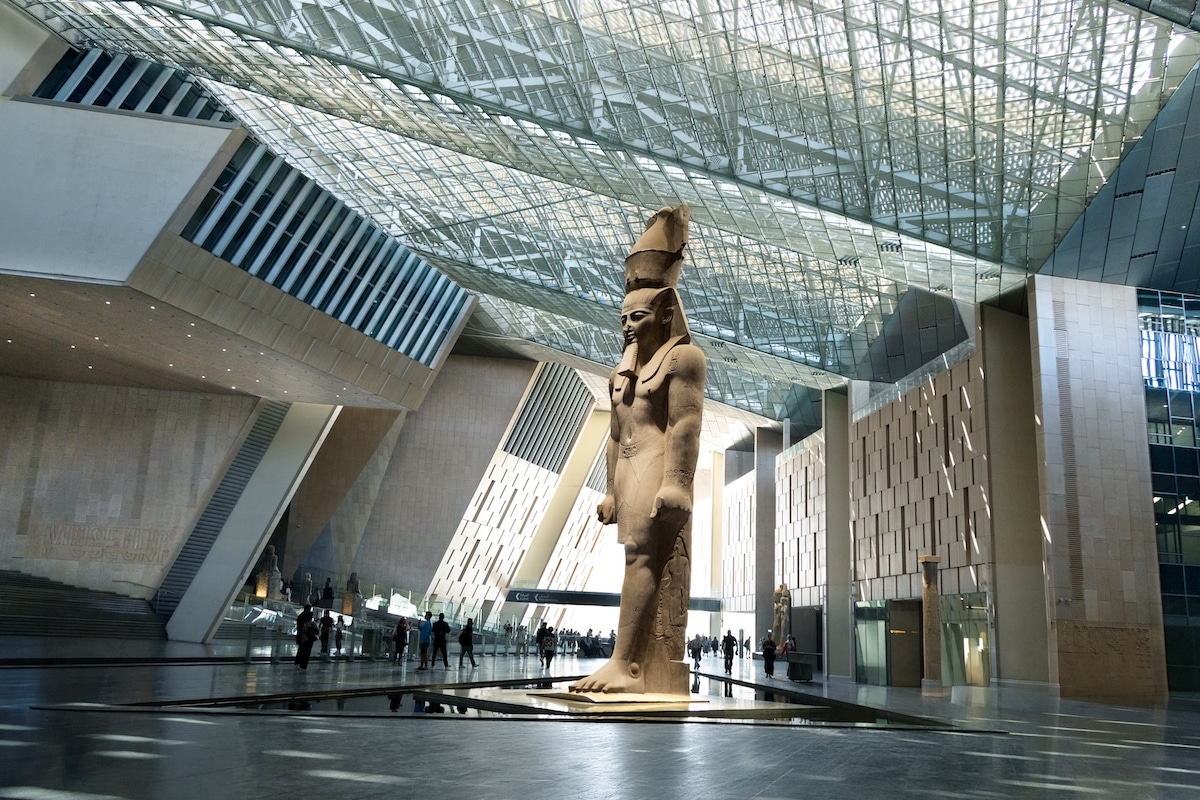
The 11-meter-tall Colossus of Ramesses II stands in the atrium of the Grand Egyptian Museum. Originally located at the Memphis archaeological site, it now serves as the symbol and welcoming landmark of the new museum.
This solar boat was originally housed in Khufu's Boat Pit on the south side of the Great Pyramid, and is currently the most complete large wooden boat in the world, built using ancient Egypt's unique "nail-free shipbuilding technique."Now relocated to the GEM, you can view up close the hull's timber structure, lashing methods, and component arrangement — a vital exhibit for understanding Old Kingdom royal beliefs and craftsmanship.

The Khufu Solar Boat is a 4,600-year-old wooden funerary vessel, 43 metres long, assembled from over 1,200 pieces of cedar wood — the most complete ancient Egyptian ship in existence. Photo by Wolfgang Kaehler/LightRocket via Getty Images. From artnet.
Crafted from approximately 11 kilograms of pure gold, this golden mask is Egyptian civilisation's most iconic work of art. The proportions of the brows and eyes, the blue glass-inlaid lines, and the protective incantations inscribed on the back all embody "divinity," "eternity," and "royal aesthetics." The lustre and dimensionality of the real object deliver an impact that photographs can never capture.
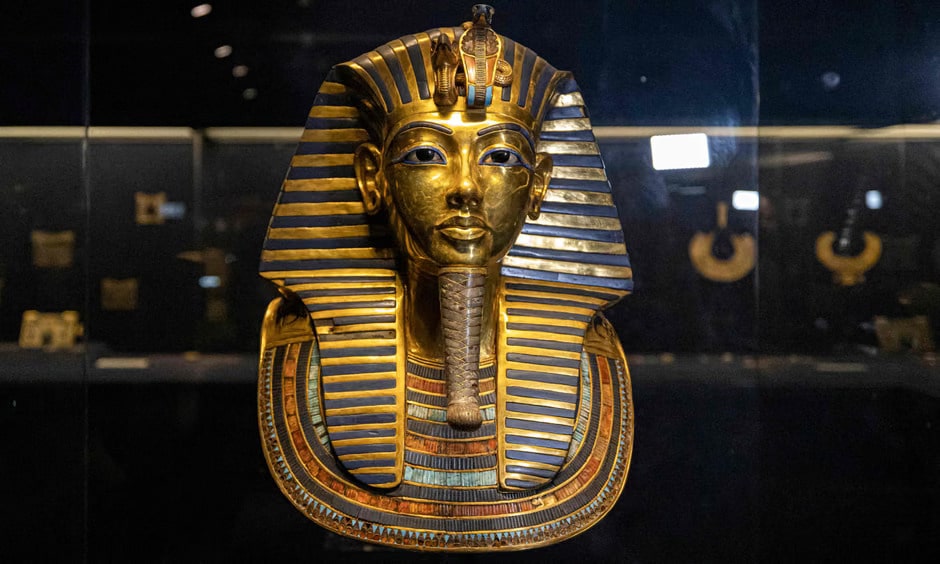
Tutankhamun's golden mask, crafted from pure gold and inlaid with lapis lazuli and glass, is one of ancient Egypt's most iconic artefacts and a symbol of the Grand Egyptian Museum's (GEM) collection. Photo by Khaled Desouki/AFP/Getty Images/ The Guardian
After seeing the three classic treasures, you'll discover that GEM's true charm actually lies in the details.More than 5,000 artifacts are on display here, and many visitors rush to snap a photo with the golden mask before leaving— missing out on the "hidden treasures" that truly reveal the essence of royal power, faith, and craftsmanship. Here are the 7 highlights that insiders always pause to examine closely. Each one is packed with storytelling, and together they help you piece together the values and intellectual framework of ancient Egyptian civilization. If you want to truly understand the GEM—not just "walk through" it—these seven pieces are the essentials you cannot afford to miss.
This dagger is one of the most fascinating items among Tutankhamun's burial treasures. Scientists confirmed through X-ray fluorescence analysis that the metal composition of the blade originates from a meteorite. To the ancient Egyptians, metal from the sky symbolized a "gift from the gods," making this dagger not just a weapon, but a symbol of the pharaoh's "divine mandate." The hilt is adorned with gold foil, titanium-hued glass, and inlaid gemstones—craftsmanship so refined it far surpassed the metalworking technology of its time, astonishing modern researchers with the fact that ancient Egyptians already knew how to identify, extract, and shape meteoritic metal. Though often overlooked at the GEM, it is actually one of the most extensively studied Egyptian artifacts in the scientific community. 💡 Fun Fact: Did this dagger really come from a meteorite? How did science prove it? Using X-ray fluorescence spectroscopy (XRF) to analyze the metal composition of Tutankhamun's dagger, the research team discovered:
- Nickel (Ni) content is extremely high, far exceeding what ancient iron smelting could achieve
- Cobalt (Co) levels also match the characteristic composition of iron meteorites
- The ironworking technology on Earth at that time could not have produced this kind of alloy
As a result, the scientific community unanimously agrees that this dagger's blade was made from "meteoritic iron." This finding was published in Meteoritics & Planetary Science, and has been cited by NASA's planetary science division.👉 The ancient Egyptians also knew this metal came from the sky, describing it as “iron of the heavens.”
You've surely seen statues of pharaohs in the classic pose with arms crossed over the chest, holding these two objects that symbolize royal authority.
- The Crook: Represents the “shepherd,” symbolizing the king's role in protecting his people
- The Flail: Represents grain and order, the king's power to keep the world running
These two artifacts speak the “language of kingship.” Crafted from pure gold and gemstones for Tutankhamun's tomb, they are extraordinarily refined in detail. Look closely and you'll see gold-wire wrapping, colour pairings, and surface textures that reveal the ancient Egyptian craftsmen's ultimate interpretation of “symbols of royal power.”

Tutankhamun's Crook and Flail: symbolizing the pharaoh's dual power as “shepherd” and keeper of “order,” one of the most crucial artifacts for understanding the language of ancient Egyptian kingship. By Bill Abbott - King Tutankhamun's tomb goods: flail and crook DSC_0971, CC BY-SA 2.0
Tutankhamun's Golden Throne is, among all his burial treasures, the artifact that best reveals the coexistence of "human warmth" and "symbols of kingship". The relief on the backrest depicts an extremely rare scene: the young king seated on his throne, while his wife Ankhesenamun personally anoints him with fragrant oil, grooms his hair, and comforts him. Such an intimate and tender image is exceedingly rare in Egyptian royal art, showcasing the naturalistic, gentle, family-centered style unique to the Amarna period (Amarna style).
In terms of craftsmanship, the throne features:
- A wooden core covered in sheets of pure gold
- Inlays of glass and semi-precious stones
- Fine linear feather patterns and the sun god Aten's rays symbol
- Curves and light postures typical of "Amarna aesthetics"
The Golden Throne is not merely a chair, but a narrative of Tutankhamun as king, husband, and the final heir of the Amarna period.

Tutankhamun's Golden Throne: the relief on the backrest depicts a rare intimate interaction between the young king and his queen, one of the most iconic works of art from the Amarna period.Photo Credit : Egypt Museum
In ancient Egypt, the leopard skin was worn by the highest-ranking priest. Yet among Tutankhamun's burial treasures, you'll find that the pharaoh himself also wore a leopard-skin robe. This symbolises something profound: the pharaoh was not merely a king, but the bridge between humanity and the gods. The leopard skin symbolised power, protection, and religious authority — its patterns, tailoring, and metal ornamentation are exquisitely refined, revealing that kingship and priesthood were in fact "unified" in ancient Egypt. This robe is often overlooked by visitors, yet it is key to understanding the pharaoh's true identity.
Most visitors know only of Tutankhamun's golden mask, but what truly astonished archaeologists was his multi-layered mask and protective system. Ancient Egyptian funerary philosophy held that the deceased's journey to the afterlife was fraught with trials, so "layer upon layer of protection" was essential to ensure the soul could be safely reborn. Tutankhamun's mask assembly included:
- Outer golden mask: representing divinity and eternity
- Inner funerary mask: fitted directly over the mummy to protect the face
- Anthropoid mask within the coffin: symbolising the protective power of the Ba spirit
Different materials also carry different meanings:
- Gold=incorruptibility, eternal life, divinity
- Glass and gemstones=rebirth, light and protection
- Wood=a material connection to the human body
The entire structure functions like a carefully designed “afterlife protection network,” revealing the ancient Egyptians’ nuanced understanding of eternal life, and allowing us to see the multiple symbolic layers of the young king’s identity from different angles. 💡 Fun Fact: Tutankhamun's mummy remains in the Valley of the Kings
Although Tutankhamun's golden mask and burial treasures have been moved to the Grand Egyptian Museum for display, his actual mummy still rests in its original tomb (KV62) in the Valley of the Kings, making it one of the very few pharaonic remains still kept at its original site.
👉 Further Reading: Introduction to the Valley of the Kings
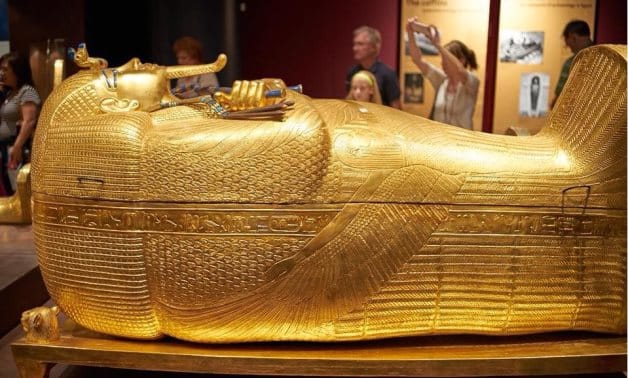
Tutankhamun's outer Gilded Coffin: made of wood covered in thin sheets of pure gold, its surface engraved with protective spells and feathered patterns, forming an important layer within the young king's "multi-layered coffin system." Photo Credit : Egypt Today
Sekhmet is a lioness-headed goddess symbolizing war, protection and healing, and is one of the most powerful female deities in Egyptian religion. Several Sekhmet statues in the GEM collection feature strong, forceful lines and intense gazes, clearly showing her role as "protector of the royal house." She often appears in grouped sculptures alongside the god Ptah or Ramesses II, symbolizing the strength and divine blessing required by royal authority. These statues are key exhibits for understanding "the ancient Egyptian reverence for female divine power," and also showcase the strength and stability of New Kingdom sculptural craftsmanship. 💡 Fun Fact: Why does ancient Egypt's mightiest goddess have a lion's head? Sekhmet's lion head symbolizes combat, protection and healing, and also represents an incarnation of the sun god Ra, which is why she was regarded as the most important guardian of royal power. During the New Kingdom, large numbers of her statues were produced—some temples have even yielded over a hundred of them—showing just how heavily the dynasty of the time relied on her power.

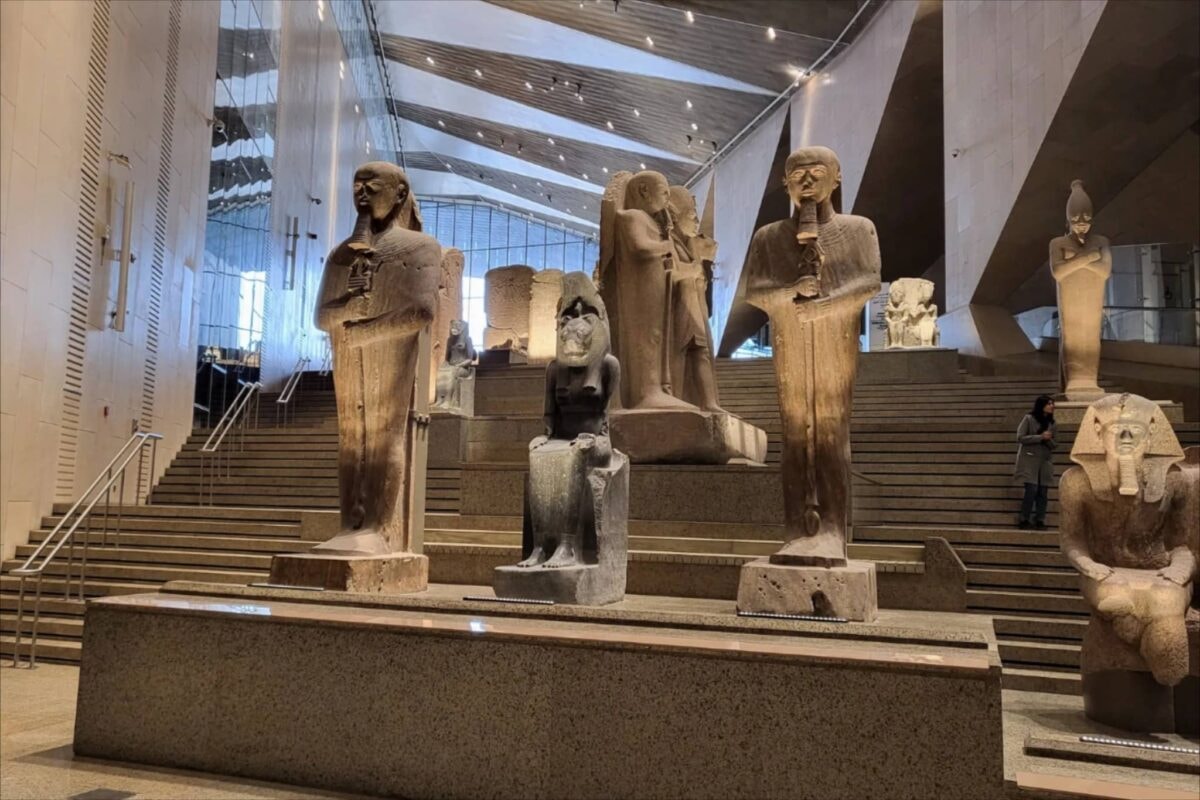
The granite statue of Sekhmet in the Grand Staircase gallery, seated between two statues of the Memphite god Ptah, is one of the most powerful depictions of a goddess from the New Kingdom period.
GEM's jewellery gallery is full of surprises. Materials used by the ancient Egyptians included:
- Lapis Lazuli
- Turquoise
- Carnelian
- Gold thread and glass inlay
From necklaces and bracelets to amulets, each piece showcases highly refined craftsmanship. You'll discover that ancient Egyptian jewellery was not mere "decoration" but functional objects for protection, blessing, and status. The colour combinations and gold foil techniques remain astonishing even today, making this the gallery that best embodies ancient Egypt's fusion of "aesthetics and technology."
The essence of the Grand Egyptian Museum lies not only in the colossal statues, solar boats, or golden masks, but in those easily overlooked details that truly reveal ancient Egyptian thought. From daggers forged from meteorite iron, to crooks and flails symbolising royal power; from the pharaoh's gold finger stalls and the priest's leopard skin, to multi-layered masks and intricate jewellery craftsmanship — each piece is the ancient Egyptians' concrete interpretation of eternity, order and divinity. When you can trace the connections between royal power, religion and craftsmanship through these stories, you'll discover that the GEM is not merely a museum, but an encyclopaedia that lets you witness the pulse of ancient civilisation with your own eyes.
No amount of photos can compare to experiencing the glow of gold in person at the Grand Egyptian Museum, and gaining deep insight into the codes hidden behind daggers, jewellery and masks. If you'd like to delve deeper into Egypt's cultural context and way of life, DeWonder Travel's Egypt In-Depth Tour is led by professional tour leaders and local experts, weaving together historical sites, local life and cultural experiences, so your journey becomes more than sightseeing — it becomes a journey of understanding civilisation. ✨ Itinerary Highlights
- Small Group Design (8–14 people): Maintains flexibility and quality, avoiding the crowds of large tour groups.
- Professional Guiding: Led by culturally knowledgeable guides and Egypt experts, offering in-depth explanations of the GEM and pyramid history.
- Diverse Experience Itinerary: Includes a Nile River cruise, Nubian village visits, and guided tours of Abu Simbel Temple and Luxor Temple.
- Curated Accommodation: Combining hotels in central Cairo with pyramid-view lodgings, offering comfort with an authentic local atmosphere.
- Photography-Friendly Itinerary: Specially arranged sunrise, sunset and night-light sessions, perfect for cultural photography enthusiasts.
The Grand Egyptian Museum (GEM) is undoubtedly the absolute centerpiece of any 2026 Egypt trip. Let DeWonder guide you on the starting point for truly understanding ancient Egyptian civilization. 👉 View year-round departure dates for our Egypt in-depth tour 👉 Join our free online seminar to get your Egypt itinerary questions answered 👉 Click here to register DeWonder Egypt In-depth Tour Information Kit 👉 Click here to download 👉 Further reading: Grand Egyptian Museum Guide 👉 Further reading: Where Are Egypt's National Treasures?Grand Egyptian Museum vs. European Museums 👉 Further reading: Egypt's Three Great Museums Guide - An Overview of GEM, NMEC, and EMC Exhibits 👉 Further reading: Egypt Pyramids Guide