
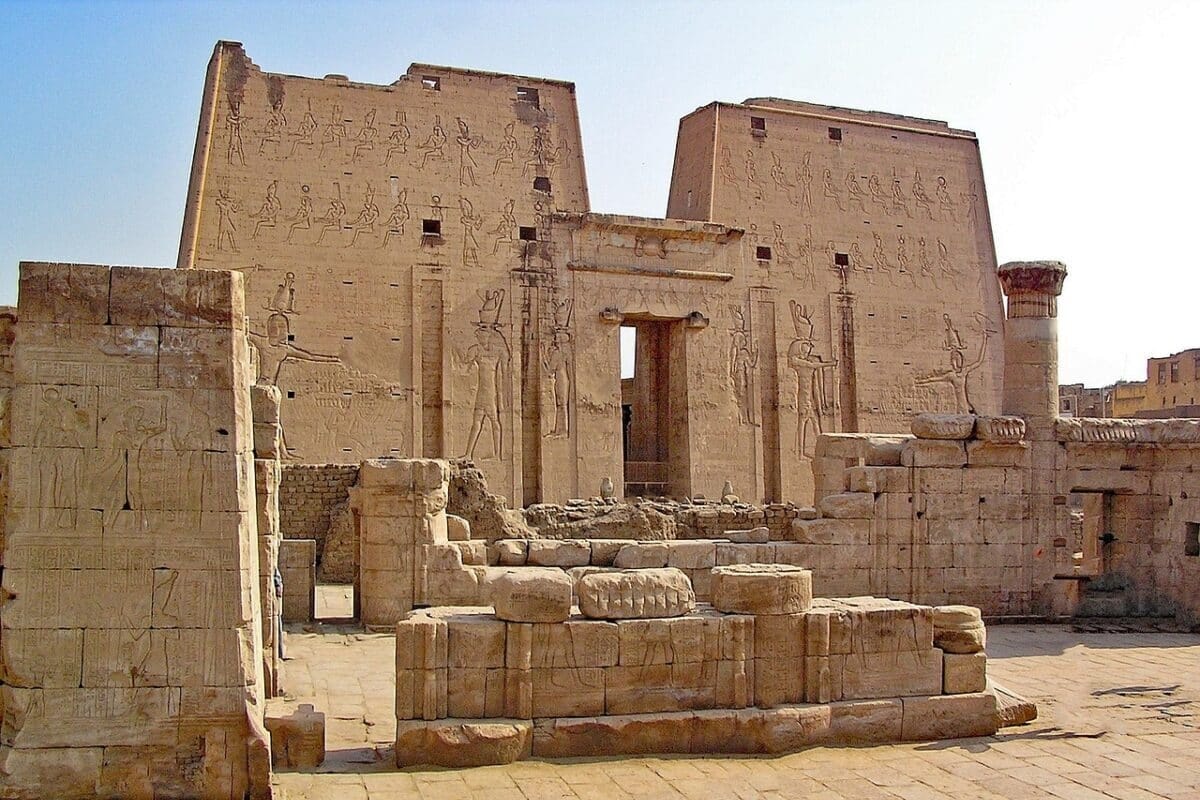
Edfu Temple: Egypt's Best-Preserved Temple — Step into the Sacred Sanctuary of Horus
Edfu Temple is the most completely preserved ancient Egyptian temple, renowned for its Falcon God Horus, majestic pylons, and vivid reliefs. This article gives you a quick guide to the must-see highlights of Edfu Temple.
Edfu Temple is Egypt's most completely preserved and structurally clearest ancient temple, regarded by many archaeologists and Egyptologists as "the ideal model for studying ancient Egyptian architecture." It is dedicated to the falcon god Horus, symbol of justice, victory, and kingship. From the pylons and hypostyle hall to the inner sanctuary and sacred barque chamber, the temple survives in near-original condition, making it one of the most delightful stops on a Nile cruise.
Edfu is called the "best-preserved temple" not as an exaggeration, but because it truly possesses three unique conditions among Egypt's temples:
- The First Pylon, the Hypostyle Hall, the offering chamber, the sacred barque chamber, and the inner sanctuary axis are all fully preserved.
- Walking through the temple, you can clearly sense the "ceremonial pathway" of an ancient Egyptian temple.
- Many Egyptologists use Edfu as the classic example when explaining "temple design."
In later periods, Edfu was buried for a long time under accumulated sand, which unexpectedly protected the structure from weathering and human damage. When 19th-century archaeologists re-excavated it, many wall carvings were still remarkably clear.
- Built from the reign of Ptolemy III to Ptolemy XII, it is one of the most important Egyptian temples of the Hellenistic era.
- Its reliefs, inscriptions, and ritual scenes are exceptionally well preserved, making it ideal for understanding religious life during the Ptolemaic period.
- If you want to "understand the structure of Egyptian temples," Edfu is the perfect starting point.

Front facade of Edfu Temple|The best-preserved Egyptian temple from the Ptolemaic period, its massive pylons and clearly preserved reliefs showcase the pinnacle of ancient Egyptian architectural craftsmanship. Image by lapping from Pixabay
The construction of Edfu Temple took over 180 years, beginning under Ptolemy III and completed only under Ptolemy XII (father of Cleopatra VII), making it the most representative building of the Ptolemaic dynasty's drive to revive Egyptian religion.
- Although the Ptolemaic Dynasty ruled Egypt, the rulers themselves were Greek.
- To win the acceptance of the Egyptian people, they built and rebuilt temples on a massive scale, continuing traditional beliefs and consolidating their political legitimacy.
- Edfu is the "model work" of this religious policy.
- Founded by: Ptolemy III
- Main construction: Ptolemy IV to Ptolemy IX
- Completed by: Ptolemy XII, father of Cleopatra
This timeline spans multiple rulers, making Edfu the temple where "Hellenistic × Ancient Egyptian aesthetics" blend most naturally.
- Horus symbolizes kingship, justice, and victory.
- The Ptolemaic Dynasty chose to heavily promote the worship of Horus, hoping to strengthen their own rule through this "guardian deity of kings."
- The relief in the temple depicting Horus's victory over Set is the most obvious political symbol.
- In later periods, silt from the Nile and windblown sand gradually buried the temple.
- This actually spared it from extensive destruction, stone plundering, and natural erosion.
- It was re-excavated in the 19th century by the French Egyptologist Auguste Mariette.
The main deity worshipped at the Temple of Edfu is one of ancient Egypt's most important gods—the falcon god Horus. He symbolizes the sky, justice, and kingship, and was regarded as the guardian of all pharaohs. As such, every wall and every relief at Edfu revolves around the power and spirit of Horus.
- Form: A human body with a falcon head, or in full falcon form.
- Meaning: Guardian of the sky and light.
- Relationship with the pharaohs: Successive pharaohs regarded themselves as "Horus on Earth."
As a result, temples dedicated to Horus tend to carry more "symbols of kingship," and Edfu is the most complete and quintessential example of them all. 👉 Further Reading: A Quick Guide to Egypt's Key Deities
Edfu's most famous narrative reliefs depict the long-standing conflict between Horus and Seth, the god of chaos:
- Seth represents chaos, violence, and the power of the desert
- Horus symbolizes order, justice, and civilization
- Their confrontation reflects ancient Egypt's belief that "order triumphs over chaos"
On the walls of Edfu, you'll see scenes of Horus pursuing Seth, the king assisting Horus in performing rituals, and symbolic ceremonies of justice subduing chaos. These murals clearly convey the message the Ptolemaic dynasty wished to express: they stood on the side of order.

Relief of Horus at the Temple of Edfu | The falcon god Horus, depicted with the head of a griffin-like hawk, symbolizes kingship, protection, and victory, and is the principal deity worshipped at the Temple of Edfu.Image by DEZALB from Pixabay
The most famous photo spot at the Temple of Edfu is the black granite statue of the falcon god Horus at the entrance. Its solemn form and remarkably well-preserved surface, standing upright in a dignified pose, make it the temple's most iconic symbol. Almost every visitor takes a photo here, because this statue represents not only Horus himself, but also the completeness and grandeur of Edfu. 💡 Did You Know: Why Was the Temple of Horus So Highly Regarded by the Ptolemaic Dynasty? The Ptolemaic Dynasty were not native Egyptians (they were descendants of Greek Macedonians), but they were eager to be seen by the Egyptian people as "legitimate pharaohs."Worshipping Horus meant declaring themselves on the side of righteous kingship. The Temple of Edfu is one of the masterpieces they used to symbolize"the legitimacy of their rule."

The Horus Statue at the Temple of Edfu | This iconic falcon-god Horus statue is a must-photo highlight for visitors, symbolizing the pharaoh's protector and the power of the sky.By Codex - Own work, CC BY-SA 3.0
The Temple of Edfu features concentrated highlights and a clear layout, making it ideal for first-time visitors exploring an Egyptian temple. Below are the 5 most noteworthy areas, helping you grasp the essence of the temple in a short time—without getting lost or missing key scenes.
- Edfu's most iconic photo spot.
- The pylon is remarkably well-preserved, with clearly visible relief details.
- Suggested angles: a frontal wide shot, or a low-angle upward shot for greater grandeur.
- Towering columns combined with natural beams of light create the most stunning visual scenes.
- The column capitals and symbolic decorations are exceptionally well-preserved.
- Widely praised by visitors as the "most breathtaking" space to experience in person.
- The black granite statue of Horus on the right side of the entrance is the symbol of Edfu.
- With its complete face and crisp features, it's the most popular photo spot for visitors.
- This statue is also the best example for understanding the "symbol of royal power."
- The sanctuary is the most sacred space, with the central platform being where the "Sacred Barque" was placed (used for processional rituals).
- Its extraordinary state of preservation makes it a key highlight for understanding ancient Egyptian ritual procedures.
- The wall paintings at Edfu record numerous rituals, offerings, and the story of "Horus's Battle Against Seth."
- Thanks to their excellent preservation, the lines and hieroglyphs remain as clear as when they were new.
- Look out for details such as the scenes of Seth being hunted down, royal rituals, and ceremonial implements.

The Sacred Barque of Edfu Temple | A ceremonial vessel used by priests during religious festivals to carry the statue of Horus, symbolising the god's journey and protection—one of the most precious ritual artefacts within the temple. Image by DEZALB from Pixabay

Ritual Scene Relief Inside Edfu Temple | The wall depicts a ceremonial scene of priests presenting sacred offerings to Horus, with finely detailed lines that offer important imagery for understanding ancient Egyptian religious rites.Image by Christine Mills from Pixabay
Q1: Why is the Temple of Edfu so well preserved? A : Edfu was buried under sand and silt for centuries, which actually protected it from weathering, stone theft, and destruction. It was only rediscovered in the 19th century by French antiquarians, which is why its architecture, reliefs, and inner sanctuary remain in astonishingly complete condition. Q2: Are photos allowed inside the Temple of Edfu? A : Yes. Edfu is one of the few temples with ample lighting, a stable structure, and photography permitted in most areas — just avoid using flash out of respect for the artifacts' preservation. Q3: How do you get to the Temple of Edfu after the cruise ship docks? A : Most Nile cruises arrange for passengers to travel by horse carriage to the temple entrance after arriving in Edfu, a ride of about 5–10 minutes. This is currently the most common and locally distinctive way to get there. (Some groups occasionally use small vehicles or electric carts instead.) Q4: Is Edfu suitable for independent travel, or is a cruise more convenient? A : Edfu is located in the middle stretch of the Nile, making transportation relatively inconvenient. Most travelers arrive via Nile cruise, which is the most time-saving, hassle-free, and atmospheric way to visit. Joining a tour not only simplifies transportation arrangements but also lets a guide help you understand the murals and rituals.
The Temple of Edfu is one of the highlights of a Nile cruise itinerary, and the place where travelers can most fully appreciate the structure of an ancient Egyptian temple.If you'd like to arrive with ease, without worrying about transport or transfer logistics, while having someone guide you through the myths of Horus and the exquisite reliefs, DeWonder Egypt In-Depth Tour would be the most comfortable choice. We've arranged for you:
- 4-Day, 3-Night Nile Cruise: linking Kom Ombo, Edfu, and Philae in one seamless journey
- Professional Guided Commentary: helping you understand Edfu's complete axis and the mural story of Horus × Set
- Exclusive Small Groups of 8–14: just the right pace, unhurried photo time, and more thorough explanations
- Cultural Lectures & Pre-Trip Briefings: making it easier for you to grasp the rituals and imagery when viewing the temples
If you'd like to travel slowly along the Nile, exploring the best-preserved temples of ancient Egypt at the most comfortable pace, join us and let Edfu be one of the most elegant stops on your journey. 👉 View Egypt In-Depth Tour Departure Dates for the Whole Year 👉 Join Our Free Online Seminar to Get Your Egypt Trip Questions Answered 👉 Click Here to Register DeWonder Egypt In-Depth Tour Info Kit 👉 Click Here to Download 👉 Further Reading: Egypt Temple Series
👉 Further Reading: Guide to Egyptian Mythology 👉 Further Reading: Egypt Pyramids Guide | Grand Egyptian Museum Guide