
Egypt Museum Guide: Where to See Tutankhamun's Golden Mask and the Royal Mummies?
Where is Tutankhamun's treasure kept? Where can you see the mummies? This article gives you a complete rundown on the exhibit layout and must-see highlights of GEM, NMEC, and EMC, helping you quickly plan your Cairo museum itinerary and step into true ancient Egypt.
When people travel to Egypt, there are two things almost everyone wants to see: Tutankhamun's golden mask, and the actual mummies of the pharaohs. Now, with the official opening of the Grand Egyptian Museum (GEM), and the continued operation of the National Museum of Egyptian Civilization (NMEC) and the Egyptian Museum in Cairo (the old museum), Cairo has become the world's most concentrated "showcase of ancient civilization."
All three museums house precious Egyptian artifacts, but which one should you actually visit? This article will help you fully understand the positioning and exhibit distribution of the three major museums, so you won't be confused before you set off: Where should you go to see the golden mask? Where should you go to see the pharaohs' mummies? This article will walk you through it all.
💡 Quick tip:If you only have time for one museum, choosing the Grand Egyptian Museum (GEM) is a sure bet.want to see"the Pharaoh himself", then you simply must visit theNational Museum of Egyptian Civilization (NMEC). For history buffs, however, the sense of antiquity at the Egyptian Museum in Cairo is all the more captivating.
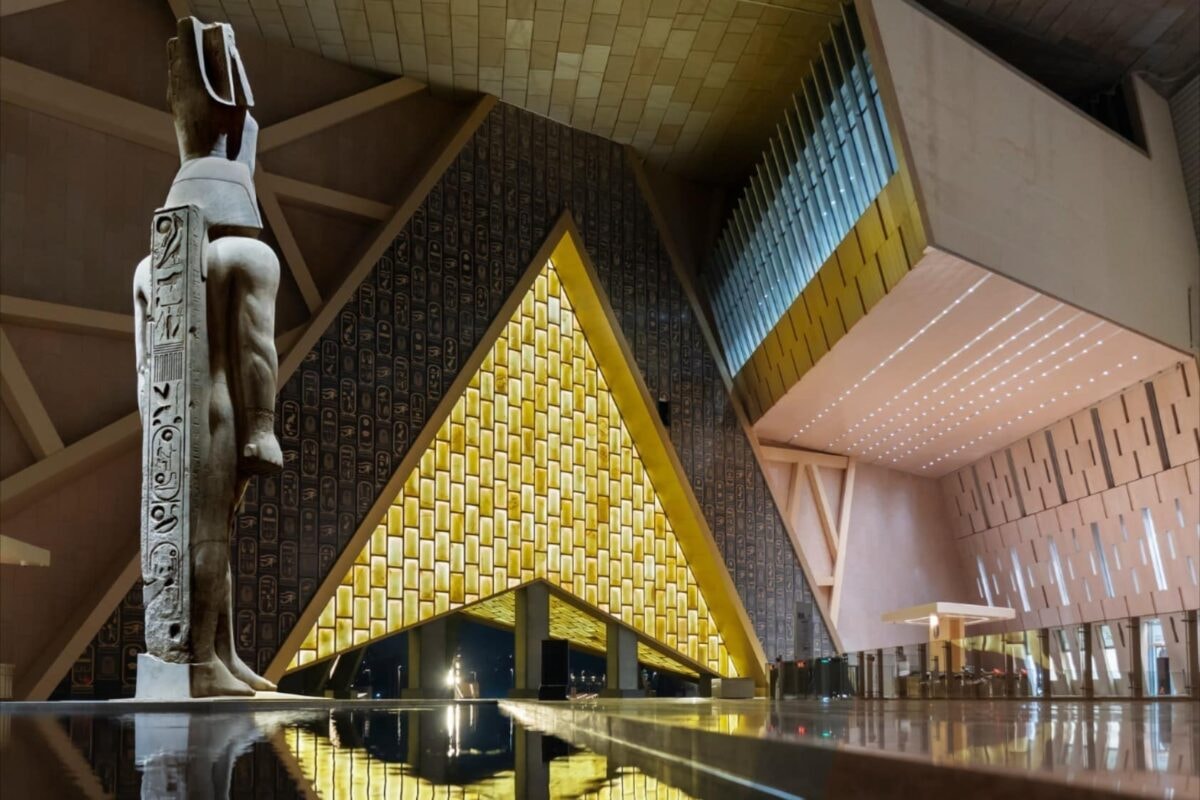
 The main atrium of the Grand Egyptian Museum (GEM) is designed around the themes of "pyramid" and "sunlight", symbolising light illuminating ancient civilisation. The colossal statue of Ramesses II standing at the entrance welcomes every visitor.Photo Credit : GEM Facebook
 The wooden anthropoid coffin of Ramesses II, now housed at the National Museum of Egyptian Civilization (NMEC), is one of the museum's signature treasures.Photo Credit : Ministry of Tourism and Antiquities
 The painted anthropoid coffin of Thutmose III, its blue-and-gold decoration symbolising the pharaoh's eternal glory. Photo Credit : NMEC website
 Standing in Tahrir Square for over a century, the Egyptian Museum in Cairo (EMC) was once home to the gold masks and mummies, and remains the birthplace of modern Egyptian archaeology.Photo By Bs0u10e01 - Own work, CC BY 3.0
A Quick Comparison of Egypt's Three Major Museums: Understand the Differences at a Glance
Now that all three museums are open, the key question is "Which museum should I go to, and what will I see there?"」Here's a table to help you understand the positioning and highlights of the three major museums in 30 seconds Comparison of Egypt's Three Major Museums| Category | Grand Egyptian Museum GEM | National Museum of Egyptian Civilization NMEC | Egyptian Museum in Cairo EMC |
| Location | Beside the Giza Pyramids, a new landmark | Old Cairo, on the banks of the Nile | Tahrir Square, downtown Cairo |
| Thematic Focus | Complete Tutankhamun collection, the glory of the Old Kingdom | Pharaoh mummies, the general history of Egypt | Middle and Late Kingdom artifacts, early collections |
| Must-See Highlights | The gold mask, the colossal statue of Ramesses II, Khufu's Solar Boat | The Royal Mummies Hall (the actual bodies of 22 pharaohs and queens) | The burial goods of Yuya and Tuya, Greco-Roman period statues |
| Who It's For | First-time visitors to Egypt, those wanting to see the "classic national treasures" | Those wanting to see actual mummies, history buffs | Archaeology enthusiasts, those fascinated by the details of ancient civilizations |
Grand Egyptian Museum (GEM): Tutankhamun's Final Resting Place
If we had to pick the one museum you absolutely cannot miss, it would have to be the Grand Egyptian Museum (GEM). Located beside the Giza Pyramids as a striking new landmark, it is the world's largest museum dedicated to Egyptian archaeology, and a monumental achievement more than two decades in the making — a symbol of Egypt's return to the world's cultural stage. Step inside, and you're greeted by an 11-metre-tall colossal statue of Ramesses II, standing majestically in the soaring glass atrium, facing the pyramids in the distance as if proclaiming: "Welcome back to the realm of the Pharaohs." The main atrium of the Grand Egyptian Museum (GEM) is designed around the themes of "pyramid" and "sunlight", symbolising light illuminating ancient civilisation. The colossal statue of Ramesses II standing at the entrance welcomes every visitor.Photo Credit : GEM Facebook
Curatorial Concept
GEM adopts a "timeline-based curatorial approach" combined with thematic gallery design, withthe developmental trajectory of ancient Egyptian civilisation as its main axis, journeying from the prehistoric period all the way to the Greco-Roman era. Unlike the "civilisational narrative storytelling" of the Museum of Civilisation, GEMplaces greater emphasis on the archaeological achievements and original state of artefacts from the Pharaonic period, allowing visitors to experience the craftsmanship and beliefs of ancient Egypt through genuine excavated relics. ✨ Must-See Highlights- Complete Tutankhamun Treasures Gallery (Unique in the World): Over 5,000 burial artefacts are displayed together in full for the first time in a single hall, including the golden mask, throne, chariots, jewellery and everyday items. This isthe most complete and systematically organised Tutankhamun collection in history, letting you witness the boy pharaoh's world both in life and after death in one visit.
 Tutankhamun's golden mask, crafted from pure gold and inlaid with lapis lazuli and glass, is one of ancient Egypt's most iconic artefacts and a symbol of the Grand Egyptian Museum (GEM) collection. Photo by Khaled Desouki/AFP/Getty Images/ The Guradian
 - Colossal Statue of Ramesses II: The symbol of the museum and the first awe-inspiring sight upon entering. Whether by day or night, the interplay of light and shadow renders him even more majestic.
 The colossal statue of Ramesses II in the atrium of the Grand Egyptian Museum stands 11 metres tall. Originally located at the Memphis site, it has now become the symbol and welcoming landmark of the new museum.
 - Khufu Solar Boat: A 4,600-year-old vessel for the Pharaoh's soul, relocated intact from its original site beside the pyramids, now sailing anew within a climate-controlled glass gallery.
 The Khufu Solar Boat is a 4,600-year-old wooden funerary boat measuring 43 metres in length, assembled from over 1,200 pieces of cedar wood. It is the most complete surviving vessel from ancient Egypt. Photo by Wolfgang Kaehler/LightRocket via Getty Images. From artnet.
National Museum of Egyptian Civilization (NMEC): Face to Face with the Pharaohs
If the GEM lets you witness the pharaohs' magnificent treasures, then theNational Museum of Egyptian Civilization (NMEC) lets you truly come face to face with the pharaohs themselves. Located on the banks of the Nile, NMEC is one of Cairo's most modern museums, weaving a grand narrative of civilization that spans from prehistory to modern Egypt. Curatorial Concept NMEC uses the timeline of civilization as its curatorial backbone, covering cultural development from prehistoric and pharaonic times through the Coptic, Islamic, and modern eras of Egypt. Unlike the GEM's focus on archaeology and artistic beauty, NMEC emphasizes the evolution of civilization and the continuity of life, telling the story from ancient times to today of "how Egyptians became Egyptians." ✨ Must-See Highlights- Royal Mummies Hall: Houses the actual remains of 22 ancient Egyptian rulers, including Ramesses II and Queen Hatshepsut.These mummies were originally housed in the old Cairo Museum, and in 2021 they were "relocated" in a grand ceremony from Tahrir Square all the way to the NMEC as part of thePharaohs' Golden Parade. That parade let the whole world witness Egypt's respect for and continuation of its history, and this Mummy Hall is their final resting place. The gallery is designed with a tomb-like atmosphere — dim lighting and a solemn mood — with each pharaoh's sarcophagus quietly telling a thousand-year-old story. The gallery is designed with a tomb-like atmosphere, with low lighting and a solemn mood.
- Main Exhibition Hall: Traces the evolution of civilisation from prehistoric times to the modern era — from pottery and clothing to religious art — giving you a complete understanding of the continuity of Egyptian culture.
The wooden anthropoid coffin of Ramesses II, now housed at the National Museum of Egyptian Civilization (NMEC), is one of the museum's signature treasures.Photo Credit : Ministry of Tourism and Antiquities
The painted anthropoid coffin of Thutmose III, its blue-and-gold decoration symbolising the pharaoh's eternal glory. Photo Credit : NMEC website
The Egyptian Museum in Cairo (EMC): A Century-Old Treasury in Tahrir Square
Step into Tahrir Square in downtown Cairo, and the pink-facaded building with its classical domes marks the very starting point of Egyptian archaeology — The Egyptian Museum in Cairo (EMC). Since its opening in 1902, this century-old museum has remained at the heart of Egyptian archaeology and the birthplace of countless legendary discoveries. Before the GEM and NMEC were completed, Tutankhamun's golden mask and the royal mummies were once displayed here, making it truly the "first home of Egyptian antiquities." Although these treasures have since moved to the new museums, the EMC still safeguards countless artefacts from the Middle Kingdom, the Late Period, and the Greco-Roman era — along with an irreplaceable "soul of the old museum" that lingers within its halls.Curatorial Concept
The EMC follows the classic early-20th-century approach of curating by type and period, organising displays by material (stone carvings, wooden coffins, jewellery) and excavation site, with galleries preserving the original European-style archaeological display format. There are no digital interactives here, no dazzling lighting—yet visitors can feel the most authentic atmosphere of an archaeological site. For researchers and history enthusiasts, this "unpackaged, original flavour" is precisely the greatest appeal. ✨ Must-See Highlights- The Burial Treasures of Yuya and Tuya: The grandparents of Tutankhamun, their tomb was once one of the most intact royal burial chambers found in the Valley of the Kings. Their gold masks and burial goods are still displayed at the EMC today, hailed as the most significant discovery "second only to Tutankhamun."
- Middle Kingdom and Greco-Roman Period Artefacts: A vast collection of statues, wooden coffins, jewellery and wall paintings, showcasing the diversity and ongoing evolution of ancient Egyptian art.
- The EMC's Century-Old Atmosphere: Get up close with yellowed labels, wooden display cases and handwritten notes, as if stepping back into an archaeological site from the early 1900s.
Standing in Tahrir Square for over a century, the Egyptian Museum in Cairo (EMC) was once home to the gold masks and mummies, and remains the birthplace of modern Egyptian archaeology.Photo By Bs0u10e01 - Own work, CC BY 3.0