
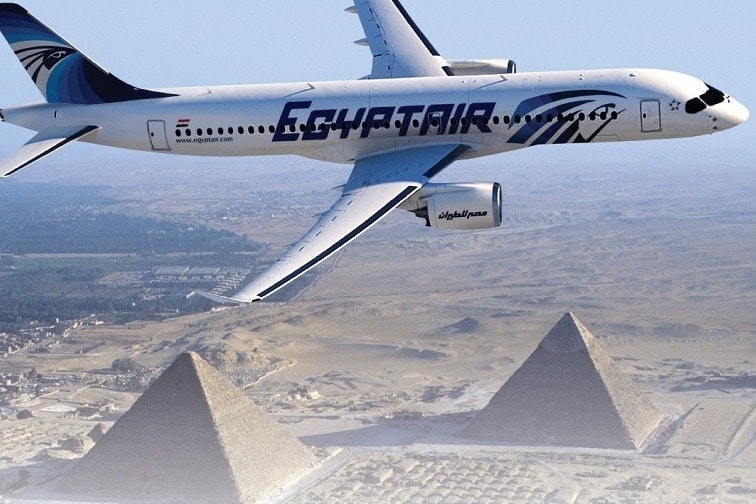
Egypt Transport Guide: How to Choose the Best Way to Travel Between Major Cities and Attractions? Comparing Flights, Cruises, and Trains
Traveling to Egypt and wondering how to get between attractions? Here's a complete breakdown of transport options between major cities, comparing flights, cruises, and trains to help you find what suits your itinerary best.
Egypt's major attractions are spread across a vast area, with distances between cities often reaching hundreds of kilometres. The transport method you choose will directly affect the pace and quality of your trip. This article focuses on"how to travel between major cities and attractions,"comparing the actual differences betweendomestic flights, Nile cruises, and trainsto help you choose the most suitable transport arrangement based on your itinerary needs.
If efficiency and reliability are your main concerns, most travellers moving between Egyptian cities will choose from the following three options:
- For those with limited itinerary time: Domestic flights are the fastest and least tiring option, ideal for round trips between Cairo and Aswan or Luxor
- For those wanting to visit Nile sites along the way: Nile cruises can handle transport, accommodation, and sightseeing all at once
- For those prioritizing budget with more time to spare: Trains are a viable option, but require accepting longer travel times and lower comfort levels
As for private cars or long-distance taxis, while technically feasible, the long distances and high time costs mean they're rarely used as the primary method for traveling between major cities—typically only considered as a supplementary option.
When planning transport between cities in Egypt, there's no single answer that suits everyone. The following four factors will directly influence whether you should choose flights, cruises, trains, or consider other alternatives.
The distances between Egypt's major cities are long, so travel itself can easily take up half a day or more. If your overall trip duration is limited, transport efficiency should be your top priority—domestic flights typically preserve the most actual sightseeing time. On the other hand, if your trip is longer, you'll have more room to consider slower transport options like trains or cruises.
For travellers visiting Egypt for the first time, stability and predictability in transport arrangements matter a great deal. Modes of transport that require you to transfer, communicate, or make last-minute adjustments on your own are considerably harder to manage in practice. Choosing a mode of transport with a clearer structure and more centralised arrangements can effectively reduce uncertainty.
Some modes of transport handle not just "movement" but also shape the pace of your daily itinerary. A Nile cruise, for example, combines city transfers, accommodation, and some sightseeing all within a single continuous journey — an important consideration for travellers who prefer not to change hotels frequently or deal with luggage repeatedly. 👉 Further reading:The Complete Guide to Nile Cruises
Overland transport such as chartered cars or trains often involves continuous journeys of several hours or more. If comfort during long rides, physical stamina, or minimising en-route variables are important to you, you'll generally lean towards flights, trains, or other forms of mass transit.
When travelling between Egypt's main cities, domestic flights, Nile cruises, and trains are the three most common and practical options. Each has a distinct role, and each suits different travel scenarios.
Domestic flights are the fastest way to travel between Egyptian cities, and are especially well-suited to longer routes such as those connecting Cairo, Aswan, and Luxor.
- Best for: Limited trip duration, wanting to minimise time spent on transport
- Key advantage: Short flight times leave more time for sightseeing
- Things to note: Schedules may occasionally change, so it's best to allow some flexible time
Overall, if efficiency and reliability are the main considerations, domestic flights are usually the preferred choice for most travellers.
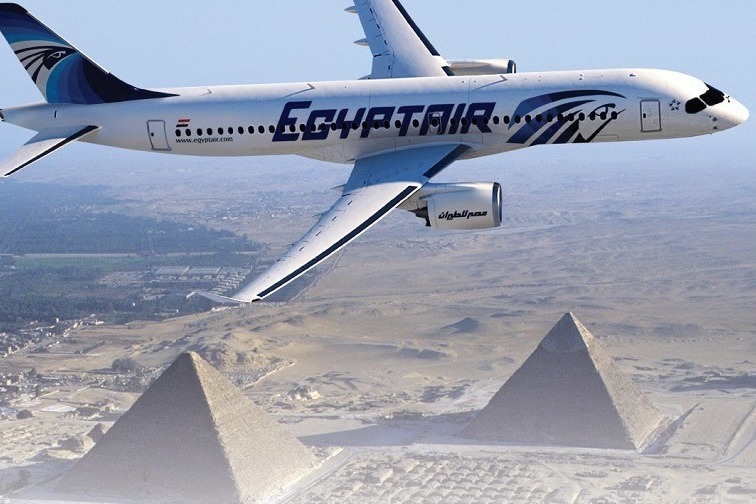
When travelling between cities in Egypt, domestic flights are known for their time efficiency and reliability, and are commonly used for trips between Cairo and Aswan or Luxor. Photo Credit : Cairo Scene
A Nile cruise serves both as a means of transport and a way to visit sights, commonly used for the route between Aswan and Luxor.
- Best for: Travellers who want to visit multiple sites along the Nile without frequently changing accommodation
- Key advantages: Transport, accommodation and some sightseeing are all taken care of in one go
- Things to note: The itinerary pace is fixed, leaving little room for adjustment
For first-time visitors to Egypt who want to reduce the complexity of arranging transport, a cruise is a relatively hassle-free choice. 👉 Further Reading:Nile Cruise Guide
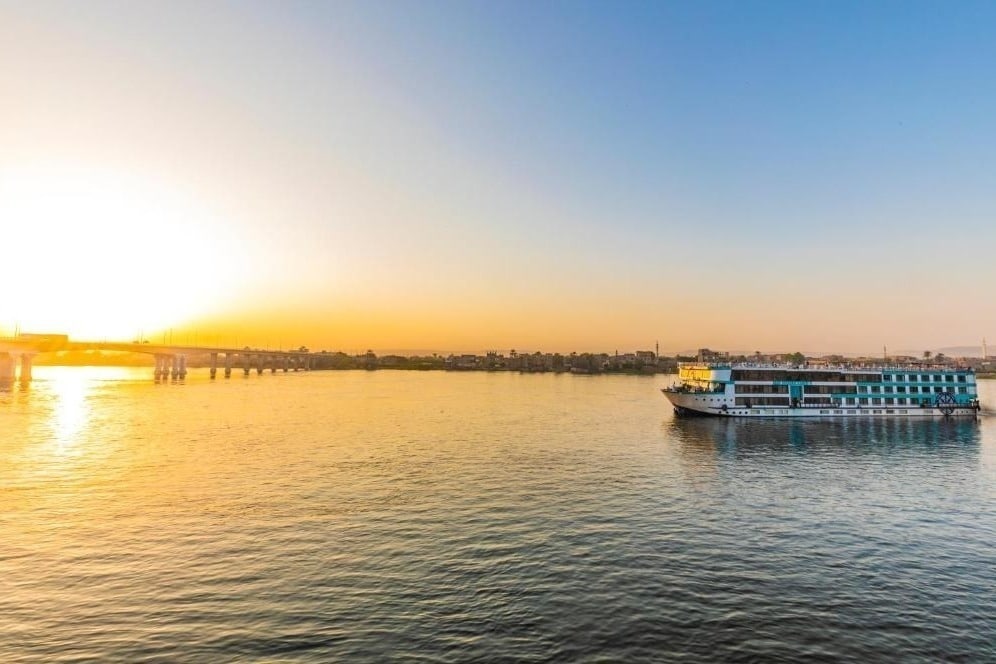
Nile cruises are commonly used for the Aswan to Luxor route, allowing visits to multiple important sites along the way and reducing the need for frequent accommodation changes.
Trains are a long-established and relatively affordable mode of long-distance transport, commonly used between Cairo and Luxor.
- Best Suited For: Travellers with limited budgets who can accept longer travel times
- Main Advantage: Lower cost
- Points to Note: Long travel times, with significant variation in train types and comfort levels
Trains are not an efficiency-focused option, and are better suited to travellers with ample time and fewer requirements regarding travel conditions.
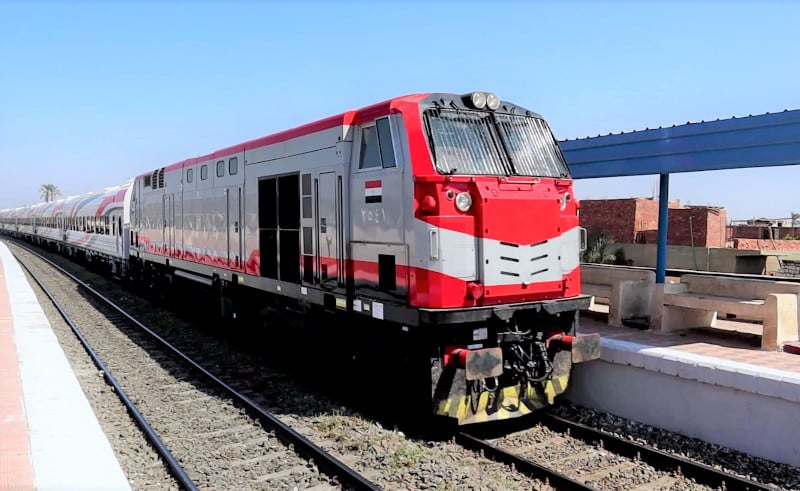
Among cross-city transport options in Egypt, trains are a lower-cost but slower way to travel, suitable for travellers with a more relaxed itinerary. Photo Credit: Cairo Scene
Mode of Transport | Time Efficiency | Comfort Level | Suitable For |
Domestic Flight | High | High | Tight schedules, first-time visitors |
Nile Cruise | Medium | High | Travellers seeking an integrated itinerary |
Train | Low | Medium | Budget-conscious travellers with ample time |
In theory, a private car or long-distance taxi could be used to travel between Egypt's major cities, but in practice, this isn't the preferred option for most travellers, mainly for the following reasons:
- Long distances and travel times: A round trip between Cairo and Luxor or Aswan by road often takes several hours or more, which can eat into sightseeing time.
- Limited real-world flexibility: Certain stretches require coordination with specific time slots or security arrangements, so the freedom of arranging your own car may not be as great as expected.
- No clear cost advantage: Long-distance private car hire tends to be expensive, and overall value doesn't necessarily beat flights or cruises.
- Higher planning barrier: Language communication and long hours on the road make this less friendly for first-time visitors to Egypt.
Conclusion: Private cars or long-distance taxis are better suited as a supplementary option for city or short-distance travel, while domestic flights, Nile cruises, or trains remain the mainstream choices for intercity journeys.
When planning an actual itinerary, most travellers combine different modes of transport based on the distance between cities and the pace of their trip. Below are the most common and well-established intercity transport arrangements.
City Route | Most Common Mode of Transport | Why This Arrangement | Additional Notes |
Cairo ⇄ Aswan | Domestic flight | Longest distance, overland travel takes too long | Upon arrival, use a private car or taxi to get around city sights |
Aswan → Luxor | Nile River cruise | Allows stops at multiple important sites along the way | Combines transport, accommodation, and some meals |
Luxor ⇄ Cairo | Domestic flight / train | Flexible choice depending on time and budget | Those with a tight schedule usually choose flights |
Within major cities | Private car / taxi / ride-hailing apps | Sights are spread out, requiring short-distance travel | Uber and Careem are available in Cairo |
💡Quick Summary
- Long-distance city travel:Mainly by air or cruise
- Middle stretch of the Nile:Cruise is the most common arrangement
- Within cities and short-distance travel:Overland transport as a supplement
This combination achieves a better balance between time efficiency, comfort, and itinerary completeness.
After completing long-distance travel between cities, when actually visiting the sights, you still need to choose suitable in-city or short-distance transport based on the city's size and the distribution of attractions. Below is a summary of the situations travelers most commonly encounter and the corresponding choices.
Movement Scenario | Applicable City | Common Transport Options | Why It's Arranged This Way | Additional Notes |
Short-distance travel within the city | Cairo | Uber, Careem, taxis | Relatively transparent pricing and easy to use | Street taxis usually require price negotiation beforehand |
Travel between attractions | Aswan, Luxor | Private car hire, tour buses | Attractions are spread out with limited public transport | Often paired with half-day or full-day itineraries |
Short-distance travel on the Nile | Around Aswan | Felucca sailboats | Highly experiential, suited for short distances | Not a mode of transport between cities |
💡 Quick Summary
- Getting around within the city: Mainly by ride-hailing apps or taxis
- Cities with dense but scattered sites: Mostly use chartered cars or tour coaches
- Nile-related activities: Felucca sailboats are a short experiential form of transport
These short-distance transport arrangements mainly serve to support longer journeys, helping the overall itinerary flow more smoothly.
There's no single answer to getting around Egypt — it depends on the distance between cities, the length of your trip, and personal preference, combined with different modes of transport. For some travellers, comparing schedules, transfer methods, and actual road conditions one by one can become the most time-consuming part of trip preparation. That's why many people choose itineraries that already have transport pre-arranged, handling long-distance travel (such as domestic flights and Nile cruises) together with local transfers, to avoid the uncertainty of arranging connections yourself. This kind of arrangement is especially suited to the following situations:
- Limited trip duration and wanting to reduce the cost of planning transport
- First-time visitors to Egypt who are less familiar with local transport
- Wanting to focus on the sights and experiences rather than the details of getting around
With pre-arranged transport, travellers simply follow the itinerary's pace to move smoothly between major cities and attractions. Don't want to plan your own transport in Egypt? DeWonder Egypt In-Depth Journey Domestic flights, Nile cruises and private transfers are arranged according to the actual itinerary, allowing travellers to focus fully on the sights and experiences themselves. ✨ Itinerary Highlights:
- 4-day, 3-night Nile cruise, travelling slowly along the river of the Pharaohs
- Visit the classic combination of the Giza Pyramids and the Grand Egyptian Museum in one trip
- Exclusive Nubian cooking class and homestay experience for in-depth exchange with local families
- Classic temple sites seamlessly connected: Abu Simbel → Kom Ombo → Edfu → Karnak → Luxor → Valley of the Kings
- Small groups of 8–14 people for a more relaxed pace and a more in-depth experience
👉 Check out Egypt In-Depth Tour departure dates all year round 👉 Join our free online seminar to get your Egypt itinerary questions answered 👉 Click here to register DeWonder Egypt In-Depth Tour Info Kit 👉 Click here to download 👉 Further reading:Ultimate Guide to Nile River Cruises in Egypt 👉 Further reading:An Analysis of Egypt's Seasonal Climate Across Cities 👉 Further reading:Egypt Travel Safety Guide 👉 Further reading: A Series on Egypt's Temples
👉 Further Reading: Guide to Egyptian Mythology | Decoding Egyptian Totems 👉 Further Reading: Egypt Pyramids Guide | Grand Egyptian Museum Guide