
Egyptian Mythology Guide: Understand the 8 Key Gods and Mural Stories in One Read — From Horus to Anubis
Want to understand the figures in Egyptian murals? This mythology guide introduces you to eight key deities including Horus, Anubis, and Osiris, helping you understand their stories and symbolism, so you won't just skim past them when visiting museums and temples!
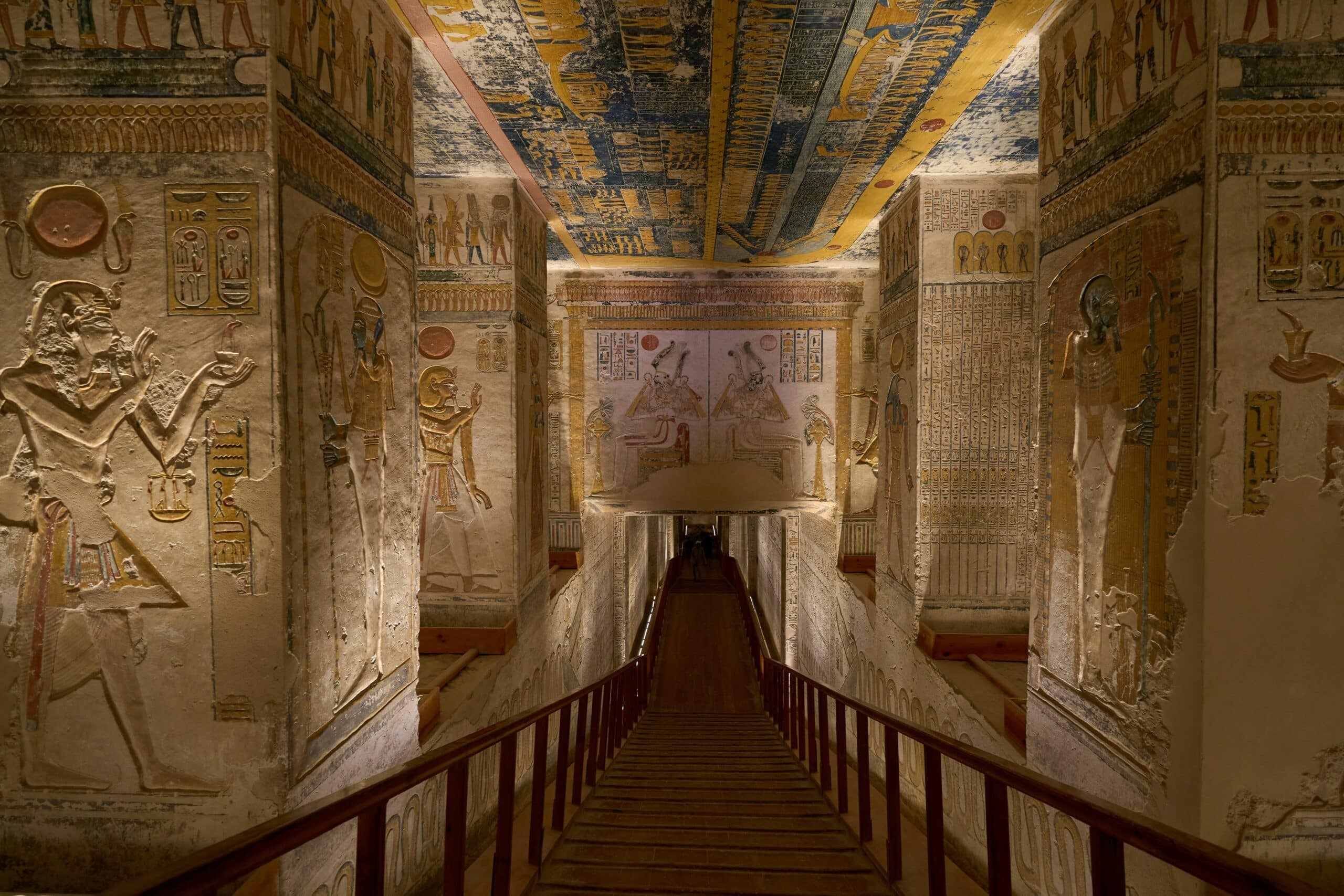
When standing at Abu Simbel, the Valley of the Kings, or the Grand Egyptian Museum, gazing at walls covered in reliefs and golden murals, have you ever wondered who these "half-human, half-animal" deities actually are? Ancient Egyptian mythology is vast and complex, but you don't need to memorize hundreds of gods. Just by recognizing the eight key deities that appear most frequently, you can understand the stories behind most murals and statues — from kingship and death, to rebirth and eternity. This article serves as a "viewing guide to ancient Egyptian culture," helping you connect those abstract images and stories as you move between museums and temples, so that your trip to Egypt isn't just sightseeing, but truly "understanding."
Want to quickly identify murals or statues on-site? The following identification chart is your most practical viewing tool in Egypt. We recommend saving it, or referring to it during your visit.
Deity | Identifying Features | Symbolism and Role |
Horus | Falcon head, or a complete falcon figure | God of kingship and the sky, protector of the pharaoh |
Anubis | Jackal head, black dog head | Guardian of mummification and the dead, guides souls to the underworld |
Osiris | Green skin, entire body wrapped in white cloth (mummy form) | Lord of the underworld, symbolizing rebirth and eternity |
Isis | Wears a "throne symbol" or "cow horns with sun disk" headdress | Goddess of magic and motherhood, mother of Horus |
Amun-Ra | Two tall feathers atop the head | Sun god, king of the gods, chief deity of Thebes |
Hathor | Cow horns with sun disk, or a cow head on a human body | Goddess of love, beauty and music, symbolizing joy and life |
Thoth | Ibis head (long-beaked bird) | God of wisdom and writing, scribe of the underworld |
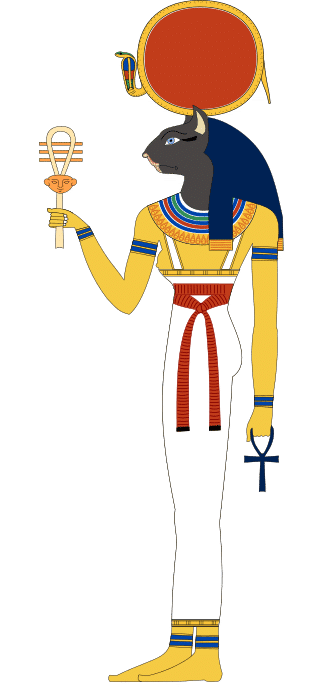
Bastet | Cat head on a human body | Goddess of the home and joy, guardian of women and family happiness |
💡Tip: If you see a deity with a falcon head standing beside the pharaoh in a temple mural, that's most likely Horus;When the figure of a black jackal-headed god appears beside a tomb or coffin, that is Anubis.
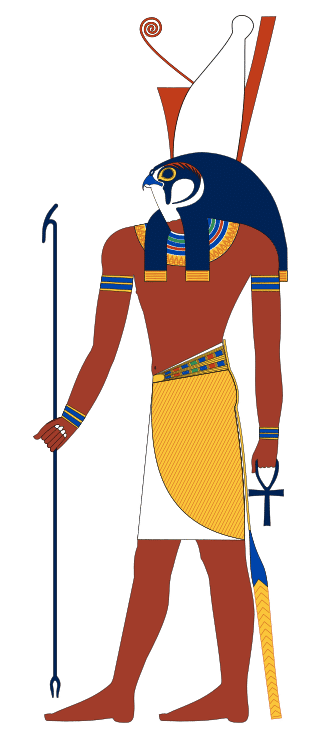
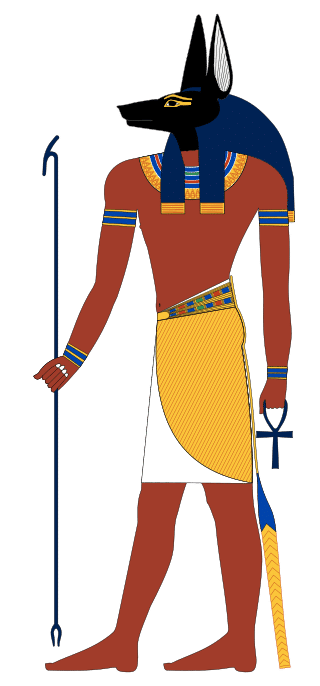
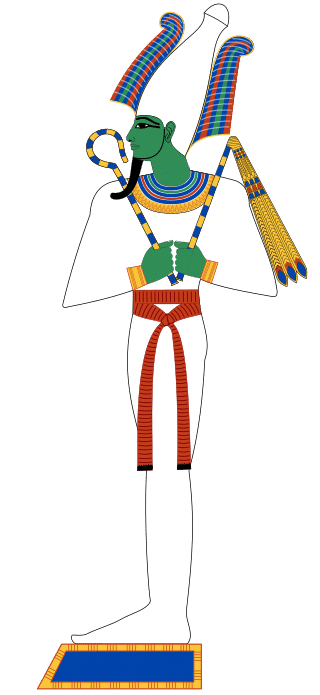
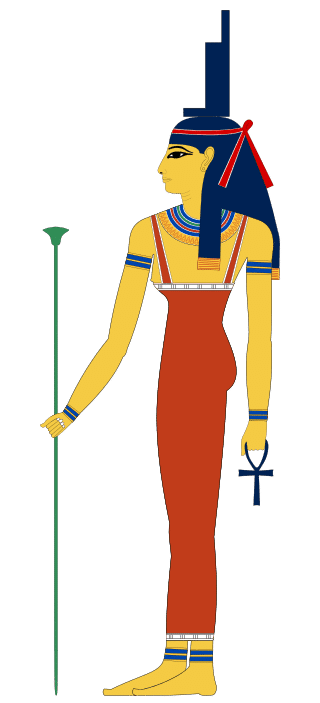
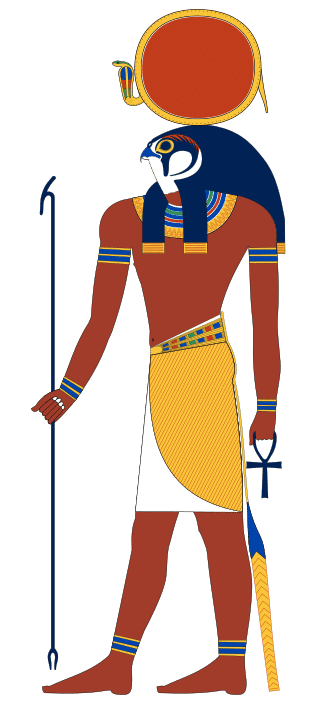
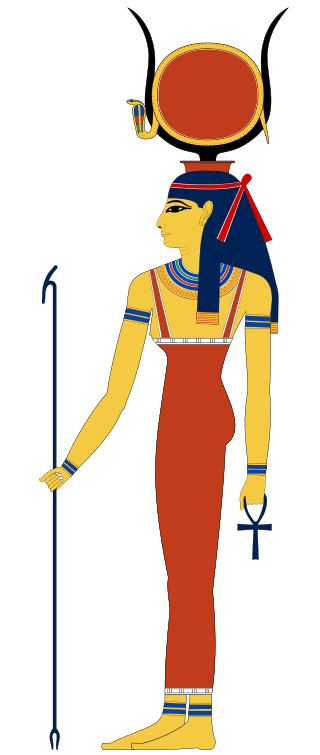
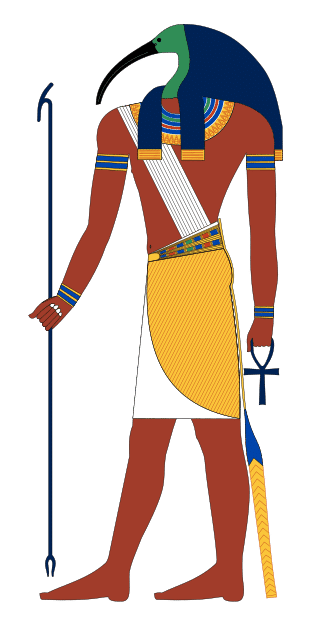
To understand Egyptian wall paintings, start with this story — The Legend of Osiris. Osiris was a benevolent king, deeply loved by his people. His brother Set, consumed by jealousy, plotted his murder, cutting his body into pieces and scattering them across the Nile. His wife Isis traveled the length of the land to recover his remains, used her magic to briefly restore him to life, and conceived his posthumous son — Horus. Once grown, Horus waged a fierce battle against Set to avenge his father. In the end, he reclaimed the throne, symbolizing "order triumphing over chaos." Osiris became Lord of the Underworld (Duat), presiding over the judgment of the dead. This myth laid the foundation for the belief system of kingship in ancient Egypt:
- In life, the pharaoh was Horus on Earth — symbolising the legitimacy of his rule
- In death, the pharaoh became Osiris in the Afterlife — representing the continuation and rebirth of the soul.
So when you look at the wall paintings in temples or tombs: Horus represents "kingship in this world", while Osiris symbolises "eternity in the next life". 📌 Viewing Tip: In the tombs of the Valley of the Kings, the green-skinned god holding a sceptre is Osiris; on the towering temple walls, the falcon-headed god standing alongside the pharaoh is Horus.
In the ancient Egyptian belief system, the pharaoh was more than just a mortal ruler. He was also "the representative of the gods on earth", entrusted with the mission of maintaining cosmic order between heaven and earth. To read the wall paintings in temples and tombs, master the following three perspectives and you'll be able to see at a glance the relationship between the pharaoh and the gods.
Every pharaoh was regarded as an incarnation of Horus, the sky god and guardian of kingship. In wall paintings, you'll often see the pharaoh wearing the double crown (symbolising the unification of Upper and Lower Egypt), with a falcon spreading its wings behind or above him — that is Horus protecting him. This signifies that the pharaoh's power did not come from earthly sources, but was divinely sanctioned. 📌 Viewing Tip: At Luxor Temple or the Temple of Edfu, Horus is often depicted standing behind the pharaoh with wings spread in protection — a symbol of "legitimacy of power" in the wall paintings.
When a pharaoh passed away, he was not regarded as having vanished, but as entering the underworld (Duat) and transforming into Osiris. Thus, in tomb wall paintings, Osiris is often seated on his throne awaiting the judgement of the dead, while the pharaoh standing before him is the soul being received into the underworld. This symbolises that "death is rebirth" — the pharaoh's soul does not perish, but continues on as an eternal guardian. 📌 Viewing Tip: In the tombs of the Valley of the Kings, note Osiris's green skin and white wrappings, symbolising the life-giving force of the Nile and resurrection.
In ancient Egyptian religious rituals, only the pharaoh could speak directly with the gods, offering sacrifices on behalf of the entire nation. The most common scene in wall paintings shows the pharaoh holding offerings or incense in both hands, standing before the statue of a god.That was a ritual symbolising cosmic order and balance, rooted in the name of Ma'at, the goddess of truth. As such, the pharaoh was not merely the ruler of the state, but a bridge between heaven and earth. He carried out divine will in human form, upholding the "order between the mortal and divine realms" so that the cosmos could remain in motion and harmony. 📌 Viewing Tip: At Karnak Temple, you'll see wall paintings of the pharaoh raising offerings before the sun god Amun-Ra — a depiction of his responsibility to maintain cosmic balance.
When travelling in Egypt, you're not just wandering among ancient columns and murals — you're deciphering a story that has continued for thousands of years. These historical sites are not static relics, but interwoven threads of myth and power, faith and civilisation. From the museums of Cairo to the temples along the Nile, the following locations will help you truly "read" the mythological world of ancient Egypt.
🔎Theme Focus: The Underworld, Kingship, and Rebirth Located beside the pyramids, the Grand Egyptian Museum is the starting point for understanding Egyptian civilisation. Its galleries display over 100,000 artefacts, revealing the ancients' imagination of death and eternal life. You'll see Anubis, the black-headed jackal god, guarding coffins as a symbol of protection for the deceased, as well as amulets engraved with the Eye of Horus, representing healing and protection. ✨Key Insight: Tutankhamun's golden mask and burial treasures are a tangible expression of the "Osiris belief" — that death signifies the path to rebirth.
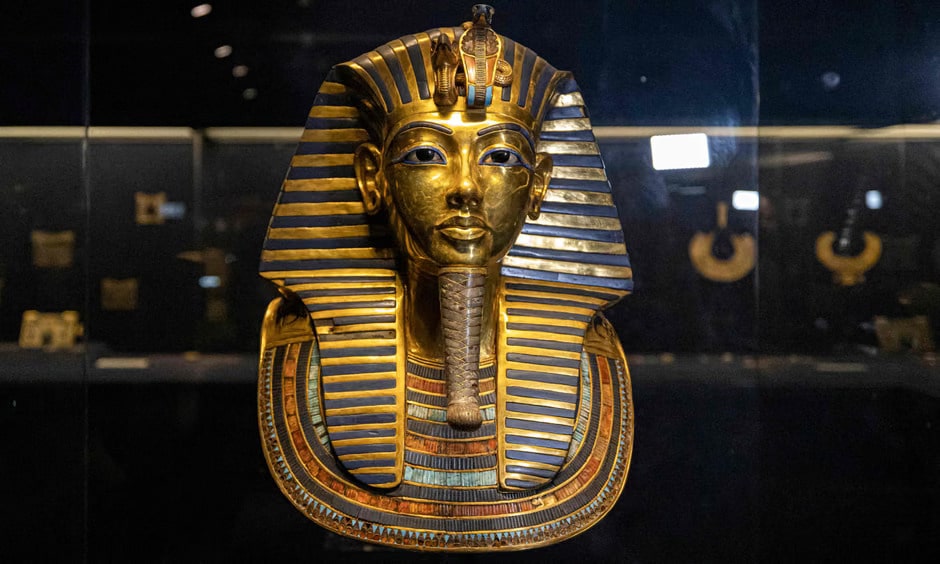
Tutankhamun's Gold Mask is one of the most iconic artefacts at the Grand Egyptian Museum (GEM). The mask features the Uraeus (cobra) and Vulture Emblem, symbols of royal power representing the pharaoh's protection by the "two goddesses of Upper and Lower Egypt", and reflecting his status as a divine being on earth.
🔎Theme Focus: The Afterlife and Judgement In the tombs of the Valley of the Kings, the still-vivid wall paintings are not mere decoration, but a guide to the soul's journey. You'll see Osiris seated on his throne presiding over judgement, Anubis weighing the hearts of the deceased, and Thoth, depicted with the head of an ibis, recording the results. ✨Key Insight: The mural depicting the “Weighing of the Heart” symbolises truth and order (Ma’at), reminding people that only through righteousness can one enter the eternal underworld.

The tomb murals of the Valley of the Kings depict the pharaoh’s journey into the underworld after death. On the walls, you can see images of deities such as Osiris, Anubis, and Horus, symbolising the soul’s judgement through the “Weighing of the Heart”, leading to rebirth and eternity. Photo by Dmitrii Zhodzishskii on Unsplash
🔎Theme Focus: Kingship and Sun Worship Luxor was the religious centre of ancient Thebes. The temples here celebrate the relationship between the pharaohs and the sun god through massive stone columns and murals. On the walls, you’ll see pharaohs making offerings to the sun god Amun-Ra, or being crowned by Horus, symbolising the legitimacy of their kingship. ✨Key Insight: The “Forest of Columns” at Karnak Temple is made up of hundreds of massive pillars, each carved with stories of pharaohs and deities, reflecting the core belief of ancient Egypt in “theocratic rule”.

Karnak Temple was the most important religious complex of Ancient Egypt's New Kingdom period, dedicated to the chief deity Amun-Ra. The reliefs on the stone columns depict pharaohs making offerings to the gods, the winged sun disk, and the lotus and papyrus motifs symbolizing unification—representing the legitimacy of royal power and the continuity of cosmic order. Photo by Mo Gabrail on Unsplash
🔎Theme Spotlight: Sun, Light & Eternity Built by Pharaoh Ramses II in honour of the sun god, the Abu Simbel Temples are among Egypt's most magnificent sacred sites. Every February and October, morning light streams through the temple's inner corridor to illuminate the statues at its deepest sanctuary—falling in turn upon Ramses II, Amun-Ra, and Ra—while the god of death, Ptah, alone remains forever in shadow. ✨Key Insight: This "Miracle of the Sun" is not merely a triumph of architectural engineering, but a profound symbol of the Ancient Egyptians' faith in the sun and eternity.

Built by Pharaoh Ramses II for the sun god, the four colossal statues at the temple entrance symbolize the pharaoh's divine status and the glory of royal power. Above the main gate, carvings of the Winged Sun Disk and the Uraeus (cobra) emblem represent the sun god's protection and sacred power.Photo by Dmitrii Zhodzishskii on Unsplash From the glass display cases in museums to the stone walls of temples, every relic continues the same theme—the cycle of life and the eternity of kingship. Once you understand these mythological symbols, Egypt is no longer just an "ancient" land, but a civilisation that is still whispering, still telling its story.
Q1: What's the difference between Horus and Anubis? These are the two deities visitors most often confuse. Horus is the falcon-headed sky god, symbolising kingship and protection; Anubis is the jackal-headed guardian of the underworld, responsible for mummification and guiding souls. If you see a falcon beside a pharaoh in a temple, that's Horus; if you see a black dog-headed god standing beside a coffin in a tomb chamber, that's Anubis. Q2: Why is Osiris's skin green? Green symbolises the fertile silt of the Nile and the power of plant growth, representing rebirth, abundance, and eternal life. Thus, Osiris is not only the lord of the underworld but also a symbol of nature's cycle and resurrection. Q3: What's the difference between Amun-Ra and Ra? Ra is the embodiment of the sun, symbolising light and creation; Amun represents hidden and sacred power. By the New Kingdom period, the two were merged through religious syncretism into Amun-Ra, symbolising the union of the sun and kingship, and hailed as the "King of the Gods." This phenomenon of merging different deities into one is known as "syncretism," a common feature of ancient Egyptian religion used to emphasise the unity and continuity of divine power. At Abu Simbel, you'll see images of two sun gods side by side—Ra-Horakhty, symbolising the light of the rising sun, and Amun-Ra, representing the eternal power of the sun. Q4: What does the "Eye of Horus" represent? Horus lost an eye while battling Set, which was later healed by Thoth, the god of wisdom. As a result, the "Eye of Horus" symbolises restoration, protection, and wholeness, and was often made into amulets in ancient Egypt to protect travellers and the deceased. Q5: What do the animal symbols in the murals mean? Almost every animal in Egyptian murals carries symbolic meaning: the falcon represents the sky and kingship, the cat symbolises protection of the home, the scarab beetle represents rebirth, and the snake embodies the dual nature of protection and danger. Every creature is part of the language of mythology. 👉 Further Reading: Decoding Egyptian Totems
Once you understand these gods and stories, Egypt's murals are no longer just ancient decorations, but chapters of "history that speaks."Every relief carving, every beam of sunlight piercing through the temple, continues the same theme—life, kingship, and eternity. If you want to witness firsthand where these legends were born, we invite you to join DeWonder Travel's Egypt In-Depth Tour. From the pyramids to the Valley of the Kings, from the Temple of Horus to the morning light at Abu Simbel, our small groups of 8-14 travelers with professional guides will help you decode the murals and understand the myths, turning this journey into not just sightseeing, but an "adventure through civilization." 👉 View Egypt In-Depth Tour departure dates for the whole year 👉 Join our free online seminar to get your Egypt itinerary questions answered 👉 Click here to register DeWonder Egypt In-Depth Tour Information Kit 👉 Click here to download 👉 Further Reading: Egypt Pyramids Guide 👉 Further Reading: Grand Egyptian Museum Guide 👉 Further Reading: Egyptian Symbols Explained