
Exploring Bhutan's Festivals: An In-Depth Guide to Tshechu and the Black-Necked Crane Festival
Want to understand Bhutan's most iconic festival culture? This article takes you into the heart of Tshechu Festival and the Black-Necked Crane Festival, introducing mask dances, giant thangkas, and the sacred legend of the black-necked crane. From religious devotion to nature conservation, experience the deep charm of Bhutanese culture in one journey.
Known as the "Land of the Thunder Dragon" and a "Buddhist Kingdom of Happiness," Bhutan is home not only to majestic valleys and monasteries, but also to deeply moving festival traditions. Every year from March to November, two iconic festivals are celebrated across Bhutan: the Tshechu Festival and the Black-Necked Crane Festival. These celebrations are more than religious rituals—they are vital moments for uniting communities, passing down faith, and upholding the values of nature conservation.
In Bhutan, "festivals" are not mere entertainment, but sacred religious rituals and vital bridges of social connection. The Tshechu Festival originates from auspicious days in the Tibetan lunar calendar, during which devotees take part in mask dances and prayer wheel rituals to cleanse karma and pray for blessings in the year ahead. Each region holds its own Tshechu Festival, each with its own distinct character—from the grand ceremonies in the capital Thimphu to the solemn atmosphere at Paro Dzong. Meanwhile, the Black-Necked Crane Festival held every November reflects the Bhutanese people's reverence for and dedication to protecting nature. When hundreds of black-necked cranes migrate from Tibet and descend upon the Phobjikha Valley, the local community gathers at Gangteng Monastery to hold a celebration, welcoming these "winter messengers" with song and dance, while also instilling conservation values in the younger generation. These two festivals—one an expression of enduring religious faith, the other a story of coexistence between humans and nature—together form the cultural heart of Bhutan that most deeply touches the souls of travelers.
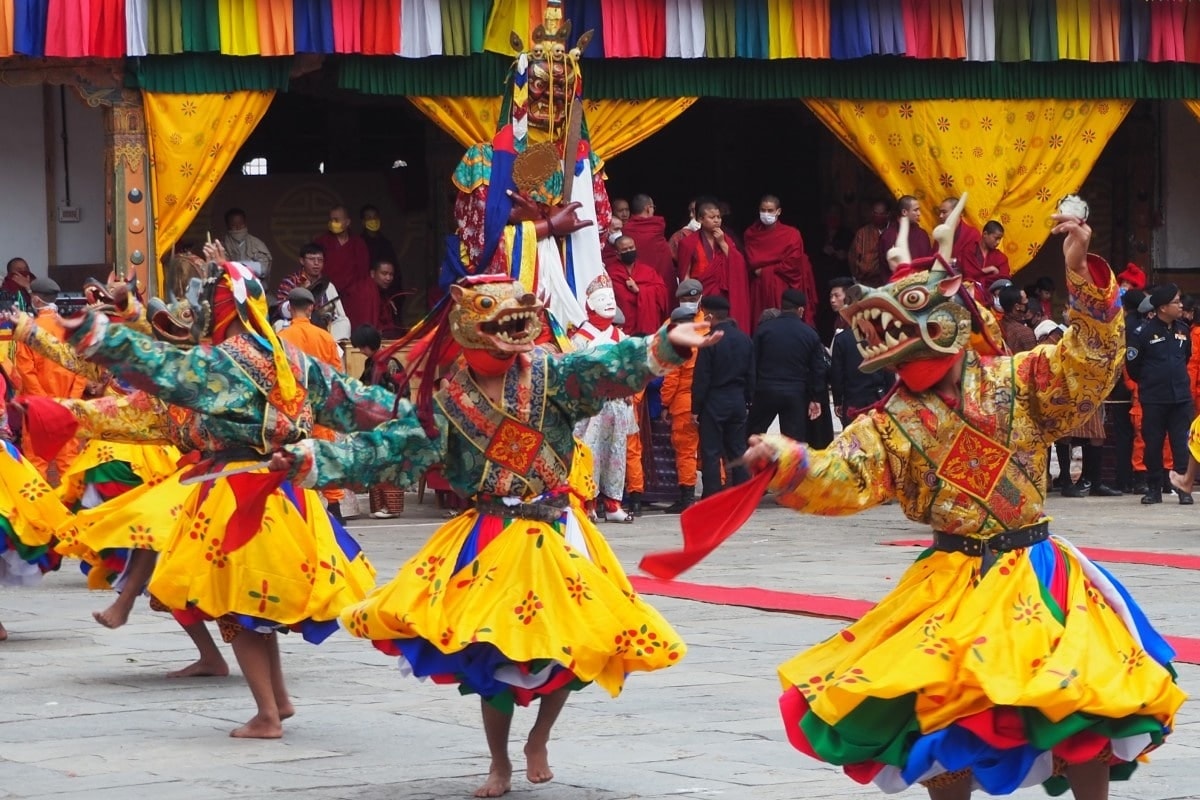
The Tshechu Festival is a religious celebration held almost every year in nearly every region of Bhutan, organized around dzongs (fortress-monasteries) or temples. It typically falls on the tenth day of the Tibetan lunar calendar (Tshechu), commemorating the auspicious day when Guru Rinpoche (Padmasambhava) spread the Dharma. The timing of Tshechu Festivals varies by region, but most are held in March, April, September, and October, and they are significant celebrations of the Kagyu and Drukpa lineages of Tibetan Buddhism. During the festival, the courtyards of Bhutan's dzongs become vibrant meeting grounds for religious ritual and communal celebration, featuring solemn mask dances known as Cham Dance. Monks don masks depicting deities and animals, using ritual dance to convey Buddhist teachings and the cycle of life. The entire festival is imbued with themes of blessing and purification, offering a feast for both the eyes and the spirit. One of the festival's highlights is the unveiling of a giant thangka (Thongdrel) at some of the larger Tshechu celebrations, such as the Paro Tshechu. This is a massive scroll painting depicting Buddha or bodhisattvas, briefly displayed at dawn—it is said that a single glimpse can cleanse karma and bestow blessings. Thangkas hold a place of great importance in Tibetan Buddhism, known for their vivid colors and intricate details, framed with brocade fabric. They serve not only as religious art, but also as tools for spiritual practice. Beyond its religious significance, the Tshechu Festival is also an important social and economic occasion. The festivities often draw crowds from surrounding villages, with bustling market stalls and a lively atmosphere. The Tshechu Festivals at Thimphu Dzong (Tashichho Dzong) and Paro Dzong are the largest and most well-attended, making them the top choices for experiencing Bhutan's festival culture firsthand. 💡Good to know:
- While the Tshechu Festival can be experienced at Paro Dzong or Thimphu Dzong, Tiger's Nest Monastery is a pilgrimage site and does not host festival events.
- When photographing, avoid disrupting the ceremony and respect local beliefs and sacred spaces.
📷 Tshechu Festival Highlights:


Every early November, when the first black-necked cranes migrate from the Tibetan Plateau to Bhutan's western Phobjikha Valley, the Bhutanese hold a unique celebration at Gangtey Monastery — the Black-Necked Crane Festival — to welcome these rare migratory birds with prayers and joyful festivities. This festival blends religious faith, environmental education, and community culture. Local schoolchildren and villagers perform dances imitating the black-necked cranes, symbolizing respect and blessings for all living things. Together with traditional Bhutanese songs and dances as well as Tibetan Buddhist ceremonies, the Black-Necked Crane Festival stands as an outstanding example of ecological conservation combined with cultural heritage. Phobjikha Valley is the most important habitat for black-necked cranes in Bhutan. Thanks to its high-altitude wetlands and strict conservation policies, the valley remains untouched by modern infrastructure, preserving pristine night skies and natural ecosystems. On festival day, while the hillside around Gangtey Monastery bustles with crowds, dozens of black-necked cranes can still be seen soaring freely across the valley — a harmonious scene of humans and birds coexisting. 💡Tips:
- The Black-Necked Crane Festival is held exclusively in November — we recommend arranging accommodation in Gangtey in advance to fully experience the day's activities and dawn-to-dusk bird-watching itinerary
- Clothing tip: Temperatures in Gangtey drop low in the morning and evening, so please bring a warm outer layer
📚 Black-Necked Crane Festival Fun Facts
- What is the black-necked crane? The black-necked crane is a rare migratory bird found in the Tibetan and Himalayan regions, with fewer than 10,000 remaining worldwide. Bhutan regards it as a symbol of peace and good fortune, and hundreds flock to Phobjikha Valley each year to overwinter.
- What is its religious significance? Legend holds that upon arriving at Gangtey, the black-necked cranes circle above the monastery three times, symbolizing homage to the Buddha. For this reason, they are revered as sacred cranes, held in high esteem by monks and locals alike.
- Why are the performers mostly children? The festival's performances are largely led by local children, aiming to cultivate ecological awareness and cultural heritage from a young age. Through dance and theatre, the younger generation gains a deeper understanding of the importance of nature conservation
👉 Further Reading: Black-necked Crane Watching Guide 📷 Highlights of the Black-necked Crane Festival:


Travellers wishing to personally experience the charm of Bhutan's festivals can choose the most suitable one to attend based on their travel dates and interests.Below is a comparison between the Tshechu Festival and the Black-Necked Crane Festival to help you plan the perfect itinerary:
Festival Name | Months Held | Location | Main Activities | Cultural Highlights |
Tshechu Festival | March, April, September, October | Major dzongs such as Tashichho Dzong and Rinpung Dzong | Mask dances, Buddhist rituals, markets | Tibetan Buddhist ceremonies, community gatherings |
Black-Necked Crane Festival | Early November each year | Gangtey Monastery, Phobjikha Valley | Crane dance performances, religious celebrations, birdwatching | Nature conservation education, harmony between people and ecology |
How should I choose which Bhutanese festival to attend?
- If you prefer religious and folk culture, choose the Tshechu Festival to experience Bhutan's most vibrant sense of ritual
- If you're interested in ecology and natural culture, the Black-Necked Crane Festival offers a rare experience of coexistence between environment and wildlife
Attending a Bhutanese festival not only lets you deeply experience local culture, but is also a paradise for photography enthusiasts. However, before you start snapping photos, don't forget to respect local religious and social customs. 📸 Recommended Photography Highlights Tshechu Festival (Tashichho Dzong / Rinpung Dzong)
- The moment monks perform mask dances
- Crowds in traditional attire weaving through the markets
- Dzong architecture and stupas set against the festival scene
Black-Necked Crane Festival (Gangtey Monastery / Phobjikha Valley)
- Black-necked cranes in flight against the valley landscape
- Schoolchildren dressed in crane feather costumes performing dances
- Traditional dwellings in the valley beneath the mountains' starry night sky
Additional Recommended Locations
- Tiger's Nest Monastery: Not a festival venue, but Bhutan's most iconic photography backdrop
- Dochula Pass: Stunning views overlooking the Himalayan mountain range and clusters of stupas
🙏 Photography and Visiting Etiquette
- Please do not photograph close-ups of monks' faces during ceremonies
- Keep a distance and remain quiet while photographing, without disturbing the religious ceremony in progress
- Hats and shoes must be removed when entering temples, and clothing should avoid excessive exposure
- Do not use flash casually, especially in indoor prayer halls and in front of thangkas
💡Tip: If you want to capture photos with a strong local feel, try asking locals if they'd be willing to take a photo together—most people are very friendly and may even share stories about their attire and festival traditions!
DeWonder has been deeply immersed in in-depth Bhutan tours for over 10 years, leading tours multiple times each year to experience the Tshechu Festival and Black-necked Crane Festival in person. From the religious context behind the festivals to dancing, appreciating, and celebrating alongside locals, our team is well-versed in how to help you not just watch the spectacle, but step into the heart of the culture.
- Want to truly understand the spirit and stories behind Bhutan's festivals
- Want to participate in annual events that locals consider sacred
- Want to capture moments that are not just beautiful, but meaningful
Choosing DeWonder's in-depth Tshechu Festival and Black-necked Crane Festival tour isn't just a trip—it's a cultural journey that transforms your perspective. 👉Check out the Bhutan Tshechu Festival and Black-necked Crane Festival tour schedule 👉Sign up for free for the Bhutan online webinar, where we'll answer more of your questions about traveling to Bhutan: Click here to register 👉Getting ready to head to Bhutan? We recommend reading this Complete Bhutan Travel Guide 👉Want to learn more about Bhutan's cultural experiences? Further reading: Five Must-Try Bhutan Cultural Experiences 👉Want to know the best travel season? Further reading: Bhutan's Best Travel Season