
Is Chefchaouen in Morocco Worth Visiting? 5 Things You Need to Know Before You Go
From transport and accommodation to tips on how long to stay, quickly grasp the reasons Chefchaouen is worth visiting and the key points to arrange before your trip.
The 30-Second Takeaway
If you're planning a trip to Morocco, Chefchaouen is a stop well worth including. It's not the city with the most attractions in Morocco, but it's often one of the stops that leaves the deepest impression on travellers. The reason isn't just the blue old town, but a rhythm that's completely different from other cities—it's quieter, slower, and more suited to pausing and taking it all in. Here are a few key points to grasp before you set off:- The blue buildings are mainly concentrated in the old town (Medina); not the entire city is blue
- As for the origin of the blue, the most common explanation is linked to the historical Jewish community
- You can get there from Fez, Tangier or Rabat, but the travel time is not short
- We recommend staying a night—it lets you feel its charm far more than a brief stopover
- Beyond the blue alleyways, the main square, the Kasbah and the Spanish Mosque are also well worth including
Why Is Chefchaouen Worth Visiting?
The first time many people see Chefchaouen, they're drawn in by its blue alleyways. But what truly makes this city worth including is often more than just its visual appeal—it's that, throughout your entire Moroccan journey, it offers a very different way to pause and stay. Compared with other cities in Morocco, Chefchaouen's rhythm is noticeably much slower.There isn't that overwhelming urban pressure here, nor any need to keep rushing between attractions. You can simply stroll, pause, and sit down to watch people come and go, and the journey still feels complete. What makes Chefchaouen so memorable isn't just its blue streetscapes, but the quiet, lived-in feel this mountain town naturally reveals in the details of everyday life.
5 Things to Know Before Visiting Chefchaouen
1️⃣ Why Is Chefchaouen Blue?
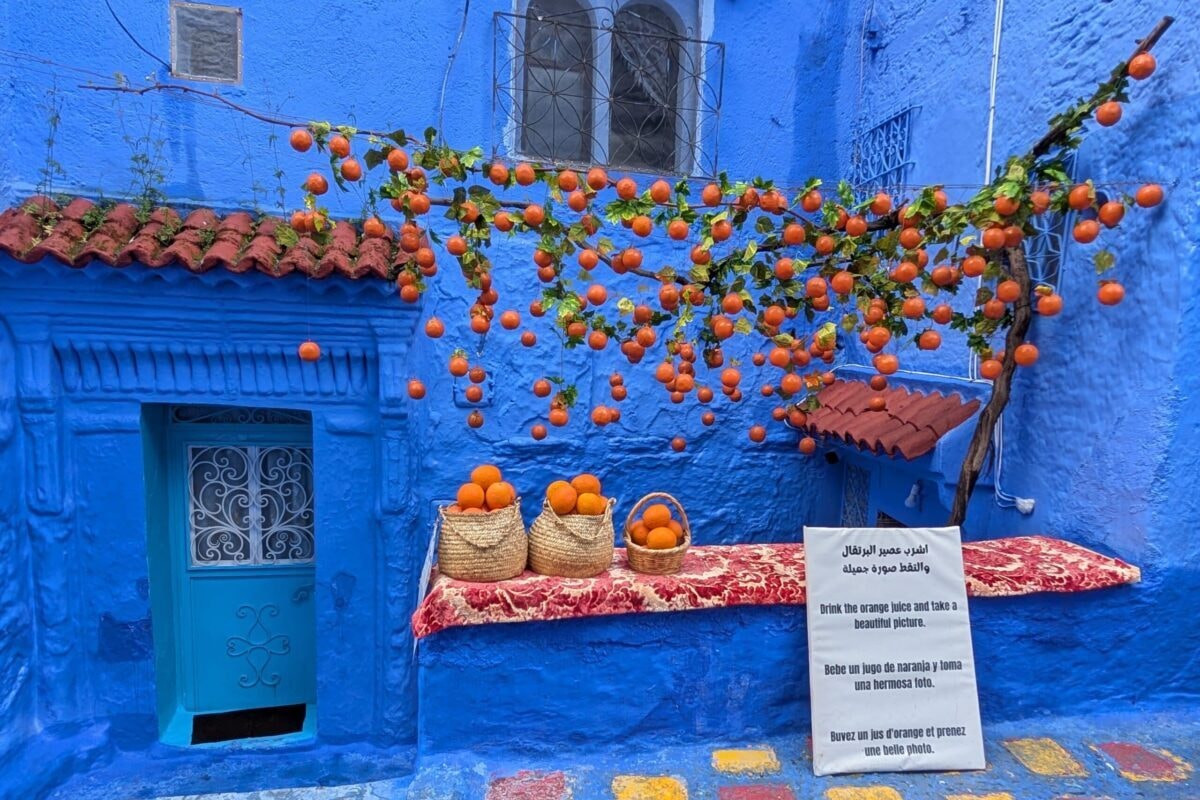
Chefchaouen's most iconic feature is its walls and alleyways painted in varying shades of blue. As for the origin of the blue, the most common explanation relates to the historical Jewish community. It is widely believed that blue symbolises the sky, heaven and faith, which is why local Jewish residents were the first to use it. However, this isn't the only explanation. There are also some more down-to-earth theories—for example, that blue repels mosquitoes, brings a cooling sensation, or simply makes the city more distinctive. Today, blue has long become one of Chefchaouen's most striking features. The blue buildings are Chefchaouen's most iconic feature, and the most common explanation for their origin relates to the town's historical Jewish community.
2️⃣ Not the Whole City Is Blue—It's Mainly Concentrated in the Old Town
Many people planning a trip to Chefchaouen assume the entire city is blue. But in reality, the most iconic blue buildings and alleyways are mainly concentrated within the Old Town (Medina). Once you leave the old town, the other areas look more like an ordinary Moroccan mountain town. This point is actually quite important, because it directly affects your expectations and how you plan your itinerary. If your time is limited, what truly makes Chefchaouen worth your while isn't ticking off lots of spots, but rather:- Saving your time to wander slowly through the old town
- Lingering among the blue alleyways and squares
- Feeling the rhythm of this city, rather than just hunting for "photo spots"
 Chefchaouen's most iconic blue scenery is mainly concentrated around the old town (Medina); viewed from up high, you can better appreciate how this blue mountain town relates to the surrounding terrain.
3️⃣ Reachable from Fes, Tangier or Rabat, but staying a night is more recommended
There are three common starting points for Chefchaouen:- Fes
- Tangier
- Rabat
- From Tangier it's relatively closest, about 2.5–3 hours
- From Fez it's about 4–5 hours
- From Rabat it's about 4–5 hours or more
Is Chefchaouen worth a special trip?
Yes, it is—as long as you don't rush it. Rather than a day trip there and back, we'd recommend staying overnight. Because what makes Chefchaouen truly enchanting isn't just the blue alleyways by day, but the different faces it reveals at different times:- Strolling through the old town by day
- The mountain-town light at dusk
- The quieter atmosphere of the square at night
- The streets in the early morning before the crowds arrive
4️⃣ Beyond the blue alleys, Chefchaouen has several places well worth visiting
- Plaza Uta el-Hammam : This is the main square of the old town, and where many people first come to know Chefchaouen. It's surrounded by restaurants, cafés, and shops, making it a great spot to slow down and take a rest.
- Kasbah : Located right beside the main square, it's one of the most iconic historic buildings in the old town. Beyond the architecture itself, it gives you a clearer sense of this mountain town's historical background.
- Spanish Mosque : If you want to take in a panoramic view of all of Chefchaouen, this is well worth planning for. It's especially rewarding at dusk, when the layers of the mountain town and the light become more pronounced.
- The blue alleys : This is still one of the most iconic areas of Chefchaouen, but rather than rushing to find the "most popular photo spots," it's better to treat it as a route for a leisurely stroll.
5️⃣ What truly makes Chefchaouen worthwhile is how it lets your journey slow down
This is something many people don't necessarily realize before they set off. The pace of city travel in Morocco is usually quite intense:- Marrakech is lively and full of stimulation
- Fez has a high density of culture that takes real effort to take in
- The long-distance travel itself is also tiring
 What makes Chefchaouen memorable isn't just its blue alleyways, but the everyday interactions and warmth of the town that you only truly notice once you've slowed down along the way.
 As the pace of the journey slows, part of Chefchaouen's appeal lies in these unscripted everyday moments that capture the feel of life in a mountain town.