
Northern Lights Beginner's Guide: Essential Tips, Popular Locations, and Cruise Aurora Hunting
A must-read for aurora beginners! Answering common questions: When is the best time to see it? Where should you go? Can you capture it with your phone? Plus, discover the new option of cruise aurora hunting — all explained in one place.
The Northern Lights are a dream-like spectacle that many people hope to witness at least once in their lifetime, but beginners often have many questions: When is the best time to see them? Where should you go? What do you need to prepare?This article takes a beginner's perspective to compile essential viewing tips, popular locations, and the newly emerging option of "cruise aurora hunting," helping you seize the best opportunity in the 2026 aurora peak year to successfully witness the miracle of the northern night sky on your first try.
The appearance of the Northern Lights is closely related to solar activity, which reaches a peak roughly every 11 years. According to observations from NASA Solar Cycle Science and the NOAA Space Weather Prediction Center, 2026 is set to be the peak of the next major aurora eruption, meaning the Northern Lights will be stronger and appear more frequently, greatly increasing the chances for beginners to witness them successfully. Besides mastering the timing for 2026, the month you choose to watch is also crucial:
Month | Characteristics | Best Suited For |
Sep–Oct | Relatively stable weather, long enough nights, not too cold | Beginners & those who want a comfortable aurora chase |
Nov–Jan | Longest nights, but bitterly cold with more cloud cover — more challenging | Experienced chasers |
Feb–Mar | Weather gradually warming, clearer skies, snowy scenery paired with the aurora | Beginners & photography enthusiasts |
👉 Further Reading:To learn more about the aurora eruption cycle and chasing tips, check out our "2026 Arctic Aurora Eruption Guide" for a detailed introduction.
For first-time aurora chasers, choosing the right location matters more than anything else.Here are a few popular choices:
- Reykjavik, Iceland: Easily accessible and ideal for beginners; besides the Northern Lights, you can also visit the Blue Lagoon and the Golden Circle.
- Tromsø, Norway: Known as the "Capital of the Northern Lights," with well-developed tourist facilities and a rich variety of experiences.
- Lapland, Finland: Famous for its glass igloos, perfect for families and travelers alike.
In recent years, an emerging way to chase the lights has been gaining popularity — taking a cruise to Greenland. Thanks to minimal light pollution at sea and the ship's flexibility to move toward clearer skies, sighting success rates have risen significantly — perfect for travelers hoping to seize the 2026 solar maximum. 👉 Further Reading:For a full guide to Northern Lights viewing spots across Europe and Canada, check out our《Aurora Guide》.

The night sky near a church on the outskirts of Reykjavik, Iceland, where the Northern Lights weave through the darkness — often the very first stop for many Arctic travelers embarking on their aurora-chasing journey.Photo credit : Marek Piwnicki
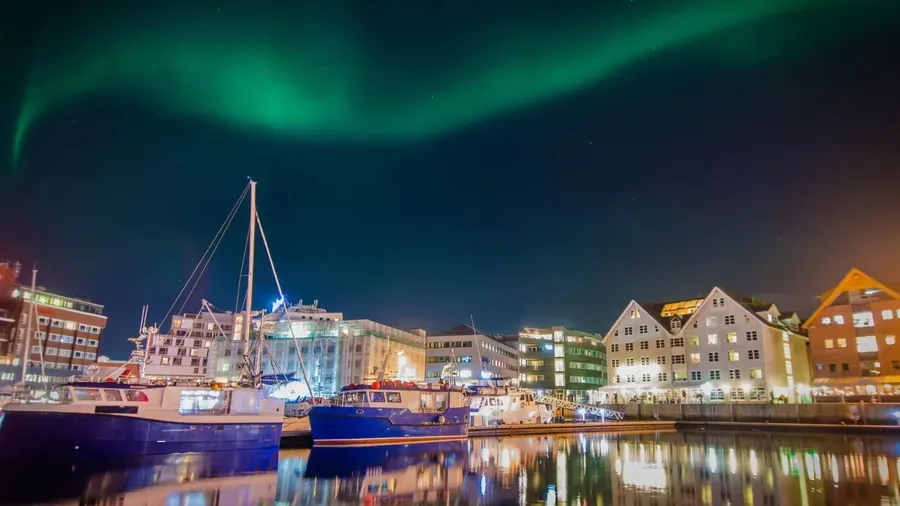
In Tromsø, you can gaze up at the aurora right from the city centre — one of the rare places where you can watch the Northern Lights while sipping hot chocolate in your coat. Photo credit : reileycoyote

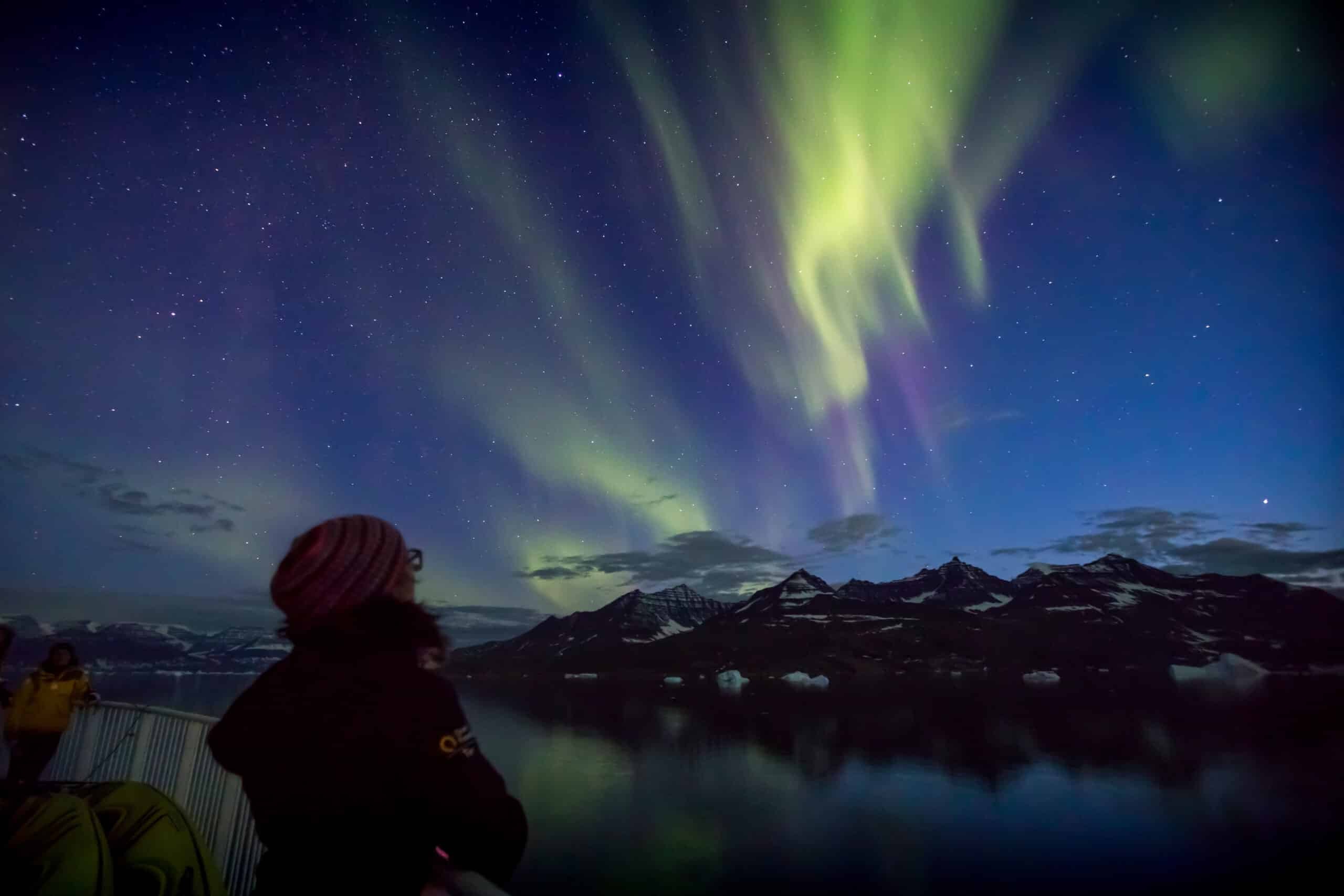
A 360° panoramic view from the deck of a cruise ship off Greenland lets travellers focus on chasing the lights, free from light pollution.
- Allow enough time: We recommend staying at least 5 nights to boost your chances of success.
- Choose a spot free of light pollution: Stay away from city lights — suburbs, snowfields or the open sea are best.
- Keep an eye on the weather and forecasts: Use an aurora forecast app or a specialised website to track solar activity and cloud cover.
- Pack enough warm clothing: Dress in layers with a windproof, insulated coat to avoid getting cold during long waits outdoors.
- Photography tips: Even a smartphone can capture the aurora — just remember to bring a tripod and switch on night mode.
Essential Items | Packing List | Useful Links |
Warm Clothing | Hat, gloves, windproof and insulated jacket, snow boots | |
Tripod | Essential for stabilising phone/camera shots | |
Power Bank | Phone battery drains quickly in low temperatures | |
Aurora Forecast | Track solar activity and cloud cover in real time | Aurora activity forecast websites Aurora Service NOAA Space Weather |
Warming Accessories | Hand warmers and a hot drink flask for extra comfort while waiting |
Many beginners worry: "Without a professional camera, will I be unable to capture the aurora?" In fact, there's no need to worry too much — smartphone cameras have advanced rapidly in recent years, and with a tripod and the right settings, you can still capture a decent record of the aurora.
- When lighting is dim, the camera will automatically show the 🌙 "Night Mode" icon
- Tap the icon to adjust the exposure duration (5–15 seconds recommended)
- If you don't see it, the lighting may not be dark enough, or your phone model may be too old to support it 👉 【Apple Official Guide】
- Open the camera → switch to Pro mode
- Manually adjust ISO (800–1600) and shutter speed (5–15 seconds)
- For phones without Pro mode, you can tap the screen → adjust "Exposure Compensation" (+/–) to increase brightness 👉【Samsung Official Guide】
- Open the camera → select Night Sight mode
- When the phone is held steady (a tripod is recommended) and the surroundings are dark enough, it will automatically switch to Astrophotography mode, and the shutter icon will turn into a star 🌌
- Exposure can last several minutes, and the system will automatically combine a clear image of the night sky with the aurora 👉【Official Google Guide】👉【Official Pixel Tutorial】
If you want to capture even higher-quality photos, consider bringing a DSLR (such as Canon, Nikon, Sony, or other professional interchangeable-lens cameras), with the following recommended settings:
- Wide-angle lens (14–24mm)
- Aperture F2.8 or wider
- Exposure time 10–20 seconds
- ISO 1600–3200
- A tripod and shutter release cable (or self-timer) are also needed to avoid camera shake
📌 Essential Shooting Reminders
- Use a tripod or stable support to avoid blur from long exposures
- Bring a power bank, as phone batteries drain quickly in low temperatures
- Use a wide-angle lens (on your phone or camera) to capture a wider view of the sky
For most beginners, the traditional approach is to “chase the lights on land” in the Nordic countries or Iceland; but in recent years, more and more people have chosen to see the aurora by cruise ship instead.Both methods have their own characteristics:
Method | Advantages | Limitations | Best For |
Land-Based Aurora Chasing | - Wide range of itinerary options (Iceland, Tromsø, Finland) - Broad budget range, with accommodation options to suit different needs | - Highly weather-dependent, may see nothing for several nights in a row - Requires frequent travel and staying up late to chase clear skies | Travellers who want flexible itineraries and to experience local culture |
Cruise Aurora Chasing | - The ship can move flexibly to avoid cloud cover - No light pollution at sea, offering vast open views - Includes accommodation, meals, and expert guides—hassle-free with all costs bundled together | - Departure dates and routes must be planned in advance - Ports of call are relatively fixed | First-timers, those wanting higher success rates, or travellers hoping to seize the 2026 solar maximum |
Many people assume cruises come with a higher price tag, but this reflects the "all-in-one experience" they offer, sparing first-timers the stress of planning routes and driving themselves. For a first aurora-chasing trip, a cruise can greatly reduce uncertainty; land-based trips suit travellers who prefer flexible scheduling. 👉 Further Reading:See more in"Land vs Cruise Aurora Chasing: A Comparison", to see which experience suits you best
2026 marks the peak of the solar cycle, and if you want to seize this once-in-a-decade opportunity, a Greenland cruise route offers a combination of adventure and comfort. Here are the itinerary highlights:
- Departure Point: Reykjavik, Iceland, with convenient air connections to other European cities, making it a popular starting point for aurora travel.
- Voyage: 14 days, 13 nights, sailing through the Denmark Strait to explore Greenland's northeast coast, with opportunities to admire the aurora under pristine skies.
- Ship Features & Special Experiences: Sail aboard the Quark Expedition operated Ultramarine
- Ride Zodiac boats for close-up encounters with polar wildlife
- Equipped with a helicopter, allowing you to experience the northern landscape from a bird's-eye view.
- The ship features a sauna and observation deck, letting you wait for the Northern Lights in comfort.
- Experience local Inuit culture and cuisine in Greenland.
- Accompanied by photography experts who guide you in capturing the aurora and polar scenery.
💡 Quick Tip: Spaces on this journey are limited, so early planning is recommended—especially as demand is expected to surge significantly during the 2026 aurora peak.👉 For more details, please refer to our《2026 Arctic Greenland Northern Lights In-Depth Tour Itinerary》

Aurora captured live aboard the Quark cruise ship in Northeast Greenland — under a pristine, light-pollution-free sky, travellers can enjoy the aurora feast directly from the deck
Q1: Do you have to see the Northern Lights only in winter? Not necessarily. The aurora season runs from September to March the following year, with September–October and February–March offering more stable weather, making them more suitable for beginners. Q2: Where is recommended for viewing the Northern Lights? Reykjavik in Iceland, Tromsø in Norway, and Lapland in Finland are all popular locations. If you want to increase your chances of success, a Greenland cruise can move to the best viewing spots, making it a popular emerging choice for 2026. 👉 For more location comparisons, please refer to our《Northern Lights Guide》 Q3: How much more expensive is aurora chasing by cruise compared to on land? A cruise itinerary may look more expensive at first glance, but it already includes accommodation, meals, and expert guiding — compared to land-based aurora chasing where "accommodation + transport + itinerary" are paid separately, it's actually a complete, all-in-one package. 👉 Further reading:《The Complete Guide: Land vs Cruise Aurora Chasing》 Q4: Is it really possible to photograph the aurora with a phone? Yes! With a tripod and iPhone Night Mode, Android Pro Mode, or Pixel Astrophotography, you can capture clear, stunning aurora shots.
2026 marks the peak of the aurora cycle, making it undoubtedly the best year to set off for first-time chasers hoping to succeed on their very first try. Whether you choose the flexible, free-spirited land-based aurora chase, or the all-in-one, higher-success-rate cruise aurora chase, planning ahead will make your journey smoother. If you'd like to admire the aurora in the most comfortable way possible while also exploring Greenland's magnificent nature and culture, we recommend our newly launched: 👉 《2026 Arctic Greenland Aurora In-Depth Tour》 — departing from Reykjavik, Iceland, this 14-day, 13-night journey takes you into the pristine Arctic sky to capture the most magical aurora moments of your life. DeWonder has partnered with Quark Expeditions to create a professionalArctic In-Depth Tour. Through carefully arranged small-group tours, you'll not only be able to chase the aurora with peace of mind, but also gain in-depth insight into polar ecology and witness unique natural landscapes. From the aurora and wildlife to Inuit culture, we have already accompanied numerous travellers to the ends of the earth.

Quark Expedition has 33 years of polar expertise, having successfully led numerous groups on Northern Lights hunts, with dedicated observers and guides providing travellers with the most complete aurora-chasing experience 👉 Check out theYear-Round Arctic Departure Schedule 👉Click Here to Download the Itinerary PDF 👉 Join Our Free Online Seminar, and enjoy an HK$22,000 discount!