
Polar Bear Watching Guide: Greenland, Svalbard – Best Months, Ecological Knowledge & Cruise Experiences
Explore Greenland's polar bear habitats in depth, master the best viewing months, ecological insights, and cruise expedition tips to embark on a soul-stirring polar journey.
If you want to witness polar bears strolling gracefully across the ice with your own eyes, Greenland and Svalbard are among your best destinations. Greenland is home to the world's largest national park—Northeast Greenland National Park—which shelters a substantial wild polar bear population. Each year from summer into early autumn, as sea ice melts and daylight hours lengthen, cruise ships and Zodiac boats can venture deep to the edge of the ice floes, allowing travellers to observe the "King of the Arctic" up close in its daily life. This article will introduce you to the distribution of polar bears, fascinating ecological facts, and why Greenland is the best place to see them, along with a complete guide to the best viewing months and cruise expeditions.
Polar bears live mainly along the coasts and sea ice regions within the Arctic Circle, including:
- Greenland
- Northern Canada (particularly around Hudson Bay)
- Svalbard
- Alaska
- Northern Russia
Among these, northeastern Greenland is one of the world's most pristine, undisturbed polar bear habitats. Its vast ice floes and fjords provide an ideal environment for hunting seals, and every year from June to September, as the sea ice recedes, polar bears appear more frequently along the shoreline and at the edge of the ice floes—making this the golden season for viewing. Besides Greenland, we also recommend heading to Svalbard to see polar bears 👉 Further Reading: Explore Svalbard 💡Did You Know: Why Don't Polar Bears Live in Antarctica?
- Geographic Isolation: Polar bears evolved in the Northern Hemisphere, separated from Antarctica by the equator and vast oceans, making natural migration impossible.
- Different Habitats: The Arctic consists of floating sea ice ideal for hunting seals, while Antarctica is land covered by an ice sheet — an environment unsuited to their habits.
- More Extreme Climate: Antarctic winters are colder and drier, making it difficult for polar bears to forage.
- Mismatched Food Sources: Polar bears rely on Arctic Ocean seals, and species distribution and density differ in Antarctica.
The polar bear (Ursus maritimus) is the world's largest land carnivore and the apex predator of the Arctic region. They have a fat layer up to 10 cm thick and double-layered fur, allowing them to maintain body heat in temperatures of dozens of degrees below zero. According to data from the IUCN (International Union for Conservation of Nature), the current global polar bear population is approximately 22,000–31,000, and they are classified as a Vulnerable species;and World Wildlife Fund (WWF) points out that the loss of sea ice caused by climate change is the greatest threat facing polar bears.
- Size: Adult males weigh 400–600 kg, while females weigh 150–300 kg.
- Fur colour: The outer layer of fur is transparent and hollow, reflecting and refracting light to appear white; the undercoat and skin are actually black, helping to absorb heat.
- Diet: Seals are their primary food source. They use their sense of smell to detect prey from several kilometres away, then lie in wait at ice holes or ice edges to make the catch.
- Habitat: They rely on sea ice as a hunting platform and travel route, moving to the edges of floating ice or coastal areas to forage when the ice shrinks in summer.
💡Did you know? Polar bears can swim over 50 kilometres in a single stretch, with records showing they can swim continuously for 9 days, covering more than 600 kilometres, in search of prey or habitat
- Mother bears typically give birth to 1–3 cubs in snow dens between November and January.
- The cubs leave the den the following spring, following their mother to learn foraging and survival skills until they become independent at around 2.5 years old.
💡Did you know? Polar bear cubs weigh only about 600 grams at birth—roughly the weight of a can of cola—and must grow rapidly on their mother's milk.
- The global polar bear population is estimated at around 22,000–31,000, and they are listed as IUCN's Vulnerable
- Climate Change: As the Arctic is warming at more than twice the global average rate, the loss of sea ice has drastically shrunk polar bears' hunting grounds. Dietary Shift: Studies show that some populations have started foraging on land (such as seabirds, eggs, or garbage), but this cannot replace their high-fat, seal-based diet, leading to a decline in their health.
- Human Impact: Oil development, shipping, and increasing pollution continue to threaten their habitat.
💡 Did you know?NASA observational data shows that over the past 40 years, the summer extent of Arctic sea ice has shrunk by more than 40%, directly compressing the polar bears' living space.

A mother polar bear and her cub walk together along the Greenland coast, the cub learning to adapt to the polar environment under its mother's watchful guidance

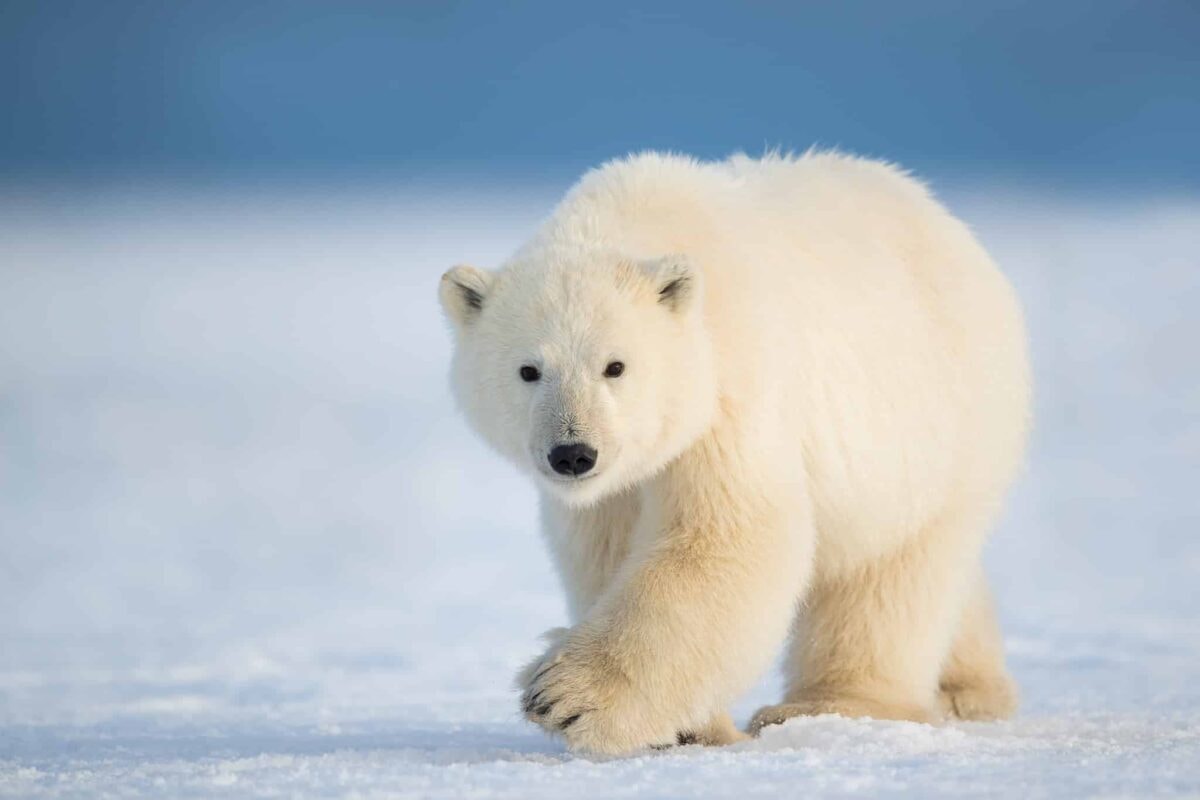
A polar bear wanders among the ice floes in Greenland, searching for prey along the edge of the sea ice
Choosing the right month is crucial for spotting polar bears in the wild. In Greenland, the best viewing period is concentrated from June to September. During this time, sea ice melts and polar bears hunt seals along the edge of the ice floes; the weather is relatively stable with long daylight hours, allowing cruise ships and Zodiac boats to venture deep into their habitat. Northeast Greenland National Park in particular, with virtually no permanent human settlement, is an excellent location for observing wild polar bears. Besides Greenland, other Arctic regions also offer good viewing opportunities worth considering:
Region | Best Months | Highlights & Viewing Conditions |
Greenland | June–September | Sea ice melts and polar bears hunt along the ice floe edges; stable weather; Northeast Greenland National Park is a prime viewing hotspot |
Svalbard | June–August | Excellent midnight sun conditions; fjords become accessible once the ice melts; high chance of bear sightings |
Churchill, Canada | October–November | Polar bears gather to wait for the sea ice to form so they can hunt seals — the peak season for land-based viewing |
💡 Quick Tip:
- Polar bear movements depend on weather, ice conditions, and prey distribution, so sightings aren't guaranteed on every trip.
- Choosing an experienced polar expedition team (such as Quark Expeditions) can boost your chances of a successful sighting.
Combining a cruise with Zodiac boat excursions is the safest, most flexible, and most successful way to observe polar bears in Greenland.
- Comfort & Safety:Polar expedition ships (such as Quark Expeditions' Ultramarine or Ocean Explorer) are equipped with observation decks, expert expedition leaders, and round-the-clock medical teams.
- Long-Range Exploration:Able to cross the Denmark Strait and venture deep into the remote waters of Northeast Greenland National Park.
- Round-the-Clock Sighting Opportunities:During the 24-hour midnight sun, polar bears and other wildlife may be spotted even in the middle of the night.
- Getting Closer to Their Habitat:Able to access shallow shoals, ice floe areas, and deep fjords that cruise ships cannot reach.
- Flexible Route Adjustments:Routes can be changed on the spot to track wildlife based on polar bear locations, weather, and ice conditions.
- Expert Commentary:Led by polar guides who share knowledge of Arctic ecology and conservation while you observe.
💡 Extra Wildlife Surprises: During your polar bear expedition in Greenland, in addition to polar bears, the same Zodiac excursion may also let you spot:
- Walruses basking together in the sun
- Arctic foxes darting across the tundra
- Sightings of bowhead whales, beluga whales, or narwhals
- The Northern Lights reflected on ice sheets under the night sky in late summer to early autumn
👉 Further Reading:Arctic Wildlife Watching Experience - Whales, Seals & Muskoxen

Riding a Zodiac inflatable boat to admire Arctic scenery up close, with opportunities to see various wildlife

On a Zodiac cruise in the Arctic, besides spotting polar bears, you can also get an up-close look at walrus habitats
To safely and comfortably watch polar bears in Greenland, choosing the right season and itinerary is essential, but so is proper preparation beforehand. The following tips will help make your polar adventure smoother and your wildlife watching experience more complete.
- Telephoto lens (300mm or above): Ideal for capturing close-up shots of polar bears from a safe distance.
- Anti-shake system: Cruise ships and Zodiacs can be bumpy, so this helps improve your shot success rate.
- Waterproof cover: Protects your camera from sea spray.
- Spare batteries and memory cards: Cold temperatures drain batteries faster, so it's recommended to carry extras with you.
👉 Further Reading: Arctic Photography Guide
- Layered clothing (moisture-wicking layer + insulating layer + waterproof jacket)
- Waterproof, non-slip snow boots
- Windproof hat and waterproof gloves
- Neck gaiter or warm face mask
👉 Further Reading: Arctic Cruise Packing List
- Follow your tour leader's instructions and maintain a safe distance from wildlife (at least 50 metres)
- Do not feed or startle animals
- Avoid loud noises to minimise disturbance to animals' natural behaviour
- Stay hydrated during long periods of outdoor activity in polar regions
- Sunscreen and sunglasses (ice and snow glare is intense)
- Always wear a life jacket when boarding the Zodiac
💡 Quick Tip: Polar weather changes rapidly — even in summer, be prepared for cold temperatures, strong winds, or snowfall at any time.
If you want the highest chance of spotting wild polar bears while also exploring Greenland's polar landscapes in depth, the "Arctic Greenland In-Depth Tour" and "Arctic Svalbard In-Depth Tour " are excellent choices. Jointly launched by Quark Expeditions and DeWonder Travel, these itineraries combine polar exploration, cultural experiences, and luxurious cruise accommodation, taking you deep into the heart of the Arctic Circle.
- Departing from Reykjavik, Iceland, cross the Denmark Strait and journey deep into the fjords of northeastern Greenland
- Daily Zodiac landings to explore glaciers, Arctic villages and wildlife such as polar bears
- June–September is peak season for bear sightings, while September is the best time to view the Northern Lights — enjoy both auroras and wildlife exploration in one trip 👉Click here to download the itinerary PDF
- Gather in Helsinki, Finland, then take a charter flight to Longyearbyen to board the ship
- Explore the region with the highest density of polar bears in the world, discovering glaciers and wildlife under the summer's midnight sun
- Flexible itinerary design, adjusted in real time based on wildlife sightings and sea conditions 👉 Click here to download the itinerary PDF
- Polar Bear & Wildlife Viewing: Led by professional expedition guides, get close to the pack ice by Zodiac in search of polar bears, walruses, Arctic foxes, whales, and more.
- Glacier & Fjord Exploration: Go ashore on the tundra to observe the brief yet flourishing plant life of the Arctic summer, and capture photos of icebergs and glaciers.
- Inuit Culinary Culture Experience: Savour traditional dishes made from local ingredients while listening to stories of Inuit life.
- Spectacular Northern Lights: If your voyage falls in early autumn (September), weather permitting, you may enjoy the aurora from the deck or the pack ice.
- Spacious ocean-view cabins or balcony suites
- Gym, sauna, hot tub, and observation deck
- Dining includes buffet breakfast and lunch, refined dinners, plus round-the-clock coffee and tea

With 33 years of polar travel experience, Quark Expeditions' ships feature cabins with view windows or balconies, letting you take in the magnificent polar scenery anytime

From September to early October each year is the best time to view the Northern Lights, and weather permitting, enjoying the aurora right from the ship's deck is by no means difficult 💡Helpful Tip:Book more than six months in advance to secure your preferred cabin and early-bird offers, especially during the Northern Lights season (September), which is always the most popular. 👉 Check outthe Full-Year Arctic Departure Schedule 👉 Join our Free Online Seminar, and enjoy savings of up to HK$28,000 ! 👉 Click here to download the【Detailed Itinerary Information Pack】 👉 See moreArctic Greenland Attractions