
Where Are Egypt's National Treasures? One Article to Understand the Grand Egyptian Museum vs. Western Museums (British Museum, Louvre, The Met)
From the Rosetta Stone to the Bust of Nefertiti, Egypt's national treasures are scattered across museums in Europe and America. But only Cairo's "Grand Egyptian Museum (GEM)" brings together Tutankhamun's Golden Mask, the Colossus of Ramesses II, and Khufu's Solar Boat, presenting the true face of 5,000 years of ancient Egyptian civilization in complete chronological order!
Do you think all of Egypt's national treasures are in Cairo? Many people planning a trip to Egypt think: "On a trip to Egypt, I'll get to see the Rosetta Stone, the Bust of Nefertiti, and Tutankhamun's Golden Mask!" But the truth is—those most famous Egyptian artifacts are actually scattered around the world. This isn't bad news—it actually helps you plan your journey with more direction.The Grand Egyptian Museum lets you see the "full picture" of civilization, while Western museums hold "key pieces of history". Before you set off, understandwhere Egypt's national treasures are distributed, and you'll know the highlights of each stop—and better understand where to go to find the "Egyptian national treasure" in your heart.
Rank | National Treasure (Artifact) | Status/Why It Matters | Collection Location |
🥇 | Mask of Tutankhamun | [Fame ✦ Artistic Value] Undoubtedly the world's number one. It is not only the pinnacle of craftsmanship from 3,300 years ago, but also the "ultimate symbol" of ancient Egyptian civilization. | Cairo|Grand Egyptian Museum (GEM) |
🥈 | Rosetta Stone | [Academic Significance] The only key to unlocking ancient Egyptian hieroglyphs. Without it, all Egyptian artifacts would be nothing but silent stones—it is the cornerstone of "Egyptology." | London|The British Museum (The British Museum) |
🥉 | Nefertiti Bust | [Artistic Value] Hailed as the "Most Beautiful Woman in the World," it is the "Mona Lisa" of ancient Egyptian art, perfectly embodying the distinctive style of the Amarna Period. | Berlin|Neues Museum (Neues Museum) |
4️⃣ | The Temple of Dendur | [Uniqueness ✦ Scale] An entire temple relocated indoors. Gifted by the Egyptian government to the United States in 1965, it stands as a symbol of Egyptian cultural diplomacy. | New York|The Metropolitan Museum of Art (The Met) |
5️⃣ | Royal Mummies | [Historical Authenticity] This is not an artefact, but the actual remains of a Pharaoh. Seeing the face of Ramesses II in person delivers an impact that cannot be replicated. | |
6️⃣ | Khufu Solar Boat | [Uniqueness ✦ Historical Value] About 4,600 years old, it is the world's oldest and most complete giant ancient ship, representing the technological wonder of the Old Kingdom. | Cairo|Grand Egyptian Museum (GEM) |
7️⃣ | The Seated Scribe | [Artistic Value] The pinnacle of realism from the Old Kingdom period. The crystal-inlaid "gaze" still feels as though a soul is watching you. | Paris|The Louvre (Musée du Louvre) |
8️⃣ | Younger Memnon (Head of Ramesses II) | [Fame ✦ Scale] A 7-tonne granite colossus, showcasing the might of the New Kingdom. | London|The British Museum (The British Museum) |
9️⃣ | Tomb of Kha and Merit | [Academic Significance] A top-tier national treasure known only to insiders. An unlooted noble tomb, offering a perfect time capsule for understanding daily life in ancient Egypt. | Turin|Museo Egizio (Egyptian Museum) |
🔟 | Tutankhamun's Full Collection | [Complete Context] Over 5,000 burial items (throne, chariots, coffins) together narrate the life of a pharaoh — "completeness" itself is a national treasure. |
💡Important Reminder|Regarding the Location of the "Royal Mummies" Collection Egypt's most famous pharaoh mummies (such as Ramesses II, Queen Hatshepsut, etc.) are not at theGrand Egyptian Museum, nor at theEgyptian Museum in Cairo. Following the 2021 "Pharaohs' Golden Parade," they have been permanently relocated to a dedicated gallery within the brand-new "National Museum of Egyptian Civilization, NMEC 👉 Further Reading: Egypt Museum Guide: Grand Egyptian Museum vs Cairo Egyptian Museum vs National Museum of Egyptian Civilization (Coming Soon)
The Grand Egyptian Museum (GEM) is not just a new museum — it is the starting point for Egypt to retell its own history to the world. This national cultural landmark, led by the Egyptian government and 20 years in the making, sits beside the pyramids, symbolizing the connection between ancient and modern civilization. Unlike European museums that showcase a "single star artifact", GEM's curatorial philosophy is: to tell the story of an entire civilization through complete context, rather than displaying a few treasures
GEM's exhibitions are arranged in chronological order, from prehistoric remains and the Old Kingdom through to the Ptolemaic and Roman periods, allowing visitors to trace the evolution of Egyptian civilization step by step. This curatorial approach means you don't just view artifacts — you "immersively journey through history". Exhibition highlights include:
- Prehistoric Gallery: Showcasing the earliest settlements and ritual objects along the Nile Valley.
- Middle Kingdom Gallery: Exploring how the pharaonic system, religious beliefs, and artistic styles took shape.
- New Kingdom Gallery:Witness the empire at its peak, from chariot technology to religious innovation.
- Ptolemaic to Roman Period Gallery:Showcasing the influence of Greek and Roman art on Egyptian craftsmanship.
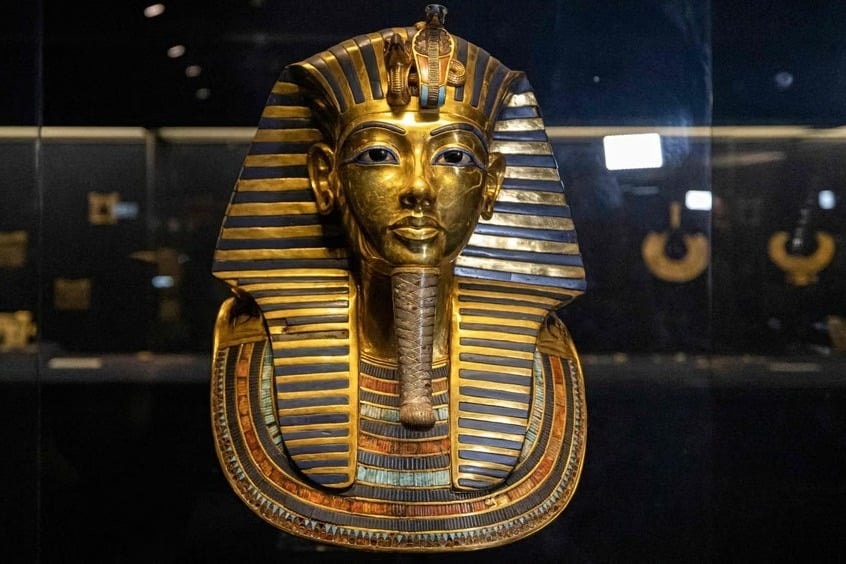
The world's most iconic Egyptian artifact, symbolizing power and eternal life. Crafted from gold, lapis lazuli, and quartz, the mask's enigmatic smile embodies the belief that the pharaoh was "transformed into the sun god." At GEM, you can see this timeless masterpiece displayed alongside over 5,000 burial treasures for the very first time.
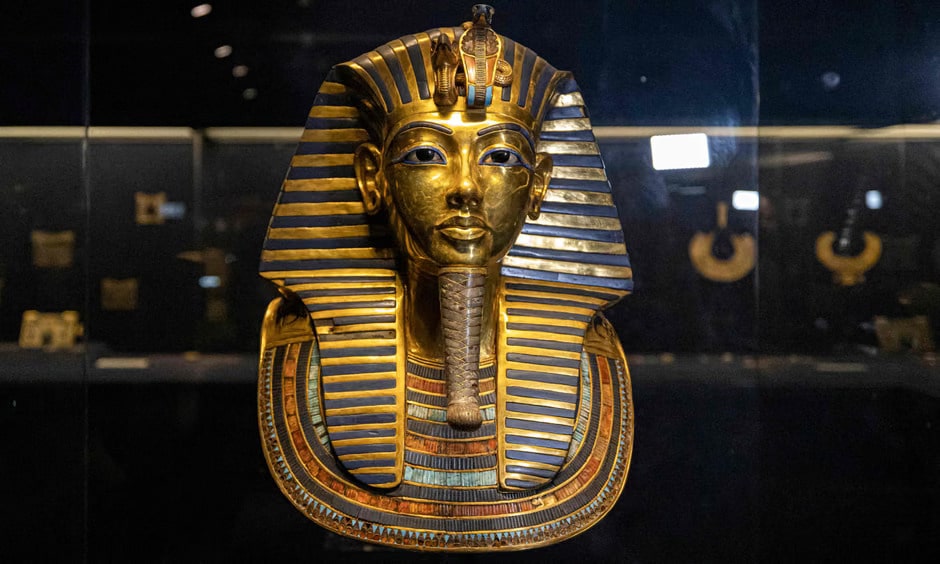
The Mask of Tutankhamun, crafted from pure gold and inlaid with lapis lazuli and glass, is one of the most iconic artifacts of ancient Egypt and the emblem of the Grand Egyptian Museum's (GEM) collection. Photo by Khaled Desouki/AFP/Getty Images/ The Guradian
Standing over 11 metres tall and weighing 80 tonnes, this colossal granite statue delivers visitors' first awe-inspiring encounter upon entering GEM. Originally erected at the ancient site of Memphis, the statue now stands in the museum's central atrium, symbolizing the pinnacle of power and architectural artistry during the New Kingdom era.
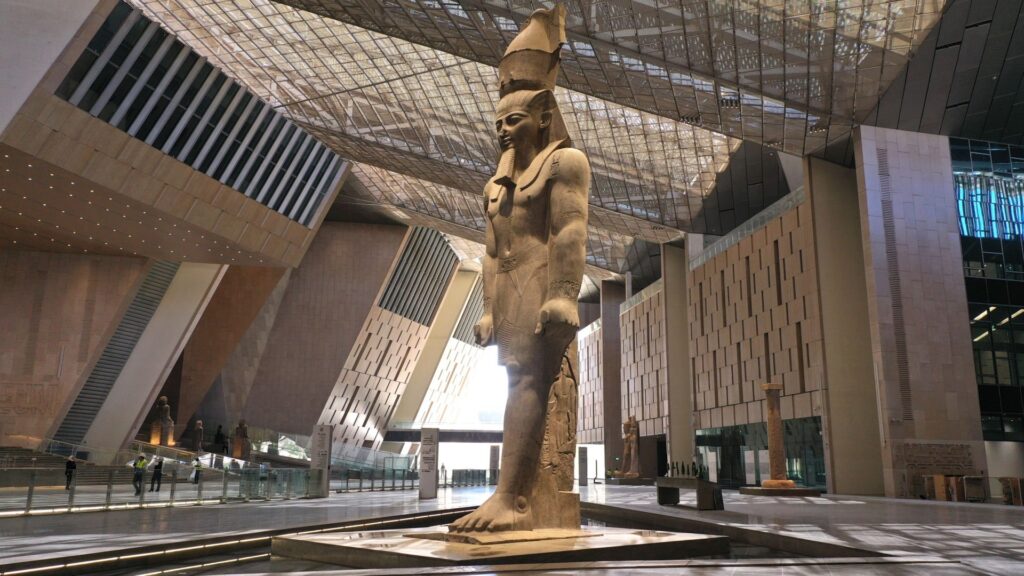
The 11-metre-tall colossal statue of Ramesses II in the atrium of the Grand Egyptian Museum, originally located at the Memphis site, has now become the symbol and welcoming landmark of the new museum.
Built around 2600 BC, this is a massive vessel for the soul from the pyramid era. Measuring 43 metres in length and assembled from 1,200 pieces of wood, it symbolises the pharaoh riding the wind after death to the realm of the sun god. Due to its immense size and fragility, this artefact will never leave Egypt, making it the GEM's "national treasure centrepiece."

The Khufu Solar Boat is a 4,600-year-old wooden funerary boat, 43 metres long and assembled from over 1,200 pieces of cedar wood, making it the most complete ancient Egyptian vessel in existence. Photo by Wolfgang Kaehler/LightRocket via Getty Images. From artnet. ✨Additional Highlight: The Grand Staircase Upon entering the museum, you will immediately be captivated by the "Grand Staircase"—this magnificent 25-metre-high atrium lined with over 80 statues of pharaohs and deities on either side. From the Old Kingdom at the base to the New Kingdom at the top,every step symbolises an era of civilisation.This isn't just an entrance—it's an immersive route that lets visitors「walk through Egyptian history in person」.

The interior of the Grand Egyptian Museum is organised by era and theme, with exhibits arranged along the「Grand Staircase」to construct a historical narrative arc from the Old Kingdom to the New Kingdom. Photo credit : GEM
Having seen the complete civilisational narrative at the Grand Egyptian Museum (GEM), it becomes easier to understand that the「Egyptian national treasures」held in European and American museums are, in fact, thecontinuing chapters of the same story. The 19th-century archaeological fervour and colonial context led to many artefacts being taken out of Egypt. Although this history remains controversial, it has also allowed the world to witness the splendour of ancient Egypt across different cities. Today,London, Paris, Berlin, Turin, and New York stand as another set of time capsules preserving this civilisation.
🔎 Exploration Focus: The Academic Starting Point for Interpreting Ancient Egyptian Civilisation The British Museum's Egyptian gallery is the birthplace of modern Egyptology. Its collection's significance lies not in「quantity」but in providing the「key to interpreting civilisation」. ✨ Signature Artefact:
- The Rosetta Stone: the sole key to deciphering hieroglyphics.
- Head of Ramesses II (Younger Memnon): A colossal granite statue symbolizing imperial power.
- Papyrus of Ani: The most complete Book of the Dead, depicting the soul's judgment on its journey to the afterlife.
💡 Additional Insight:The British Museum also holds dozens of mummies, including nobles, priests, and animal mummies, showcasing Ancient Egypt's funerary culture. But note—the true pharaoh mummies remain in Egypt at the NMEC (National Museum of Egyptian Civilization), where figures like Ramesses II and Queen Hatshepsut are permanently preserved in climate-controlled conditions.

Rosetta Stone|Housed in the British Museum, London. Three scripts inscribed on a single stone slab became the key to deciphering ancient Egyptian hieroglyphs. Photo credit : Smarthistory
🔎 Spotlight on Discovery: The Palace of Art of Ancient Egypt The Louvre's Egyptian Antiquities department centres its curation on art history, showcasing the aesthetic spirit of ancient Egypt through sculpture, painting and jewellery craftsmanship. ✨ Museum Treasures:
- The Seated Scribe: the pinnacle of realist art from the Old Kingdom period.
- Great Sphinx of Tanis: the largest and oldest sphinx outside Egypt, now standing guard at the entrance to the Egyptian Antiquities department.
- Dendera Zodiac: an ancient celestial chart removed from the ceiling of the Dendera Temple, revealing the ancient Egyptians' understanding of the cosmos.
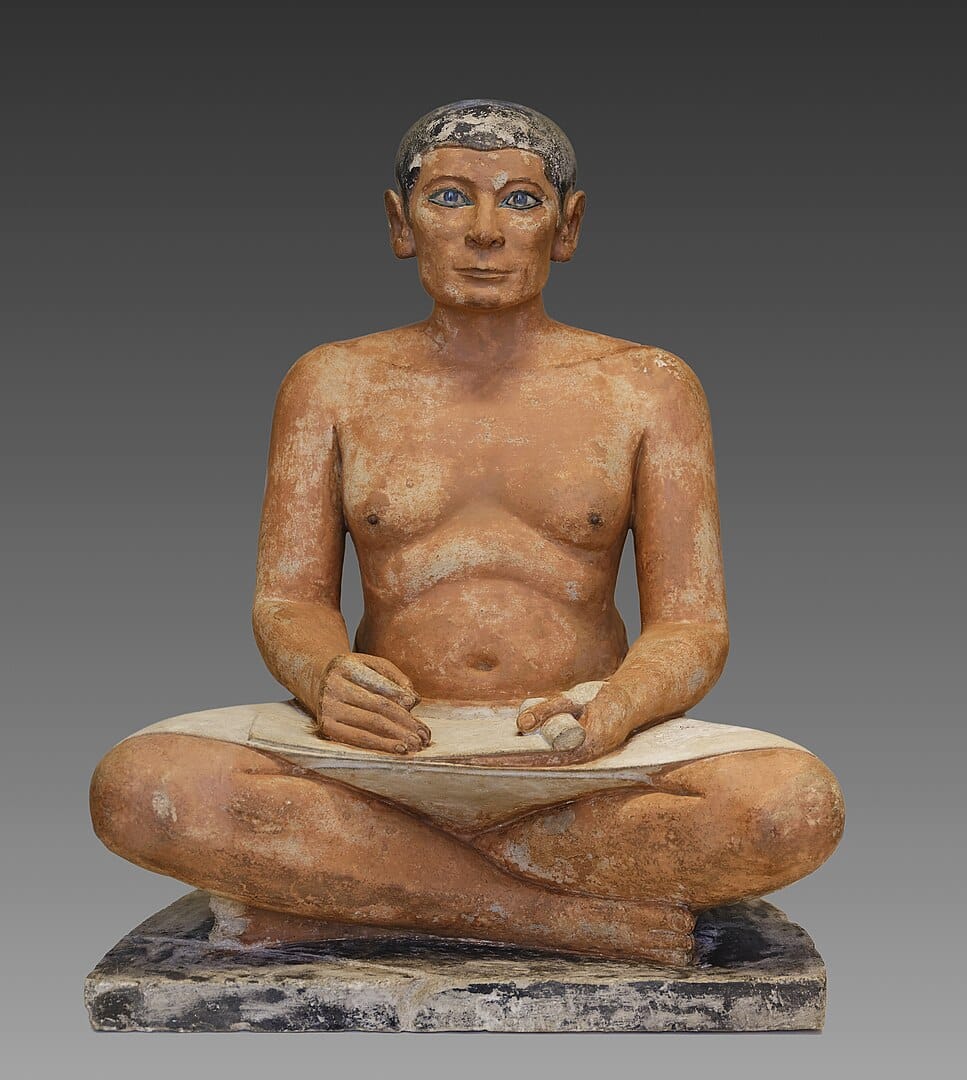
The Seated Scribe|Housed at the Louvre Museum, Paris, France. Unearthed from the Saqqara necropolis, dating back approximately 4,500 years. Made of limestone with eyes inlaid with crystal and copper, it is a masterpiece representative of realist art from the Old Kingdom period. Photo By Shonagon - Shonagon, CC0
🔎 Exploration Highlight: Nefertiti's Timeless Smile and the Classics of the Afterlife Berlin'sNeues Museum may be modest in scale, but its collection holds immense scholarly value, showcasing both the artistic pinnacle of the Amarna period and exceptionally precious funerary texts. ✨ Signature Artefacts:
- Nefertiti Bust: One of the world's most famous female portraits, a masterpiece of Amarna-era art.
- Book of the Dead Papyri Collection: Housed in the underground gallery (Souterrain), displaying numerous afterlife texts from different periods, forming one of the world's most complete collections of the Book of the Dead.
- Reliefs and Murals from the Akhenaten Period: Presenting ancient Egypt's brief yet brilliant era of religious reform.
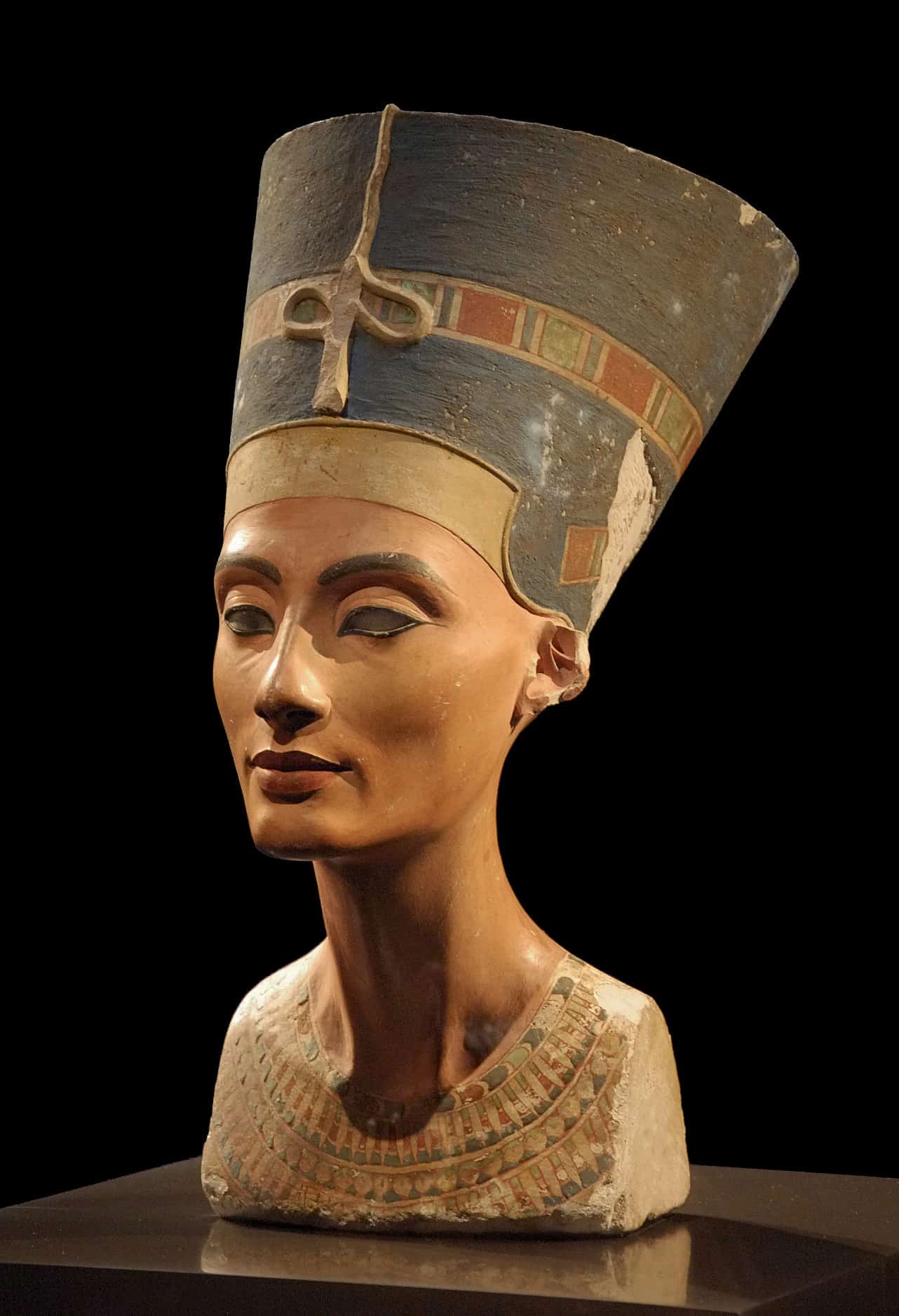
The Bust of Nefertiti | Housed in the Neues Museum, Berlin, Germany, created around 1345 BCE, a painted limestone sculpture, celebrated as the pinnacle of ancient Egyptian Amarna-period art.Photo By Philip Pikart - Own work, CC BY-SA 3.0
🔎 Exploration Focus: A Perfect Slice of Ancient Egyptian Daily Life The Museo Egizio in Turin is the world's oldest and most important museum dedicated to Egyptology outside of Cairo. Its curatorial focus on "living archaeology" presents the authentic everyday world of the ancient Egyptians. ✨ Signature Treasures:
- Tomb of Kha and Merit: The only complete, unplundered noble tomb ever discovered.
- Everyday Objects and Food Models: Recreating ancient daily life and funerary culture.
🔎 Exploration Focus: A Cultural Marvel—A Temple That Crossed the Ocean Located beside Central Park in New York, The Metropolitan Museum of Art (The Met) is one of America's most iconic art institutions, and its Egyptian galleries are nothing short of a "desert sanctuary in the city." ✨ Signature National Treasures:
- The Temple of Dendur: Built in 15 BC during Roman-era Egypt, it was gifted to the United States by the Egyptian government in 1965 in gratitude for American assistance in saving Nubian monuments.
- Statue of Hatshepsut: A striking symbol of a female pharaoh's power and divine authority.
- Gold Coffins, Wall Paintings, and Jewelry Collections: A magnificent display spanning three thousand years of history, forming North America's most complete Egyptian exhibition.
🏛️ Curatorial Highlights: The MET has fully reconstructed the temple's original form within a glass gallery. Sunlight streams through the floor-to-ceiling windows facing the Hudson River, casting light upon the sandstone of the Temple of Dendur, making visitors feel as though they are standing amid the ancient sunset over the banks of the Nile.

The Temple of Dendur | Housed in The Metropolitan Museum of Art (The Met) in New York, USA. Built in 15 BC by a Roman-era Egyptian governor to honor Isis and Osiris. In 1965, it was gifted by the Egyptian government to the United States in gratitude for assistance provided during the Nubian Monuments rescue campaign. Photo credit: The MET Museums across Europe and America serve as an"extended theater" for ancient Egyptian civilization. While the Grand Egyptian Museum reveals the origin of the story, these collections allow the civilization to continue being understood and appreciated on the world stage. If the Grand Egyptian Museum represents the "original self" of ancient Egypt, then the collections across Europe and America serve as the "resonating stage" that keeps the civilization's brilliance alive throughout the world.
After viewing the signature artifacts at Europe's major museums, you'll discover this: while what they display are "fragments of history," the place that truly weaves these fragments into a complete story is, in fact, located right beside the pyramids in Cairo—theGrand Egyptian Museum (GEM). ✨ Why GEM Should Be Your First Stop
- GEM tells you the full story of civilisation: from prehistory to the Roman era, helping you understand how ancient Egypt shaped belief, art and kingship.
- European museums showcase the extension of civilisation: revealing ancient Egypt's influence on world aesthetics and scholarship.
See GEM first, and you'll truly "understand" the Rosetta Stone; then see Europe, and you'll "connect" the threads of civilisation. This is the most complete viewing order— GEM is the starting point, Europe is the extension. Already visited museums in Europe or America? Then GEM is even more essential for you Many travellers have visited the Egyptian galleries of London, Paris, Berlin or New York, but when you step into GEM, you'll suddenly realise: those remembered "single pieces" are just a fragment of the puzzle. Here, you can see the outline of an entire civilisation with your own eyes—Tutankhamun's golden mask, complete burial treasures, colossal statues of Ramesses, the Solar Boat of Khufu... Each piece lets you rediscover the "soul of Egypt".
Want to walk into Tutankhamun's golden world with your own eyes, witness the play of light on the Solar Boat beneath the Giza Pyramids, then travel south along the Nile to explore the Valley of the Kings and Abu Simbel? ✨ Join DeWonder Travel's [In-Depth Egypt Tour] and set off!Led by a professional local guiding team, journey through the Grand Egyptian Museum, the Pyramids and the Nile cruise. With small groups and dedicated guides, experience the grandeur and mystery of five thousand years of civilisation at the most comfortable pace. 👉 View this year's Egypt In-Depth Tour departure dates 👉 Join our free online seminar to get your Egypt tour questions answered 👉 Click here to register DeWonder Egypt In-Depth Tour Info Kit 👉 Click here to download 👉 Further reading: Egypt Pyramids Guide 👉 Further reading: Grand Egyptian Museum Guide