
Who Was Tutankhamun? Unravelling the Historical Mystery and Century-Old Archaeological Legend of the "Golden Boy King"
Get to know Tutankhamun and his golden treasures, and learn about the Valley of the Kings tombs and the Grand Egyptian Museum, for a deeper Egypt travel experience.
Tutankhamun was a pharaoh of ancient Egypt's Eighteenth Dynasty, ascending the throne at age 9 and dying young at 19. He left behind no illustrious achievements during his reign, but because his tomb (KV62) was found in 1922 almost completely undisturbed by tomb robbers, it stunned the world. Over 5,000 golden burial objects were unearthed from the tomb, making him the most famous Egyptian pharaoh in the world. Today, these treasures are displayed together in their entirety for the first time at the Grand Egyptian Museum (GEM). For those preparing to travel to Egypt, understanding Tutankhamun's story is almost like unlocking in advance the most important historical thread to the Valley of the Kings and the GEM.
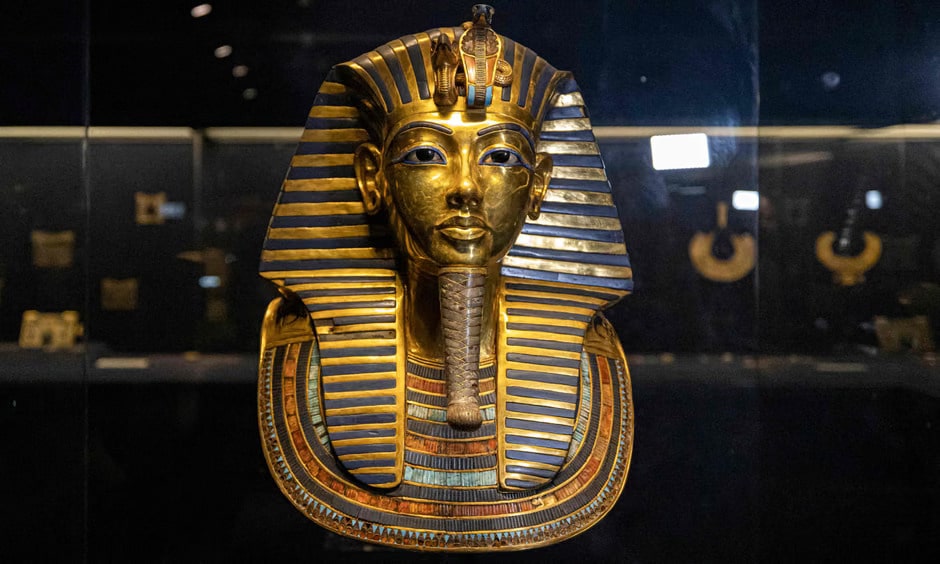
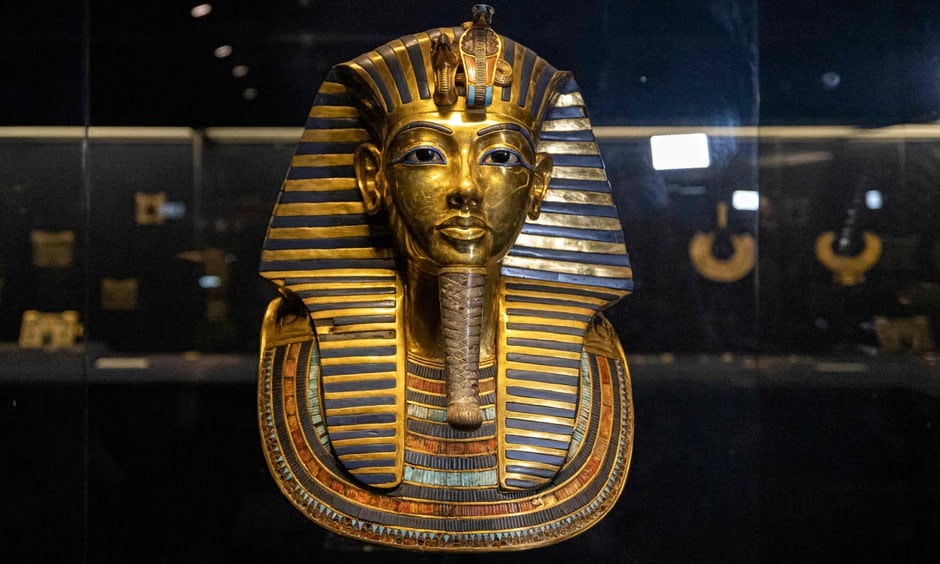
Tutankhamun's golden mask is one of ancient Egypt's most famous artefacts. Today it is housed and displayed together with his more than 5,000 burial objects at the Grand Egyptian Museum (GEM).

The Grand Egyptian Museum (GEM). Currently the world's most complete repository of artefacts unearthed from Tutankhamun's tomb, with over 5,000 burial objects displayed together in their entirety for the first time.
Many people's impression of Tutankhamun is often limited to just "that famous golden mask." But if you learn his story before setting off, you'll discover: Egypt's two most important travel experiences are, in fact, both directly connected to this boy king.
- At the Valley of the Kings, you can see his actual tomb and mummy
- At the Grand Egyptian Museum (GEM), you can see the 5,000 treasures that accompanied him into the afterlife
When these two places are linked together over the course of your journey, what you see is no longer just artefacts, but a story of history spanning 3,000 years.

An interior passage of Tutankhamun's tomb (KV62), located in the Valley of the Kings in Luxor, Egypt. Discovered in 1922, it is one of the few pharaonic tombs that remained almost entirely undamaged by tomb robbers.
Archaeological studies and DNA testing suggest that Tutankhamun may have suffered from a number of genetic disorders and needed a walking cane to get around. This stands in stark contrast to the image of the valiant charioteer depicted in the murals, and it has prompted historians to rethink the true life of this young pharaoh.
Most of the pharaohs' tombs in the Valley of the Kings were plundered by grave robbers as early as antiquity. Only Tutankhamun's tomb, its entrance buried under rubble, luckily escaped this fate and slumbered for 3,000 years. It was not until 1922 that the British archaeologist Howard Carter rediscovered the tomb.

In 1922, archaeologist Howard Carter discovered Tutankhamun's tomb (KV62) in the Valley of the Kings, unveiling one of the most important archaeological finds of modern times.
Shortly after the tomb was discovered, Lord Carnarvon, the excavation's sponsor, died under mysterious circumstances, sparking sensational worldwide media coverage of the "Pharaoh's Curse." Although it was later regarded as mere coincidence, this air of mystery undoubtedly helped Tutankhamun rapidly become the world's most famous Egyptian pharaoh.
Over 5,000 burial objects were unearthed from Tutankhamun's tomb, including:
- The golden mask
- Golden chariots
- Royal furniture
- Exquisite jewellery
- and even the pharaoh's undergarments and childhood toys
These artefacts have, for the first time, allowed archaeologists to fully reconstruct the royal life of ancient Egypt 3,000 years ago.
The ancient Egyptians believed that after death the soul still needed a body and an identity, so they created the famous golden masks and multi-layered anthropoid coffins. These exquisite objects were not mere decoration—they were the key to helping the soul recognise itself in the afterlife. 👉 Further reading: Must-See Artefacts at the Grand Egyptian Museum
Many travellers only discover after arriving in Egypt that understanding the story of Tutankhamun lets you see a completely different Egypt. The following three scenes highlight the most obvious differences.
If you haven't looked into the background Stepping into Tutankhamun's KV62 tomb, you might think: compared with the other pharaohs, this place seems rather small, and there aren't many murals either. If you understand his historical background You will feel a powerful sense of historical contrast and archaeological wonder.Precisely because Tutankhamun died so young, his tomb was hastily completed, modest in scale, and therefore more concealed. It was these very conditions that allowed it to successfully evade tomb raiders for thousands of years. As you stand inside that small burial chamber, what you'll picture is this: the moment in 1922 when archaeologists first broke through the wall and saw a room ablaze with gold. 👉 Further Reading : Highlights of the Valley of the Kings
If it's just a quick visit Many people's impression of Tutankhamun often stops at that famous golden mask. If you understand his story The way the entire museum is curated feels like a life record of the boy pharaoh. You'll start to notice the details:
- Worn walking canes
- Linen gloves
- Childhood toys
In that moment, what you see is not just golden treasure, but a young man who left this world at just 19. 👉 Further reading:
- 《A Complete Guide to the Grand Egyptian Museum》
- 《Egyptian Museum Guide: Where to See Tutankhamun's Golden Mask and the Royal Mummies?》
- 《Don't Just Look at the Golden Mask! The 10 Must-See Artefacts at the Grand Egyptian Museum (GEM)》
Once you understand Tutankhamun's story, you'll realise that the whole Egypt journey is actually like a giant jigsaw puzzle. In the Valley of the Kings in the south, you see his tomb and mummy. At the Grand Egyptian Museum (GEM) in Cairo to the north, you see his treasures and his preparations for the afterlife. When these two places connect along your journey, Egypt is no longer just a collection of sights, but a 3,000-year story of history. And this sense of connection is often one of the most unforgettable experiences for many travellers. 👉 Further reading: Top 10 Must-Visit Sights in Egypt
Without commentary, the treasures of Tutankhamun might seem like nothing more than a dazzling pile of gold. But when the history is brought to life, the whole experience is completely transformed. If, while travelling in Egypt, you'd like to focus on understanding the culture, appreciating the sights, and soaking up the rhythm of the journey while someone else handles the logistics and itinerary, a well-planned, small-group in-depth tour makes the whole experience far more relaxing. DeWonder's Egypt In-Depth Tour small-group in-depth itinerary is one option well worth considering: ✨ Tour Highlights:
- A domestic flight from Cairo links up with an Aswan Nile River cruise—no long coach rides and no backtracking
- A 4-day, 3-night Nile River cruise, travelling slowly along the river of the pharaohs
- Expert-guided commentary to understand the stories behind the temples, murals, and religious rituals
- Small groups of 8–14 people, for a more comfortable pace and a more in-depth experience
Don't just pass through — truly step into the heart of ancient Egyptian civilisation. 👉 View all year-round Egypt in-depth tour departure dates 👉 Join a free online seminar to have your questions about the Egypt itinerary answered 👉 Click here to sign up DeWonder Egypt In-Depth Tour Info Pack 👉 Click here to download 👉 Read moreEgypt Travel Guide 👉 Further reading: An introduction to the Egyptian temple series
👉 Further Reading:A Guide to Egyptian Mythology | Decoding Egyptian Symbols 👉 Further Reading:Guide to the Pyramids of Egypt | Guide to the Grand Egyptian Museum