
A Complete Guide to the Physical Demands of Arctic Cruises: Key Points on Shore Hikes and Health Assessment
Planning an Arctic cruise but worried you're not fit enough? Let us walk you through the intensity of shore hikes, the stamina required for outdoor activities, and the key health assessments to complete before departure.
An Arctic expedition cruise is not an extreme sport, but neither is it a purely leisurely sightseeing trip. It falls into the category of "active adventure travel," requiring a certain level of physical adaptability and stable health. This article explains the actual physical demands of an Arctic itinerary from three perspectives:
- Stability of sailing at sea
- Intensity of shore hikes
- Medical resources and health risk management
This will help you make a clear assessment before you set off.
Arctic expedition cruises are mostly built with ice-class hulls and equipped with stabilizers. Voyages largely take place among archipelagos and fjords, rather than long crossings of the open ocean. Sea conditions are still affected by the weather, but overall they fall within the predictable range of natural marine conditions. Most travellers adapt to the rhythm of sailing in a short time. The physical toll of an Arctic itinerary usually does not come from the motion of the sea.

Arctic cruise voyages mostly take place in fjords and archipelago waters, and large ice-class expedition ships are fitted with stabilizers to enhance sailing stability.
Physical exertion in the Arctic does not come from a single day of high-intensity activity, but rather from consecutive days of outdoor excursions. The main sources of strain are as follows:
Item | Description |
Jet lag adjustment | About a 6–7 hour time difference flying from Asia to Northern Europe |
Daily landings | 1–2 outdoor activities per day |
Hiking terrain conditions | Tundra, loose gravel, gentle natural slopes |
Climate factors | Around 0–10°C, with wind chill |
Standing observation | Wildlife observation requires standing for long periods |
Overall, it is an "endurance-type activity" that requires steady walking and the ability to recover. 👉 Further reading:Understanding the Arctic Climate 👉 Further reading:Polar Dressing Guide
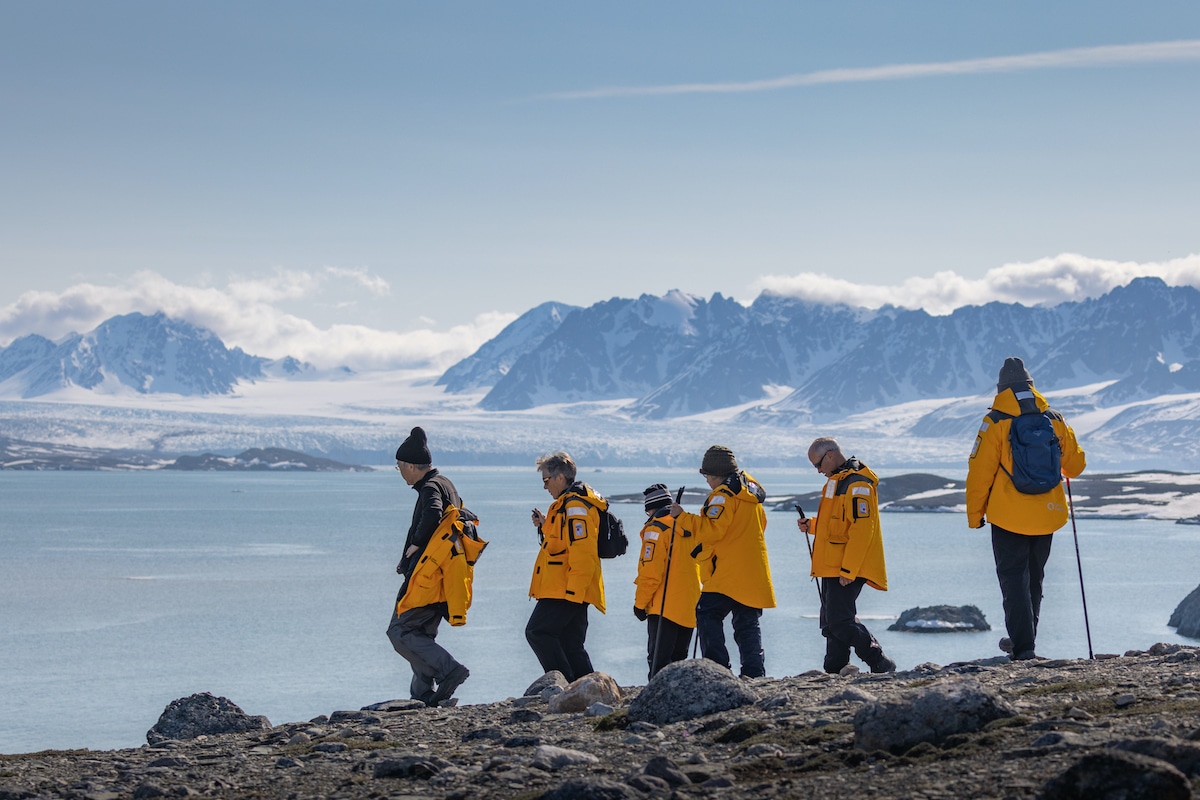
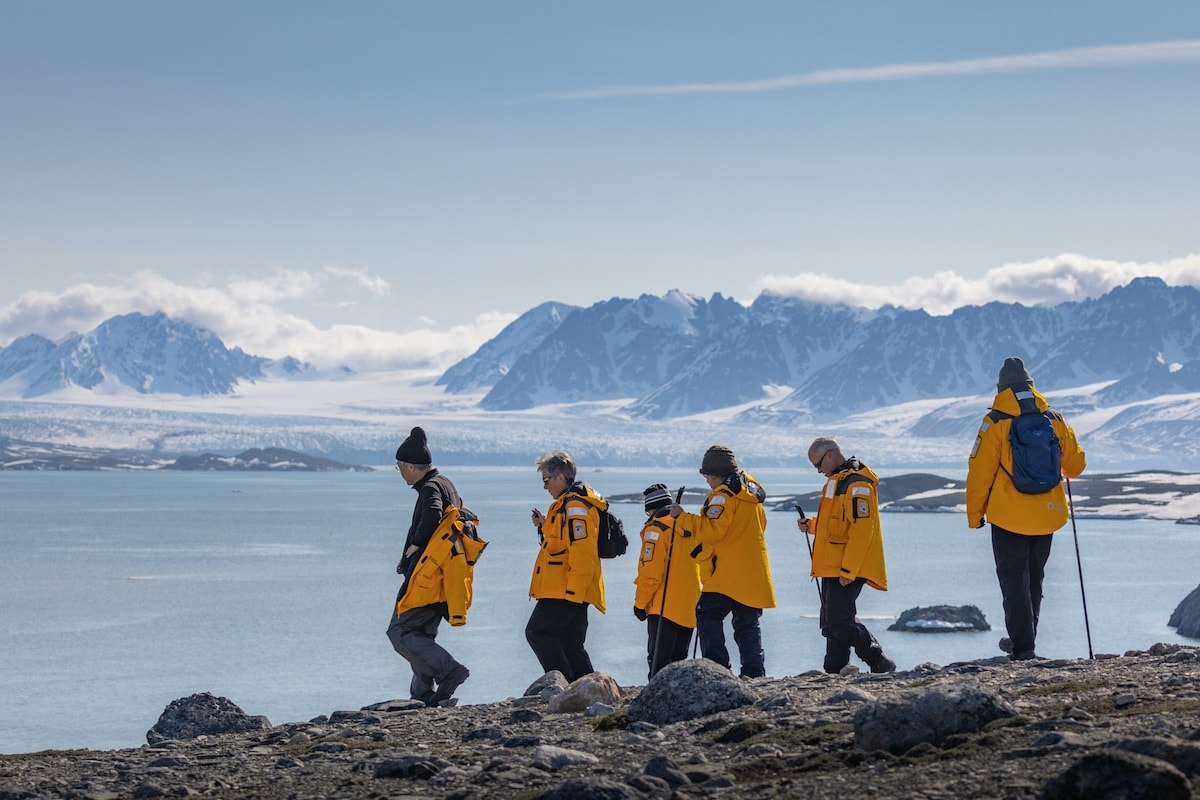
Arctic landing hikes mostly cross gently sloping tundra terrain, with activities typically lasting 1–3 hours; the physical demand comes mainly from extended walking.
Take Greenland as an example: the landing terrain is mostly natural tundra and low hills.
Item | Actual Condition |
Altitude | Low |
Gradient | Mainly gentle slopes of low hills |
Ground | Tundra grassland, gravel, rocky shore |
Technical Requirements | No climbing or specialised equipment required |
Activity Duration | About 1–3 hours |
The activity is a guided nature walk (Light Hiking), not high-altitude mountaineering or long-distance trekking. Participants need to have:
- A steady walking ability
- A basic sense of balance
- The ability to move over uneven ground
If you can normally walk continuously for 45–60 minutes, you can usually take part without difficulty.

Arctic landings mostly involve guided nature walks (Light Hiking), and usually require only about 45–60 minutes of walking to take part.
The Arctic is a remote region, and medical care aboard a cruise operates on a tiered support system.
Tier | Location | Scope of Function |
Tier One | Onboard the cruise ship | Basic emergency care and treatment of common illnesses |
Tier Two | Arctic towns | Small medical centres or regional hospitals |
Tier Three | Reykjavik / Helsinki | Full specialist medical and surgical capabilities |
Reykjavik in Iceland and Helsinki in Finland, these two departure cities have well-developed medical systems and the capacity to handle critical emergencies. Please note:
- Medical evacuation from remote waters takes time
- Weather may affect evacuation arrangements
- Specialist medical care is only available in major cities
Being in stable health before departure is therefore an important prerequisite for travelling to the Arctic.
In the following situations, we recommend consulting a medical professional before departure:
- Cardiovascular disease
- Chronic respiratory disease
- Diabetes
- Severe joint degeneration
- Long-term use of prescription medication
If your health condition requires frequent medical monitoring or immediate specialist support, you should assess your situation carefully.
An Arctic expedition cruise does not require extreme physical fitness, but rather:
- Steady walking ability
- Stamina for multi-day outdoor activities
- Stable health condition
- Ability to adapt to changes in climate
If you can move about freely in daily life and take part in regular outdoor activities, most people can complete an Arctic itinerary without difficulty. If you have any concerns about your health, the most responsible approach is to consult a qualified physician before departure.
A professional in-depth Arctic tour created by DeWonder in partnership with Quark Expeditions andSwan Hellenic. With our small-group arrangements, you can not only observe wildlife up close during cruise and Zodiac explorations, but also gain deep insight into and photograph the polar ecosystem while taking in unique natural scenery, all with the commentary of expert guides. From the aurora and wildlife to Inuit culture, we have accompanied more than a great many travelers to the ends of the earth. Greenland Northern Lights In-Depth Tour
- Departing from Reykjavík, Iceland, crossing the Denmark Strait to venture deep into the fjords of northeast Greenland
- Daily Zodiac landings to explore glaciers, Arctic villages and wildlife
- September is the best time to view the Northern Lights — enjoy both auroras and wildlife in one trip
- A once-in-a-decade astronomical wonder: witness a total solar eclipse on the Arctic glaciers
- The itinerary combines fjord exploration, wildlife observation and science lectures
- Perfect for travellers who love photography and astronomy
Svalbard Archipelago In-Depth Tour
- Gather in Helsinki, Finland, then take a charter flight to Longyearbyen to board the ship
- The region with the world's highest density of polar bears; explore glaciers and wildlife under the summer's midnight sun
- Flexible route design, adjusted in real time according to animal sightings and sea conditions
Greenland & Canada In-Depth Tour
- Departing from Reykjavik, Iceland, cross Baffin Bay and the Davis Strait to explore Greenland's fjords and the Canadian Arctic Archipelago
- Daily Zodiac landings for up-close encounters with icebergs, glaciers, and wildlife such as polar bears and walruses
- Venture into Inuit communities and polar towns to experience Indigenous culture and life in the far north
👉 View the Year-Round Arctic Departure Schedule 👉 Join a Free Online Seminar and enjoy exclusive offers! 👉 Further reading: Arctic Travel Guide