
Are the Three Caucasus Countries Suitable for Independent Travel? Understanding the Real Differences Through Cross-Border Restrictions and Transport Integration
When crossing all three Caucasus countries in one trip, is arranging it yourself really more flexible? This article compares independent travel with in-depth small-group tours in terms of cross-border movement and flexibility, helping you see clearly which approach suits you better.
When planning a trip across the three Caucasus countries, the first question many people ask is, "What kind of itinerary is actually feasible?" Many travellers worry that the three Caucasus countries are far apart and that information is relatively scattered; on the other hand, they don't want to sacrifice itinerary flexibility just because they join a group tour. "Are the three Caucasus countries suitable for independent travel" has long been a question that remains unclearly answered in the minds of travellers wanting to visit the Caucasus. Drawing on years of experience in Caucasus travel, DeWonder takes you to explore how the three Caucasus countries themselves have certain structural cross-border restrictions and integration difficulties, and how these conditions directly affect the real differences between independent travel and other ways of travelling.
It's not that the three Caucasus countries can't be travelled independently, but when your itinerary spans Armenia, Georgia and Azerbaijan at the same time, the biggest challenge of independent travel isn't just travel time—it's whether cross-border routes are feasible, whether the itinerary order is correct, and whether you can effectively integrate different modes of transport. Once you get these judgements wrong, it's often not a matter of fine-tuning the itinerary, but of having to start an entire section over again. Put simply, the question of whether the three Caucasus countries "can be travelled independently" is actually closer to "whether it's worth taking on these integration risks yourself."
Clear and practical cross-border restrictions exist between the three Caucasus countries. The most crucial point is: The land border between Armenia and Azerbaijan is not open This means the itinerary order isn't simply a matter of personal preference; you must first confirm "whether this combination of countries is feasible in itself." If you aren't aware of this early in the planning stage, you often only discover in the latter part that a certain leg of the route can't be travelled directly, and you can only return to a transit country to rearrange things. For independent travel, this isn't a problem you can solve by switching to another mode of transport—rather, the very structure of the itinerary needs to be reorganised.
Another reality unique to the three South Caucasus countries is this: cross-border and regional travel can rarely be accomplished with just "one mode of transport" alone. Common situations in practice include:
- Between certain countries, long-distance overland travel is relatively reasonable
- For certain segments, not flying would severely cut into your time on the ground
- Some rural areas, natural landscapes, or wine regions lack public transport connections
This also means that independent travellers must take on not just the task of looking up transport information, but judging for each segment: which mode is most beneficial for the trip as a whole. When an itinerary spans three countries, this kind of judgement comes up again and again, and the cost in time and mental energy naturally rises.
On an independent trip within a single country, adjusting the itinerary usually just means spending extra time on one leg of transport. But across the three South Caucasus countries, the impact of getting the order wrong is often far greater:
- You may have to return to a specific transit city or country
- Adding 1–2 days of pure travel
- Squeezing the key cities and attractions you had planned to visit
Therefore, for the three Caucasus countries, "whether you sequence things correctly from the start" matters far more than "whether you can adjust along the way."
In the three Caucasus countries, the difference between independent travel and an in-depth small group isn't about who is more flexible, but about who takes on the high-risk work of integration and judgement.
- Working out which countries and cities cannot be crossed between directly
- Repeatedly adjusting the itinerary sequence to avoid unworkable routes
- Reassessing whether the mode of transport is reasonable for each leg
- Once a misjudgement is made, having no choice but to accept backtracking or extra transit days
- Avoiding unworkable cross-border combinations right from the start
- An itinerary sequence and transport logic already proven in practice
- No need to trial and error and make corrections using your actual travel time
In the three Caucasus countries, the key value of an in-depth small group is not saving effort, but reducing the risk of structural errors in the itinerary.

An itinerary spanning three countries often means dealing with varied terrain and modes of transport; a flexible small-group arrangement allows the journey to maintain a steady rhythm as you move between them.
For many travellers, the worry about joining a group tour isn't about "having someone lead the way," but about "being locked into a fixed itinerary." Across the three Caucasus countries, truly meaningful flexibility actually means:
- Room for adjustment built upon a "feasible route"
- A small group size, allowing the focus of stops to be adjusted according to actual circumstances
- No need to sacrifice the experience for the sake of poorly planned cross-border arrangements
In other words, flexibility built upon a flawed itinerary structure only amplifies the risks; whereas within a sound cross-border framework, flexibility is in fact far easier to achieve.

A small group paired with a dedicated guide not only makes cross-region and cross-border transfers more efficient, but also adds cultural and historical context at each location, so that the journey is not merely a passing visit but a genuine understanding of the local character.
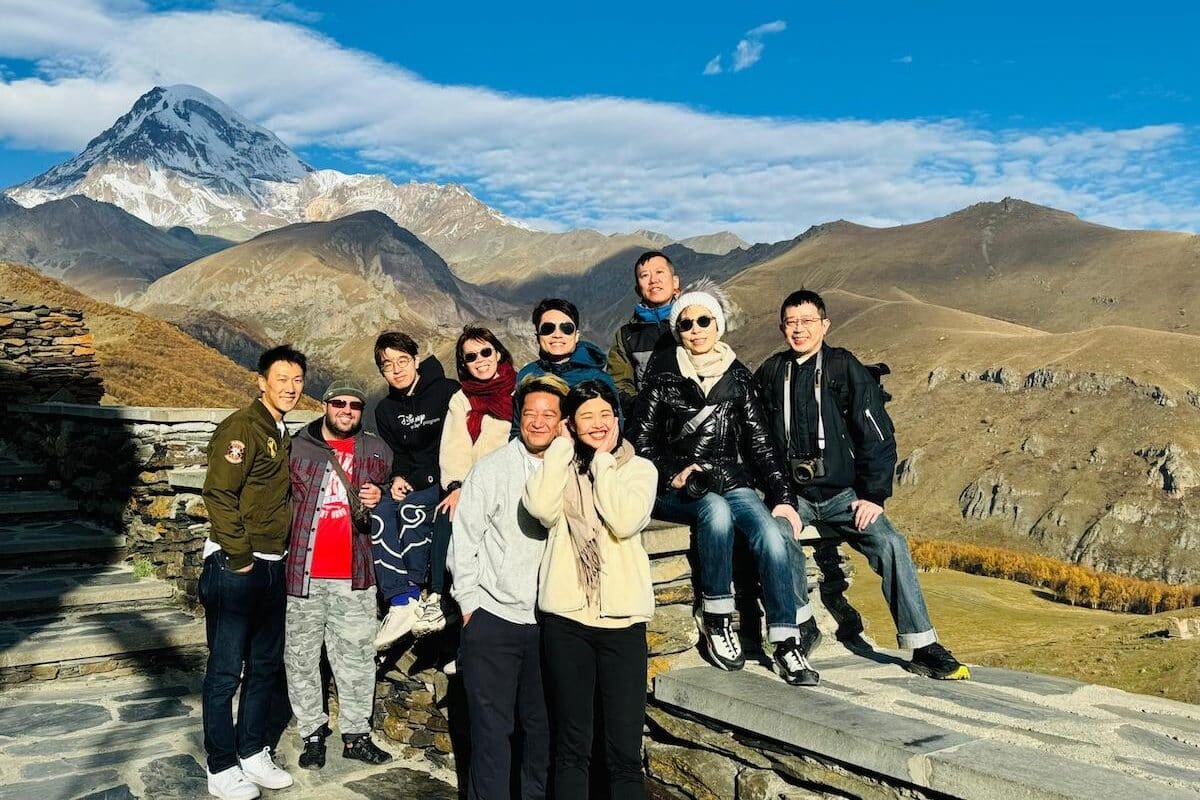
The three Caucasus countries are not impossible to travel independently, but when multiple countries, different modes of transport, and real cross-border restrictions come into play, "who designs the overall sequence and integrates the transport" often affects the quality of the journey more than whether it is a self-guided trip. If you don't want to be tied down by inflexible conventional tours, yet you also don't want to bear the high costs of getting cross-border arrangements wrong on your own, then DeWonder's Caucasus In-Depth Tour small-group experience, which combines cross-border planning expertise with itinerary flexibility, is a choice that better fits the real conditions of the three Caucasus countries. DeWonder's carefully designed Caucasus In-Depth Tour takes you through Azerbaijan, Georgia, and Armenia in a small group
- Ten Years of Experience, In-Depth Planning:Venture onto routes that ordinary tour groups never reach, bringing you close to the living scenes of local history and culture.
- Exclusive Interactive Activities:Share a meal with herders, prepare traditional dishes, or try the Duduk instrument, truly feeling the warmth of local life.
- Deep Insight into Local Life:Visit tin-house neighbourhoods and rural families to understand the residents' true stories and beliefs.
- Reviving Historical Stories:From Soviet-era relics to medieval monasteries, appreciate the changing eras of the Caucasus.
- A Comprehensive Cultural Experience:From winemaking to music and art, every part of the journey becomes a blend of the intellectual and the emotional.
- Small-Group Departures:An average of 8–14 travellers together, maintaining the ideal balance of comfort and interaction.
This journey is not just about ticking off checkpoints, but an exploration of culture, history, and connection with oneself. Set off for the three Caucasus countries with DeWonder now. 👉 View the full-year departure dates for our in-depth Caucasus tours DeWonder In-Depth Caucasus Tour Information Pack 👉 Click here to download To learn more about travelling in the three Caucasus countries, we recommend our featured 👉Caucasus Travel Guide 👉 Further reading:A Quick Introduction to the Three Caucasus Countries 👉 Further reading:Recommended Attractions in Georgia | Recommended Attractions in Armenia | Recommended Attractions in Azerbaijan 👉 Further reading:Visa Requirements for the Three Caucasus Countries 👉 Further reading:Cross-Border Transport Guide for the Three Caucasus Countries 👉 Further reading:Languages, Currencies and Daily Life in the Caucasus