
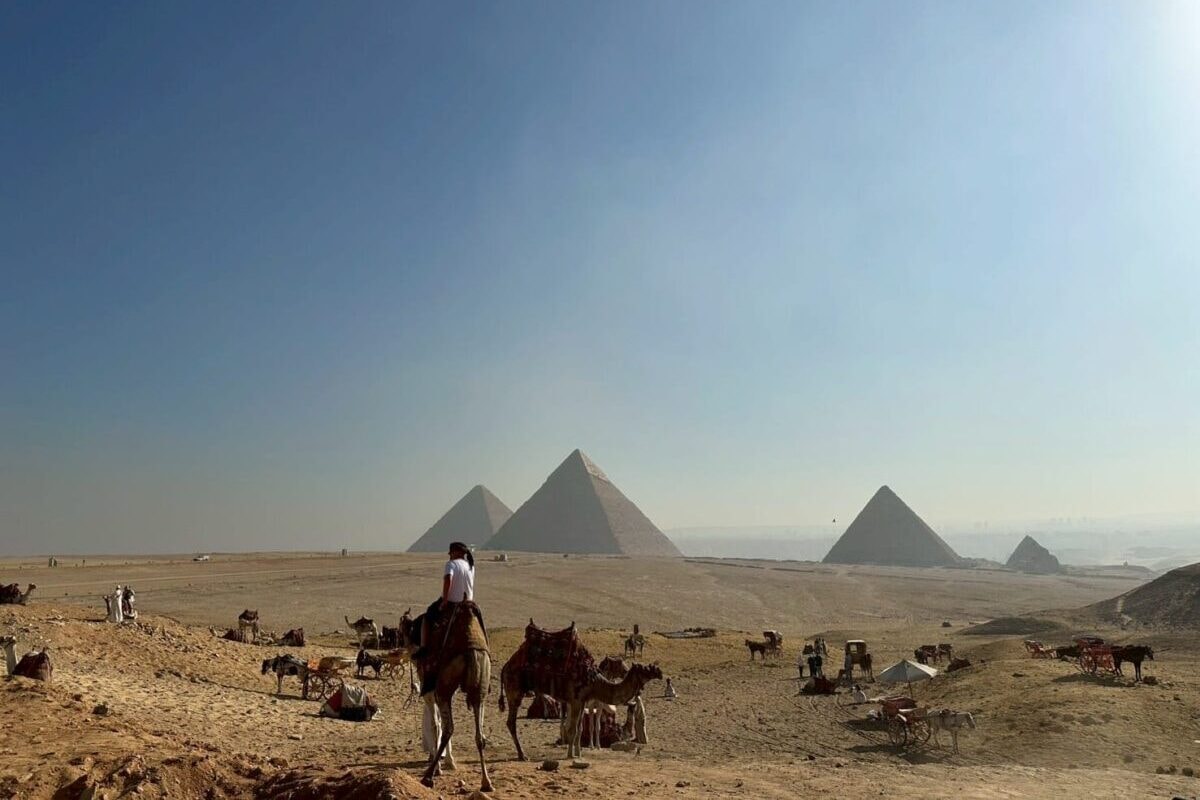
Essential Ancient Egyptian History to Know Before You Go: Understanding Temples, Pyramids, and Dynastic Eras at a Glance
From the Old Kingdom to the New Kingdom, we break down which era Egypt's key sites belong to, helping you build a clear framework of this civilisation.
Before travelling to Egypt, most people know they'll see pyramids, temples, and countless relics of an ancient civilisation. But once they actually arrive, a question often arises: What exactly is the difference between these structures? Why are some places pyramids while others are massive temples? This article distils the ancient Egyptian history that's "enough to get you by" before you set off, helping you quickly work out on-site: which dynastic era does what you're looking at belong to? And what role did it play in ancient Egyptian civilisation?
Ancient Egyptian civilisation spans an enormous stretch of time, but in terms of "what you'll actually see when travelling," the focus is really quite clear:
- Old Kingdom: left behind the most iconic "landmark structures"
- New Kingdom: left behind the most numerous, and most visit-worthy, temples and royal sites
- Middle Kingdom: left behind institutions, order, and transitional remains rather than large tourist landmarks
Dynastic Era | Approximate Period | Most Commonly Seen When Travelling | Key Points for On-Site Identification | Common Types of Remains |
Old Kingdom | c. 2700–2200 BC | Pyramids, tombs | Simple form, immense scale | Pyramid complexes |
Middle Kingdom | c. 2050–1700 BC | Fewer single landmarks | Symmetrical design, strong sense of order | Urban remains, burial chambers |
New Kingdom | c. 1550–1070 BC | Temples, monumental structures | Forests of stone columns, long axial lines | Temple complexes |
Put simply: if you see a pyramid, it's most likely from the Old Kingdom; if you see an enormous temple, it's almost always from the New Kingdom.


Site | Type | Main Period of Construction / Use | Corresponding Kingdom Era | Key Points for Understanding |
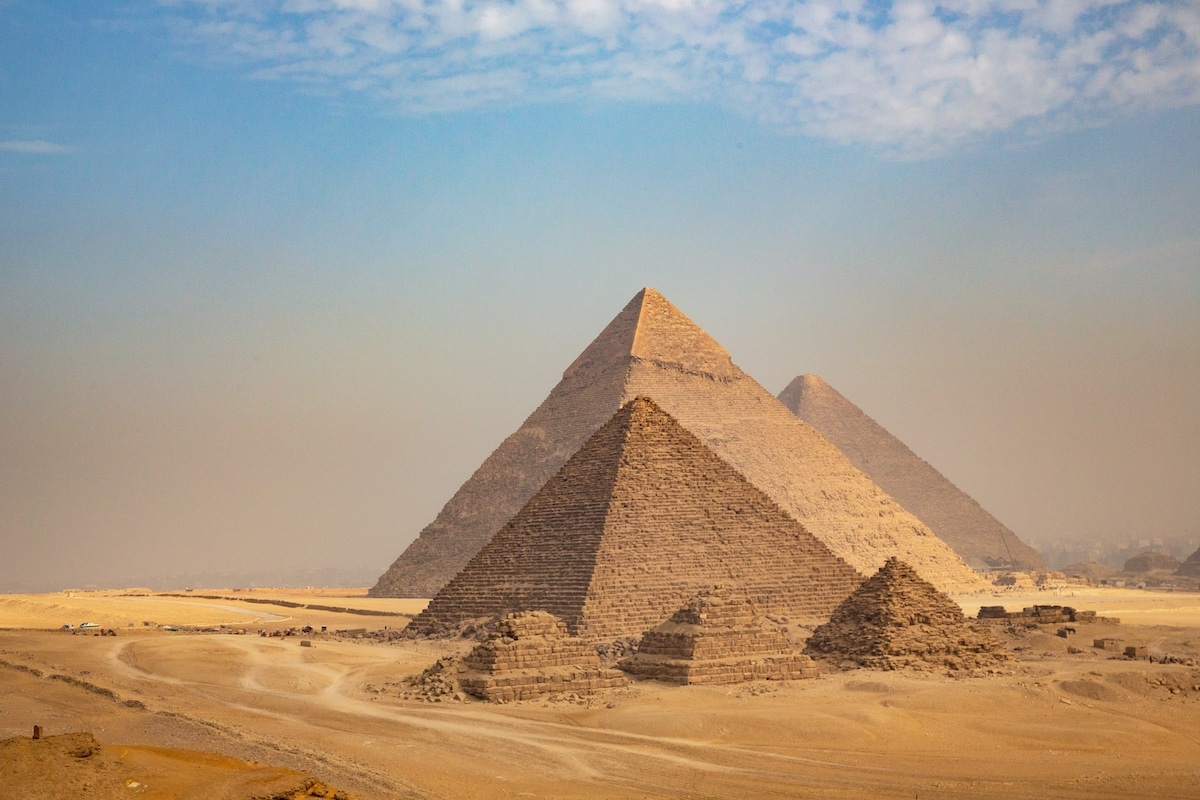
Pyramids | c. 26th century BC | Old Kingdom | Eternity outweighs the present life; kingship made visible | |
Temple | 13th century BC | New Kingdom | Peak of empire; a display of kingship and divinity | |
Royal Necropolis | 16th–11th century BC | New Kingdom | Burials became concealed; pyramids no longer built | |
Temple Complex | 16th–12th century BC | New Kingdom | A national religious and political centre | |
Temple | From the 14th century BC | New Kingdom | Forms a ceremonial axis with Karnak | |
Temple | 4th century BC–Roman period | Ptolemaic Dynasty | A late work, yet deliberately imitating ancient Egyptian forms | |
Temple | Ptolemaic Dynasty | Ptolemaic Dynasty | Double-temple layout, continuing the New Kingdom idiom | |
Temple | 3rd–1st century BC | Ptolemaic Dynasty | The best-preserved "standard ancient Egyptian temple" |
💡 Did You Know: Although the temples of Philae, Kom Ombo and Edfu belong to the Ptolemaic Dynasty (the Hellenistic period), in both architectural and religious form they deliberately replicate the ancient Egyptian temple traditions of the New Kingdom. 👉 So when travelling in Egypt: "It looks very Ancient Egyptian" ≠ "It must have been built during the Old Kingdom or New Kingdom."


👉 Further reading:Top 10 Must-Visit Attractions in Egypt
Highly concentrated in height and consistent in form, the pyramids are the most distinctive hallmark of the Old Kingdom. The core values of the Old Kingdom were:
- The afterlife is the true life
- The pharaoh's immortality equals the eternity of the state
- The foremost goal of architecture is to "endure long enough"
Therefore, the pyramids you see on site:
- Do not pursue decoration
- Do not emphasise interior space
- The focus is on structure and mass
👉 The pyramids were how the Old Kingdom expressed its worldview through architecture. Further reading👉 What's Inside the Egyptian Pyramids? Debunking the 5 Big Myths and an Expert-Level Visiting Guide
By the New Kingdom, Egypt had entered the peak of its imperial era, and its way of thinking had shifted too:
- Royal power no longer relied solely on "visible tombs"
- Burials turned toward concealment (the Valley of the Kings)
- Temples became the public stage for national power and religion
This is also why:
- The Valley of the Kings is a product of the New Kingdom
- A large number of colossal temples cluster around Luxor
This is where many travellers in Egypt get most confused. Pyramids and temples both look magnificent, but they belong to completely different civilisational logics.
Category | Pyramids | Temples |
Main period of appearance | Old Kingdom | New Kingdom |
Core function | Burial place of the pharaoh | Religious and state ceremonies |
Intended users | The pharaoh after death | Deities, priests, royal power |
Architectural focus | Structural stability, permanence | Scale, axial layout, sense of imposing grandeur |
What to observe on site | Form and location | Columns, reliefs, sense of space |
Simple takeaway: pyramids were built for the "afterlife," temples were built for the "running of the state."
This isn't actually because the Middle Kingdom was unimportant, but because it simply wasn't an era "built for tourists to admire." What role did the Middle Kingdom play in the civilisation?
- Restoring order after the collapse of the Old Kingdom
- Establishing legal, administrative and social structures
- Laying the foundations for the New Kingdom's imperial expansion
What it left behind is mostly:
- Remains of towns
- Burial chambers
- Institutions and values, rather than colossal landmarks
Even if you don't actually visit any Middle Kingdom sites, you'll still "feel" its presence. For example:
- Why are the temples so orderly?
- Why are the images so highly repetitive?
- Why does the space emphasise hierarchy and symmetry?
These are in fact all values established during the Middle Kingdom; they were merely presented on a grander architectural scale during the New Kingdom. 👉 What the Middle Kingdom left behind is an "operating logic", not tourist landmarks.
- Old Kingdom: pyramids = the outward expression of eternity
- Middle Kingdom: order and institutions, which allowed the civilisation to endure
- New Kingdom: temples and the Valley of the Kings, which made the civilisation visible
As long as you can tell these three things apart, most of the sights you see on the ground in Egypt can be quickly placed back into their correct context for understanding.
Egypt is actually not a country suited to "constantly rushing between sights". Between the temples, tombs and museums there already exists a clear thread of civilisation; if you only snap photos to tick boxes, it is easy to feel worn out in the latter part of the trip, yet unable to say what you have really seen. When we plan our Egypt itineraries, we deliberately place the focus on understanding sequence and pacing design, rather than on cramming in as many sights as possible. Through an itinerary built around Cairo, Luxor and Aswan, we allow first-time travellers to Egypt to see the full picture of the civilisation within the limits of time and energy, while still leaving room to digest and understand. If you want this trip to be not just about "having been to Egypt", but about truly knowing what you have seen and why it matters, the way the DeWonder Egypt In-Depth Tour is planned will be the most suitable starting point. For travellers setting foot in Egypt for the first time, it lets you devote more of your energy to the experiences that truly matter: the pyramids, the Nile, and the cities and culture themselves. ✨ DeWonder Egypt In-Depth Tour itinerary highlights:
- A 4-day, 3-night Nile cruise, travelling slowly along the river of the pharaohs
- Visit both the classic Giza Pyramids + Grand Egyptian Museum in one trip
- Exclusive Nubian Cooking Class and homestay experience, for deep exchanges with local families
- Classic temple sites seamlessly linked: Abu Simbel → Kom Ombo → Edfu → Karnak → Luxor → Valley of the Kings
- Small groups of 8–14 people, for a more relaxed pace and a more in-depth experience
👉 View year-round departure dates for our in-depth Egypt tours 👉 Join our free online seminar to get your questions about the Egypt itinerary answered 👉 Click here to register DeWonder In-Depth Egypt Tour Info Kit 👉 Click here to download 👉 See more Egypt travel guides 👉 Further reading: Egyptian temple series
👉 Further reading: Guide to Egyptian Mythology | Egyptian Symbols Explained 👉 Further reading: Egypt Pyramids Guide | Grand Egyptian Museum Guide