
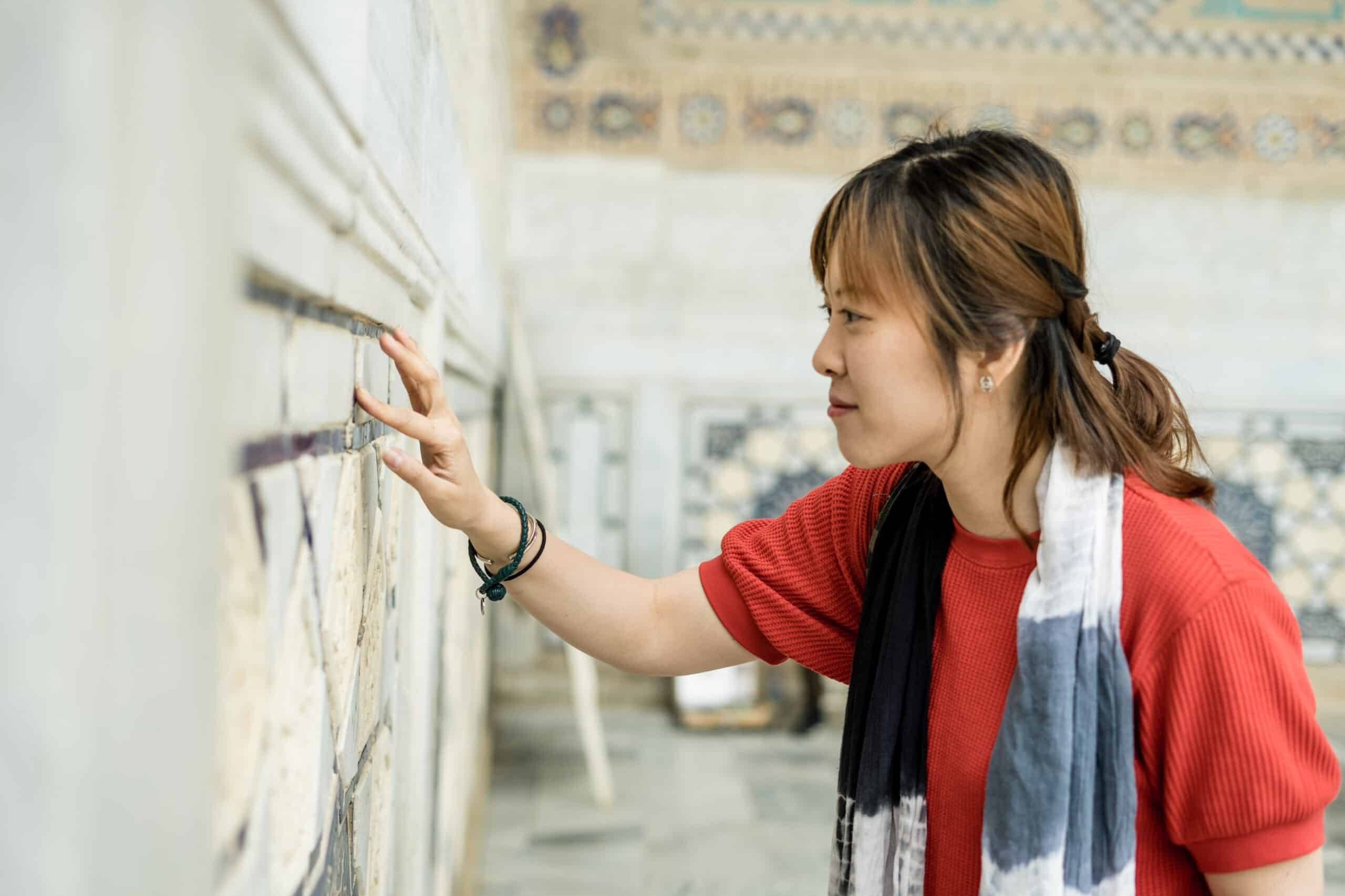
From the Silk Road to the Gates of Hell: Understanding the Past and Present of Central Asian History and Civilisation
Travel along the Silk Road and set foot on the lands of the five Central Asian nations. From the blue domes of Samarkand to the flames of Turkmenistan, every step is a dialogue between history and civilisation.
At the centre of the map lies a land often called "the land that connects the world" — Central Asia. Over two thousand years ago, the Silk Road stretched here from the distant East, weaving together merchants, poets, scholars and imperial ambitions amid sand dunes and blue domes. The five Central Asian nations we see today are not merely names on a tourist map, but sparks struck between civilisations: the romance of Persia, the nomadic soul of the Turkic peoples, and the modern imprint left by the Soviet era. Want to understand this land on a deeper level? Let's start with the stretch of the Silk Road that crosses Central Asia.
The Silk Road was not just a route, but a network of civilisation connecting the ancient East and West. Central Asia sat at the very heart of this network, becoming a meeting point for caravans, ideas and faiths. ✨ Why was Central Asia the "heartland" of the Silk Road?
- A key geographical position: connecting China's Western Regions, the Persian plateau and the European continent.
- A cultural melting pot: Islamic, Buddhist, Persian and Turkic cultures merged here.
- Key cities:
- Uzbekistan → Samarkand, Bukhara, Khiva: centres of scholarship and religion.
- Tajikistan → Dushanbe: a capital carrying on the legacy of ancient Persian culture.
- Kazakhstan & Kyrgyzstan → the northern branch route of the steppe nomadic peoples.
- Turkmenistan → Merv, Ashgabat: transit points along the desert route.
💡Did you know: the name "Silk Road" was actually only coined in the 19th century by the German geographer Ferdinand von Richthofen. In ancient times, people simply called it the "caravan route" — yet it was precisely this route that first truly united the world.
In the heart of Uzbekistan lies a city whose name is almost synonymous with the "Silk Road"— Samarkand. It has witnessed the glory of empires, the wisdom of scholars, and the transmission of faith. ✨ Why is Samarkand the most dazzling city on the Silk Road?
- Capital of the Timurid Empire: In the 14th century, ruler Timur transformed this city into a symbol of power and art.
- Architectural Wonders:
- Registan Square: A stunning blue wonder formed by three madrasahs, hailed as "the Heart of Central Asia".
- Bibi-Khanym Mosque: Built to honour a queen, its grandeur nearly pushed the craftsmen's skills beyond their limits.
- Centre of Knowledge and Faith: Samarkand's observatory, libraries, and mosques were once the most coveted destinations for scholars and travellers alike.
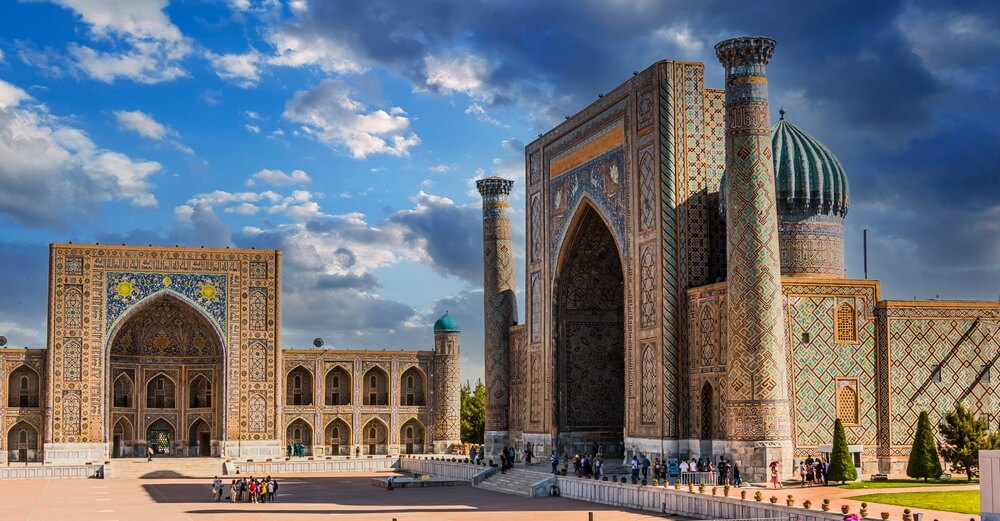
Registan Square in Samarkand is Uzbekistan's most iconic landmark, hailed as the pearl of the Silk Road
Central Asia's allure lies not only in its long history, but in being a crossroads of civilizations woven together by many ethnicities and cultures.Over a thousand years, Persian poetry, Turkic nomadic spirit, and Soviet-era modernist architecture have together shaped the unique face of Central Asia today. ✨ Three cultural forces that shaped Central Asia's character: Persian Culture (Tajikistan, Turkmenistan)
- Brought poetry, intricate palace ornamentation, and an ultimate pursuit of beauty.
- Traces can be seen at Tajikistan's Navruz Palace and Turkmenistan's white marble city.
👉 Further Reading:【Tajikistan Attractions】 |【Turkmenistan Attractions】

Ashgabat's famous "Happiest Palace" in Turkmenistan, renowned for its massive diamond-shaped architecture, is the dream venue where local newlyweds hold their weddings.Turkic Culture (Kazakhstan, Kyrgyzstan)
- The nomadic traditions of horseback peoples endure today, reflected in music, embroidery, and festival rituals.
- The heroic epic "Manas" and the yurt villages along Issyk-Kul Lake stand as symbols of this culture.
👉 Further Reading:【Kazakhstan Attractions】|【Kyrgyzstan Attractions】
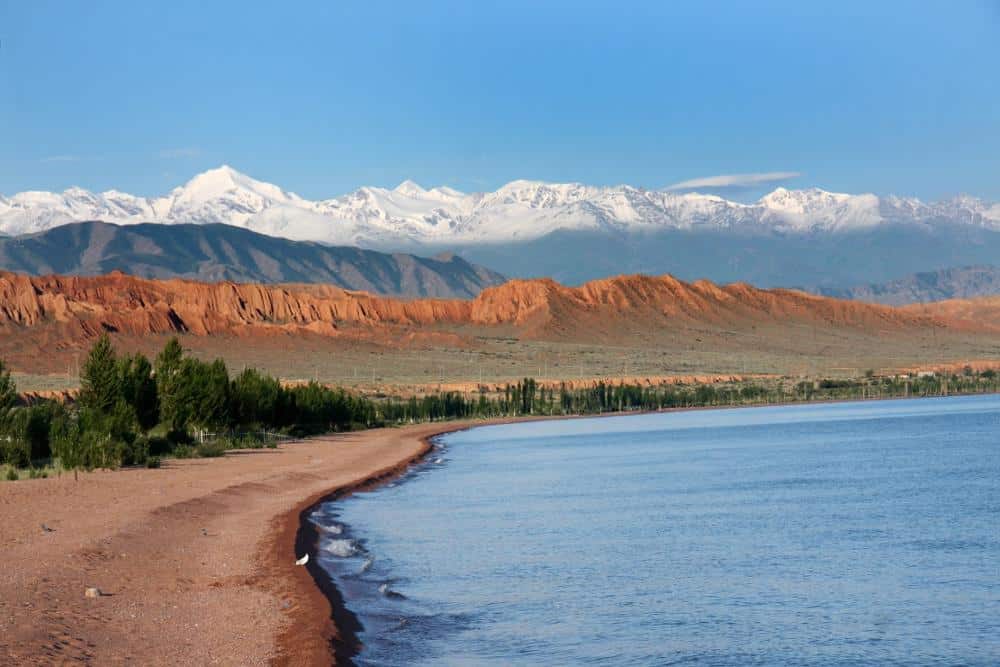
The scenery along Issyk-Kul Lake, where azure waters mirror the snow-capped Tian Shan Mountains in the distance, is one of Kyrgyzstan's most iconic natural wonders.Photo Credit : Kyrgyz’ WhatSoviet-Era Relics (Uzbekistan, Kazakhstan)
- City streets and public spaces bear geometric architecture, monuments, and murals from that era.
- Strolling through Almaty or Tashkent, you can still feel the imprint of that period.
💡Did You Know:In Almaty, Kazakhstan, and Tashkent, Uzbekistan, you might find "Lenin Avenue" and "Timur Square" coexisting on the same street. In Central Asia, history is never buried—it walks side by side. 👉 Further Reading:【Uzbekistan Attractions】|【Kazakhstan Attractions】

Soviet-era mosaic murals in downtown Almaty, vivid in colour and distinctive in style, showcasing the fusion of art and socialist themes of that era.
The Silk Road carried not only goods but also knowledge, technology, and ways of life. From papermaking in China to winemaking craft in the Caucasus, every exchange along this route helped reshape the face of human civilisation. ✨ Culture and Technology Flowing Along the Silk Road: The Spread of Papermaking
- Originating in the East, papermaking technology spread to Samarkand after the Battle of Talas in 751 AD (in the area of present-day Kyrgyzstan).
- Samarkand became a papermaking centre of the Islamic world, from where the technique was later passed on to the Arab world and Europe.
The Journey of Wine
- Wine originated in the Caucasus (today's Georgia and Armenia), spread through Persia into Central Asia, and travelled all the way east to China's Western Regions.
- Samarkand and Bukhara were once important centres for wine trade and winemaking.
👉 Further Reading:A Quick Guide to the Three Caucasus Nations - Azerbaijan, Georgia & Armenia 💡 Fun Fact:Well-preserved ancient wine jars have been excavated in Samarkand, and archaeologists found grape seeds and winemaking sediment still remaining inside them—proof that people two thousand years ago already understood the "art of a gentle buzz". The Development of Astronomy and Scholarship
- Ulugh Beg's Observatory in Samarkand was one of the most advanced observation centres of the medieval world.
- Scholars there observed celestial movements with the naked eye, achieving accuracy nearly on par with modern instruments.
💡 Fun Fact:The Samarkand astronomer Ulugh Beg calculated the Earth's rotation period through naked-eye observation alone, with an error margin of less than 1% compared to today's scientific instruments.
The history of Central Asia has never stood still—some stories are, quite literally, still "burning" to this day.InTurkmenistan's Karakum Desert, there is a natural gas crater that has been burning continuously for over half a century—known as the "Gates of Hell" (Darvaza Gas Crater). This accident, originating from Soviet geological drilling in the 1970s, unexpectedly became one of the most spectacular wonders of Central Asia today. The flames light up the entire desert at night, symbolizing both the struggle and coexistence between humanity and the forces of nature. Want to learn more about this ever-burning wonder? 👉 Further Reading:Introduction to Turkmenistan's Gates of Hell

The Gates of Hell (Darvaza Gas Crater), located in Turkmenistan's Karakum Desert, formed in 1971 due to a natural gas drilling accident, and continues to burn to this day.
The allure of Central Asia often hides in the faint glimmers along the journey. When you walk into Registan Square and see the blue domes glistening in the sunlight, or gaze at that unquenchable flame in the night of the Karakum Desert, you'll discover that history has never left—it has merely changed form and continues to breathe. Want to witness these stories in person? DeWonder Travel has carefully designedin-depth Central Asia toursthat let you explore this mysterious land in the most comfortable way:
- Years of Central Asia expertise: our team has travelled across all five countries, from deserts to lakes, crafting itineraries that best suit travellers' needs.
- Flexible itinerary design: choose from three, four, or five countries, freely combined to match your time and preferences.
- Must-see classics: we take you to lesser-known wonders like the "Gates of Hell", for truly breathtaking scenery.
- In-depth interaction: more than sightseeing, with family visits, pottery workshops, and local cultural exchanges.
- Small group departures: each group has 8–14 people (no more than 18 at most), for a more relaxed atmosphere and deeper experience.
- Travel community: travel together with companions, exploring the world like a group of friends and creating unforgettable memories.
Book your in-depth Central Asia tour now Ready to embark on your Silk Road journey? Whether it's a 9-day introductory tour of two countries or a 19-day grand adventure across five, we've designed comfortable and surprise-filled itineraries just for you.
- Two-Country Tour|9 Days 8 Nights👉View Detailed Two-Country Tour Itinerary A beginner-friendly itinerary taking you throughTurkmenistan and Uzbekistan, the best choice for a first taste of Central Asia.
- Three-Country Tour|12 Days 11 Nights 👉 View Detailed Three-Country Tour Itinerary Focused onTurkmenistan, Uzbekistan and Tajikistan, ideal for travellers with limited time who still want an in-depth experience.
- Four-Country Tour|15 Days 14 Nights👉 View Detailed Four-Country Tour Itinerary A curated selection ofTurkmenistan, Uzbekistan, Tajikistan and Kazakhstan, balancing ancient cities and nature with a more relaxed pace.
- Five-Country Tour|19 Days 18 Nights 👉 View Detailed Five-Country Tour Itinerary A complete journey throughTurkmenistan, Uzbekistan, Tajikistan, Kyrgyzstan and Kazakhstan.
👉 View Year-Round Departure Dates for the Central Asia In-Depth Tour 👉 Join Our Free Online Seminarto have your Central Asia itinerary questions answered 👉 Click Here to Register DeWonder Central Asia In-Depth Tour Information Pack 👉 Click Here to Download 👉 See MoreCentral Asia Five-Country Travel Guide