
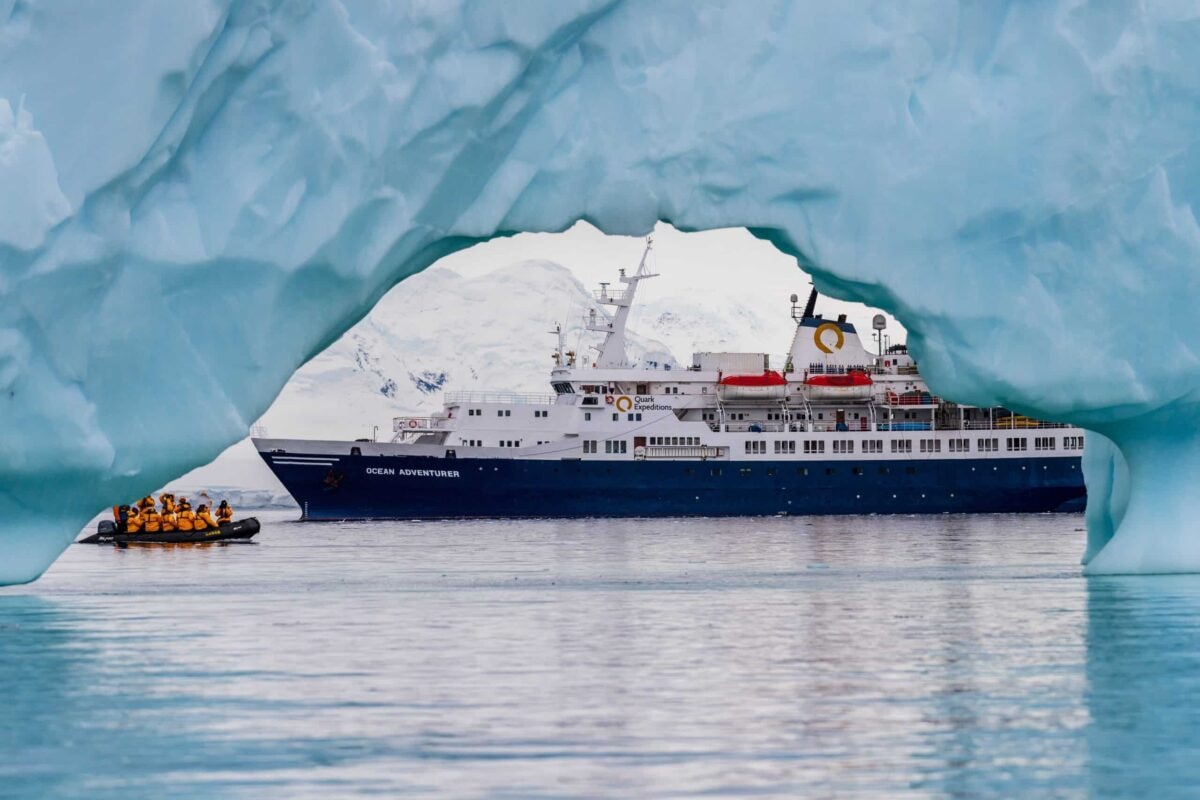
How to Choose an Antarctic Cruise? Ship Size and IAATO Landing Rules Explained
Starting from IAATO landing regulations, we break down the differences between Antarctic cruise ship types to help you determine which cruise can truly deliver an Antarctic landing expedition experience.
When planning an Antarctic trip, one of the most common questions travellers face is:"What kind of cruise should I actually choose for Antarctica?"Your choice of Antarctic cruise directly determines whether you can actually land in Antarctica, how long you can go ashore each day, and whether this journey means "viewing icebergs from afar" or "truly setting foot at the end of the world."
 Only expedition cruise ships with extensive polar operating experience can safely deploy Zodiac landing craft while strictly complying with IAATO regulations, arranging actual landings in Antarctica and close-up wildlife observation for passengers.
 All cabins on the World Explorer cruise ship feature floor-to-ceiling windows or balconies, making it a mid-sized cruise ship among Antarctic vessels
When choosing an Antarctic cruise, the key has never been how big the ship is, but whether it's truly designed for landing in Antarctica.
30-Second Key Takeaways: Antarctic Cruise Passenger Capacity and Landing Rights
In Antarctica, "ship size" directly determines "landing rights". According to official IAATO (International Association of Antarctica Tour Operators) regulations, passenger capacity is the hard criterion that determines whether you can set foot on Antarctic soil:
- 13–200 passengers (Category 1): Strongest landing rights. Almost all landing sites are open, with 2 activities reliably scheduled per day.
- 201–500 passengers (Category 2): Restricted landing. Landing is possible, but must be split into 3-5 rotating groups (limited to 100 people per batch), significantly reducing time ashore.
- 501+ passengers (Cruise Only): Landing absolutely prohibited. Restricted by regulations to onboard cruising for distant viewing only, with disembarkation forbidden.
Why Can't You Choose an Antarctic Cruise Based on Price Alone?
Antarctica is not an ordinary travel destination—all activities must comply with the environmental protection regulations of the Antarctic Treaty.
- Core Restriction: At any given time and location, a maximum of only 100 people may be ashore simultaneously.
- Key Tool: Landings rely entirely on Zodiacs (inflatable boats) for transfer—there are no piers.
- Key Decision Factor: A cruise's "passenger capacity" and "expedition operation efficiency" matter far more than cabin luxury.
- A higher-priced cruise doesn't necessarily mean more landings
- Luxurious onboard facilities don't guarantee you'll actually set foot on Antarctica
- A cruise's "expedition design and operational capability" matters far more than hardware
What is IAATO? The Key Role Behind Antarctic Landing Regulations
IAATO (International Association of Antarctica Tour Operators)is the world's most important self-regulatory body for Antarctic tourism, responsible for setting codes of conduct and ecological protection standards. IAATO's Key Rules Most Relevant to Landings- A maximum of 100 people may land in Antarctica at any one time
- Each group of landing passengers must be accompanied by a sufficient ratio of expedition staff
- Cruise ships must have complete environmental protection and safety procedures in place
Only expedition cruise ships with extensive polar operating experience can safely deploy Zodiac landing craft while strictly complying with IAATO regulations, arranging actual landings in Antarctica and close-up wildlife observation for passengers.
How Are Antarctic Cruises Classified by Ship Size? What's the Difference?
🚢 Small Antarctic Expedition Ships (Under 100 Passengers)
- Advantages: All passengers can go ashore at the same time, offering maximum flexibility.
- Disadvantages: Smaller hulls with weaker resistance to rough seas mean the most intense seasickness when crossing the Drake Passage. Facilities are usually simpler.
- All passengers can land in the same group
- Itinerary pace is highly flexible, centred around landings
- Hull and public spaces are relatively streamlined
- Travellers with expedition travel experience
- Those who prefer high-intensity, packed itineraries
- Those with lower requirements for onboard space and facilities
🚢 Mid-sized Antarctic Expedition Ships (approx. 120–199 passengers)
For most travellers, the real key isn't "the fewest passengers," but rather "how good the actual experience is under IAATO regulations."as an example, using the mid-sized expedition ships Ultramarine and Sea Explorer, operated by Quark Expeditions : Core Advantages- Designed from the hull up specifically for Antarctic expeditions and landings
- Equipped with a highly efficient Zodiac fleet for stable, staggered landings: although carrying over 100 passengers, professional"land-sea split" operations (one group ashore while another cruises by Zodiac, then swapping) ensure every passenger enjoys 2 full activities each day.
- Ample expedition staff ensure safety, in-depth commentary, and itinerary flexibility
- Onboard space, storm-resistant design, and lecture facilities enhance overall voyage quality
- Wave-Resistant Technology: Equipped with modern stabilizer fins and a 1A ice-class hull, offering far greater navigational stability than smaller vessels
- First-time visitors to Antarctica
- Those who want guaranteed Antarctic landings while valuing comfort and safety
- Those who want to strike a balance between the intensity of adventure and physical demands
All cabins on the World Explorer cruise ship feature floor-to-ceiling windows or balconies, making it a mid-sized cruise ship among Antarctic vessels
🚢 Large Antarctic Cruise Ships (200+ passengers)
Design Focus- Hull and space planning centred on long-duration voyages at sea
- Itinerary focused on crossing Antarctic waters and admiring icebergs and polar landscapes
- 201–500 passengers: Although landings are possible, since only 100 people can go ashore at a time, waiting times between groups are extremely long, and you may only get 1 hour ashore for the entire day.
- 501+ passengers: According to IAATO regulations, this type of vessel is strictly prohibited from making any form of landing.
- Suitable for: Seniors who have already visited Antarctica, or those who simply want to enjoy fine dining on board while admiring iceberg views from afar.
Which Cruise Ship Should You Choose for Antarctica? A Quick Guide
| Your Needs | Recommended Vessel Type |
| Want a stable Antarctic landing | Mid-size or small expedition ship |
| First time to Antarctica | High-end mid-size expedition ship |
| Value professional guiding and safety | Expedition-class vessel |
| Mainly interested in viewing scenery from afar | Large cruise ship |
FAQ: Choosing and Comparing Antarctic Cruises
Q1: Do I have to choose a cruise with fewer than 100 passengers to go to Antarctica?
A: Not necessarily. The key is whether it's an expedition-class vessel with well-established landing operations, not simply the passenger count.Q2: Can mid-size Antarctic cruise ships make landings in Antarctica?
A: Yes, as long as they comply with IAATO regulations and are operated by an experienced expedition team, taking passengers ashore in batches via Zodiac boats.Q3: Why can't most large cruise ships make landings?
A: Because IAATO limits the number of people allowed to land at the same time to 100, making it extremely difficult to operate in practice.Q4: For a first trip to Antarctica, what's the most important criterion for choosing a ship?
A : Whether stable landings are possible, the professionalism of the expedition team, and whether IAATO regulations are consistently followed over the long term.Q5 : What type of Antarctic cruise ship does DeWonder typically use for its in-depth Antarctica tours?
DeWonder partners with Quark Expeditions and our itineraries mostly sail aboard mid-sized expedition vessels such as the Ultramarine and Sea Explorer.Q6: Will a mid-sized ship carrying around 200 passengers be unable to land due to queuing?
A: No. Professional expedition ships (such as the World Explorer or Ultramarine) carry a high-density fleet of Zodiacs capable of completing shuttle transfers in batches within 20 minutes. Through alternating land and sea activities, travellers' time spent on Antarctic activities is often richer and safer than on smaller ships.Q7: Why are large cruise ships (over 500 passengers) strictly prohibited from landing?
A: This is a strict rule set by IAATO based on environmental protection and emergency rescue risk considerations. Large cruise ships are usually not equipped with expedition gear, and the sheer number of people would place excessive physical pressure on Antarctica's fragile ecosystem, so they are restricted to the "cruise-only" category.Why Choose DeWonder to Explore Antarctica Together
If what you're looking for is:- Under IAATO regulations, a stable, high-quality landing experience
- Professional vessels operated by top global polar expedition companies
- Itineraries genuinely designed around "setting foot on Antarctica", not just a formality cruise
- Itinerary Route: Classic Single-Island Antarctic Peninsula Itinerary
- Sailing Duration: 11-Day 10-Night Cruise Itinerary
- Inclusions: Cruise fare, landing activities, onboard meals, polar lectures, and professional guidance from the expedition team
- Exclusive Services: Professional pre-departure consultation for Hong Kong/Macau departures, visa consultation, flight transfer advice, and packing guide
- Hong Kong's Best Prices for a Luxury Experience