
Why Is the Drake Passage So Rough? Is It Really That Nauseating? A Seasickness Prevention Guide for Antarctic Cruises
The most common question before heading to Antarctica: will the Drake Passage make you seasick? From how the waves form to seasickness-prevention tips, understand it all at once.
30-Second Key Summary: What to Expect When Crossing the Drake Passage in 2026
- Sailing time: Around 48 hours one way (two days and two nights).
- Sea condition probability: Based on polar sailing experience statistics, in summer about 70% of the time it is a calm Drake Lake, and about 30% is a rougher Drake Shake.
- Key to preventing seasickness: Prevention is better than cure.It is recommended to take medication 4-6 hours before entering the passage.
- Modern technology: By 2026, mainstream expedition ships (such as Ultramarine) are equipped with advanced stabilizers, which can offset more than 50% of the rocking sensation.
What is the Drake Passage?
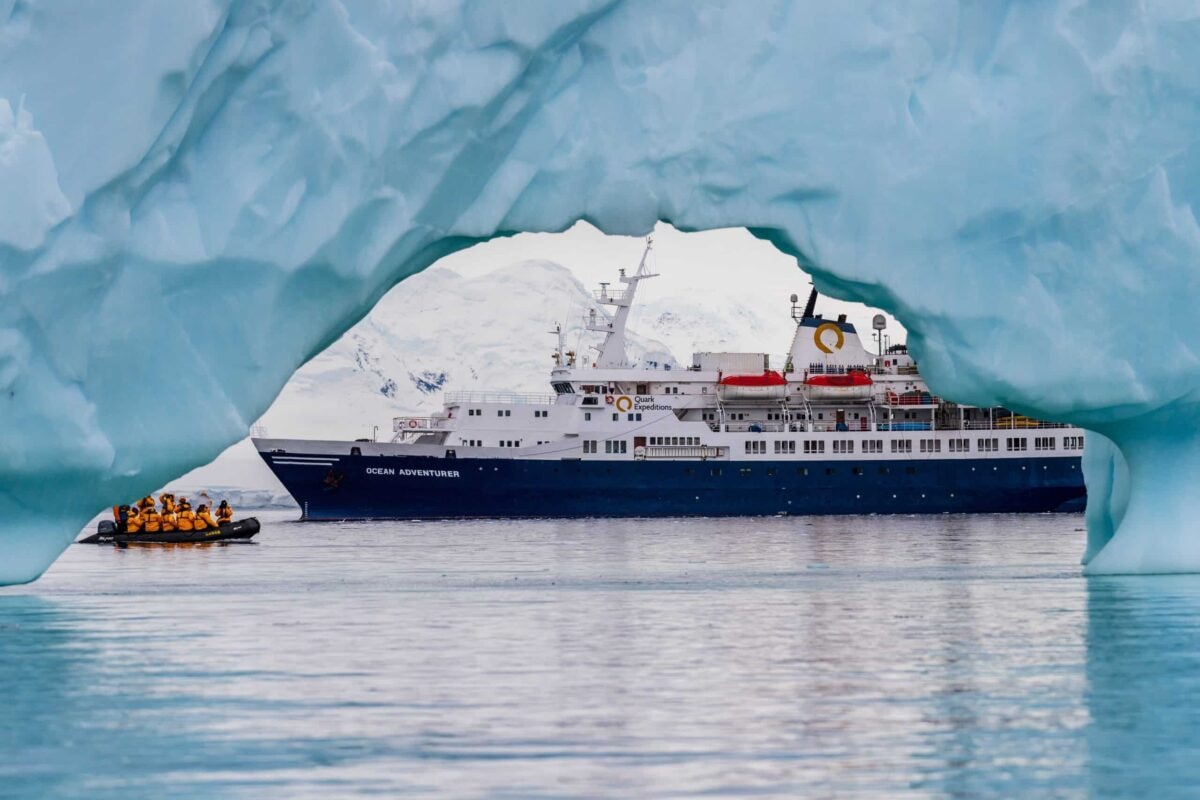
The Drake Passage lies between Cape Horn in South America and the Antarctic Peninsula, spanning about 800 kilometres, and is an important maritime channel connecting the Pacific and Atlantic Oceans. This body of water is also one of the main channels of the Antarctic Circumpolar Current (ACC). Because it sits where powerful westerly winds meet massive ocean currents, sea conditions in the Drake Passage change frequently, making it the most famous stretch of the voyage to Antarctica. An expedition ship sailing through Antarctic waters. The Drake Passage lies between South America and the Antarctic Peninsula, and is the most common sailing route to Antarctica.
Why are the waves in the Drake Passage especially big?
The big waves in the Drake Passage are not a matter of "bad luck," but the combined result of geographical and ocean-physics conditions. The three main reasons are as follows.The powerful westerly wind belt of the Southern Hemisphere
Between latitudes 40° and 60° South, there is almost no large landmass to block the wind.This allows air currents to travel long distances around the globe and continuously intensify, forming the powerful Westerlies。 In maritime history, these latitude zones have also earned several vivid names:| Latitude Zone | Traditional Name | Meaning |
| 40°S | Roaring Forties | Persistent and powerful westerly winds |
| 50°S | Furious Fifties | More frequent storms and swells |
| 60°S | Screaming Sixties | Extremely strong winds and violent sea conditions |
The "Bottleneck Effect" Between the Oceans
The Drake Passage is one of the narrowest maritime channels between the Pacific and Atlantic Oceans. Enormous volumes of seawater are forced through a channel only about 800 kilometres wide here. This creates a bottleneck-like effect:- Current speeds increase
- Energy becomes concentrated
- Waves stack up and amplify more easily
The World's Strongest Current: The Antarctic Circumpolar Current
The Drake Passage is also the main channel for the Antarctic Circumpolar Current (ACC). This current is regarded as one of the strongest ocean currents on Earth. Studies estimate that the Antarctic Circumpolar Current transports roughly 100 times the volume of water carried by all the world's rivers combined every second. When this deep-sea current:- Flows across the shallower continental shelf
- Interacts with strong westerly winds
Crossing the Drake Passage Is Actually a Transitional Journey
Ecology expert Chris Leung once shared his real experience: "On the first day I was genuinely knocked out with seasickness in my cabin, but after taking my seasickness medication on schedule, I came back to life." This is actually a typical experience for many travellers. On an Antarctic voyage, the two days spent crossing the Drake Passage often become a rhythmic transition from everyday life into the polar world. Once your body gradually adjusts, you may find yourself:- Watching the sea from the 270° panoramic lounge
- Attending lectures by polar experts
- Observing seabirds and albatrosses
 Ecology expert Chris Leung shares his experience crossing the Drake Passage: “Seasickness is usually just an adjustment period; taking seasickness medication in advance can often effectively reduce discomfort.”
Crossing the Drake Passage: 3 Practical Tips to Prevent Seasickness
Crossing the Drake Passage doesn't necessarily mean you'll get seasick. Based on the practical experience of polar ship doctors and seasoned tour leaders, here are three science-backed approaches to consider:1️⃣ Take Seasickness Medication in Advance
Don't wait until you start feeling unwell to take it. We recommend starting seasickness medication or patches 4–6 hours before entering the Drake Passage. Medical research shows that motion sickness medication works best “before any vomiting occurs.” The behind-the-ear patch (Scopolamine) commonly used by Hong Kong travellers offers a long-lasting effect of up to 72 hours, steadily suppressing the vestibular nerve. Common options include:- Doctor-prescribed seasickness medication
- Seasickness patches
- Ginger slices or ginger candy
2️⃣ The Crew's Secret: Green Apples and Soda Crackers
This isn't superstition—it's a standard remedy on polar ships. The pectin and acidity in green apples effectively ease stomach pressure and reduce nausea, while soda crackers neutralize the stomach acid produced by nervous tension.
💡 Tip: If you feel unwell, you can ask the restaurant for a green apple and pair it with a warm cup of ginger tea.
3️⃣ Physical Positioning: Finding the Ship's Center of Gravity
According to marine engineering, a ship's rocking motion is at its smallest at the center point.
Cabin selection advice: Choose a mid-ship, lower-deck cabin. These cabins are closest to the ship's center of gravity and feel the most stable.
The reasons include:- Close to the ship's center of gravity
- Less up-and-down motion
- A more stable overall feel
 An Antarctic expedition ship sails through icy seas. When booking a cabin, it is generally recommended to choose a lower-deck position at the centre of the ship to reduce the sensation of rocking when crossing the Drake Passage.
4️⃣Adjust Your Visual and Eating Habits
A few simple habits can also help reduce seasickness:- Look at the horizon: keep your vision and sense of balance in sync
- Eat small, frequent meals: avoid greasy food
- Avoid scrolling on your phone: looking down can worsen seasickness
- Stay well hydrated
Frequently Asked Questions About the Drake Passage
Q1: Is the Drake Passage equally rough all year round?
A: Overall, sea conditions in the Drake Passage can vary considerably throughout the year. However, the Southern Hemisphere summer (November to March) is usually more stable, which is why the Antarctic expedition season is concentrated during this period. 👉 Further reading:The Best Season to Visit AntarcticaQ2: Do cruise companies avoid heavy seas?
A: Yes. Antarctic expedition ships typically:- Adjust their routes based on the latest weather data
- Plan for smoother sailing times
- Adjust cruising speed when necessary
Q3: Can you see wildlife in the Drake Passage?
A: Yes, and it is often spectacular. Wildlife commonly seen in these waters includes:- Albatross
- Petrel
- Whales
- Seals
Q4: If I don't want to sail across the Drake Passage, is there another way to reach Antarctica?
A: Yes. Some itineraries offer a Fly Cruise (flying over the Drake Passage). Travellers can:- Fly across the passage from South America
- Landing on an island near Antarctica
- Then boarding the expedition ship
 Fly Cruise itineraries let travellers fly directly across the Drake Passage and then board an Antarctic expedition ship to begin their journey. This approach avoids the sailing leg, but the price is usually higher.
The Drake Passage Is Actually Part of the Antarctic Journey
Travellers often divide the sea conditions of the Drake Passage into two types:- Drake Lake: the sea is as calm as a lake
- Drake Shake: when the waves are large, the ship rocks noticeably
Experience Antarctica in Depth with DeWonder
Antarctica offers not only a visual spectacle, but a complete immersion in ecology, history and politics. DeWonder's Antarctica In-Depth Tour insists on small groups of 14–20 people, so that every landing has ample time to understand the ecology. Following the footsteps of experts, you'll bring home a wealth of knowledge and deeply satisfying memories. DeWonder's Antarctica In-Depth Tour uses small-group arrangements to explore the Antarctic Peninsula, South Georgia and the South Shetland Islands, gaining a deep understanding of polar ecology and taking in unique natural landscapes- Route: Classic single-island itinerary of the Antarctic Peninsula
- Duration: 11-day, 10-night cruise itinerary
- Included: Cruise ticket, landing activities, onboard meals, polar lectures, professional guiding by the expedition team
- Exclusive services: Professional pre-trip consultation for departures from Hong Kong and Macau, visa advice, flight connection recommendations and a packing guide
- Enjoy a luxury experience at the best price in Hong Kong