
Antarctica Transport Guide: Cruise-Only vs Fly-Cruise Itineraries — How to Choose? Comparing Duration and Travel Modes
DeWonder's polar advisors have put together this decision-making guide on Antarctica travel logistics, helping you dispel the myths about trip length and objectively compare the experiential differences between a "cruise-only" and a "fly-cruise" series. From coping with seasickness on the Drake Passage, to budget considerations, to the transfer role of King George Island — find the polar adventure plan that best fulfils your dream!
Summary of Antarctica Travel Modes
- Mainstream travel modes: Reaching Antarctica is mainly divided into the most classic and popular "traditional full-voyage cruise (sailing both ways by sea)", and the fly-cruise series developed to meet diverse needs, including "fly in, cruise back (one-way flight)" and"fly both ways (two-way flights)".
- Comparing duration and budget: Many people mistakenly believe that fly itineraries are shorter, but in fact all three have very similar total durations (about 10 to 12 days). The core differences lie in how time is allocated and in the budget. Traditional cruises offer excellent value for money and are the top choice for most travellers; fly itineraries, which include polar charter flight arrangements, come at a significantly higher price.
- The Passage experience: The traditional crossing of the Drake Passage takes about 48 hours one way. Modern expedition ships are all equipped with advanced stabiliser fins to counter the motion, and in summer there is up to a 70% chance of calm seas — making it a classic ritual for shifting into the right frame of mind for the polar region. Fly itineraries, on the other hand, suit travellers who prefer to skip the Drake Passage crossing and precisely control their time.
- The role of King George Island: In fly itineraries, King George Island plays the crucial role of a "polar transfer hub." After landing here, travellers immediately transfer to a shuttle to board the ship — it is the gateway connecting everyday life to the Antarctic expedition.
Cruise-Only vs Fly-Cruise: Unpacking the Differences in Duration and Travel Experience
Within the same total number of days, how you cross the Drake Passage determines where your budget lands and the overall pace of the journey. Below is a comparison of three modes of transport:| Comparison | ① Full-Voyage Cruise (Classic Mainstream Choice) | ② Fly In, Cruise Back (Balanced Highlights Route) | ③ Fly Round-Trip (Efficient, Sea-Free Route) |
| Total Trip Duration | About 11–12 days; the most well-developed option with the widest choice of departures | 12 days, 11 nights | 10 days, 9 nights |
| How You Cross the Passage | Cruise across in both directions (about 48 hours of sailing each way) | Dedicated charter flight outbound (3.5 hours), cruise crossing on the return | Dedicated charter flights in both directions (3.5 hours each way) |
| Budget Positioning | High Value, Dream Fulfilled: The most economical and sensible cost structure, and the market's most mainstream, standard choice | Mid-to-High Budget: Higher than the traditional route because it includes a one-way polar charter flight | Top-Tier Premium Budget: Both legs are served by dedicated charter flights, with the highest logistical costs |
| Role of King George Island | The cruise sails directly to the Antarctic Peninsula, without deliberately stopping at this island | Polar Transfer Gateway: Upon landing, you are transferred directly to board the ship | Polar Transfer Gateway: This island's runway serves as the sole charter-flight hub for arrivals and departures both ways |
| The Sea-Crossing Experience | In summer there is a 70% chance of a calm "Drake Lake"—perfect for attending lectures, watching seabirds, and enjoying your time aboard while sailing | An efficient direct arrival on the way out, and an elegant crossing on the return once your body has fully adjusted to polar sea conditions | Skips the passage crossing entirely, reducing open-ocean sailing time to 0% |
| Best Suited For | Travelers with well-balanced time and budget who long to experience the full ritual and sense of a historic seafaring expedition | Travelers who want to save their freshest energy for the opening landing while still keeping a one-way sea-crossing experience | Travelers who prefer precise control over a streamlined itinerary, have ample budget, and wish to eliminate the uncertainties of sea travel entirely |
A Deeper Look: The Operating Logic and Experiential Value of Each Transport Mode
Traditional Full Voyage Cruise: The Irreplaceable Sense of Classic Expedition Ceremony (The Top Choice for Most Travellers)
The conventional full-voyage cruise (such as Quark Expeditions' classic route) is currently the most established and highest market-share classic way to reach Antarctica. The cruise sets sail from Ushuaia, Argentina, taking about two days and two nights each way to cross the Drake Passage. Many travellers are often frightened by the rough-sea videos found online, but according to actual polar voyage statistics, in summer there is as much as a 70% chance that sea conditions will be as smooth as a mirror — the so-called "Drake Lake". What's more, modern mainstream expedition ships (such as Ultramarine) are all equipped with advanced automatic stabiliser fin systems that greatly offset most of the swaying sensation. These two days at sea instead become the best transition period, letting you relax in the 270° ocean-view lounge, attend lectures by polar experts, observe albatrosses on the open sea, and gradually settle your mood to greet the first iceberg appearing on the horizon. This is not only a highly cost-effective way to realise your dream, but also the most beautiful and deeply ceremonial prologue. 👉 Further Reading: Drake Passage Seasickness Prevention GuideFly-Cruise Itinerary: A High-Spec Charter Flight Efficiency Alternative
For travellers with a more ample budget, or those who wish to allocate their time differently, joining the "Fly Series" with a polar private charter flight is worth considering.- Fly In, Cruise Out: On the outbound leg you take a dedicated charter flight in Chile, needing only 3.5 hours to efficiently fly across the passage and land directly on King George Island to board the ship immediately. This lets travellers save their freshest, fullest sense of wonder for the opening landing on the Antarctic Peninsula; on the return you take the sea route back by cruise, so in terms of logistics management you are completely unaffected by the spring fog on the polar runway, giving very high reliability.
- Fly-in, fly-out both ways: Both the outbound and return legs use charter flights to and from King George Island Airport, condensing what would be 4 days of sea crossing into just 7 hours of flying, and reducing the variable of Drake Passage rough-sea motion to a complete 0%. However, do note that since this type of itinerary relies heavily on dedicated charter-flight air logistics throughout, the overall price threshold is significantly higher than a traditional all-cruise itinerary.
Frequently Asked Questions About Antarctic Transport Q&A
Q1: On the fly-in itinerary, you land on "King George Island"—will you spend a lot of time touring the island during the trip?
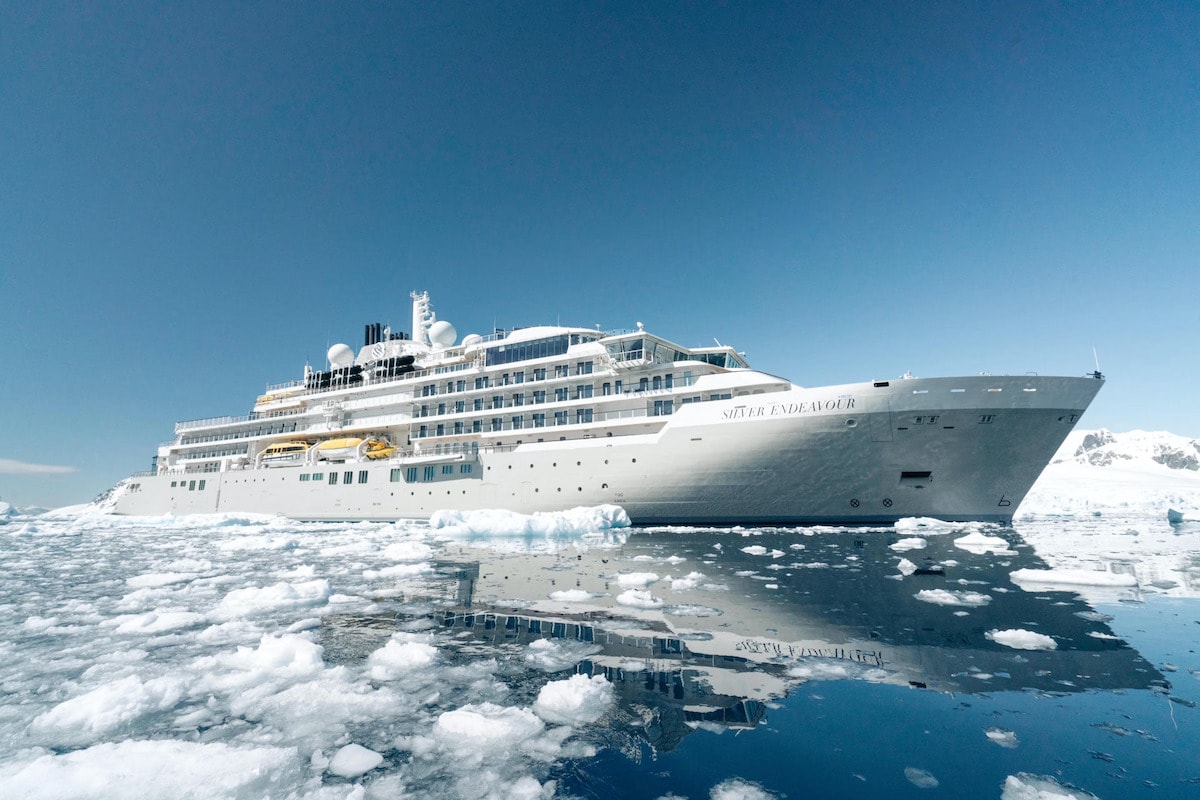
A:No. On the fly-in itinerary, King George Island serves mainly as a "polar runway and embarkation transfer point." Once the dedicated charter flight crosses the passage and arrives at King George Island, the primary purpose is to efficiently connect "real life" with "life in Antarctica." After landing, travellers are promptly guided by the expedition team to the shore to board Zodiac inflatable boats and embark the Silver Endeavour cruise ship. All the highlight explorations that follow—watching penguins, glacier hiking, and more—still take place along the Antarctic Peninsula and its coastal fjords.Q2: Between a traditional all-cruise trip and a fly-in itinerary, is there any difference in the animals you actually see on-site in Antarctica?
A:The natural ecosystem of the Antarctic Peninsula is completely open to all, and no matter which mode of logistics you arrive by, the daily Zodiac landings and ice-sea cruising experiences are equally spectacular. The only tiny difference lies in the "ice-melt timing gap": because the fly-in itinerary embarks right from the start at King George Island—which sits at a lower latitude and where the ice melts earlier—the early-spring voyages in early November have a very high chance of being the first to witness penguins coming ashore to grab stones and build their nests. As the summer season progresses from December to February and the sea ice retreats over a wide area, traditional standard cruises pushing deep into the heart of the peninsula can likewise catch the peak of penguin chick-rearing and the appearance of great whales.Q3: DeWonder's no-surcharge shared room for solo travellers—does it differ depending on the transport or the ship operator?
A:Everyone is treated exactly the same. Upholding the philosophy of intellectual sharing, DeWonder promises "no surcharge for solo bookings."Whether you choose the cost-effective, most popular Quark classic full-voyage cruise, or the higher-budget Silversea fly-cruise series with private charter flights and personal butlers, solo travellers can opt to share a cabin with a same-gender fellow traveller. We save you the hefty single supplement, letting you spend your budget on the polar experiences that matter most.Fulfil Your Dream Journey to Antarctica with DeWonder
Antarctica offers not only visual awe, but also a complete immersion in ecology, history and politics. As a professional polar travel agency and expedition consultant, DeWonder Travel focuses on delivering high-quality, in-depth Antarctica trip planning, helping travellers connect with the world's top expedition fleets such as Quark Expeditions, Sliversea and more. Many people assume polar expedition travel means hardship and discomfort, but in DeWonder's planning, we regard 'comfort' and 'efficiency' as the foundation of an in-depth experience.We have established deep strategic partnerships with the world's benchmark shipping operators: whether you choose Quark Expeditions' flagship fleet (such as Ultramarine), returning after a day of wilderness expeditions to an elegant space equipped with top-tier spa and refined dining; or prefer Silversea's brand-new fly-cruise approach (such as Silver Endeavour), efficiently flying over the Drake Passage by exclusive private charter and enjoying near 1:1 personal butler care.Choosing DeWonder means you never have to compromise between 'expert-led guiding' and 'high-end comfortable accommodation'—we deliver both at once. If you're worried about how to prepare for an Antarctic trip, just leave it to DeWonder Travel. DeWonder In-Depth Antarctica Tours use small-group arrangements to explore the Antarctic Peninsula, South Georgia and the South Shetland Islands, offering an in-depth understanding of polar ecology and a chance to admire unique natural landscapes- Antarctic Peninsula Classic Single-Island Cruise Itinerary : 11 Days 10 Nights / 12 Days 11 Nights
- Antarctic Peninsula: Fly In, Cruise Out : 12 Days 11 Nights
- Antarctic Peninsula: Fly-In, Fly-Out Round Trip : 10 Days 9 Nights
- Fees Include:cruise ticket, landing activities, onboard meals, polar lectures, and professional guided tours by the expedition team
- Exclusive Services:professional pre-trip consultation for departures from Hong Kong and Macau, visa consultation, flight transfer advice and a packing guide
- The best prices in Hong Kong for a luxurious experience